


AK Sponsor
Posted: 4/19/2005 8:10:05 AM EDT
|
I have never built an AK before but is used to be a sheet metal worker and don't think I would have trouble with fitting a parts set up to a receiver. My concern is heat treating. I have never done this before. What tools are needed? How is it done? Thanks |
|
I tried to compile some of the methods I have seen here: www.quarterbore.net/forums/showthread.php?t=314 I have not got much feedback so take it for what it is worth... |
|
Just did one and learned a little more... I didn't heat treat the ejector before installation...which is a mistake since it's easier with it out of the gun. The first time I heated to cherry red, then quenched in oil. I took it out and after about 60 rounds, the ejector tip started to deform a little. I figure it would have failed completely (by bulging and causing the bolt to jam) in about 300 rounds. So I re-shaped it and heated to cherry red, HOLDING for 3 minutes at that temp. Then I quenched in oil (poured half a quart of fresh oil over it over about 30 seconds). Then I heated to get the blue color and held that for about 30 seconds. Shot about 300 rounds through it and there is no sign of deformation, so it looks like it worked. Note that I am using steel case ammo, as most of us are with 7.62... So there's my 2 cents... |
| You should look into the product Kasenit. You heat the part until cherry red, then immerse it into this stuff, then reheat to cherry red and quench in cold clean water. Really simple. |
|
Kasenit is supposed to be used when you are using a steel that will not harden on its own(like a 1006). You are placing a carbon rich material on the surface and allowing it to diffuse into the metal surface. The old gunsmiths used to do the same thing with locks by placing them in close contact with deer antler in red coals(anything organic with a high carbon content). Essentially, you are carburizing the surface. Todays modern alloys like 4130 and 4150 will harden just fine utilizing heat and quenching alone. Kasenit is not necessary for these alloys. 
|
I disagree, well, to a point. I don't know what material my rails are made of (TAPCO and other manufacturers) but the heat and quench method didn't work for my ejector or FCG holes. Ended up with elongated FCG holes and a pinged ejector. Trying to harden the ejector and FCG holes "after" building is no piece of cake. After that fiasco, I started using Kasenit and never looked back. No more elongated holes or pinged ejectors. You can say what you want, but Kasenit was the answer to my problems. Won't do another build without it. |
|
HammerinPA, Everyone makes decisions on how to proceed based on there experience. I understand what you are saying and I agree I wouldn't want to heat treat an assembled firearm. I was just making the point that kasenit isn't necessary for these alloys to harden (4130, 4140, 4150, etc.) My experience includes seven years in a metallurgical lab of a commercial heat treater. These materials will easily harden above what you would want your receiver hardness to be. The only reasons I can think it would not harden is 1) You didn't take it high enough - 1600 degrees F 2) You didn't quench it fast enough or well enough (enough volume to absorb the heat) or 3) You didn't have an alloy steel to begin with. Bear in mind we had calibrated thermocouples indicating temperature and spectrometers to verify composition. Essentially, what you are doing is taking a ferritic steel and heating and quenching it to become an untempered martensitic steel. This is very hard and very brittle material. You then heat it to temper it and it becomes a tempered martensitic steel. You lose some hardness but gain toughness. I will do some tests on some 4130 material, check hardness and report back to everyone.
|
|
Guys, I said I would do some heat treat tests and report results back to you. These are quick and dirty. but I think give a good idea of whats going on. These tests were performed on a 4130 ejector and a 4130 receiver blank. First I ran the material spectrographically to verify it was 4130. I got carbon at 0.31 %, chromium at 0.83 %. 4130 spec is C 0.28 -0.33 and Cr 0.80 - 1.10. So we have the correct material. I then checked hardness as received. They were 44 Rockwell A (125 Brinell). This is too soft for an ejector and pin holes. I would prefer about 70 - 73 Rockwell A (371 - 421Brinell) I then heated them with a MAPP torch until the holes and ejector glowed bright red (about 15 seconds) and quenched in five gallons of oil. I checked the hardness of the ejector and adjacent to a pin hole and got 55 Rockwell A (180 Brinell) and 47.5 Rockwell A (140 Brinell). This goes along with what hammerinpa said. This is way too soft for these components. Either we are not getting it hot enough or our quench isn't quick enough. I then heated both items to bright red heat, held for two minutes and quenched in water . I know everyone says 3 minutes but the surface was starting to scale and I chickened out. I checked hardeness and got 73 Rockwell A (421 Brinell) and 75 Rockwell A (468 Brinell). So, we are getting up to some useful hardnesses. I then took an oxy-acetylene torch heated it for about 5 seconds and quenched in water and got 74 Rockwell A (442 Brinell. You have to be careful because you can easily melt or burn a hole through your part. These still have to be tempered at about 600 degrees for best performance. Based on these tests, I would recommend the following: Heat using a MAPP torch, hold the area for the three minutes and quench in water. If you have access to a Rockwell hardness tester, check your parts. That's the only way to tell if you have achieved your goal.
|
1: Keep the info coming... Nice to hear from someone that has access to the proper equipment, and the "background". 2: You said you tested a 4130 receveir blank, and ejector.... Tapco? 3: I'm getting ready to order some 4130 from here to make mine own flats /and or ejectors:http://www.aircraftspruce.com/catalog/mepages/4130sheet.php .50 6" x 12" 03-23000 $1.662 I was wondering was has to be done if the 4130 as received is annealed vs normalized? Which is better to use to make up receivers /ejectors? On the above link it says: *Subject to availability of normalized sheet, annealed 4130 sheet may be substituted. PS: Any better internet sources for flat sheet steel? If I call locally I guess I ask for normalized sheet, 4130, .50 6"x12" Tensile strength 90,000 PSI. Furnished cold-rolled and oiled in sheet thicknesses of .025-.080 inch. Oh, one more thing... Anyone heat treating the upper rails that the bolt runs back and forth on? Are "real" AK's spec'd only treating the pivot holes and nothing else? Please in your response gear it towards persons without access to the proper equipment, (Maybe giving ideas on how to access such equipment - Or expand on "Getto" types of heating treating... Myabe a homemade Rockwell tester? , etc.) Please take a few moments and review this thread, see if you can add anything that may have been overlooked Thanks! |
|
wearenotalone, Heat treating for the annealed or normalized is exactly the same. Usually, annealed or normalized is specified for machinability. Sometimes, too soft is not good for machining because the metal is gummy and tears instead of cutting cleanly. The parts I tested were from Marsh Hawk Arms, but the same would work for any 4130 composition. All of the hardness testers are pretty expensive. You could probably pick up a used one for$300 to $1000. You might consider a file set. They make them in different hardnesses and you check your parts hardness by determining what hardness will file it and what won't. You would have to heat treat a piece of scrap from your part the same way and test file that. Good luck with your receivers |
|
When heating to cherry red, when the steel reaches the proper temperature it loses magnetism. I use the magnet on the end of my scribe and check a couple of times while heating. Once at the temp I quench in water. I then sandblast or wire brush to get rid of the discoleration. I then reheat just until blue and let air cool. Haven't had any problems yet. You could use the wax pens that melt at a certain temp for the second heating to be more precise but I have not gotten a definitive answer on the correct temp. I have heard anywhere from 500-750 degrees. The first temp where magnetism is lost is somewhere around 1600+- degrees. Mark |
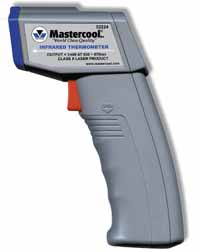
|
600 degrees on the whole frame to get a final temper? That isn't very hot - just a little more than it takes to melt solder - to temper steel. Sheet metal that is just .040" won't take a lot of heat applied for a lengthy time without some type of warping or wrinkling. Holding the temperature for three minutes at cherry red with a torch doesn't seem to be any better than just getting it too the cherry red for 15 seconds and quenching it in oil. Taking the energy out of the heated area needs to be done quickly - that is why oil, thicker than water, will absorb the heat quicker. There is oil hardened steel and air hardened steel. 4130 is definitely oil hardened steel. But sheet metal is a whole different game than a knife blade! I guess I'll find out when I do my first flat! 
|
| As for the oil vs. water quench, this is my input from experiance. 4130 will not harden easily. It is NOT 4140, which will. It must be pushed hard to harden. A violent quench is the only way to do it. Oil will not remove heat as quickly as water. Additionally, oil burned into the surface of the part will screw up any metal finishing process except paint. Quench in water. It works. |
|
mg, I know that after working with knife blades that you have to harden it then draw it back down. Too hard and steel will be brittle and crack. Too soft and it will wear quicker. I know its going to take at LEAST two trys before I get it right, more likely three. Working with tool makers and machinists I was told that oil gives a more uniform temper to steel when immersed than water does. Oil will draw the heat out in a uniform manner while water will boil giving sporadic uneven cooling. It probably doesn't matter on an axis hole on a receiver - just so long as it is harder than the axis pin! And water is a whole lot easier to use than a bucket of oil! |
| water will deffinitely take the heat out faster than oil. But, yes boiling will boil and make things a LITTLE uneven. I ahve read reports of poeple who heated to red and used oil to quench... but it was still to soft. After a water quench it was hard enough. So the majority oppinion seems to be, heat till red, quench in water. Then sand off the scaling. Then put it in your mom's oven to preheat. Heat each section till blue and let cool slowly (in an oven). This is the way I'm going to try it first anyways.... YMMV |
|
I tried an oil quench on the four holes I did and I can tell you it is no fun cleaning between each heating and quenching cycle. I checked hardness and there was very little change. I then quenched in water and got a big increase. It was a lot easier just wiping the receiver off with a paper towel for each cycle. Water is definitely a better quenchant than oil and brine water is even better. I personally do not believe you will achieve a hardened surface with an oil quench on 4130 using a propane or MAPP torch. I would like to hear someone who manufactures receivers commercially weigh in with there process.
|
|
WATER QUENCH- I have built several receivers from 4130 material. I did one in a vacuum furnace and oil quenched. The resulting hardness was very low on the Rockwell "C" scale. As a matter of fact it buried the diamond when I tested it. As a side note I quenched the receiver straight in the oil tank and had very little warping. This was a 1.6 mm thick complete receiver. After testing the hardness in various places all places were "soft". I then went to my oxy/acy torch. I flame hardened all of the receiver holes,ejector,rails,rivet holes and where I stamped my serial number also. With the torch and water quenching the material was now in the upper Rc48 range for hardness. Once I verified this I put it in the oven to draw at 600 Deg. F for a couple hours. I can heat treat an entire receiver with a torch and a 5 gallon bucket of water in about 10 minutes. See the attached spec sheet for 4130 material "water quenched". It is accurate. http://asm.matweb.com/search/SpecificMaterial.asp?bassnum=M4130F |
AK Sponsor