


Posted: 12/29/2024 9:33:19 PM EDT
|
I set 18 pressure treated 4x4s between 24 and 30 inches in the ground. No concrete, packed the dirt that came outta the hole around them tight. They seemed pretty solid. It started raining that evening and has rained non stop for 3 days. 2 of the posts got 50 pounds of fast setting concrete around them. Pretty sure a squirrel climbing up one of them would cause them to topple over now. Even the 2 with the concrete wobble around moving the dirt around the hardened concrete. Is my only hope to pull them all and repack or would packing more dirt in the existing hole help? They're set in the ground to hold a 4 board fence for appearance sake. I'm not keeping in animals or anything like that. Pretty sure the right thing to do is pull them and repack. Thoughts? I feel like tomorrow I'm going to be pulling posts. Yay. |
|
If you legit went 24-30 inches down you will probably be fine. I did about the same but with pressure treated fencing posts and attached some chainlink to it- keeps the neighbors trash from blowing onto our property. The posts have done great in the year they've been in. Only problem is the trees from Helene that mashed the chain link |
|
Posts set directly in concrete will rot out faster than posts stuck into bare ground. The best solution for longevity is to set steel stand-off brackets into concrete, and bolt your 4x4 posts to the brackets so that the wood is not in contact with soil or concrete. Sorry, this is a lesson I've learned in 30+ years as a homeowner in a dry climate. ETA these are kind of pricey but worth it in the long run. 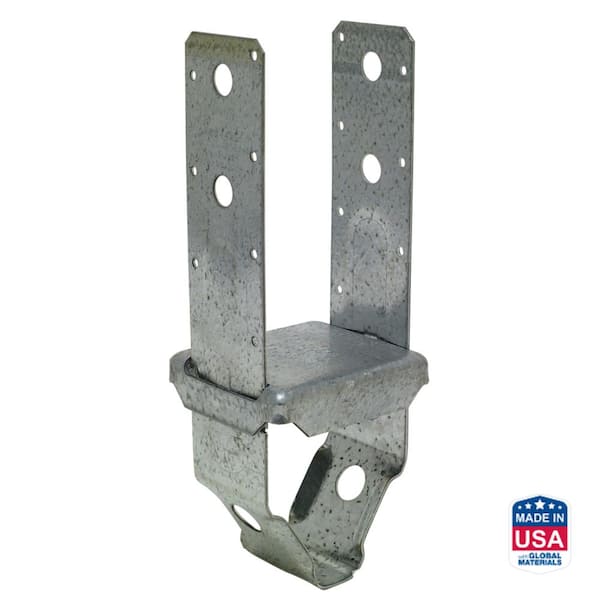 |
|
You can set with compacted gravel instead of concrete or soil. Did you paint the cut ends with that foul smelling preservative? The treatment only gets to about an 1/8" into the wood and the cut ends not be treated. At the very least, I would compact the soil around the posts again, adding some more as needed. If you didn't add some water when you set the posts and compacted the soil, the rain did it for you. 
|
|
Who ever put the extension on the house I bought put the posts in about a 18" wide concrete cylinders. No idea how deep. Frost is enough force separating the 2 posts that the inside ceiling peak sheetrock cracks from frost expanding the ground during the winter. I haven't figured out how to fight the frost. I just keep filling the cracks every spring. Pain in the ass. *I think the fix is sawing the posts so it "sits" on the concrete and the concrete can move to where ever the fuck the frost puts it. |

|
Simpson Strong Tie EZ Base appropriate concrete tube form Square hole form Never used these but looks interesting and easy |
|
Quoted: Posts set directly in concrete will rot out faster than posts stuck into bare ground. The best solution for longevity is to set steel stand-off brackets into concrete, and bolt your 4x4 posts to the brackets so that the wood is not in contact with soil or concrete. Sorry, this is a lesson I've learned in 30+ years as a homeowner in a dry climate. ETA these are kind of pricey but worth it in the long run. https://images.thdstatic.com/productImages/63ee713b-2600-4e8d-ac30-a858b7507197/svn/simpson-strong-tie-post-bases-pbs44az-64_600.jpg Simpson CB series is my preferred connector for post-to-slab anchoring. They’re far superior to ABU’s for high wind areas. |
|
Quoted: Posts set directly in concrete will rot out faster than posts stuck into bare ground. The best solution for longevity is to set steel stand-off brackets into concrete, and bolt your 4x4 posts to the brackets so that the wood is not in contact with soil or concrete. Sorry, this is a lesson I've learned in 30+ years as a homeowner in a dry climate. ETA these are kind of pricey but worth it in the long run. https://images.thdstatic.com/productImages/63ee713b-2600-4e8d-ac30-a858b7507197/svn/simpson-strong-tie-post-bases-pbs44az-64_600.jpg Agreed it's worth doing right the first time...buy once cry once and all that. |
|
Quoted: Didn’t bother to read the OP I see. “…They're set in the ground to hold a 4 board fence for appearance sake. I'm not keeping in animals or anything like that…”  I guess I did miss that 4 sentences in, but that really doesn't help answering the question.. A sand spike and a 1" x 1" can hold up a "4 board fence, for appearance sake". I guess I did miss that 4 sentences in, but that really doesn't help answering the question.. A sand spike and a 1" x 1" can hold up a "4 board fence, for appearance sake".For appearance only, 4" x 4"s a couple or more feet deep as the OP already did is likely just fine. Concrete and 4x"s would be crazy for a picket fence. |
| For posts straight into the dirt, I backfill and compact with the end of a 2x4. Throw in a couple shovels of dirt and beat it down with the 2x4 on all 4 sides. Try to get it filled evenly. Beat it down with the 2x4 etc. Not nearly as good as concrete but it'll hold everything I need it too. |
| If you really think you got them tamped good, I wouldn't redo it. Stop dicking with them trying to see if they move, check the plumb on all of them to be sure they're still true, then tie them together with at least one stringer. Add/tamp fill around the posts as needed as it dries. |
|
Quoted: You can set with compacted gravel instead of concrete or soil. Did you paint the cut ends with that foul smelling preservative? The treatment only gets to about an 1/8" into the wood and the cut ends not be treated. At the very least, I would compact the soil around the posts again, adding some more as needed. If you didn't add some water when you set the posts and compacted the soil, the rain did it for you. This is what I do. 6" deeper and use basement water proofing on the part of the post embedded in subgrade. |
| Just repack and add some dirt when doing so. No need to pull them. When you repack, do it like you mean it. End of a 2x4 or 4x4 works and pound the heck out of it, evenly. Best to wait until it drys out a bit and pack them out away from the posts a bit more too. Sounds like pretty loose dirt, so you may need to add more than you think while compacting. |
|
Your hole needs to be big enough in diameter that you can easily put a tamping rod all the way to the bottom all around the post. Dump a shovel or 2 of dirt evenly around the hole and tamp it until that layer is solid, then dump another shovel full and repeat. If your hole was just big enough to stick the post in, then any dirt you put back in the hole and tamped stayed at the top of the hole and left basically empty space at the bottom around the post. When done like this they usually feel solid, until that first rain. |
|
I grew up on a farm We never set out wooden posts in concrete. And if a post failed, it meant cattle were out and you had to redo it anyways - so learned to do it right. Here's the secret. Tamping the dirt as you fill. You should dig a hole at least 24 inches deep. And when you put the post in and tamp, you should tamp at least 12 times. Shovel handle works okay. A dowl with a flat end works even better. But you got to put in about 4 inches of dirt then tamp it all around, add 4 more inches and tamp, etc. In theory, you have the volume of dirt from the hole plus the pole itself, so you should have a heap of dirt afterwards. Nope, if you can't get all the dirt back in the hole WITH the pole, you didn't tamp it enough. |
|
Locust posts, let them dry good or cut them during the winter. Tamp the dirt into the hole around the post in stages. A shovel of dirt, tamped down with a good tamping tool (8 ft. long wooden pole about 2 to 3" in diameter) till the dirt "rings" when you hit it with the end of the pole. Then another shovel full and repeat the tamping down of the loose dirt. Do it right and they won't come loose. I remember my dad telling me that he and my youngest brother had finally some of the locust posts along the road side of the garden in the late 80's. He put them in before he went into the Air Force in 1953. Treated lumber doesn't last nearly as long as a good locust post. Some treated lumber is crap. Clearly states on the label is in to intended for ground contact. Some treated lumber states on the label it is good to go for ground contact or even burial in dirt. I've found the good stuff at Home Depot after the "treated lumber" from Lowes rotted out on me just lying on the ground (pegged to the dirt to keep the driveway gravel in the driveway.) Takes longer to tamp the dirt in around a post but it's rock solid when done right. |
|
Drive in Simpson post holders Next time try these drive in simpson post holders. They are awesome and way faster than digging a hole. I would just try packing the dirt more before digging them up. Also adding the bracing and installing the fence will stiffen it up. |
|
I recently took down a 25 year old section of fence and the posts were treated 4x4s in concrete. The parts of the posts that were below grade in concrete were in just as good or better condition than the above grade. Some of the posts had gotten in pretty bad shape but most were in surprisingly good condition for 25 years. |
|
Quoted: I grew up on a farm We never set out wooden posts in concrete. And if a post failed, it meant cattle were out and you had to redo it anyways - so learned to do it right. Here's the secret. Tamping the dirt as you fill. You should dig a hole at least 24 inches deep. And when you put the post in and tamp, you should tamp at least 12 times. Shovel handle works okay. A dowl with a flat end works even better. But you got to put in about 4 inches of dirt then tamp it all around, add 4 more inches and tamp, etc. In theory, you have the volume of dirt from the hole plus the pole itself, so you should have a heap of dirt afterwards. Nope, if you can't get all the dirt back in the hole WITH the pole, you didn't tamp it enough. This fits with my experience on our farm too. We don't have a single post in concrete. Never had a failure. We use a 36" deep auger, dig out the hole, place the post and fill/tamp every 6-12". |
|
Quoted: I set 18 pressure treated 4x4s between 24 and 30 inches in the ground. No concrete, packed the dirt that came outta the hole around them tight. They seemed pretty solid. It started raining that evening and has rained non stop for 3 days. 2 of the posts got 50 pounds of fast setting concrete around them. Pretty sure a squirrel climbing up one of them would cause them to topple over now. Even the 2 with the concrete wobble around moving the dirt around the hardened concrete. Is my only hope to pull them all and repack or would packing more dirt in the existing hole help? They're set in the ground to hold a 4 board fence for appearance sake. I'm not keeping in animals or anything like that. Pretty sure the right thing to do is pull them and repack. Thoughts? I feel like tomorrow I'm going to be pulling posts. Yay. How did you pack them? Hand packing them may not get enough compaction force to really solidify the soil around the posts. Posts with solid or nearly solid fencing material have to resist some lateral forces from wind. The taller the fence and the larger the post spacing the bigger the load. The post will exert a force on the soil. The deeper the embed the more resistance you will have. The bigger the post the more resistance you will have. Concrete makes the post bigger. The portion of the post in the frost zone are typically not counted on the resist any force. Expansive clay is also a little tricky when it comes to resisting applied forces. Posts supporting wires are not really required to resist lateral loads except wind. The load only gets significant with high wind and thick wires. Corner posts are another issue. Corners are used to resist the pull of the wire in two directions. |
|
How much rain and how much damp/wet do you expect the solid around the posts to be? Here around Seattle it rains a lot at least half of the year and quite a bit for at least another third. It only stops for a couple months in the Summer. Therefore, I need to allow the water around the posts to drain. I dig at least six more inches than the 2ft depth that I fill with rocks and gravel, compact and settle the post over it. I applied a very stinky purple stuff (forgot the name) that Home Depot sells to prevent or treat wood rot on the buried part of the posts. Then filled for another six inches around and compact again. Then filled the rest with concrete. The holes are at least two to three times the 4x4 area in diameter. Once the concrete sets it can rain cats and dogs and it will not move while the rocks at the bottom allow all the water to drain. I have posts buried like this for well over 10 years and they all look good holding a 6ft fence around the house (I replaced some just a bit after my 18 years old son was born). I live in a very old house and the fence was already there when I bought it. I already replaced almost all posts (I replace them as they break because of the rot). They were set using the method I described above. I noticed that they all rotted near the surface. The parts buried deep down all looked good. Therefore, I just copied it. |
|
Quoted: When we put mailboxes in at work we dump small rock with fines in the hole and around the post. Put it in layers and pack each layer with a metal rod. This gets the posts pretty solid and the posts last for quite a few years. Haven’t done a lot of post setting but what gunner said was my first thought. Seemed to work fine in Indiana weather and soil. |
|
How long are the posts? They may be wobbly because you have a big lever above ground. I built a fence in Colorado at 9200' where it is high and dry. I thought about setting the 8' long x 6" wide CCA-treated posts in concrete but took the advice of an old ranching publication. My posts are 30-36" down. Posts in good draining soil tend to last longer than posts set in concrete BECAUSE most people don't pour the concrete flush to or above the surface of the ground. Concrete below grade allows water to collect on the concrete, which causes rot at that interface. Don't set concrete below grade on wood fence posts. |
|
Quoted: How long are the posts? They may be wobbly because you have a big lever above ground. I built a fence in Colorado at 9200' where it is high and dry. I thought about setting the 8' long x 6" wide CCA-treated posts in concrete but took the advice of an old ranching publication. My posts are 30-36" down. Posts in good draining soil tend to last longer than posts set in concrete BECAUSE most people don't pour the concrete flush to or above the surface of the ground. Concrete below grade allows water to collect on the concrete, which causes rot at that interface. Don't set concrete below grade on wood fence posts. This seems to be the "trick" on what I've seen down here in SE Texas (for resi privacy fences/gates/etc). We normally get a fair amount of rain, and soil is clay, so stuff stays wet until it doesn't. Fences set by whoever with concrete below grade and soil covering the top tend to rot at the top of post where it's in contact with the surrounding soil. Post set in concrete above grade sloped away from the pole seem to have few issues. Might be because you have people go "Buh, the concrete above the grass is ugly, make it lower so it looks nice with grass, buh". And the fence companies do it that way because they might not know any better, it's what the customer wants, and it means repeat business in 10 years when the post rots through and the fence falls over in a thunderstorm. I can understand farms/ranches not setting posts in concrete due to the economics/time/effort of it. And I've never seen it done that way for barbed wire |
|
Quoted: How long are the posts? They may be wobbly because you have a big lever above ground. I built a fence in Colorado at 9200' where it is high and dry. I thought about setting the 8' long x 6" wide CCA-treated posts in concrete but took the advice of an old ranching publication. My posts are 30-36" down. Posts in good draining soil tend to last longer than posts set in concrete BECAUSE most people don't pour the concrete flush to or above the surface of the ground. Concrete below grade allows water to collect on the concrete, which causes rot at that interface. Don't set concrete below grade on wood fence posts. Wrap the below grade portion of the post in heavy tarpaper (or ice and water shield, if you want to spend the money), mound concrete above grade. let concrete dry, trim tarpaper to top of concrete. 3-4 inches of gravel in the bottom of the post hole before setting the post can help with drainage. If you're setting a 4 X 4 post, make at least an 8 inch post hole so the concrete actually does it's job. |