


AR Sponsor


|
Sinclair International has the Hornady 5.56mm NATO 75 grain SUPERPERFORMANCE on sale now for $15.49 a box of 20 until the middle of July, so get some while it is on sale!
http://www.sinclairintl.com/.aspx/sid=73994/pid=41669/Product/223_REM_75_GR_BTHP_SPF_AMMO__20_BOX_ |
|
Quoted:
I would really like to see you shoot 10 round groups. Can ya do that? I ordered some more .223 75 gr TAP and will be doing more 10 round groups. Sure, but i may have to wait to get to a 100+ yard range again. I can do a 50 yard test tomorrow. |
Well, I tried it in my carbine (16", standard carbine gas system). It turns out that Hornady wasn't bullshitting about keeping it rifle length gas systems. Out of the 10 rounds I fired, I recovered 7 of them, and 3 had blown primers   So, I think I'm going to stick with the 75gr TAP for my homeland security needs. My carbine is a Stag 16" upper, M4 ramps, chrome lined, 5.56 chamber, 1x9 twist, with a Magpul BUIS (the reason the groups are in different places is I was in the process of sighting in the new sight). I also just put the upper on a CMMG lower due to sending in a Form 1 for the Stag lower it used to be on  Anyway, here is the setup (same range I shot on the last time, just walked halfway down). I also just rested it on what you see, I didn't go prone as it rained this morning and it wasn't worth getting muddy.  M193 and TAP 75gr group: (the hole marked not a bullet was a piece of the backstop that came back through the paper)  Super Performance group:  The group was bigger than the other rounds. I wonder if the the two high flyers were the rounds that blew primers? I had a stoppage on round 8 and just put the last two into the bowling pins. I didn't notice any extra damage on the pins, although there was subjectively louder blast and more recoil over the other rounds I was shooting. I still have 20 rounds of SP left that I'll put through my 20" the next time I shoot it. I'll be sure to post the cold barrel groups on it, but I think I'll stick with 75gr TAP for my carbine and SBR when I get my stamp back. |
|
Quoted:
Well, I tried it in my carbine (16", standard carbine gas system). It turns out that Hornady wasn't bullshitting about keeping it rifle length gas systems. Out of the 10 rounds I fired, I recovered 7 of them, and 3 had blown primers
http://i31.photobucket.com/albums/c353/AJErvin/Guns/IMG00147-20110610-1537.jpg So, I think I'm going to stick with the 75gr TAP for my homeland security needs. My carbine is a Stag 16" upper, M4 ramps, chrome lined, 5.56 chamber, 1x9 twist, with a Magpul BUIS (the reason the groups are in different places is I was in the process of sighting in the new sight). I also just put the upper on a CMMG lower due to sending in a Form 1 for the Stag lower it used to be on
Anyway, here is the setup (same range I shot on the last time, just walked halfway down). I also just rested it on what you see, I didn't go prone as it rained this morning and it wasn't worth getting muddy. http://i31.photobucket.com/albums/c353/AJErvin/Guns/carbine61011.jpg M193 and TAP 75gr group: (the hole marked not a bullet was a piece of the backstop that came back through the paper) http://i31.photobucket.com/albums/c353/AJErvin/Guns/75tap50yds.jpg Super Performance group: http://i31.photobucket.com/albums/c353/AJErvin/Guns/SP50yds.jpg The group was bigger than the other rounds. I wonder if the the two high flyers were the rounds that blew primers? I had a stoppage on round 8 and just put the last two into the bowling pins. I didn't notice any extra damage on the pins, although there was subjectively louder blast and more recoil over the other rounds I was shooting. I still have 20 rounds of SP left that I'll put through my 20" the next time I shoot it. I'll be sure to post the cold barrel groups on it, but I think I'll stick with 75gr TAP for my carbine and SBR when I get my stamp back. How does gas system length affect blown primers? I am having a hard time intuitively linking the two......wouldn't a shorter gas system bleed chamber pressure faster? ETA: Longer burn curve means higher pressure in the gas tube causing the bolt to come out of battery sooner when the chamber pressure is high enough to blow a primer??????? |
|
Quoted:
Longer burn curve means higher pressure in the gas tube causing the bolt to come out of battery sooner when the chamber pressure is high enough to blow a primer??????? I think the longer burn curve means a LONGER pressure spike, not higher. The force applied to the primer is not more, but for a longer duration, thus moving it more and popping it out. However, the more I think about this, it doesn't make sense that it would pop primers. A shorter gas system would provide and earlier "pressure release valve" effect. You would get more hot gas through the gas port, and quicker/harder shell extraction, and thus I would think the problems seen would more likely be stuck cases, FTE's, bolt bounce, harder recoiling rifle, not popped primers. That's my take on things. |
|
Quoted:
Quoted:
Longer burn curve means higher pressure in the gas tube causing the bolt to come out of battery sooner when the chamber pressure is high enough to blow a primer??????? I think the longer burn curve means a LONGER pressure spike, not higher. The force applied to the primer is not more, but for a longer duration, thus moving it more and popping it out. However, the more I think about this, it doesn't make sense that it would pop primers. A shorter gas system would provide and earlier "pressure release valve" effect. You would get more hot gas through the gas port, and quicker/harder shell extraction, and thus I would think the problems seen would more likely be stuck cases, FTE's, bolt bounce, harder recoiling rifle, not popped primers. That's my take on things. What I was picturing with my edit was not to say that there is a higher pressure because of the longer burn curve, but that there is higher pressure in the gas tube compared to a normal burn curve because the chamber pressure stays at it's peak for longer. This, I could see, may cause the bolt carrier/bolt to unlock sooner (compared to normal), and since there is a longer burn curve, the chamber pressure would be higher at that point in time and may blow out a primer. For a primer to blow out, wouldn't the bolt have to be unlocked? Otherwise you would see "flat" primers? |
|
Quoted: Quoted: Quoted: Longer burn curve means higher pressure in the gas tube causing the bolt to come out of battery sooner when the chamber pressure is high enough to blow a primer??????? I think the longer burn curve means a LONGER pressure spike, not higher. The force applied to the primer is not more, but for a longer duration, thus moving it more and popping it out. However, the more I think about this, it doesn't make sense that it would pop primers. A shorter gas system would provide and earlier "pressure release valve" effect. You would get more hot gas through the gas port, and quicker/harder shell extraction, and thus I would think the problems seen would more likely be stuck cases, FTE's, bolt bounce, harder recoiling rifle, not popped primers. That's my take on things. What I was picturing with my edit was not to say that there is a higher pressure because of the longer burn curve, but that there is higher pressure in the gas tube compared to a normal burn curve because the chamber pressure stays at it's peak for longer. This, I could see, may cause the bolt carrier/bolt to unlock sooner (compared to normal), and since there is a longer burn curve, the chamber pressure would be higher at that point in time and may blow out a primer. For a primer to blow out, wouldn't the bolt have to be unlocked? Otherwise you would see "flat" primers? Did you look at the PDF from Hornady? Link: http://media.midwayusa.com/midwayusa/staticpages/pdf/Chart_PDFs/Hornady-Superformance.pdf I don't know that I'd be supposed to screen capture and post the charts themselves, but just look at the pressure curve on P1 and then the chart at the bottom of the P2 comparing the pressures of the normal ammo compared to the SP ammo. Even though it doesn't have numbers on the chart, then take a look at this one:  The carbine length gas system is half the length of the rifle, and on this charge, shows a peak gas port pressure of approx. 35K PSI as opposed to 20K PSI on the rifle system. Due to the longer duration of peak pressure produced by Superformance™, the post peak/declining port pressure at common carbine and mid-length gas port locations is still higher than that produced by standard propellant. This has a tendency to flood the system with a larger volume of gas, at a higher velocity, that tries to open the bolt of the gun too fast. It’s a timing issue. The cartridge case is still swollen from the application of pressure during firing while the gun is simultaneously trying to extract the cartridge case before it has had an opportunity to settle back to its original size, or more simply: the gun is still in the process or firing while it’s trying to extract the cartridge case. If the firearm and the ammunition are not in sync, there can be what is commonly identified as "pressure signs” on the cartridge case. This is exhibited by the movement/marring of the head of the cartridge case, cratered primers, flat primers, ripped or ruptured cartridge cases, "popped primers”, and/or any combination of these effects. |
|
Quoted:
Quoted:
Quoted:
Quoted:
Longer burn curve means higher pressure in the gas tube causing the bolt to come out of battery sooner when the chamber pressure is high enough to blow a primer??????? I think the longer burn curve means a LONGER pressure spike, not higher. The force applied to the primer is not more, but for a longer duration, thus moving it more and popping it out. However, the more I think about this, it doesn't make sense that it would pop primers. A shorter gas system would provide and earlier "pressure release valve" effect. You would get more hot gas through the gas port, and quicker/harder shell extraction, and thus I would think the problems seen would more likely be stuck cases, FTE's, bolt bounce, harder recoiling rifle, not popped primers. That's my take on things. What I was picturing with my edit was not to say that there is a higher pressure because of the longer burn curve, but that there is higher pressure in the gas tube compared to a normal burn curve because the chamber pressure stays at it's peak for longer. This, I could see, may cause the bolt carrier/bolt to unlock sooner (compared to normal), and since there is a longer burn curve, the chamber pressure would be higher at that point in time and may blow out a primer. For a primer to blow out, wouldn't the bolt have to be unlocked? Otherwise you would see "flat" primers? Did you look at the PDF from Hornady? Link: http://media.midwayusa.com/midwayusa/staticpages/pdf/Chart_PDFs/Hornady-Superformance.pdf I don't know that I'd be supposed to screen capture and post the charts themselves, but just look at the pressure curve on P1 and then the chart at the bottom of the P2 comparing the pressures of the normal ammo compared to the SP ammo. Even though it doesn't have numbers on the chart, then take a look at this one: http://i56.tinypic.com/2mywwpd.gif The carbine length gas system is half the length of the rifle, and on this charge, shows a peak gas port pressure of approx. 35K PSI as opposed to 20K PSI on the rifle system. Due to the longer duration of peak pressure produced by Superformance™, the post peak/declining port pressure at common carbine and mid-length gas port locations is still higher than that produced by standard propellant. This has a tendency to flood the system with a larger volume of gas, at a higher velocity, that tries to open the bolt of the gun too fast. It’s a timing issue. The cartridge case is still swollen from the application of pressure during firing while the gun is simultaneously trying to extract the cartridge case before it has had an opportunity to settle back to its original size, or more simply: the gun is still in the process or firing while it’s trying to extract the cartridge case.
If the firearm and the ammunition are not in sync, there can be what is commonly identified as "pressure signs” on the cartridge case. This is exhibited by the movement/marring of the head of the cartridge case, cratered primers, flat primers, ripped or ruptured cartridge cases, "popped primers”, and/or any combination of these effects. Thanks for the info. 
I had not seen that PDF before, but the cause is exactly what I was picturing. |
|
Quoted:
Sinclair International has the Hornady 5.56mm NATO 75 grain SUPERPERFORMANCE on sale now for $15.49 a box of 20 until the middle of July, so get some while it is on sale! http://www.sinclairintl.com/.aspx/sid=73994/pid=41669/Product/223_REM_75_GR_BTHP_SPF_AMMO__20_BOX_ Thank you for the link. I just ordered 240rds. Im going to run it through my 14.5 (with pinned battle comp) barrel with carbine gas and see how it does. |
The Hornady SuperPerformance NATO 5.56mm 75 grain works real good out of my piston SIG 556 carbine, killed this coyote with one shot @ 190 yards. Entrance wound in the shoulder was the size of a pencil, exit wound was the size of a baseball...

This hog took one Hornady SuperPerformance 75 grain into the frontal boiler room at 146 yards and dropped dead: 
|
|
Quoted:
Quoted:
Sinclair International has the Hornady 5.56mm NATO 75 grain SUPERPERFORMANCE on sale now for $15.49 a box of 20 until the middle of July, so get some while it is on sale! http://www.sinclairintl.com/.aspx/sid=73994/pid=41669/Product/223_REM_75_GR_BTHP_SPF_AMMO__20_BOX_ Thank you for the link. I just ordered 240rds. Im going to run it through my 14.5 (with pinned battle comp) barrel with carbine gas and see how it does. Did you read the entire thread? You're going to see popped primers with that carbine length gas system. |
|
Quoted:
Quoted:
Quoted:
Sinclair International has the Hornady 5.56mm NATO 75 grain SUPERPERFORMANCE on sale now for $15.49 a box of 20 until the middle of July, so get some while it is on sale! http://www.sinclairintl.com/.aspx/sid=73994/pid=41669/Product/223_REM_75_GR_BTHP_SPF_AMMO__20_BOX_ Thank you for the link. I just ordered 240rds. Im going to run it through my 14.5 (with pinned battle comp) barrel with carbine gas and see how it does. Did you read the entire thread? You're going to see popped primers with that carbine length gas system. I will give it a try. I also have a 16" middy if its a problem. |
|
Quoted: Quoted: Quoted: Quoted: Sinclair International has the Hornady 5.56mm NATO 75 grain SUPERPERFORMANCE on sale now for $15.49 a box of 20 until the middle of July, so get some while it is on sale! http://www.sinclairintl.com/.aspx/sid=73994/pid=41669/Product/223_REM_75_GR_BTHP_SPF_AMMO__20_BOX_ Thank you for the link. I just ordered 240rds. Im going to run it through my 14.5 (with pinned battle comp) barrel with carbine gas and see how it does. Did you read the entire thread? You're going to see popped primers with that carbine length gas system. I will give it a try. I also have a 16" middy if its a problem. I'm interested to see your results if you're willing to try it. FWIW, the link I posted recommended against carbine AND mid-length DI systems. As long as you know that going in, have at it. Just make sure to post pics! |
|
Just picked up a couple of boxes of 75 gr TAP this evening. Alongside the TAP was some SP for a buck cheaper. I noticed the SP was a bit faster, bullets looked to be the same. I was wondering what the difference was, contemplated going with the SP. Glad I went with the TAP after reading this thread. I plan on running it through my 14.5 1/7 carbine.
Wonder if the 5.56 LE TAP would also blow primers if used in a carbine or middy? |
|
Just tested both the .223 and 5.56 Super Performance. The .223 shot fine but fired 7 of the 5.56 and all of them had blown primers. My gun jammed on the 7th round and I gave up on them after that. I've tested over 90 different types of .223 and 5.56 ammo and have never experience this before with ANY ammo.
Shot of out an RRA 24" full length gas system below. 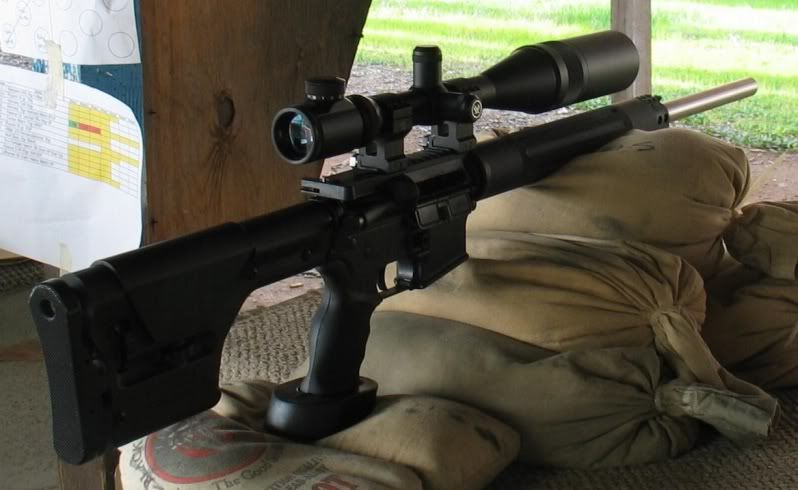
-Cody |
I shot 20 rounds of the Superformance Match 75gr 5.56 out of my SPR-type rifle. It has an 18" Superior Barrels Terebratus 416 nitrided barrel with a rifle-length gas port.

On an 83 degree day at 960ft ASL, my CED M2 chronograph recorded an average MV of 2903fps, which corrects to 2913fps at the muzzle. That is absolutely smoking out of an 18" barrel for a 75gr T2 projectile. I did not test for accuracy, but the recorded ES of 88 is a bit concerning. I know my chronograph was reading correctly, as it gave me the expected MV for a different factory load. I did not see any popped primers or other pressure signs on my brass. I use an H2 buffer as well as a Superior Shooting Systems flat wire action spring to delay unlocking as much as possible and smooth out the recoil impulse. For simple functioning, the combination of the SPR-type barrel and my buffer/action spring seem to work very well with the 75gr Superformance load. |
|
Quoted: I shot 20 rounds of the Superformance Match 75gr 5.56 out of my SPR-type rifle. It has an 18" Superior Barrels Terebratus 416 nitrided barrel with a rifle-length gas port. http://personal.visualitymedia.com/personal/ar15/556spr_900.jpg On an 83 degree day at 960ft ASL, my CED M2 chronograph recorded an average MV of 2903fps, which corrects to 2913fps at the muzzle. That is absolutely smoking out of an 18" barrel for a 75gr T2 projectile. I did not test for accuracy, but the recorded ES of 88 is a bit concerning. I know my chronograph was reading correctly, as it gave me the expected MV for a different factory load. I did not see any popped primers or other pressure signs on my brass. I use an H2 buffer as well as a Superior Shooting Systems flat wire action spring to delay unlocking as much as possible and smooth out the recoil impulse. For simple functioning, the combination of the SPR-type barrel and my buffer/action spring seem to work very well with the 75gr Superformance load. I should have chronoed mine but I don't do well with worrying getting it in the correct spot over the chrono and trying to shoot a good group at the same time. That also doesn't surprise me after the accuracy results seeing the ES that high. |
| I just picked up two boxes that I ordered from a California dealer, I was disappointed in what I received, I wrote to Hornady and complained as well. I have not shot them to give you info on accuracy or to compare to others. I can only state that the quality of the bullets I received were not equal to other products I have, including the tap in 6.8. My beef was with the primer seating in the cartrige sloppy in apperarence had the look of a poor reload rather than a factory load such as Hornady. |
AR Sponsor