


AR Sponsor


Joined:
Nov 2022
Posts:
967
EE: 0% (0)
 OH, USA
Posted: 8/1/2026 12:05:36 PM EDT
[Last Edit: Raidersgone][Edited]
| Has anyone experienced this using a heavier buffer or spring to tame down over gassed barrels? If so, at what round count? I previously asked on topic about felt recoil/ impulse on 16" using standard vs heavier buffers and springs on over gassed rifles. Standards give me 1-1:30 ejection pattern. With a H2 and standard spring I get 3:00 o'clock with 5.56 ammo and 4:00 with .223, All lockback and cycle without fail on this carbine length gas system. |

Joined:
Nov 2022
Posts:
969
EE: 0% (0)
OH, USA
|
Originally Posted By bluedog82: You’re asking if heavier buffers INCREASE wear, as opposed to a lighter buffer in the same rifle? Generally it’s the opposite, as the system is slowed down and the unlock is delayed. Yes, I've read many say going heavier buffer causes broken bolt lugs ect. from slamming the BCG home with more weight/force also with a heavier spring. Just wondering if guys have actually had breakage happen consistently or just throwing that out there in their own theory? |

|
Originally Posted By backbencher: You're probably accelerating wear on the upper; .mil M4s run H2 buffers. If H2 buffers noticeably accelerated bolt wear we'd probably see the .mil seeking a different solution, and I've not heard of a program to change buffers in the M4 platform. When did that happen? They used to run standard carbine buffers. I’m legitimately asking, not trying to be a smartass, just to be clear. |

|
Originally Posted By mace2364: When did that happen? They used to run standard carbine buffers. The H buffer was made standard with the adoption of the M4 and M4A1 in 1994. It replaced the standard carbine buffer during XM4 development. https://www.ar15.com/forums/ar-15/-ARCHIVED-THREAD-When-did-the-change-from-standard-to-H-buffer-occur-/118-634457/? |

|
Yes H2 buffer been standard for nearly 20 yrs for select fire guns using standard carbine recoil spring. I used to gage team guns every quarter in theater. Spring should be between 10 1/6”-11 1/4”. Shorter than that gets replaced. I may replace 1 out of 200-300 guns a year. Course they should have also gotten inspected before deployment. That’s on all M4A1 series in SOF with over gassed systems running suppressed and non, semi and auto. 10.3”-14.5” 5.56 guns. Don’t over think it, over gassed is for reliability in all environments with all 5.56 ammo. Rarely do I also see a broken bolt, maybe 1 in 2 yrs (out of 14 yrs down range fixing them) |
De Oppresso Liber
Iraq: 91,03,04,05,06,08,09,15,16,22-26'
Afghanistan: 09,10,11,14,17,-21'
Iraq: 91,03,04,05,06,08,09,15,16,22-26'
Afghanistan: 09,10,11,14,17,-21'
|
This is from a 2010 Colt maintenance manual: Ensure the proper buffer is used with the proper rifle. Buffers marked with "H" are used in all semi-auto only 5.56mm carbines and select fire M4 and Commando carbines. The "H2" buffer is only to be used with heavy barrel carbine barrels. |
|
Originally Posted By mcantu: This is from a 2010 Colt maintenance manual: Ensure the proper buffer is used with the proper rifle. Buffers marked with "H" are used in all semi-auto only 5.56mm carbines and select fire M4 and Commando carbines. The "H2" buffer is only to be used with heavy barrel carbine barrels. This is obviously not accurate and makes no sense, unless Colt is trying to say that all their HBARs have big gas ports. |
|
Originally Posted By mcantu: the two posters before me both said that the H2 came out with the M4A1 that has the heavy SOCOM profile barrel Originally Posted By mcantu: Originally Posted By bluedog82: This is obviously not accurate and makes no sense, unless Colt is trying to say that all their HBARs have big gas ports. The H2 was introduced to mitigate bolt bounce with the heavier profiled SOCOM barrels. Because the barrel has more mass, the carrier wants to bounce off the extension when it returns to battery. This is a similar phenomenon to striking a steel anvil with a ball peen hammer - the hammer bounces off. The heavier the profile of barrel, the more the carrier wants to bounce. This can cause hiccups in select fire guns as the bolt bounces out of battery at the same time that the hammer falls. Regarding gas port size, it's true that alot of people use H2 buffers to delay unlocking in over gassed guns but that was never its intended use (despite the fact that it does help). |
|
Originally Posted By bluedog82: This is obviously not accurate and makes no sense, unless Colt is trying to say that all their HBARs have big gas ports. It’s due to the weight of the barrel and capability of fully automatic fire. Former Colt employee confirms the above. 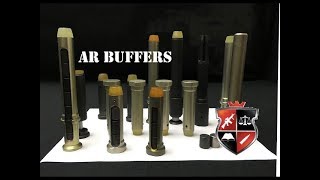 The Buffer - Theory and when to Use What Buffer |
|
Originally Posted By theguymontag: It’s due to the weight of the barrel and capability of fully automatic fire. Former Colt employee confirms the above.  https://www.youtube.com/watch?v=DYf-MLMODhA https://www.youtube.com/watch?v=DYf-MLMODhAFor the record, I’m not trying to say that Colt doesn’t state that, I’m just saying that in reality H2 buffers work in every barrel type I’ve tried them in without issue. |
|
A heavier buffer will not shorten your parts life. By delaying unlocking with greater mass, you reduced stress on the bolt by preventing an early unlock situation and you reduce stress all along the parts chain. The only possible exception MIGHT be the cam pin. But that is speculation on my part. A heavier spring will not delay unlocking by a perceptible amount. It will increase bolt closing speed and force. The only part it MIGHT help is the buffer tip and the roll pin holding it in by reducing the buffer speed impact at the rear of the receiver extension but I have only seen that area fail once on a rifle. |
|
Originally Posted By Bebop_941: The H2 was introduced to mitigate bolt bounce with the heavier profiled SOCOM barrels. Because the barrel has more mass, the carrier wants to bounce off the extension when it returns to battery. This is a similar phenomenon to striking a steel anvil with a ball peen hammer - the hammer bounces off. The heavier the profile of barrel, the more the carrier wants to bounce. This can cause hiccups in select fire guns as the bolt bounces out of battery at the same time that the hammer falls. Regarding gas port size, it's true that alot of people use H2 buffers to delay unlocking in over gassed guns but that was never its intended use (despite the fact that it does help). What you say is only partially true: The XM4s used a standard weight buffer and worked acceptably, but the H1 was considered optimum it terms of cost and tungsten consumption for production. This was done to reduce the cyclic rate. It was not the heavy barrel that was the reason for the H2 buffer, it was the return to full automatic fire. Initial batches of the M4A1 in 1987 were found to suffer from light primer strikes (bolt bounce) during automatic fire acceptance testing, these were the with initial barrel (light) profile. The issue was the H1 buffer did not prevent bolt bounce, but the three round burst masked the problem. During three round burst firing you only had a stoppage if the light strike occurred during the firing of all three rounds, if the bolt bounced on the fourth round chambering, you didn't have a stoppage. So, the observed frequency was only three-quarters the actual frequency, which was low enough to be deemed acceptable. However, when full automatic fire was reintroduced, testing was done with three to five second bursts, and the true frequency of the light strikes was observed. The heavy buffer was a low priority as at that time the M4A1 was not going to be general issue and there was not a problem in the M4. So, a number of (cheaper) alternatives were investigated, using the weights from the M231, tungsten powers, lead shot, hydraulic buffers and so on as they actually did not want to increase the buffer weight too much and further reduce the cyclic rate. Eventually, two tungsten and one steel weight was selected it only marginally impacted the cyclic rate, and was the simplest, most reliable fix. The heavy barrel being the cause and the heavy buffer being the solution myth is due to the fact that heavy barrel was first in the M4A1, the M4A1 (even with the light barrel) had the bolt bounce problem, and the heavy buffer came out about a year afterwards and the problem went away, so many people thought the heavy barrel was the cause and the heavy buffer the reaction to the cause. But in reality, the light barrel had the problem, too. |
Joined:
Nov 2022
Posts:
974
EE: 0% (0)
OH, USA
|
Originally Posted By Raidersgone: I have the LW pencil barrel. Are the barrel extensions the same for a socom profile, gov., LW, and HBAR? There are only two types of barrel extensions, those with 45 degree feed ramps ("rifle"), and those with 55 degree feed ramps ("carbine"). |

|
Originally Posted By lysanderxiii: What you say is only partially true: The XM4s used a standard weight buffer and worked acceptably, but the H1 was considered optimum it terms of cost and tungsten consumption for production. This was done to reduce the cyclic rate. It was not the heavy barrel that was the reason for the H2 buffer, it was the return to full automatic fire. Initial batches of the M4A1 in 1987 were found to suffer from light primer strikes (bolt bounce) during automatic fire acceptance testing, these were the with initial barrel (light) profile. The issue was the H1 buffer did not prevent bolt bounce, but the three round burst masked the problem. During three round burst firing you only had a stoppage if the light strike occurred during the firing of all three rounds, if the bolt bounced on the fourth round chambering, you didn't have a stoppage. So, the observed frequency was only three-quarters the actual frequency, which was low enough to be deemed acceptable. However, when full automatic fire was reintroduced, testing was done with three to five second bursts, and the true frequency of the light strikes was observed. The heavy buffer was a low priority as at that time the M4A1 was not going to be general issue and there was not a problem in the M4. So, a number of (cheaper) alternatives were investigated, using the weights from the M231, tungsten powers, lead shot, hydraulic buffers and so on as they actually did not want to increase the buffer weight too much and further reduce the cyclic rate. Eventually, two tungsten and one steel weight was selected it only marginally impacted the cyclic rate, and was the simplest, most reliable fix. The heavy barrel being the cause and the heavy buffer being the solution myth is due to the fact that heavy barrel was first in the M4A1, the M4A1 (even with the light barrel) had the bolt bounce problem, and the heavy buffer came out about a year afterwards and the problem went away, so many people thought the heavy barrel was the cause and the heavy buffer the reaction to the cause. But in reality, the light barrel had the problem, too. This just makes me wonder why the IAR with an even heavier barrel had an H3 buffer and why Colt's manual seems to elate the H through H3 to guns barrel weight. I thought the idea of the carrier getting more bounce back as the object it stuck gained mass made sense? There used to be some videos on youtube years back catching the cycle of the carrier and the bounce when tested with different buffers. I thought it seemed unusual that for that gun when it got t the H3 weight buffer it appeared to go slightly backwards and lose some of the reduction it had achieved with the H2 used before it. |
|
Originally Posted By j3_: This just makes me wonder why the IAR with an even heavier barrel had an H3 buffer and why Colt's manual seems to elate the H through H3 to guns barrel weight. I thought the idea of the carrier getting more bounce back as the object it stuck gained mass made sense? There used to be some videos on youtube years back catching the cycle of the carrier and the bounce when tested with different buffers. I thought it seemed unusual that for that gun when it got t the H3 weight buffer it appeared to go slightly backwards and lose some of the reduction it had achieved with the H2 used before it. To the first part, that's why I said what was stated was only partially true. Momentum will be conserved, so a more massive barrel will have a lower velocity after impact than a lighter one with the difference returned to the bolt carrier. However, the barrel mass is part of the rest of the rifle mass (minus the bolt carrier group), so the it's the entire system mass had gets the new velocity. And, a heavy barrel does not increase the overall mass by a high enough percentage to make large differences in bolt bounce (5 ounce difference in a 105 ounce system). To the second part, it could be that the three tungsten weights move forward during the deceleration of picking up a round from the magazine. Then they stay there rather that rebounding off the front face of the buffer interior to return to the rear. This would eliminate or sharply reduce the cascading impact effect that prevents bounce. If you want to see bad bolt bounce drop in a solid steel buffer. Those bounced so bad you couldn't get through a three round burst without a light primer strike. |
|
Originally Posted By lysanderxiii: What you say is only partially true: The XM4s used a standard weight buffer and worked acceptably, but the H1 was considered optimum it terms of cost and tungsten consumption for production. This was done to reduce the cyclic rate. It was not the heavy barrel that was the reason for the H2 buffer, it was the return to full automatic fire. Originally Posted By lysanderxiii: What you say is only partially true: The XM4s used a standard weight buffer and worked acceptably, but the H1 was considered optimum it terms of cost and tungsten consumption for production. This was done to reduce the cyclic rate. It was not the heavy barrel that was the reason for the H2 buffer, it was the return to full automatic fire. I always thought it was a combination of both. Originally Posted By lysanderxiii: Initial batches of the M4A1 in 1987 were found to suffer from light primer strikes (bolt bounce) during automatic fire acceptance testing, these were the with initial barrel (light) profile. Did all of the Colt carbines that precided the M4 and used standard buffers suffer a from the same issue? Or, was it a new issue due to a unique change in the M4 itself? Originally Posted By lysanderxiii: The issue was the H1 buffer did not prevent bolt bounce, but the three round burst masked the problem. During three round burst firing you only had a stoppage if the light strike occurred during the firing of all three rounds, if the bolt bounced on the fourth round chambering, you didn't have a stoppage. So, the observed frequency was only three-quarters the actual frequency, which was low enough to be deemed acceptable. Makes sense. Originally Posted By lysanderxiii: However, when full automatic fire was reintroduced, testing was done with three to five second bursts, and the true frequency of the light strikes was observed. The heavy buffer was a low priority as at that time the M4A1 was not going to be general issue and there was not a problem in the M4. So, a number of (cheaper) alternatives were investigated, using the weights from the M231, tungsten powers, lead shot, hydraulic buffers and so on as they actually did not want to increase the buffer weight too much and further reduce the cyclic rate. Eventually, two tungsten and one steel weight was selected it only marginally impacted the cyclic rate, and was the simplest, most reliable fix. The heavy barrel being the cause and the heavy buffer being the solution myth is due to the fact that heavy barrel was first in the M4A1, the M4A1 (even with the light barrel) had the bolt bounce problem, and the heavy buffer came out about a year afterwards and the problem went away, so many people thought the heavy barrel was the cause and the heavy buffer the reaction to the cause. But in reality, the light barrel had the problem, too. I'm curious what was different about the M4 in full auto that created this problem. Was it aways a problem dating back to the first Colt Carbines and just not well documented? Interesting post - the mass explaination always made sense and it's what the video above cited so I figured it was true. You've always been knowledgeable in what you say so I'm not doubting what you posted. I am curious if you can shed some light on to why this became a problem when the M4s returned to full auto when several full auto carbines before the M4s operated with standard weight buffers - Thanks. |
|
Originally Posted By Bebop_941: I always thought it was a combination of both. Did all of the Colt carbines that precided the M4 and used standard buffers suffer a from the same issue? Or, was it a new issue due to a unique change in the M4 itself? Makes sense. I'm curious what was different about the M4 in full auto that created this problem. Was it aways a problem dating back to the first Colt Carbines and just not well documented? Interesting post - the mass explaination always made sense and it's what the video above cited so I figured it was true. You've always been knowledgeable in what you say so I'm not doubting what you posted. I am curious if you can shed some light on to why this became a problem when the M4s returned to full auto when several full auto carbines before the M4s operated with standard weight buffers - Thanks. The XM177E1 and E2 were never rigorously tested. The only serious test of the XM177/CAR was the Small Arms Weapon System (SAWS) Test which only classified malfunctions into three categories, those that could be fixed by the operator in less than 10 seconds, those that could be fixed by the operator, but took longer that 10 seconds to rectify, and those that required the weapon to go to an armorer. If the number of light strikes was high, but the overall number of less than 10 second stoppages was low, no one would have noticed. Then a thousand or so were sent to Vietnam and field trialed. But, detailed field reliability data was not gathered, mainly it was for opinions of its usability and likability, so you don't know what you don't know. The other things is the light strike problem was not every magazine. With the M4A1 it was not seen with every magazine, maybe once every fifth or sixth magazine you would see one stoppage. Something that definitely raises a flag during acceptance testing, where you are shooting a hundred or so carbines a day, with some undergoing a 6,000 round endurance test. This puts a serious crimp in production as the batch fails acceptance, you have to go back through production records, rule out manufacturing errors, and eventually retest the batch or ask for a waiver. In the field, if you are shooting full auto in combat you just figure it was a bad round, cuss a bit, rack the bolt, and go back to shooting. Besides, most shooting is done in semi-auto, where bolt bounce is a non-issue. After 1972, the Army dropped the XM177A2 and stopped all testing, so, Colt no longer had to report how reliable the short barreled AR-15 was. They probably knew it was marginal, but just hoped that it was good enough when the M4 was being developed. Like I said the heavy buffer and the heavy barrel came out at the same time, in fact, the conversion kits included both, so it is a natural assumption to make, that the two were related, but, the reality is they were two parallel development tracks stemming from two different issues. |
Joined:
Nov 2022
Posts:
982
EE: 0% (0)
OH, USA
|
Originally Posted By lysanderxiii: The XM177E1 and E2 were never rigorously tested. The only serious test of the XM177/CAR was the Small Arms Weapon System (SAWS) Test which only classified malfunctions into three categories, those that could be fixed by the operator in less than 10 seconds, those that could be fixed by the operator, but took longer that 10 seconds to rectify, and those that required the weapon to go to an armorer. If the number of light strikes was high, but the overall number of less than 10 second stoppages was low, no one would have noticed. Then a thousand or so were sent to Vietnam and field trialed. But, detailed field reliability data was not gathered, mainly it was for opinions of its usability and likability, so you don't know what you don't know. The other things is the light strike problem was not every magazine. With the M4A1 it was not seen with every magazine, maybe once every fifth or sixth magazine you would see one stoppage. Something that definitely raises a flag during acceptance testing, where you are shooting a hundred or so carbines a day, with some undergoing a 6,000 round endurance test. This puts a serious crimp in production as the batch fails acceptance, you have to go back through production records, rule out manufacturing errors, and eventually retest the batch or ask for a waiver. In the field, if you are shooting full auto in combat you just figure it was a bad round, cuss a bit, rack the bolt, and go back to shooting. Besides, most shooting is done in semi-auto, where bolt bounce is a non-issue. After 1972, the Army dropped the XM177A2 and stopped all testing, so, Colt no longer had to report how reliable the short barreled AR-15 was. They probably knew it was marginal, but just hoped that it was good enough when the M4 was being developed. Like I said the heavy buffer and the heavy barrel came out at the same time, in fact, the conversion kits included both, so it is a natural assumption to make, that the two were related, but, the reality is they were two parallel development tracks stemming from two different issues. Thank you for the detailed response and the time it took to post it. Can we assume the same was true with the transitional carbines like the 653, 723 and 733? |
|
Originally Posted By Bebop_941: Thank you for the detailed response and the time it took to post it. Can we assume the same was true with the transitional carbines like the 653, 723 and 733? I know of no rigorous testing of any AR-15 variant after the M16 was accepted until the M16A1E1. Besides, who would have had the pockets deep enough to pay for any testing, or the desire, certainly not Colt. Our Army set a pretty high bar for reliability, most places just take the contractor word, or their testing, which is basically the same thing. |
AR Sponsor
Join the Community
Your next conversation starts here.
Create your free account to join discussions, share your experience, save topics, and connect with the AR15.COM community.
- Join discussions
- Follow topics and replies
- Connect with fellow enthusiasts
Already a member? Sign in
Stay informed by subscribing to our Newsletter