


AR Sponsor


Posted: 10/23/2024 5:36:47 PM EDT
[Last Edit: LewisMeriwether][Edited]
| Recently purchased an ultrasonic cleaner, hoping to get some thoughts on best practices, solvents, using bags, parts not to clean in the tank, etc. Bought a leo trade in detachable carry handle for a basic build would like throw in the tank to remove the oils / greases on it but concerned about it not drying fully, maybe am overthinking. Appreciate it |

|
Simple Green works well, but make sure you get the variant specifically for ultrasonic cleaners; the regular formulation will quickly corrode aluminum. Ultrasonic cleaners can remove finishes if there is a preexisting surface flaw. Really, don't leave parts in there forever and you'll be fine. |
"What is socialism? The most difficult and tortuous way to progress from capitalism to capitalism." -Stated at an intel conference, East Berlin, Oct. 1988
"Every election is a sort of advance auction sale of stolen goods." -H.L. Mencken
"Every election is a sort of advance auction sale of stolen goods." -H.L. Mencken
|
As a watchmaker-gunsmith we got into ultrasonics early on. Here's a post I did years ago............. The good points: They really clean. US gets into even the tiniest hole or crevice and makes the parts surgically clean. They usually clean FAST. Drop a dirty part in, and the dirt actually "boils" off in a cloud. Some fouling may take longer. They DEEP clean, getting crud you normally don't even see and gets into areas that normally you can't get to with other methods. They're especially good on harder fouling. (Ultrasonics work better on hard dirt). You don't have to disassemble things. Ultrasonics are used by watchmakers to avoid having to disassemble some small components. Firearms parts are huge by comparison. They work with a variety of solutions. Water with Dawn detergent works on many types of dirt, so you often don't have to use a volatile solvent. You can buy various cleaning solutions based on what you're cleaning these days now that reloading companies are selling US cleaners and various solutions. The solution is heated up by the ultrasonic action. Warm solution cleans even better. Many tanks have a built-in heaters also. Let the unit run a few minutes to drive out air and allow the solution to start heating. You can also pre-heat the solution by putting the container of whatever you're using in hot water to warm it. You can put an inch of water in the bottom and use small glass or plastic cups to hold solvent and small parts. The ultrasonic waves are transmitted by the water in the bottom through the beakers or jars. This allows using even highly flammable solvents in small amounts. Putting parts in strong plastic bags works, but be careful of the bag being attacked by a solvent. You can use the tank for many cleaning jobs, Paint brushes, dirty watch bands, electric razor heads, eyeglasses, SOME of your wife's jewelry (careful of stones and inlays), car parts, most anything that you can fit into the tank and won't be harmed by the solution or US waves will clean up surgically clean. The bad: KEEP YOUR FINGERS OUT OF THE TANK. Ultrasonics and bone marrow don't play well together. This isn't something that happens instantly, it's over time. Don't start. Ultrasonics don't work on copper fouling and not well on leading, so you still need to use standard brushes, patches, and bore solvent to clean bores and chambers. Expense. The larger tanks are COSTLY. However, if you want to clean a stripped pistol or small parts, one of the smaller $150.00 range tanks will work fine. You can put a portion of a frame or slide in the tank at a time. After cleaning it, turn it over and clean the other half. Any solvent that will attack plastic or gun finishes, will attack it FASTER in ultrasonics. As example the strong soap cleaners like the original Simply Green will literally EAT aluminum and the anodized coating and will do so faster in a US cleaner. You've got to be careful to apply a THOROUGH coat of anti-rust lube after cleaning. Ultrasonics remove ALL grease and lube, leaving the part absolutely bare, including in tiny holes and crevices that ordinarily cleaning never touches. They don't work quite as well on soft gummy grease as harder dirt. You can speed things up by pulling parts out and scrubbing with a brush. They're electronic and heat the solvent. You have to be careful with flammables. NEVER walk off and leave a unit running. Advice: It's seldom needed to run something more then 20 minutes unless it's something really dirty and the dirt is really resistant. Always start off with warm solution, since cold solution doesn't work as well. If possible buy a basket that holds parts off the bottom or make up wire hangers. Ultrasonics work better when the parts are suspended in the solution instead of laying on the bottom of the tank. A tank cover is nice to hold down fumes. Some larger tanks have a built in drain. BE CAREFUL. Some solvents may attack these and you can wind up with a floor covered in hot solvent. This is one reason NEVER to walk away and leave a US cleaner unattended. NEVER run the unit when the tank is dry even for a few seconds, it'll burn out. Be careful what cleaning solution you use. You can pull the item out and find finish or plastic parts GONE. Be careful with Tritium sights, and sights with any kind of inserts or dots. Many can be damaged or removed in the tank. Painted sight or safety markings will eventually be removed by even water, and many solvents will remove the paint almost instantly. The small tanks sold in discount stores for cleaning false teeth and jewelry really don't work too well, and most of them aren't even real ultrasonic units. One gun cleaner solution that works well is Cylinder & Slide Shop's "Dunk-It". This is a cleaning solvent mixed with a lubricant. The intent is to soak the gun in the bucket, but it can be used in a US cleaner. This cleans the gun and leaves a lubricant in all areas to prevent rust and lubricate. However, I'd still use a dedicated lubricant in key areas. The down side is the cost. Ordinary cheap paint thinner works well as does kerosene, but NEVER walk away from it because these are flammable. Running a gun in a rinse is pretty much a waste of time. If you use a water based cleaner you can rinse the gun by holding it under a faucet running hot water, or swishing it in a sink of hot water. The heat will allow the metal to dry fast. With solvents, rinsing is usually not needed unless the solvent is really dirty. Then dipping it in clean solvent is usually enough. To dry parts use a hair dryer....NOTE: Hair dryer, NOT oven, torch, or heat gun these can over heat. Shake the parts off or blow off with compressed air to remove the excess and prevent a fire with solvents before using the hair dryer. You MUST get a rust preventing coat of lube into all areas to prevent rusting. Most liquid lubes like CLP Breakfree will creep and spread into most areas given time. You can also use a fine spray like Rem-Oil. I've used CLP with a cheap air brush to get lube into tight areas, BUT... don't breath the fumes, you won't like it. Time. The time to fill a tank, run a cycle, empty and clean the tank may take more time then just putting the parts in a sink and using hot water and toothbrush to clean. The US cleaner excels at occasional deep cleaning, especially of guns not intended to be fully disassembled by the owner. |
|
Yes simple green is good. The specific one is the simple green HD as it is safe for aluminum. The green one at stores are not aluminum safe. The simple green hd one is purple in color and comes in a 1 gallon jug. I don’t know specific ratio but I just put water and pour a good amount of it in there. Works like a charm. Wash with hot water. However I find just using hot water and dawn dish soap is good enough. I also use the green scour pads and cut it into squares to clean the bcg with a pick. |
|
Originally Posted By dfariswheel: As a watchmaker-gunsmith we got into ultrasonics early on. Here's a post I did years ago............. The good points: They really clean. US gets into even the tiniest hole or crevice and makes the parts surgically clean. They usually clean FAST. Drop a dirty part in, and the dirt actually "boils" off in a cloud. Some fouling may take longer. .... I still can't find that 'Like' button. Bravsisimo, good sir. 
|
"What is socialism? The most difficult and tortuous way to progress from capitalism to capitalism." -Stated at an intel conference, East Berlin, Oct. 1988
"Every election is a sort of advance auction sale of stolen goods." -H.L. Mencken
"Every election is a sort of advance auction sale of stolen goods." -H.L. Mencken
|
Originally Posted By dfariswheel: As a watchmaker-gunsmith we got into ultrasonics early on. Here's a post I did years ago............. . @dfariswheel CHEERS! Exactly what I was hoping to learn, thank you sir. Going to give the carry handle a whirl in the Us and dry off w hair dryer and apply as directed. |
|
15-30 minutes is all I need, and most of the advice floating around indicates the cheap Chinese machines and the expensive American machines all have similar failure points. I don't even use the heating function as it heats up normally through friction/vibration. I learned to put the cleaning solution and parts into a freezer zip-loc, then fill the ultrasonic tank with water with the bag floating/sitting in that. It makes cleanup easier. Simple Green Extreme is what I normally use (the aluminum safe stuff). I've used Pine Sol before but you have to watch out as it will remove the black oxide from nitrided parts and kind of dulls the anodizing colors on aluminum parts. I have yet to see any erosion on my aluminum baffles used in an ultrasonic but I don't care too much for this can so its my test bed. I only really use it for complex parts - meaning stuff with lots of passages, nooks, crannies, and stuff I don't want to spend hours trying to clean manually. |

|
Originally Posted By metroplex: 15-30 minutes is all I need, and most of the advice floating around indicates the cheap Chinese machines and the expensive American machines all have similar failure points. I don't even use the heating function as it heats up normally through friction/vibration. I learned to put the cleaning solution and parts into a freezer zip-loc, then fill the ultrasonic tank with water with the bag floating/sitting in that. It makes cleanup easier. Simple Green Extreme is what I normally use (the aluminum safe stuff). I've used Pine Sol before but you have to watch out as it will remove the black oxide from nitrided parts and kind of dulls the anodizing colors on aluminum parts. I have yet to see any erosion on my aluminum baffles used in an ultrasonic but I don't care too much for this can so its my test bed. I only really use it for complex parts - meaning stuff with lots of passages, nooks, crannies, and stuff I don't want to spend hours trying to clean manually. This. I put the parts in a zip-loc filled with simple green extreme, then fill the tank with hot water. Typically 10-15 minutes is fine for most things, rimfire suppressor baffles might need another cycle. Dispose of the used simple green as you would used motor oil. |
Lead, follow, or get the hell out of the way!
|
Use a Zip-Loc freezer storage bag to hold your parts and cleaning solution. Pour water in the Ultrasonic tank with the freezer bag in place (to account for displacement). Run for 30 minutes. No heating is needed. I find the friction of the ultrasonic vibrations creates enough heat, but like others have suggested you can pour hot water in the tank as well or use hot water in the storage bag. I have stopped using the Ultrasonic unless it is for suppressor baffles or for special cleaning situations. One situation was the HK SP5 trigger pack. When it was brand new, they used that thicker lube and there was debris from testing firing and grit/gunk. I tried everything i could to clean it, but just decided to throw it in the Ultrasonic and relube afterwards. I saw how much stuff there was that came off. It was now grit free and clean for fresh CLP/RemOil. |

| Don’t do what I foolishly did and use the generic degreaser solution from Sam’s in the ultrasonic and fuck up an A2 upper. 7 minutes was way too long. Came back and the anodizing was almost gone. I was so pissed I forgot to turn the heating element off that it evaporated off and left the most awful crust in the tank. So that cost me an A2 upper and an ultrasonic. |
|
Originally Posted By LewisMeriwether: Recently purchased an ultrasonic cleaner, hoping to get some thoughts on best practices, solvents, using bags, parts not to clean in the tank, etc. Bought a leo trade in detachable carry handle for a basic build would like throw in the tank to remove the oils / greases on it but concerned about it not drying fully, maybe am overthinking. Appreciate it It's been said that Ultrasonic machines can eat away at any gasket compound material beneath a carrier's gas key, if gasket material was used. |

|
Originally Posted By NAM: How long do they normally take to heat up? I purchased a Chinese umbrella unit from Amazon, 15L. Has 400w for heat, but after 15 minutes, it's only up to 27C (started at 15C). 400 watts is hardly anything. The highest electric heaters you can buy from Amazon are 1,500 watts, and they're not too powerful. You can sit next to one, on high, and be not at risk. Maybe try boiling your own water, then adding it to the US. |
|
Ultrasonic tanks will get fairly warm but not really hot. In watchmakers school the jewelry school had a big one running 8 hours a day. It was uncomfortable to stick your hands in, but you weren't burned. People just insisted on sticking their hands in the running tank even after being warned of the dangers. Best option is to fill with warm solution. I don't think I'd go so far as to boil water. I'd just use hot tap water, or put the can of solution in a sink of hot water to warm it. |


|
Great thread. I ended up with a dentures US cleaner for free (and don't have dentures), so figure I'll give it a go for small things like AR bolts and other small items. Doesn't look like pistol slides or even BCG will fit, but other stuff might. From this thread, warm water with a little dawn detergent and 20 minutes, and should be good. I'll give it a shot! 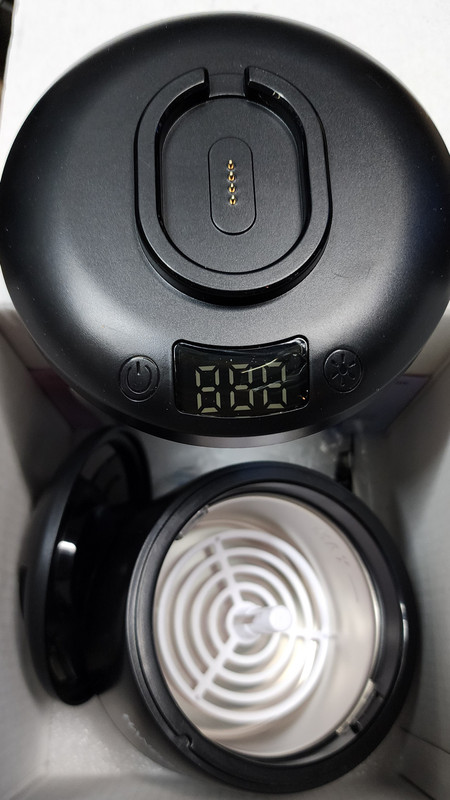
|
|
Originally Posted By dfariswheel: A dentures cleaner usually doesn't have much power, and may not even be a real ultrasonic cleaner. These are often sold as "vibrasonic" cleaners. Ran an AR bolt and parts in it. It did pretty good, and knocked the baked on carbon off the bolt tail pretty well. It's not all sparkly, but it definitely did something, especially to the hard-coked on stuff. Doesn't appear to have harmed anything. I do wonder - do people fully pull apart their bolt for this? The extractor is easy enough to remove, so I did, but I left the ejector in there. Bad idea? I imagine it now has water in there - now that I think about it. How do most people do that with AR15 bolts in US cleaners? Pictures aren't that great, but here they are all the same. It's just a cheap Amazon denture unit I got basically for free. 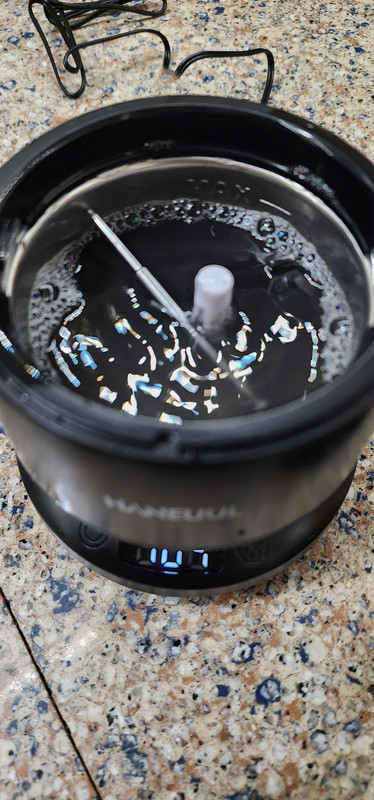 It's small, so only useful for small stuff like bolts, though I guess you can stick the end of a pistol barrel in it, I suppose. Is that a good idea, should one do that to clear out the chamber better? I just ran with handsoap and warm water. It was cool when I turned it on, you could see stuff dispersing off the bolt right away, which I thought was neat looking visually. When done, I rinsed in hot tap water and set on a paper towel, for now. Not sure if that's the right way to do it, but there we go. Anyway, here are the results. Picture doesn't really do it justice. This is a Mk18 bolt that has seen a hard life, but still runs. Go Go PSA. 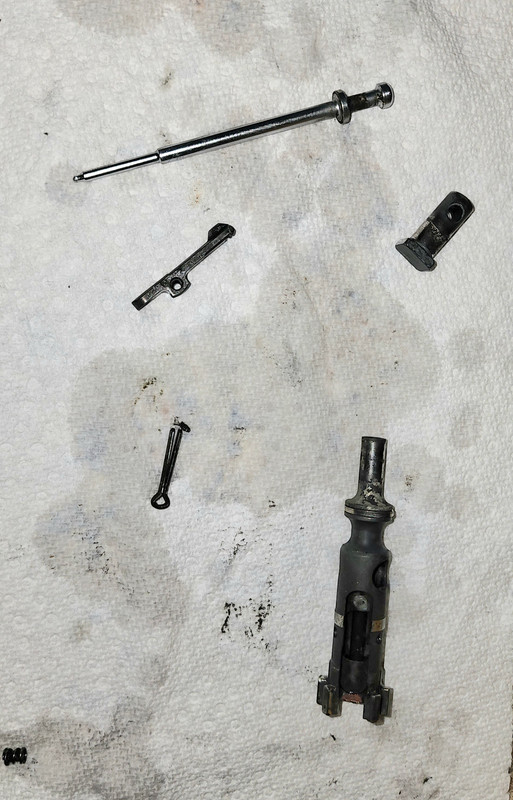 |
|
Ultrasonics get ALL lube out so the parts will be free of any rust prevention or lubrication. In the case of the ejector, I'd be worried about cleaner left in allowing rust and wear. Personally I'd clean the bolt by hand to prevent this, or disassemble the ejector to get it dry and lubricated. There is a hole in the side of the bolt into the ejector tunnel, but I'm not real sure about how well you could dry and lube the parts. |
|
Originally Posted By dfariswheel: Ultrasonics get ALL lube out so the parts will be free of any rust prevention or lubrication. In the case of the ejector, I'd be worried about cleaner left in allowing rust and wear. Personally I'd clean the bolt by hand to prevent this, or disassemble the ejector to get it dry and lubricated. There is a hole in the side of the bolt into the ejector tunnel, but I'm not real sure about how well you could dry and lube the parts. I did a little poking around. and apparently people jist toss the whole bolt in, and blow it out with air and call it good. I guess. I wonder about that, how does water not get trapped? But oh well.  Harbor Freight ultrasonic cleaner, AR 15 bolt |
AR Sponsor