


Armory Sponsor


Posted: 9/13/2026 1:02:49 PM EDT
|
Is comfortable load distribution a matter or foam thickness, foam density, anatomical mapping, surface area (cm² / in²), or a combination? Other factors? An anonymous poster in a Facebook group offered this link https://www.engineeredmaterialsinc.com/articles/understanding-foam-density-how-affects-application? 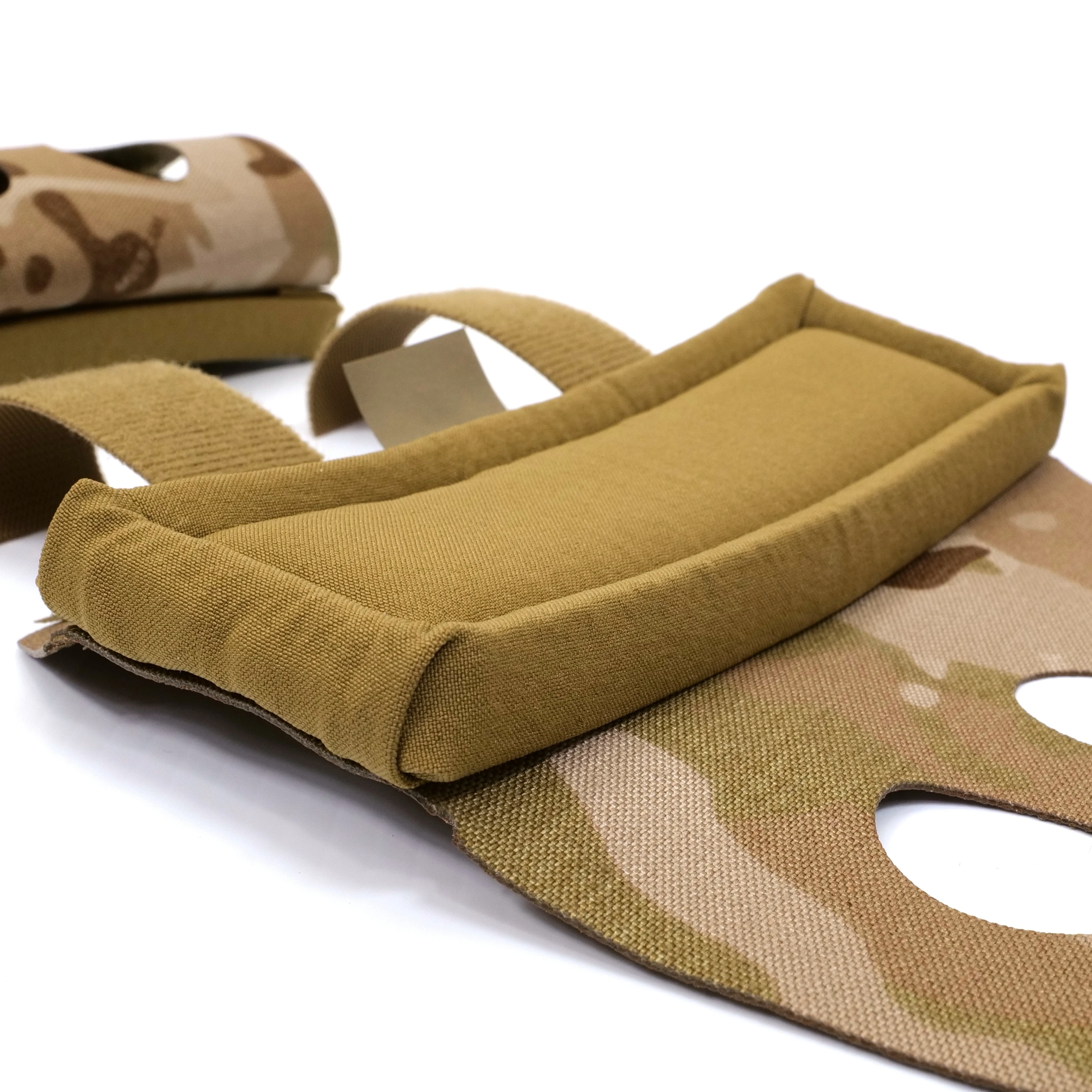
|

|
Originally Posted By Whiskey24: Is comfortable load distribution a matter or foam thickness, foam density, anatomical mapping, surface area (cm² / in²), or a combination? Other factors? An anonymous poster in a Facebook group offered this link https://www.engineeredmaterialsinc.com/articles/understanding-foam-density-how-affects-application? https://cdn11.bigcommerce.com/s-v9bg0y5o/images/stencil/original/image-manager/shoulder-pad-08-mc-ari-04.1.jpg I'm not by any means an expert in this subject, but I'm an intelligent guy, and spent alot of time backpacking with everything from a stock ALICE pack to the latest and greatest civilian packs. I've tried a bunch of different suspension systems. It's more than just the things you mentioned above, though all those things come into play. Load distribution has to take into effect the entire system, not just shoulder straps or the belt. It's how the pack (or LBE if you are talking about that, in some ways they are inter-connected) rides - how it distributes weight, how it moves (or doesn't move), and how it distributes the load across a wide range of the connection points to the human body....and that it distributes the load to the RIGHT places on the human body. Everything you said above is part of what works, but it isn't the only bit. The systems in the pack have alot to play too. You can put the best shoulder straps on an ALICE frame, and it will only do so much, especially if you don't have a good belt system. But even with a good belt system, you are limited - the straps are attached pretty low and you usually don't have any adjustment on the straps via load lifters. The better internal frame packs these days - and a few of the best external frame packs - have special systems in them that distribute the load and stop alot of the pack sway. But that's a whole different subject. I assume from your post that you are mostly talking about shoulder straps. Alot of it is the things you mentioned. But one of the most popular suspensions systems for packs these days use basically no padding (Hill People Gear) and they are popular until you get to the 60-80+ pound pack weights - at that point people tend to start switching back to the oldschool, super thick dual-density foam shoulder straps (Mystery Ranch as an example) So it's not just the padding. Foam thickness is important at heavier weights or for sub-par strap applications - ie, ALICE straps. All the foam does though is stop the pack straps from cutting into your shoulders from the weight. If you have designed the pack straps well enough (again, up to a certain weight - at that point you need the foam) you can get away with less or even no padding. But designing the pack straps right also means that the whole pack's suspension system needs to have been designed as a whole, so that the straps work correctly. IE, the correct strap attachment height, preferably adjustable. Load lifters, tied into the pack's suspension, to distribute the load to the hips via the belt. etc. There's only so much you can do via anatomical mapping and surface area - both of which are important - to make straps work right. At that point you need to either add foam or make the straps work with the pack better. If you are tied to the ALICE frame, you are going to be limited as to what you can do with making the straps work in conjunction with the pack better. This is why (along with the extra-heavy weights the guys who carry military rucks end up having to carry) alot of the ALICE pack straps have thick foam. Same with the packs guys use to pack out meat while hunting. Both groups carry upwards and sometimes over 100 pounds in their rucks. There's only so much you can do without adding more foam at that point. Anatomical mapping and surface area also only go so far, because the pack straps only actually distribute load to a small part of your shoulders / upper chest. The important part of anatomical mapping is to not drop any of the load on certain parts of your bone structure, your neck, nerve points, etc. - and to then get the pack straps out of the way - ie, wrapping around and away from your chest. One more point - dual density foam is popular with the higher end pack straps. The lower density stuff is more comfortably, but will 'bottom out' under load. So they mix low and high density foam, laminated together. I know one shoulder strap maker is experimenting with a completely different substance - not foam - for pack strap padding. It works alot better. But it's insanely expensive now. |
|
All the heavy loads I ever carried were with issue gear, for the most part, but to answer the question, it's definately a combination of all those things. Being that I carried issue gear; adjustment for comfort was key, and it's super helpful to have someone who knows how to adjust your shit, Being comfy at the start does not mean you will be comfy 5 klicks in. It's all remarkably individualistic We are all different shapes. I like most of my load on my shoulders, some like most the load on the hips, some like an even distribution. Good luck in your journey, but do remember, there will always be some discomfort as the human carcass is just not designed for load carrying. |
|
Originally Posted By wsix: Being that I carried issue gear; adjustment for comfort was key, and it's super helpful to have someone who knows how to adjust your shit, Originally Posted By wsix: Being that I carried issue gear; adjustment for comfort was key, and it's super helpful to have someone who knows how to adjust your shit, Yup, this is important. This is one of the limitations to the ALICE frame too. Originally Posted By wsix:Being comfy at the start does not mean you will be comfy 5 klicks in. Load Lifter Straps help fix this alot. |
|
Originally Posted By wsix: What do you mean, like a 6 pt harness compared to a 4? No. Load lifter straps on the shoulder harness of a backpack. They aren't used on belt kits. The top strap in this picture. Going from the harness / strap to the pack - ABOVE the shoulder. This pulls weight off the TOP of the shoulder, and instead distributes it more to the FRONT of the shoulder / chest, allowing most of the weight of the pack to sit on the belt, using the shoulder straps to mostly hold the pack in place, not hold the weight of the pack. 
|

|
Thick pads have proven more of a PITA than helping with load distribution. I much prefer a good balance of ergonomic design, width and preferably thinner construction for load distribution. Thick pads are fine as a stand-alone, but once you add a pack, sling, etc., that thickness gets exacerbated and cumbersome. ROCK6 |
"The tree of liberty must be refreshed from time to time with the blood of patriots and tyrants" - Thomas Jefferson
|
I know you're suppose to carry the weight on your hips (as much as possible) but that is not comfortable or sustainable (over many miles) for me. My weight is mostly on my shoulders so I've experimented with a lot of different shoulder straps, add-on pads, etc. In the end, a properly fitted pack is more important than the strap padding. Also, load distribution INSIDE the pack is a huge deal. Example: I use to complete a lot of GORUCK events with your standard 45# plate against my back but then a rather overloaded IFAK / TRAUMA kit on the outside of the RUCKER pack (MOLLE field attachment). The total weight of the IFAK was around 4# 9oz. Not much. However, after switching to a Kifaru Steelhead chest rig (attached to RUCKER shoulder straps with clips) I was able to add about 5# of other gear (namely a handgun, spare mags, knife, batteries, iPhone, etc + the contents of the IFAK) yielding a total weight of slightly more than 10#. Even though I doubled the extraneous load it is FAR MORE COMFORTABLE. TLDR: fit your ruck properly, carry heavy loads high and tight to your body. |
|
Originally Posted By marnsdorff: No. Load lifter straps on the shoulder harness of a backpack. They aren't used on belt kits. The top strap in this picture. Going from the harness / strap to the pack - ABOVE the shoulder. This pulls weight off the TOP of the shoulder, and instead distributes it more to the FRONT of the shoulder / chest, allowing most of the weight of the pack to sit on the belt, using the shoulder straps to mostly hold the pack in place, not hold the weight of the pack. https://cdn.shopify.com/s/files/1/0024/4799/9037/files/Pack_Fitting_load-lifter-correct3.jpg Oh, ok, all my packs are mil packs, and older ones at that. |
|
Originally Posted By GaryT1776: I know you're suppose to carry the weight on your hips (as much as possible) but that is not comfortable or sustainable (over many miles) for me. My weight is mostly on my shoulders so I've experimented with a lot of different shoulder straps, add-on pads, etc. Originally Posted By GaryT1776: I know you're suppose to carry the weight on your hips (as much as possible) but that is not comfortable or sustainable (over many miles) for me. My weight is mostly on my shoulders so I've experimented with a lot of different shoulder straps, add-on pads, etc. That is so damn counter-intuitive, but I also grew up doing a shit ton of "ruck runs" and we never used the hip belts. Fast foward to my 40's where we did a lot of distance backpacking, and my shoulder straps are just used to keep my pack upright and I could wear my pack (25-35 pounds trail weight) literally all day with zero issues. Originally Posted By GaryT1776: In the end, a properly fitted pack is more important than the strap padding. Also, load distribution INSIDE the pack is a huge deal. I know fitment gets addressed, but you're spot on with load distribution. Want to be miserable or tempt a mechanical injury? Just toss shit willy-nilly in your pack, avoid having your pack "secure and tight", and hit the road or trail...let me know how that goes  ROCK6 |
"The tree of liberty must be refreshed from time to time with the blood of patriots and tyrants" - Thomas Jefferson
|
Originally Posted By ROCK6: That is so damn counter-intuitive, but I also grew up doing a shit ton of "ruck runs" and we never used the hip belts. Fast foward to my 40's where we did a lot of distance backpacking, and my shoulder straps are just used to keep my pack upright and I could wear my pack (25-35 pounds trail weight) literally all day with zero issues. I know fitment gets addressed, but you're spot on with load distribution. Want to be miserable or tempt a mechanical injury? Just toss shit willy-nilly in your pack, avoid having your pack "secure and tight", and hit the road or trail...let me know how that goes ROCK6 I remember the strapping of 2 qt canteens to the outside of alice packs. Absolutely the worst practice ever. |
Armory Sponsor