


|
Quoted: Kragh has published one case of a tourniquet on an upper extremity for 16 hours. There was a limb lost due to tourniquet application in Africa after it was placed high and tight and left on for eight hours. Seen by multiple physicians, also, there was no arterial injury.  Also, that's UE. Seen TQs on LE for far longer than that. Also, that's UE. Seen TQs on LE for far longer than that.Also check out Tinitally, Cho, or Johannsen for Traumology's POV on prolonged TQ use. And where is Africa in the list of conflicts I provided? Oh wait... |

|
Quoted: Pardon me for being off by two hours. Been a long day training medics, and rum only helps to lubricate the dumb part of my brain. Also, that's UE. Seen TQs on LE for far longer than thatAnd where is Africa in the list of conflicts I provided? Oh wait... I was simply offering an example of a bad outcome for a tourniquet that wasn’t needed. It’s unfortunate that it happened. I’m sure you’ll agree, the implementation has been extremely rapid. The skill retention is poor to moderate, despite most are willing to help. |
|
Quoted: Kragh has published one case of a tourniquet on an upper extremity for 16 hours. There was a limb lost due to tourniquet application in Africa after it was placed high and tight and left on for eight hours. Seen by multiple physicians, also, there was no arterial injury. |
|
Quoted: There is no reason to be so emotional for a simple discussion about tourniquets. We can discuss this in a civil manner. Can you tell me more about these lower extremity tourniquets in the prehospital setting? I’m not sure I’m tracking. Are you saying a lower extremity tourniquet can be placed how how long? Is this prehospital? I was simply offering an example of a bad outcome for a tourniquet that wasn’t needed. It’s unfortunate that it happened. I’m sure you’ll agree, the implementation has been extremely rapid. The skill retention is poor to moderate, despite most are willing to help. As for the LE TQ, a TQ placed on a patient that I treated in AFG was in place for around 19 hours before being received at the Role 2, where the Illiac artery and vein were tied off before transfer to Role 3 with very minimal tissue necrosis due to lack of perfusion. The PT would have made a great recovery if it weren't for secondary bacterial and fungal infections that ultimately resulted in a left hemi-pelvectomy. The RLE had TQ placed for the same time and was later converted to a TTK amputation from a BTK for sake of a flap. Aside from being a needy little shit, the PT was ultimately DC'd to his family, fully recovered aside from the obvious disability, of which I'm sure he was compensated for. |
| This thread made me finally create an account. I haven't read all 9 pages but the RATS is garbage. Former 68W, one deployment as a line medic and one as a flight medic and seen dozens of lives saved with CATs and a few with SOFTT. I prefer CAT only due to familiarity but the SOFTT seems to work just as well the few times I applied one. |
|
Quoted: This is my way, which is a way, not the way. If TQs are on the outside of my body armor, I try to switch them out every 6 months or so due to UV exposure and abrasion. Would they still work if i switched em out every year? Sure, but it's a lifesaving piece of equipment, so it gives me peace of mind. If they're in one of my bags, they get replaced when they are used. |
|
Quoted: Yep. Multiple failure points. |
|
Quoted:
After Doc Hurley's last post I did some googling. My current SGM and commander were voting members of the 2017 CoTCCC and I know Doc Holcomb from the 25th anniversary of Mogadishu. I'd be interested in hearing your thoughts on several subjects like REBOA, the vented vs non vented chest seals, the use/over use of NCDs, and what makes the 75th so good at TCCC People want to be there. If you don’t want to be there...then they send you to Alaska or the 82nd. |
|
Quoted:
Personally I would rather see that than have it go the other way where a guy dicked around too long trying a pressure dressing and failing. Quoted:
Quoted:
Now that our cops are carrying them, we have had at least one instance where the TQ got applied on a wound that didn't need it (at all.) The problem with such widespread introduction of LE carrying things like TQs and Narcan is that then we end up with minor (but bloody) wounds getting a TQ, and diabetics getting 4 mg of Narcan squirted up their nose. It is absolutely great that we have these things, but further education should be mandatory for those that carry them. |
|
Quoted:
The same reason they are good at being Infantry. People want to be there. If you don't want to be there...then they send you to Alaska or the 82nd. |
|
Quoted: If you don't mind, I'd like to apologize. I didn't make the connection with your username, and now I feel like an outright ass.... The earlier pages of this anarchy have me a little emotionally involved and it has clouded my, how should I put it, view of the average posters here. As for the LE TQ, a TQ placed on a patient that I treated in AFG was in place for around 19 hours before being received at the Role 2, where the Illiac artery and vein were tied off before transfer to Role 3 with very minimal tissue necrosis due to lack of perfusion. The PT would have made a great recovery if it weren't for secondary bacterial and fungal infections that ultimately resulted in a left hemi-pelvectomy. The RLE had TQ placed for the same time and was later converted to a TTK amputation from a BTK for sake of a flap. Aside from being a needy little shit, the PT was ultimately DC'd to his family, fully recovered aside from the obvious disability, of which I'm sure he was compensated for. |
|
Quoted:
You must wear those skinny women's jeans. https://static.wixstatic.com/media/8f63cd_e1bb0c6c43fd46ac8eae99d9ab1ea1eb~mv2.jpg Quoted:
Quoted:I dress ina t-shirt and jeans pretty much year round. A large TQ does not fit into my mode of dress/lifestyle. https://static.wixstatic.com/media/8f63cd_e1bb0c6c43fd46ac8eae99d9ab1ea1eb~mv2.jpg Same with the folks that keep tourniquets on their rifles. I think tourniquets belong on your waist, chest or neck.
|
|
Quoted:
Since one of the big reasons you might need a tourniquet is if a limb gets traumatically amputated, I don't think it makes sense to keep it on a limb. Same with the folks that keep tourniquets on their rifles. I think tourniquets belong on your waist, chest or neck. 
|
|
Quoted:
Or it could just be left in the car or something, instead of being worn like its a fucking fashion item. Quoted:
Quoted:
Since one of the big reasons you might need a tourniquet is if a limb gets traumatically amputated, I don't think it makes sense to keep it on a limb. Same with the folks that keep tourniquets on their rifles. I think tourniquets belong on your waist, chest or neck. But I agree your car should have tourniquets (and a bunch of Izzy bandages). |
|
Quoted:
After Doc Hurley's last post I did some googling. Anyone who's been around for a bit knows the chest seal issue changes every few years. Current recommendation is vented, cool, I'll roll with it. We absolutely do too many NCDs, people pop those things in within minutes of wounding. It takes a bit longer to develop a tension pneumo. More concerning is the medial and distal placement of NCDs when going in at the 2nd ICS. I was ecstatic to vote yes for the 5th ICS and finger thoracotmy. I think it is a safer spot. What makes the 75th Ranger Regiment so good is the command understands the importance of medical training. We teach everyone Ranger First Responder (TCCC-AC), before I left, we were running Advanced Ranger First Responder who could draw fresh whole blood for us on TGT. Like others said, people do want to be there. It's not that we have the very best, we have the best people that we could find at that time. A lot of great NCOs and officers never make it to Regt. They are still fantastic soldiers. |
|
Quoted:
After Doc Hurley's last post I did some googling. My current SGM and commander were voting members of the 2017 CoTCCC and I know Doc Holcomb from the 25th anniversary of Mogadishu. I'd be interested in hearing your thoughts on several subjects like REBOA, the vented vs non vented chest seals, the use/over use of NCDs, and what makes the 75th so good at TCCC You can read this and it explains how medical training became a priority and part of the Big 5. Kotwal RS, Montgomery HR, Miles EA, Conklin CC, Hall MT, McChrystal SA. Leadership and a casualty response system for eliminating preventable death. J Trauma Acute Care Surg. 2017;82(Supp 1):S9-S15. Other items to check out: PFC DCR CPG: https://jts.amedd.army.mil/assets/docs/cpgs/Prehospital_En_Route_CPGs/Damage_Control_Resuscitation_PFC_01_Oct_2018_ID73.pdf ARC guidelines: https://publications.ems1.com/2019/Advanced%20Resuscitative%20Care%20TCCC%20Dec%202018.pdf |
|
Anyone seeking training beyond that, I recommend d-dey. Local to va and the Carolinas, can combine it with other training, has some shit hot 18Ds turned medical professionals there.
|

|
Quoted:
I'm waiting with popcorn to see the 68Ws, Corpsmen, and other mil medical bros here rape this statement. Quoted:
Quoted:
Quoted: I've know a few people that should have had neck tourniquets applied.
In my opinion, it's like the saying when you have a hammer everything looks like a nail. The mil gave out the Cats and made a big deal out of everyone carrying one in a pocket, to the detriment (IMO) of better first aid training. So you had a bunch of people running around throwing tourniquets on everything they could because it was easy and if it wasn't safe why did the Army issue them one? Saw that with the quikclot also. Being used for minor injuries that a simple pressure dressing could have handled. I personally had to stop a guy from using quickclot on me for a wound that barely required stitches (training accident, not downrange). BTW. Everyone should check out Jeff-Kirkham.com. |
|
Quoted:
I would call that a completely fair assesment. Equipment failed because of user error/inefficency/what now effect. There was plenty of training on how to use the CAT in garrison, over a guys perfectly clean ACU's, on a bright sunny day, with no blood simulation over everything getting things real sporty. Things didn't go that way in real life. You could say it made an impression. The biggest take away was nothing is foolproof, shit can go wrong, break,and have some contingencies when things go south. I carry the CAT still, but I carry 3. Quoted:
Quoted:
I feel like you probably have thick skin so I'll be blunt. That's dumb. It sounds like The medic failed to train on the equipment he had. More than likely his leadership failed but that's another conversation. Operator error doesn't negate the effectiveness of the CAT |
|
Come on, I enjoy debate. As much as I instruct, mentor, teach medics, I learn a tremendous amount from them. Most of the great ideas in TCCC are because of medics/corpsman/PJs/SOCMs/18Ds.
|
|
Quoted: I was limited on the last post: You can read this and it explains how medical training became a priority and part of the Big 5. Kotwal RS, Montgomery HR, Miles EA, Conklin CC, Hall MT, McChrystal SA. Leadership and a casualty response system for eliminating preventable death. J Trauma Acute Care Surg. 2017;82(Supp 1):S9-S15. Other items to check out: PFC DCR CPG: https://jts.amedd.army.mil/assets/docs/cpgs/Prehospital_En_Route_CPGs/Damage_Control_Resuscitation_PFC_01_Oct_2018_ID73.pdf ARC guidelines: https://publications.ems1.com/2019/Advanced%20Resuscitative%20Care%20TCCC%20Dec%202018.pdf |
|
Quoted:
I appreciate the apology. I do enjoy a spirited debate. If you had a patient with a TQ for 19 hours, that should be published. A couple things about that case, as I type this, I am going through the draft TQ review for CoTCCC, not saying it would change much, but would be good info. I'm an associate editor at JSOM, I feel confident it could get published without issue. I'm at the JTS/ISR right now and could help pull the data. Quoted:
Quoted: If you don't mind, I'd like to apologize. I didn't make the connection with your username, and now I feel like an outright ass.... The earlier pages of this anarchy have me a little emotionally involved and it has clouded my, how should I put it, view of the average posters here. As for the LE TQ, a TQ placed on a patient that I treated in AFG was in place for around 19 hours before being received at the Role 2, where the Illiac artery and vein were tied off before transfer to Role 3 with very minimal tissue necrosis due to lack of perfusion. The PT would have made a great recovery if it weren't for secondary bacterial and fungal infections that ultimately resulted in a left hemi-pelvectomy. The RLE had TQ placed for the same time and was later converted to a TTK amputation from a BTK for sake of a flap. Aside from being a needy little shit, the PT was ultimately DC'd to his family, fully recovered aside from the obvious disability, of which I'm sure he was compensated for. |
|
Quoted: If you did some Googling, you know I've been a proponent of prehospital REBOA. In fact, Holcomb, Zaf Qasim, me and a few others started a prehospital REBOA course. https://www.raptorcourse.com/. The new Advanced Resuscitative Care came out in the Fall and we put REBOA in there. However, it is a team approach and not necessarily a medic skill yet, but maybe in a few years as technology improves. Also, you shouldn't be doing REBOA without whole blood. It's a dead end without it. Anyone who's been around for a bit knows the chest seal issue changes every few years. Current recommendation is vented, cool, I'll roll with it. We absolutely do too many NCDs, people pop those things in within minutes of wounding. It takes a bit longer to develop a tension pneumo. More concerning is the medial and distal placement of NCDs when going in at the 2nd ICS. I was ecstatic to vote yes for the 5th ICS and finger thoracotmy. I think it is a safer spot. What makes the 75th Ranger Regiment so good is the command understands the importance of medical training. We teach everyone Ranger First Responder (TCCC-AC), before I left, we were running Advanced Ranger First Responder who could draw fresh whole blood for us on TGT. Like others said, people do want to be there. It's not that we have the very best, we have the best people that we could find at that time. A lot of great NCOs and officers never make it to Regt. They are still fantastic soldiers. Take BCT3 for example for limitations to training. We get medics who have little to no training on the basic lifesaving tools they have at ready, yet are team leads and squad leads, but can't put on a TQ within 30 seconds to stop a life threatening hemorrhage. We need to continue to push senior leadership to allow our medics to train on their jobs, and not wash vics in the motor pool all week, then wonder why they cant save lives on the battlefield despite the whole 1-3 weeks of training they send them to after not having practiced any medic skills for 2 years. |

|
Quoted:
I think it is ok if a tourniquet is applied to a wound that doesn’t need it in our EMS world. Most places(not all) are 30 minutes or less from a Doctor in a hospital. If the TQ needs to come off...it will and likely with very little or no damage if properly applied. Of course, more training and better recognition of what needs a tourniquet and what doesn’t is great and should be done. But...I would rather have a guy who doesn’t need a tourniquet show up to the ER in a timely manner and have it removed than have a guy die because someone was afraid or was unsure of using the tourniquet for a given wound. We used to intubate everybody and their brother who didn't have a gag reflex and wasn't breathing normally because if you took in a patient you were using a BVM on and you hadn't tubed the patient, you were the worst medic in the system. Nevermind the patient who is metabolically deranged and for whom the BVETT turned out to be an acidic death sentence. In the system I now work in, we worry about 1. oxygenation (duh) 2. ventilation (duh) and somewhere down the line is 3. "airway protection." That's not to say we were bad at the actual procedure, but:  yourscientists |
|
Quoted: I love the REBOA, however, due to the current training limitations that most medics encounter, it's simply not possible. Take BCT3 for example for limitations to training. We get medics who have little to no training on the basic lifesaving tools they have at ready, yet are team leads and squad leads, but can't put on a TQ within 30 seconds to stop a life threatening hemorrhage. We need to continue to push senior leadership to allow our medics to train on their jobs, and not wash vics in the motor pool all week, then wonder why they cant save lives on the battlefield despite the whole 1-3 weeks of training they send them to after not having practiced any medic skills for 2 years. |
|
Quoted:
Come on, I enjoy debate. As much as I instruct, mentor, teach medics, I learn a tremendous amount from them. Most of the great ideas in TCCC are because of medics/corpsman/PJs/SOCMs/18Ds. Quoted:
I think when we discuss things like that, our members need to remember the range of professions that are present here. In a CUF scenario, the street cop doesn't need to take a chance on bleeding out because he doesn't want to lose his leg due to concerns over a 2hr limit on TQ application. To tell him in the training course that TQ are safe to leave on for up to x6x hours (with x9x5x% c.i.) is fine. (Again, I'm on my phone, just making numbers up.) But having a discussion with a group of flight medics or ED RNs on how TQ application is mostly safe up to around the 2hr mark, but having a discussion about resuscitation options and limitations prior to getting the patient into surgery is also fine. If they approach the guy that shows up via EMS at the very rural ED with a circular saw injury, and think that they have six hours until he needs to go to surgery, that's wrong. |
|
Quoted:
Modern, commercial chest seals use hydrogel, which sticks to wet shit. Versus tape, which doesn't stick to anything that's wet. Vent or no vent is up to the user. I prefer non-vent, since I'm gonna needle decompress your ass right before I drop a chest tube. But your average guy will go to jail if they do that. Quoted:
Quoted: What's your opinion, based on your experiences, on a purpose made chest seal (such as HyFin Vent) versus an improvised chest seal (such as tape and a izzy package)? Vent or no vent is up to the user. I prefer non-vent, since I'm gonna needle decompress your ass right before I drop a chest tube. But your average guy will go to jail if they do that. For those who can place a needle, Turkel, or finger in the 5th ICS laterally or at the AAL, wipe the blood away and stick a peds defib pad over the wound. Don't count on 14ga caths not to clog. Have multiples on hand. A 10ga, Turkel, or finger thoracotomy is more likely to succeed. Save your 14s for the patient triaged gray at the multiple fatality MVC at which you've arrived first on scene. |
|
Quoted:
Sterility is irrelevant, field medicine is dirty, and so are the wounds. Current guidance says use a vented chest seal, but you ain't gonna hurt anyone by using a non-vented. Covering the hole in the chest with an occlusive dressing is the most important thing. Quoted:
Quoted:
On the subject of chest seals: There are other vented chest seals and more are being invented every year. As we've learned, however, a vent is not always necessary. And when it comes to a non-vented chest seal, you probably already have one in your kit. Look at your first aid kit. Do you have a sterile dressing that's packaged in plastic? In most versions, the packaging has clear plastic on one side and paper on the other. The idea is that you can peel off one side of the packaging and place the sterile dressing on the wound without contaminating it. That means the inside of the plastic is also sterile, which means you have a ready-made chest seal right there. Open the packaging and throw out the dressing, then cover the chest wound with the plastic (sterile side touching the wound) and tape it down. Some folks say if you tape the plastic on three sides, the seal will naturally "burp" air (when the patient exhales, air will escape and when the patient inhales, the plastic will suck in and stop air from entering). This is a tough one. It's quite possible that blood will act as a glue and cause the whole thing to work like a non-vented chest seal anyway. I recommend skipping the three-sided fanciness and just taping the thing in place well. |
|
I haven’t heard of REBOA until this thread. Sounds like a neat concept. It seems difficult to employ though. I watch residents trying to get a line in the femoral during codes. It does not look easy at all....they aren’t always successful either...
Is the plan to get this down to the paramedic level or is it going to be a provider level procedure pre-hospital? |
|
Question about Tourniquet application. Do you apply the T right above the wound or at the top of the limb.
Eta: For example: on a severe hand wound would you apply the T on the forearm or top of arm. I took a stop the bleed class a while back and I remember the instructor saying "high and tight" I obviously need to take a refresher. |
|
Quoted:
You are not totallly wrong. A property applied tourniquet is probably safe for two hours without need for resuscitation. My concern, we’ve implemented these programs so rapidly, there may be a significant number of people improperly applying the tourniquet. Between two and four hours I’d be prepared to resuscitate, after four, probably wouldn’t take down outside the hospital and in the hospital I’d be actively resuscitating. Some people point to the pilot who had one on for 16 hours. 1. That’s rare, 2. The extremity was cooled. There are cases in the Battle of the Bulge, tourniquets were left on six to eight hours without associated morbidity. This is because the limbs were cold. Cold limbs mean longer tourniquet time. Another issue with tourniquets, because we’ve put them out for everyone to use, there are a lot of people who speak about tourniquets without knowing the data and backing studies. I’m not implying you haven’t, but in general, I’m sure you would agree, throughout social a lot of people talk out their ass, but claim to know about tourniquets. For reference, I’m a on the Committee on Tactical Combat Casualty Care and current member of the tourniquet review working group. Quoted:
Quoted:
The last medical training I went thru was in August - so this might have changed - but my understanding is that a properly applied CAT or SOFTTW is safe for at least 2 hours. After 2 hours, it should be reevaluated and the TQ might be left in place, replaced, or removed and the wound treated with a hemostatic agent or something else. TQs are used in hospital surgical settings for mich longer than 2 hours at a time. This personally happened to me after my 3rd deployment. Aside from my arm being a little cold there were no effects of the prolonged use of a TQ that I felt by the time the anesthesia wore off. Between two and four hours I’d be prepared to resuscitate, after four, probably wouldn’t take down outside the hospital and in the hospital I’d be actively resuscitating. Some people point to the pilot who had one on for 16 hours. 1. That’s rare, 2. The extremity was cooled. There are cases in the Battle of the Bulge, tourniquets were left on six to eight hours without associated morbidity. This is because the limbs were cold. Cold limbs mean longer tourniquet time. Another issue with tourniquets, because we’ve put them out for everyone to use, there are a lot of people who speak about tourniquets without knowing the data and backing studies. I’m not implying you haven’t, but in general, I’m sure you would agree, throughout social a lot of people talk out their ass, but claim to know about tourniquets. For reference, I’m a on the Committee on Tactical Combat Casualty Care and current member of the tourniquet review working group. |
|
Quoted: Anyone seeking training beyond that, I recommend d-dey. Local to va and the Carolinas, can combine it with other training, has some shit hot 18Ds turned medical professionals there. Good group of guys. Last I heard Joel was leading the NC area and Don runs his guys down on east coast of FL. |
|
Quoted:
Question about Tourniquet application. Do you apply the T right above the wound or at the top of the limb. Eta: For example: on a severe hand wound would you apply the T on the forearm or top of arm. I took a stop the bleed class a while back and I remember the instructor saying "high and tight" I obviously need to take a refresher. If it’s gunshots, where you don’t know where the exit is or a multi casualty incident where time is more important than usual, it should be taught to go high and tight. If you are ever unsure, go high and tight. This limits the chance to miss another or the worse of the bleeds. |
|
Quoted:
Question about Tourniquet application. Do you apply the T right above the wound or at the top of the limb. Eta: For example: on a severe hand wound would you apply the T on the forearm or top of arm. I took a stop the bleed class a while back and I remember the instructor saying "high and tight" I obviously need to take a refresher. |
|
Quoted:
Question about Tourniquet application. Do you apply the T right above the wound or at the top of the limb. Eta: For example: on a severe hand wound would you apply the T on the forearm or top of arm. I took a stop the bleed class a while back and I remember the instructor saying "high and tight" I obviously need to take a refresher. There is also some debate over if a tourniquet is effective enough when compressing two bones vs one bone. I read one study where it said they saw no real difference in outcomes for patients that had tourniquets place 2 inches above the wound vs high and tight. This was a few years ago though...I’m sure new stuff is out. Biggest thing is...it should be placed above the wound...not on the wound. It shouldn’t be placed in areas that bend(knee...elbow), and getting these people to a doctor ASAP is important...so don’t forget to call 911. |
|
Quoted:
If you know the wound is isolated to a particular area, like a saw cut in the wrist area, you can go 2-3 inches above, just not over joints. If it's gunshots, where you don't know where the exit is or a multi casualty incident where time is more important than usual, it should be taught to go high and tight. If you are ever unsure, go high and tight. This limits the chance to miss another or the worse of the bleeds. Quoted:
Quoted:
Question about Tourniquet application. Do you apply the T right above the wound or at the top of the limb. Eta: For example: on a severe hand wound would you apply the T on the forearm or top of arm. I took a stop the bleed class a while back and I remember the instructor saying "high and tight" I obviously need to take a refresher. If it's gunshots, where you don't know where the exit is or a multi casualty incident where time is more important than usual, it should be taught to go high and tight. If you are ever unsure, go high and tight. This limits the chance to miss another or the worse of the bleeds. If I'm wrong though, someone correct that. I don't want to put out bad info. |
|
Quoted:
I think this is correct. Especially like with arterial bleeding, the vessel is like a fire hose. Old Newton's laws of motion. Every action has an equal and opposite reaction. Arterial bleeds are spray blood and so you can have it travel up and away from the entry wound. Necessitating you apply the TQ up above the wound always. If I'm wrong though, someone correct that. I don't want to put out bad info. |
|
Quoted:
Eh, I'm not sold on the notion that a tourniquet in your car does much good for events that happen outside of your car. But I agree your card should have tourniquets (and a bunch of Izzy bandages). https://www.kwtx.com/content/news/Tractor-accident-sends-man-to-local-hospital-with-major-injuries-441556963.html The police chief in the town down the road from the field just happed to be driving that direction the accident happened in and thankfully had a couple of TQs in his car. Here is the plow that he got under..luckily he didn’t go under the whole thing. Tough bastard called the guy in the tractor with his cell phone while being dragged by the plow. Ever since this accident, I’ve kept a couple of TQs and other medical stuff in my truck 
|
|
Quoted:
Or it could just be left in the car or something, instead of being worn like its a fucking fashion item. Quoted:
Quoted:
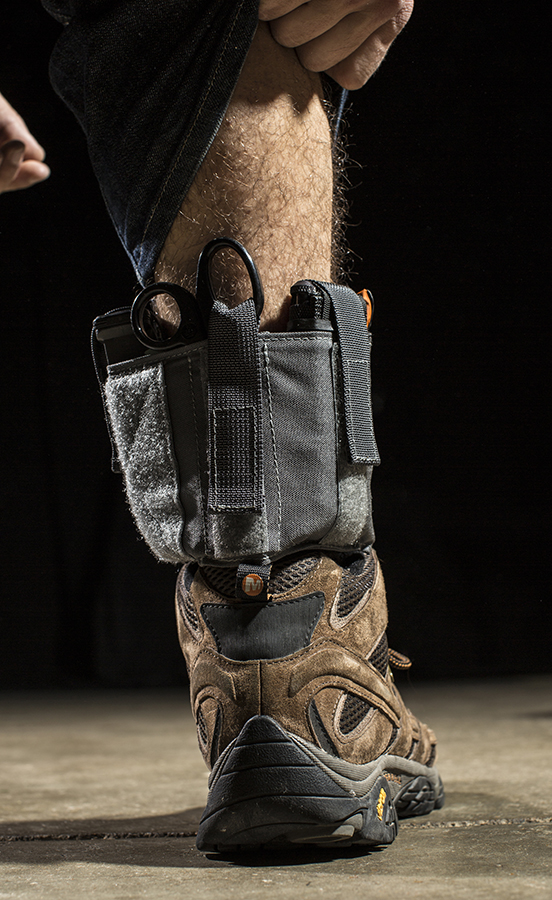
Since one of the big reasons you might need a tourniquet is if a limb gets traumatically amputated, I don't think it makes sense to keep it on a limb. Same with the folks that keep tourniquets on their rifles. I think tourniquets belong on your waist, chest or neck. These days I just keep one in my car and the ankle rig. It is a compromise of position, but I can carry the majority of the trauma tools I know how to use in it. And I know that those tools are always on me. |
Join the Community
Your next conversation starts here.
Create your free account to join discussions, share your experience, save topics, and connect with the AR15.COM community.
- Join discussions
- Follow topics and replies
- Connect with fellow enthusiasts
Already a member? Sign in
Stay informed by subscribing to our Newsletter