


Posted: 4/24/2026 11:47:49 AM EDT
|
Anyone have/use a CNC gantry style CNC router for their woodworking? I see lots of uses for this in the cabinet and box making type work that I do primarily. Don't see alot of people using them this way. I see it great for making more accurate parts that go into an assembly. Change the work flow completely. Instead of taking a flat board and cutting it to final size, add joints, pockets for hinges and what ever other work in seperate operations mount a flat board in the CNC, cut it to size (more accurate squareness and sizes), cut all additional joints, pockets or whatever. Simple example would be a picture frame, you could easily make the frame oval shape and a contoured face. Cut 4 or more pieces out with the outside and inside arcs, contoured face along with the miters for gluing together all in one setup. Making this by hand would be much more time consuming and very difficult depending upon contour on the face. Reminds me a my professional career. I'm old enough to of been around before CAD became a big thing. When I was first told about a new method of making one off precision assemblies by designing them in CAD, Machining a large chunk of the components with CAM then assembling them with no fitting I was doubtful. Now most of these assemblies are made that way. Any thoughts? |

|
At times, I use a smaller (entry level) Genmitsu 4040 Pro CNC router for doing some of my smaller projects. It can carve a 15.7"x15.7"x3.1" area without adding the extensions. It works fine for some of the stuff I do, like hollowing out trays. Attached File  GenmitsuBauer |
“There is no sound, no voice, no cry in all the world that can be heard... until someone listens.”
"The only easy day was yesterday"
"The only easy day was yesterday"
|
I'v had the shapeoko pro for several years. It works well in wood. Does OK in aluminum if you're not in a hurry. And it'll etch glass to make signs. They sell a drag knife and laser attachments for it. I've wanted to try those out but never pulled the trigger on one. For some of what OP describes, the CNC would be insanely slow compared to just using a router with a template and a tracing bit by hand. You only need to make the template 1 time. Then it makes all your picture frames take 3 minutes vs 30 minutes waiting for the CNC to run. The CNC is more delicate. You can't hog out material the way you would by hand. Because in the CNC, you have to worry about breaking bits, crashing, chatter, knocking the machine out of calibration, etc. So you tend to run it more conservatively. |

|
Originally Posted By Mmamonster: I have been using them for the last 14 years at work. They are excellent. What di you need to know Have you stood boards on end and cutting dovetails or tenons? I have seen someone on youtube making chair parts this way. What do think the accuracy is? |
|
Originally Posted By giantpune: I'v had the shapeoko pro for several years. It works well in wood. Does OK in aluminum if you're not in a hurry. And it'll etch glass to make signs. They sell a drag knife and laser attachments for it. I've wanted to try those out but never pulled the trigger on one. For some of what OP describes, the CNC would be insanely slow compared to just using a router with a template and a tracing bit by hand. You only need to make the template 1 time. Then it makes all your picture frames take 3 minutes vs 30 minutes waiting for the CNC to run. The CNC is more delicate. You can't hog out material the way you would by hand. Because in the CNC, you have to worry about breaking bits, crashing, chatter, knocking the machine out of calibration, etc. So you tend to run it more conservatively. How accurate is your machine?? What kind of feed rate do run? Why does it take 30 minutes to run the CNC? Yes, first one take a while but any additional ones are load and hit cycle start I'd assume. Can't the machine run faster and more accurate than you can by hand? Are they so delicate that they can't run a bit as fast as you can by hand? I know some of the machines seem that way, other seem more substantial. An example of a more substantial machine beefier machine? |
|
Originally Posted By DirtyDirk: Have you stood boards on end and cutting dovetails or tenons? I have seen someone on youtube making chair parts this way. What do think the accuracy is? Not used it for that, it's mainly used for feature wall panels , radius counters for shops and things in the shopfitting business. |
|
Originally Posted By DirtyDirk: How accurate is your machine?? What kind of feed rate do run? Why does it take 30 minutes to run the CNC? Yes, first one take a while but any additional ones are load and hit cycle start I'd assume. Can't the machine run faster and more accurate than you can by hand? Are they so delicate that they can't run a bit as fast as you can by hand? I know some of the machines seem that way, other seem more substantial. An example of a more substantial machine beefier machine? You're cutting into wood. The material itself doesn't really lend itself to ten thousandths accuracy. The CNC router cuts more accurate than wood can hold up to. Its well into the realm of having to use a set of calipers to measure the difference. Like single digit thousandths of an inch. It takes 30 minutes to run the CNC because of the setup time, then you are generally taking very light cuts with it. With a hand router, you can go wild because you are in control. You can always go back and touch up a spot you missed. With the CNC, it is in control. If you take too big of bites, you risk breaking the bit, workpiece shifting, or running it so hard you push the machine out of calibration or skip a tooth on the belt. The CNC program runs. It doesn't know if any of those other things have happened. So it will keep running after the belt has skipped a tooth. It will keep running and eat itself alive if the router bit gets pulled out of the chuck. As a general rule, if there's an item that you can make without needing to be artsy and it doesn't have a bunch of tedious stuff, its faster to not use the CNC. Traditional table saw, router with templates, and dovetail jig/bits are just about universally faster than the CNC if the job you're doing can be done with those methods. Here's some examples of what I've made with mine. NFA engraving with a dremel bit. I had to play with a scrap piece to figure out the speed and depth that made the cleanest letters. Keyboard case for a DIY computer keyboard. All the holes came out close enough to the right size. The keys fit snugly. It required some character building with sandpaper. The same item milled out of metal would have been the perfect dimensions. Edgelit sign. The CNC etched the glass. The biggest source of slop was me in a hurry and halfassing the image. It was a quick "raster to vector" conversion. I didn't bother to clean it up at all so the lines are wavy in the image I fed it. I also used it to cut the frame out of a single piece of wood, with a channel for the LED light strip. Dickbutt forward assist. This one was another quick-n-dirty project. It would have come out a bit cleaner if I ran the program a second pass to clean up all the burrs and crap left in the engraving. The dickbutt drawing has some slop to it. Thats just the way it is in the originals. 2.5D bear. These CNCs can't do 3D. They can do 2.5D. This bear was a demo that some of the software has. I just ran it to see how it did. I did it in cheap plywood so there is some tearing. This picture is right off the machine with no hand sanding. It would come off cleaner if you used a hardwood.  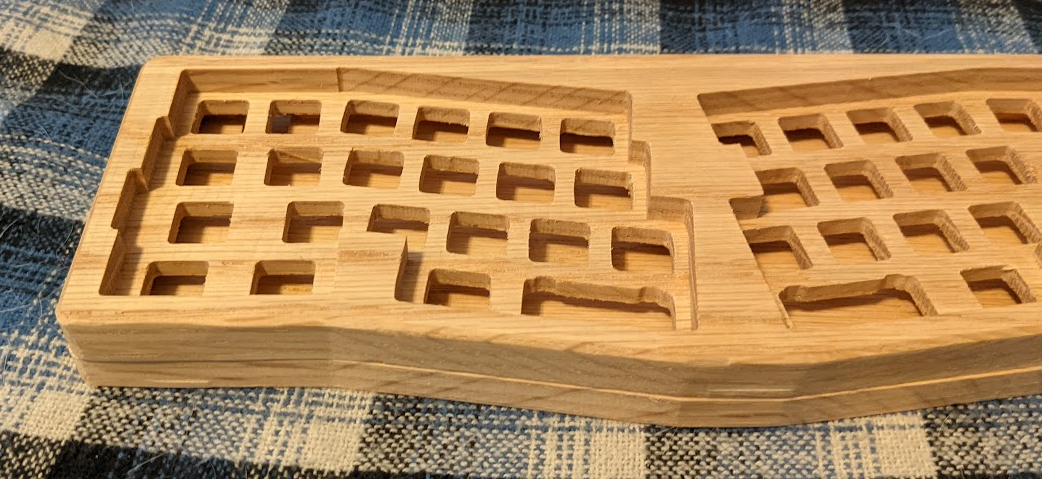 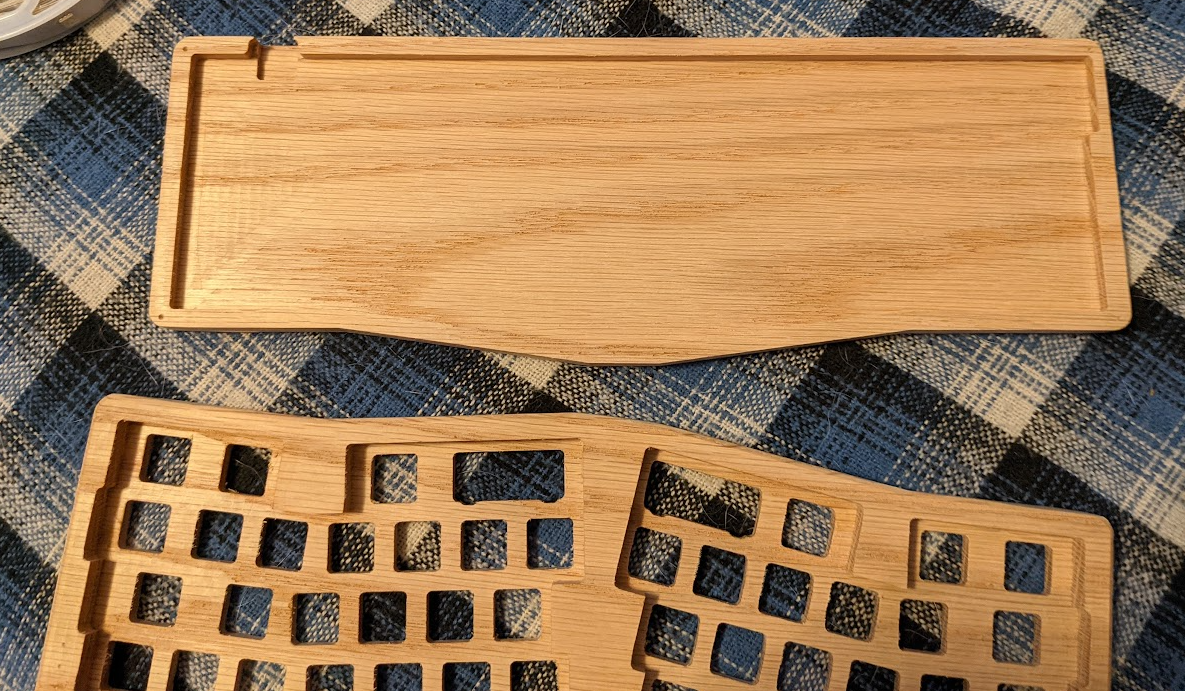 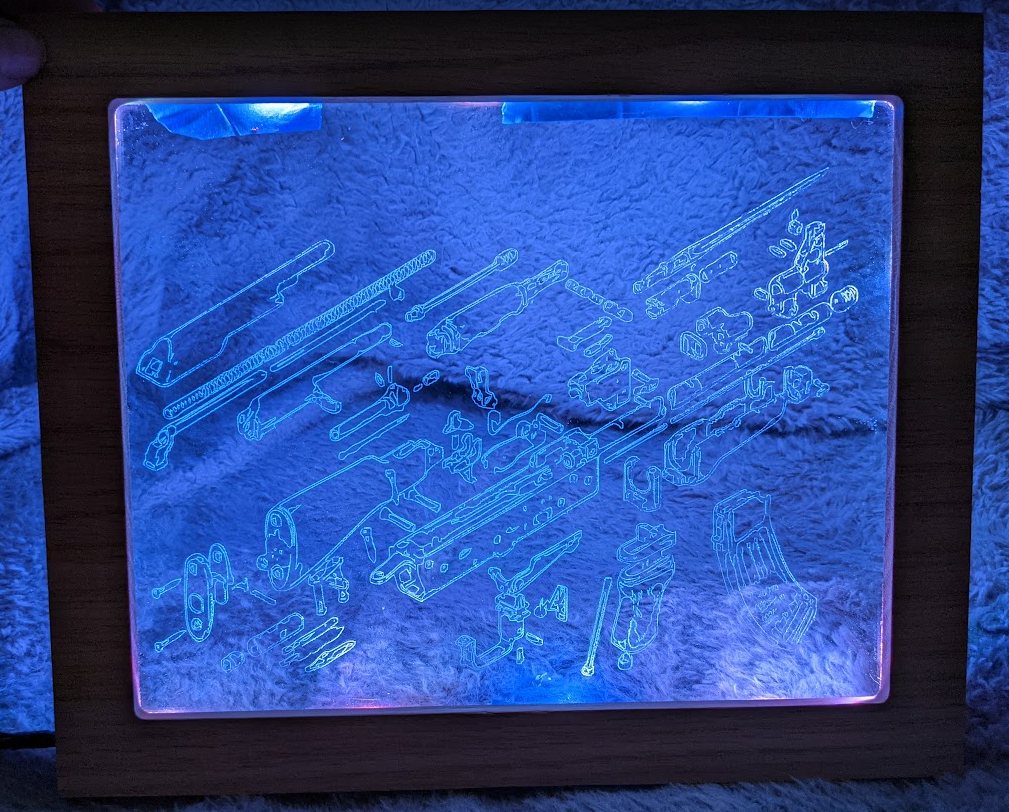 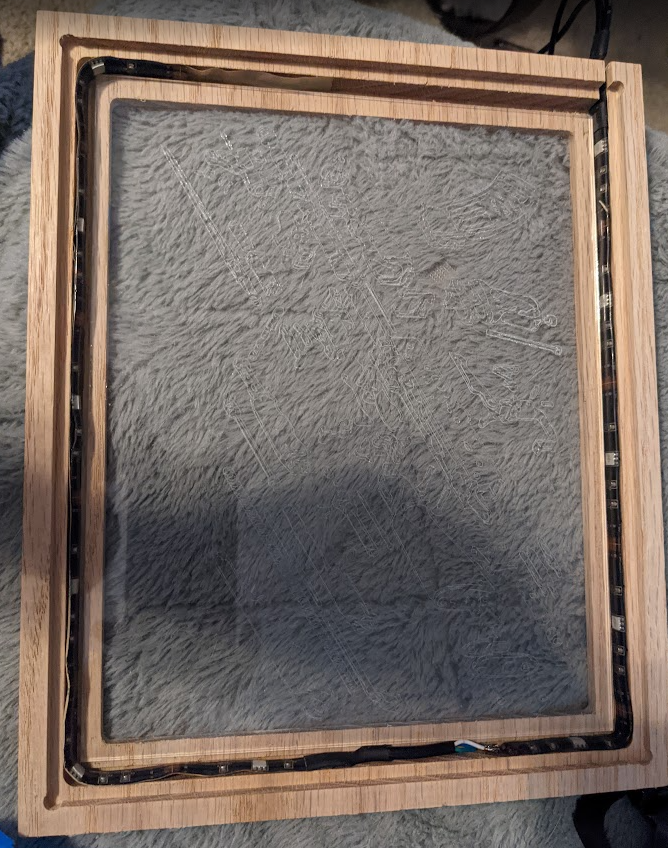 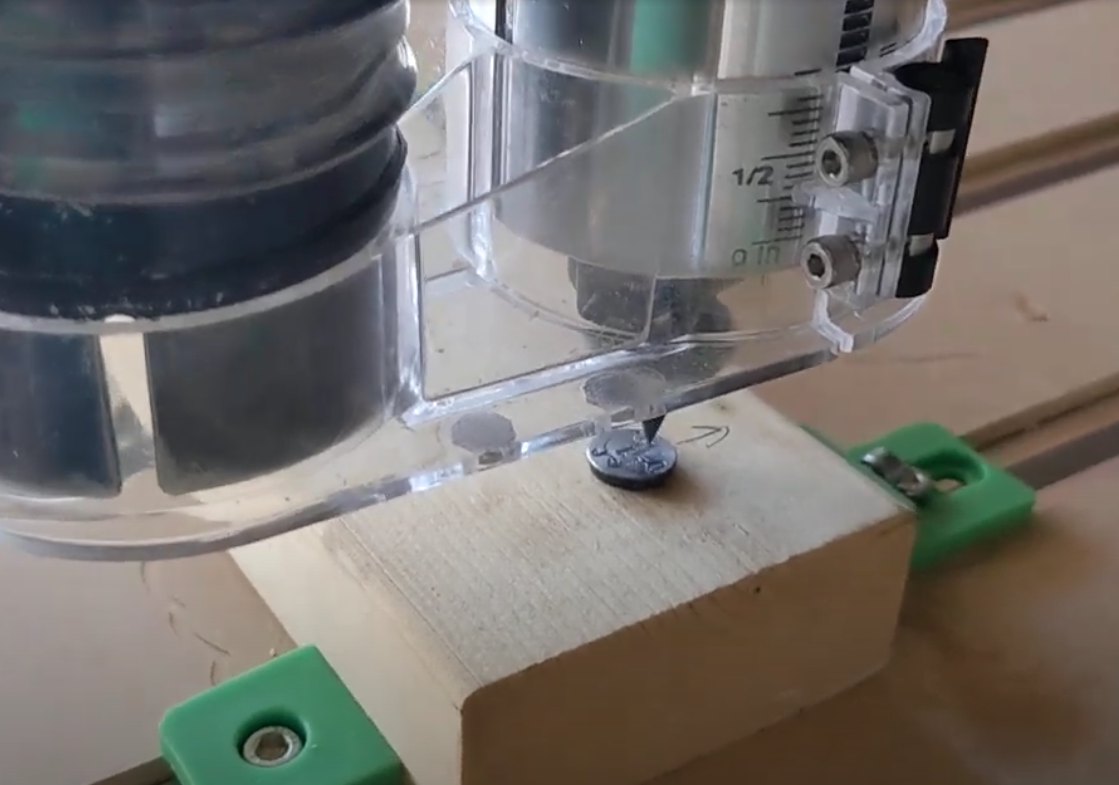 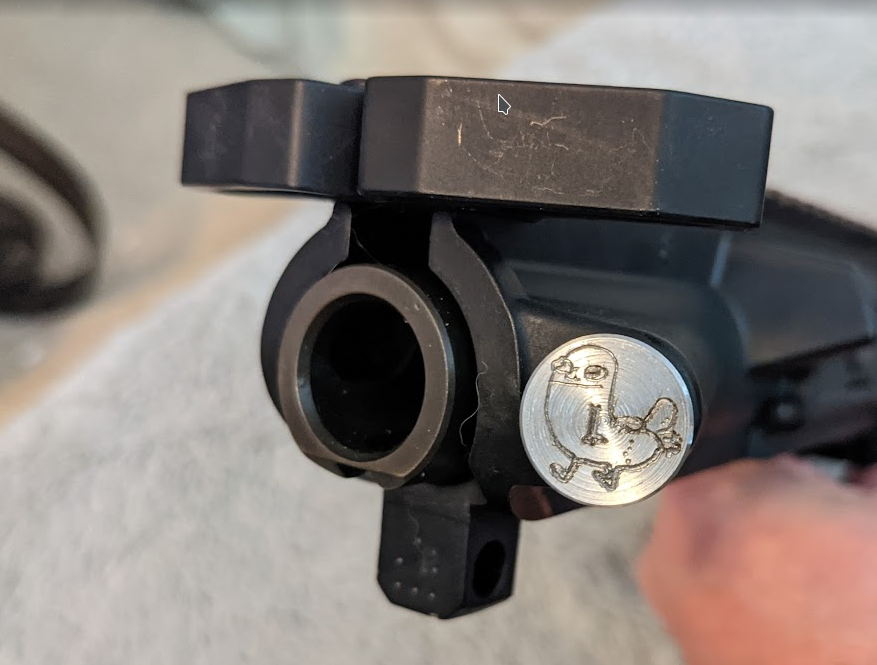 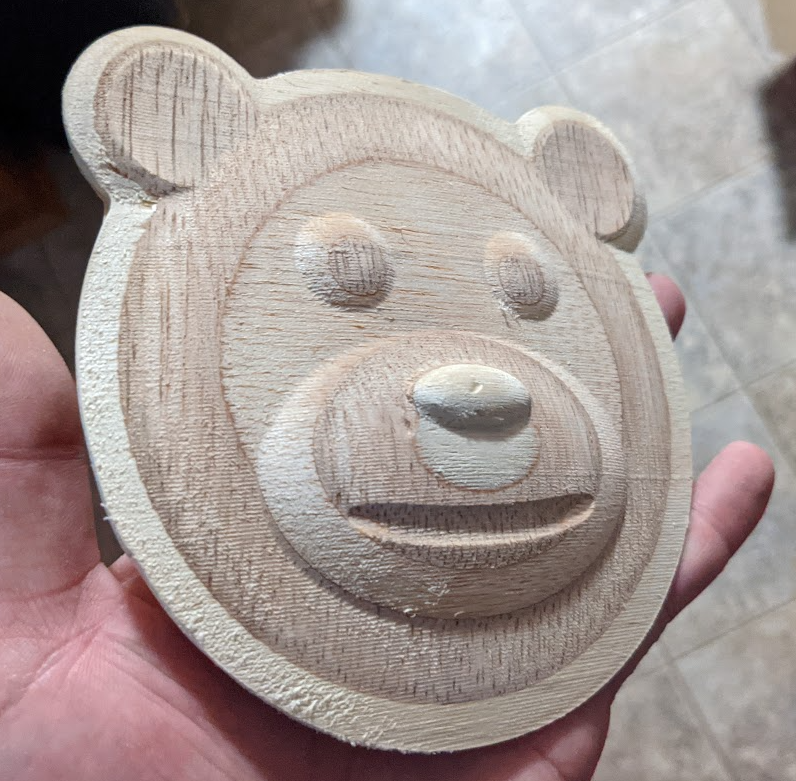
|
|
Originally Posted By DirtyDirk: How accurate is your machine?? What kind of feed rate do run? Why does it take 30 minutes to run the CNC? Yes, first one take a while but any additional ones are load and hit cycle start I'd assume. Can't the machine run faster and more accurate than you can by hand? Are they so delicate that they can't run a bit as fast as you can by hand? I know some of the machines seem that way, other seem more substantial. An example of a more substantial machine beefier machine? Originally Posted By DirtyDirk: Originally Posted By giantpune: I'v had the shapeoko pro for several years. It works well in wood. Does OK in aluminum if you're not in a hurry. And it'll etch glass to make signs. They sell a drag knife and laser attachments for it. I've wanted to try those out but never pulled the trigger on one. For some of what OP describes, the CNC would be insanely slow compared to just using a router with a template and a tracing bit by hand. You only need to make the template 1 time. Then it makes all your picture frames take 3 minutes vs 30 minutes waiting for the CNC to run. The CNC is more delicate. You can't hog out material the way you would by hand. Because in the CNC, you have to worry about breaking bits, crashing, chatter, knocking the machine out of calibration, etc. So you tend to run it more conservatively. How accurate is your machine?? What kind of feed rate do run? Why does it take 30 minutes to run the CNC? Yes, first one take a while but any additional ones are load and hit cycle start I'd assume. Can't the machine run faster and more accurate than you can by hand? Are they so delicate that they can't run a bit as fast as you can by hand? I know some of the machines seem that way, other seem more substantial. An example of a more substantial machine beefier machine? A lot of bad information here. Small cheap entry level hobby machines with trim routers can have issues like he described. Upper level hobby machines with 3phase spindles will outperform someone with a template any day. By shapeoko 5 with a 2.2kw spindle will rough out plywood at 275 ipm and 1/2” doc in tigerply edge all day. Because I do it nearly every day. Making a single picture frame by hand can be faster than making a single one on a cnc Router. Making more than one and the cnc wins. The time you spend programming only has to be done once. There are machines designed to allow the cutter to overhang the front for joinery. The Shapeoko machines have always been this way. There are also expensive bit sets that allow a type of wedged joint that can be cut flat. This allows a sheet to be cut, pocketed, joints created, holes drilled. And everything else on one side of the boards by the machine. https://www.vortextool.com/dovetail?srsltid=AfmBOooOB32PREoE9GozThyfb46_GXOP2NUZExJdPaTeOmE4oY316XRd If you’re going to be doing sheet goods you should look into a machine with a vac table. It’s a life changer. You want a machine with ball screw drives. Not belts. If you’re going to do this everyday and make hardwood drawers. I’d look a dedicated dovetail machine. It will be faster than the constant setup changes on the cnc router. |
|
Originally Posted By Quicky06: Upper level hobby machines with 3phase spindles Lol at "hobby machine" and requiring 3 phase. That is typical GD millionaire status there. That is not really close to what most people would consider a hobby setup. That is into the realm of you better be using it to make money. Otherwise called professional.  OP specifically asked about a CNC router. Not a CNC with a 2.2kw 3 phase water cooled ball blaster spindle. |
|
Originally Posted By giantpune: Lol at "hobby machine" and requiring 3 phase. That is typical GD millionaire status there. That is not really close to what most people would consider a hobby setup. That is into the realm of you better be using it to make money. Otherwise called professional. OP specifically asked about a CNC router. Not a CNC with a 2.2kw 3 phase water cooled ball blaster spindle. Are you that out of touch with the subject? They are a couple hundred bucks on Amazon and are controlled/ powered by a vfd. And do not require a 3 phase input. Carbide 3d them selfs sell one now. https://shop.carbide3d.com/products/vfd-spindle-80mm?variant=41481130311741 This isn’t some high end piece of equipment. Hell I ran one on a shapeoko 3 for several years with a. Belt drive. Here’s a 110v input version of what I use. https://a.co/d/05xr7ydw |

|
Originally Posted By giantpune: Lol at "hobby machine" and requiring 3 phase. That is typical GD millionaire status there. That is not really close to what most people would consider a hobby setup. That is into the realm of you better be using it to make money. Otherwise called professional. OP specifically asked about a CNC router. Not a CNC with a 2.2kw 3 phase water cooled ball blaster spindle. Sienci AltMill is ~$4k with a spindle. I would still consider it a router and not a true mill. The price point is still within hobbyist territory, especially considering rising costs over the last few years. If it had been available when I was buying, I absolutely would have gone for it. As it is, I run a Sienci LongMill. While the AltMill is definitely better, I can't justify buying a whole new machine when what I have does still fulfill my needs. (Especially considering that resale on hobbyist CNC is generally terrible, so it's not like I can recoup what I already have invested and put that into the better machine.) |
|
I am struck by the contrast between these multi-kilobuck machines and the TV show I watched yesterday. In the show, the host was making wooden hand planes. He would buy a Blade and chip breaker but make the plane body from scrap hardwood (ash, oak, etc). I'd guess total cost was under $100. When the cost of a machine reaches $5k - $10k level and requires 3 phase power, all to machine bear faces, I'd suggest you are probably no longer just a hobbyist. |
|
Originally Posted By Trollslayer: When the cost of a machine reaches $5k - $10k level and requires 3 phase power, all to machine bear faces, I'd suggest you are probably no longer just a hobbyist. Consider how much money people on this site spend on what is probably the most common hobby here. It will likely be far higher than that. Plus, the machines we are talking about aren't even in that range. Like I said, an AltMill is ~$4k with a spindle, and I currently run a LongMill, which is ~$2k. And proper spindles are normally run from VFDs, so you don't need actual 3-phase power in your shop. |