


Drying Set Up (Page 1 of 4)

Posted: 3/13/2026 6:51:19 PM EDT
|
Hey All, Getting a bit more serious about quality prints and need a drying set up: dryer, storage, desiccant, a way to print from the storage etc... I've been following @Obsessive 's thread but everything's starting to get over my head with details. Can someone recommend some brands/models. So, I need: -Dryer -Cereal Box storage -Obsessive's spool holder -Desiccant -??? What else? I have a Prusa single color MK4s, maybeeeee get a AMS or snapmaker in the future if that makes a difference. |

|
Cereal boxes Desiccant Hygrometers S4 Filament Dryer Wall Mounts Desiccant Pods That should get you started. 
|
|
Originally Posted By bmarshall1: Hey All, Getting a bit more serious about quality prints and need a drying set up: dryer, storage, desiccant, a way to print from the storage etc... I've been following @Obsessive 's thread but everything's starting to get over my head with details. Can someone recommend some brands/models. So, I need: -Dryer -Cereal Box storage -Obsessive's spool holder -Desiccant -??? What else? I have a Prusa single color MK4s, maybeeeee get a AMS or snapmaker in the future if that makes a difference. Your not alone in this venture. I consider myself a very technical person...and I have a hard time following Obessines notes. I have realized I am better at the design and solid file part of things than the printing to perfection side of things and have to compensate somehow. Sticking with crap ass PLA for the not critical things helps a bit. |
|
Originally Posted By RhinelandArms: Your not alone in this venture. I consider myself a very technical person...and I have a hard time following Obessines notes. I have realized I am better at the design and solid file part of things than the printing to perfection side of things and have to compensate somehow. Sticking with crap ass PLA for the not critical things helps a bit. What would be helpful for me to go into more detail explaining? Happy to do so. |

|
I have three dryers. A Fixdry NT1 which can hold two 1kg spools or one 3kg spool, a Sunlu S4 which holds four 1kg spools, and a Sunlu E2 which holds two 1kg spools but goes up to 110C. For your basic filaments (PLA, PETG, TPU, etc) pretty much any dryer will work and will be able to feed filament while drying. All of the "standard" dryers are powered by the same PTC type heaters and most will top out at 70C but some of the more recent models will go up to 85C. If you are going to print PA6 then you need something that goes to 100C at least. There's not really any point in the 85C dryers IMO because you don't need that much heat for the common filaments and it's not hot enough for PA. As far as drying ability, again they're all basically the same so just pick one based on other features that you think you might like. The S4 is great for drying a bunch of stuff at one time. The polydryer is neat because it attaches directly to their drybox. The Space Pi X4 has two chambers that can be set to different temps. |
|
Originally Posted By -Obsessed-: Cereal boxes Desiccant Hygrometers S4 Filament Dryer Wall Mounts Desiccant Pods That should get you started. To piggyback off of this, is the ams ht worthwhile? |
|
Originally Posted By -Obsessed-: What would be helpful for me to go into more detail explaining? Happy to do so. I just need more time to read your stuff and test it out. Time is the one thing I dont get much of, so once something is good enough for our non firearms line then it gets locked in. The technical filament is were I start to try and learn from your notes. I think it was your notes on tuning and dialing in stuff that went right over my head. |
|
Originally Posted By Spaceboy: That desiccant pod print is bad ass! To piggyback off of this, is the ams ht worthwhile? I guess that depends on who you ask. I say yes. Now, I understand Blob just said no above, which is totally fine. I'm of the opinion that 85ºC, while admittedly not the fastest temp to dry PA and other nylons, will do the trick if you just give it time. I usually dry for a LONG time anyway when I get a new filament, and if you are willing to let it sit in there for 24 hours, it should work just fine. I admit that 100º would have been preferred, but 85 is perfectly workable and is at least within the recommended trying temp range of nylons. So I think if you have a Bambu it's worth the integration ability to have one (and they are honestly pretty cheap for what they are, $140 each is reasonable). To each their own though. It won't dry as fast as an E2 no doubt, but it WILL work. For how often I actually need that temp it's fine. I'll have a second HT here in the next two months probably, and then I'll be able to print from one (while heating) and can be drying the next roll in the other. So I don't see the longer drying time to be an issue, but again, everyone is different. |
|
@Blob @Obsessed It looks like the S4 is a pretty good all 'round set up. I like the idea of the polydryer but I can buy 6 cereal boxes for the price of 1 polydryer spool holder. $99 for the complete set up. So far I have yet to use PA6 filament. Correct me if I'm wrong, but don't certain filaments give off a pretty strong odor and one would need an enclosed printer (also to keep the heat up). When/if I go that route I could simply buy a hi temp dryer. Would that make sense? |
|
Originally Posted By bmarshall1: @Blob @Obsessed It looks like the S4 is a pretty good all 'round set up. I like the idea of the polydryer but I can buy 6 cereal boxes for the price of 1 polydryer spool holder. $99 for the complete set up. So far I have yet to use PA6 filament. Correct me if I'm wrong, but don't certain filaments give off a pretty strong odor and one would need an enclosed printer (also to keep the heat up). When/if I go that route I could simply buy a hi temp dryer. Would that make sense? Ish. Generally a high temp dryer and enclosure would go more or less hand in hand. There are of course exceptions to everything but MOST would agree to print ABS, ASA, PC, Nylon, or any derivatives of these, you'd be best suited with an enclosure at minimum, and a high temp dryer. Yes, it's possible to print smaller parts without an enclosure but they will NOT be as strong or as dimensionally stable as one printed in an enclosure. Likewise, you can dry these filaments at 70C (the S4 max temp) but it's far from ideal and takes forever. The S4 is great for what it is if you keep your expectations in check. No different than a Bambu A1, P1S, etc etc. understand the capabilities, don't ask more if it than it was designed for, and you will be happy. I have an S4, I was on the original kickstarter early bird. It's a fantastic dryer. But my ABS, ASA, Nylon, etc, go in the AMS HT. |
|
Originally Posted By bmarshall1: Thanks, I just ordered all the items for 24 spools and gave you a couple likes on Makerworld (doesn't that give you 'store credit'?). I'll worry about the hi temp stuff when I get an enclosed printer. Originally Posted By bmarshall1: Thanks, I just ordered all the items for 24 spools and gave you a couple likes on Makerworld (doesn't that give you 'store credit'?). I'll worry about the hi temp stuff when I get an enclosed printer. Originally Posted By bmarshall1: Thanks, I just ordered all the items for 24 spools and gave you a couple likes on Makerworld (doesn't that give you 'store credit'?). I'll worry about the hi temp stuff when I get an enclosed printer. Likes do not, boosts do though.  Appreciate the likes regardless! Check out the other models, might have other things you might find useful. 
|
|
OK, I'll go back in and boost and look for the rest of your designs. I know you designed a few PRS/Rifle type stuff, are they still on Makerworld? I don't have any 'boosts' to give, I read the instructions but they didn't make much sense. Do I need to download/print a certain amount of stuff per week? |

|
Originally Posted By bmarshall1: OK, I'll go back in and boost and look for the rest of your designs. I know you designed a few PRS/Rifle type stuff, are they still on Makerworld? I don't have any 'boosts' to give, I read the instructions but they didn't make much sense. Do I need to download/print a certain amount of stuff per week? Yeah, you get 1 token a week in which you print something off MakerWorld. Just download the 3MF and print that way, etc. That's recommended regardless as it will have the slicer settings all optimized for the print. I used to sell Autotrickler and reloading accessories when I ran a 3D printing business but those designs were commercialized and never offered free. I actually sold that IP to another commercial 3D printer and thus do not have the ability to post them.
|

Joined:
Jan 2026
Posts:
26
EE: 100% (2)
 USA
USA
|
Obsessed, thanks for sharing your design for the desiccant pods. n00b question: Would you recommend printing these in PETG over PLA? I saw on MW you recommend ABS but I don't have a full enclosure for my printer yet. I printed a set of components in PLA (cause that's all I have right now) and everything came out well but some parts seem a bit brittle with PLA (the door frame for example.) Thanks again |
|
Originally Posted By fbdm: Obsessed, thanks for sharing your design for the desiccant pods. n00b question: Would you recommend printing these in PETG over PLA? I saw on MW you recommend ABS but I don't have a full enclosure for my printer yet. I printed a set of components in PLA (cause that's all I have right now) and everything came out well but some parts seem a bit brittle with PLA (the door frame for example.) Thanks again PLA should work if the filament is properly dialed in. That said I don't really keep PLA on hand so I usually do PETG as I print a lot of functional prints. PETG will NOT survive 70C drying though, which is the minimum recommended for drying the beads out inside the pod. So you'll need to remove the desiccant to dry it out. Which, should be never since it holds 250g. 
|

|
Originally Posted By gearsmithy: I considered getting an e2 but for a few bucks more you can get a proper lab oven if you know where to look. I bought the lab oven, no regrets Yeah I was pretty close to getting one instead. Downside is they're pretty damn big and you can't feed from them without mods. |
|
Originally Posted By Blob: Yeah I was pretty close to getting one instead. Downside is they're pretty damn big and you can't feed from them without mods. The trick is to find one that ships from the US. Mine weighs like 85lbs and international shipping on it would've been more than the price of the oven. |
|
Originally Posted By gearsmithy: The trick is to find one that ships from the US. Mine weighs like 85lbs and international shipping on it would've been more than the price of the oven. I was looking on ebay and there were some pretty good used options for some of the higher end brands. In the end I just didn't want to deal with the bulk of an oven, but it's definitely a viable solution especially if you're wanting to anneal some large parts. |
|
Originally Posted By gearsmithy: The trick is to find one that ships from the US. Mine weighs like 85lbs and international shipping on it would've been more than the price of the oven. Originally Posted By Blob: I was looking on ebay and there were some pretty good used options for some of the higher end brands. In the end I just didn't want to deal with the bulk of an oven, but it's definitely a viable solution especially if you're wanting to anneal some large parts. Why not just buy the West3D? It's $169, dries at up to 120C, and ships from the US? It has feeding capability as well. |
|
Originally Posted By -Obsessed-: Why not just buy the West3D? It's $169, dries at up to 120C, and ships from the US? It has feeding capability as well. Because even 120 falls short for pps-cf. I use the lab oven for drying and annealing And I flip the drive gear on the HT over so I can keep drying during the print (yeah its only 80 bit after half a day in the lab oven I think that's enough to keep moisture at bay or at least that's been my experience |
Joined:
Jan 2026
Posts:
27
EE: 100% (2)
USA
|
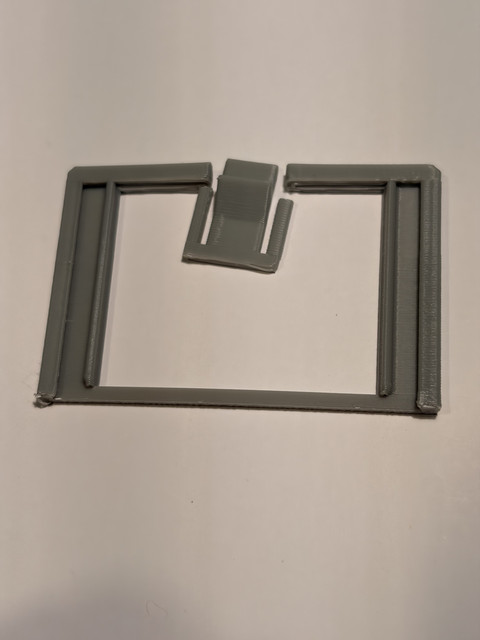
Originally Posted By -Obsessed-: PLA should work if the filament is properly dialed in. That said I don't really keep PLA on hand so I usually do PETG as I print a lot of functional prints. PETG will NOT survive 70C drying though, which is the minimum recommended for drying the beads out inside the pod. So you'll need to remove the desiccant to dry it out. Which, should be never since it holds 250g. Thanks for the info Do you happen to still have the STL file for the one-piece version of the door you seem to have in the video on MW? I have had 2 PLA frames with different filaments break with minor handling. One filament should have been pretty dialed-in. I think maybe for PLA there just isn't enough material to support much flex around the door frame where it connects to the "fastener." |
|
Originally Posted By fbdm: Thanks for the info Do you happen to still have the STL file for the one-piece version of the door you seem to have in the video on MW? I have had 2 PLA frames with different filaments break with minor handling. One filament should have been pretty dialed-in. I think maybe for PLA there just isn't enough material to support much flex around the door frame where it connects to the "fastener." Originally Posted By fbdm: Originally Posted By -Obsessed-: PLA should work if the filament is properly dialed in. That said I don't really keep PLA on hand so I usually do PETG as I print a lot of functional prints. PETG will NOT survive 70C drying though, which is the minimum recommended for drying the beads out inside the pod. So you'll need to remove the desiccant to dry it out. Which, should be never since it holds 250g. Thanks for the info Do you happen to still have the STL file for the one-piece version of the door you seem to have in the video on MW? I have had 2 PLA frames with different filaments break with minor handling. One filament should have been pretty dialed-in. I think maybe for PLA there just isn't enough material to support much flex around the door frame where it connects to the "fastener." Where is it breaking? The one in the video is the final version that is on MW, so I'm a bit confused. |
Joined:
Jan 2026
Posts:
28
EE: 100% (2)
USA

|
Originally Posted By bmarshall1: @Blob @Obsessed It looks like the S4 is a pretty good all 'round set up. I like the idea of the polydryer but I can buy 6 cereal boxes for the price of 1 polydryer spool holder. $99 for the complete set up. So far I have yet to use PA6 filament. Correct me if I'm wrong, but don't certain filaments give off a pretty strong odor and one would need an enclosed printer (also to keep the heat up). When/if I go that route I could simply buy a hi temp dryer. Would that make sense? Nylon (PA) you print from the polydryer though. I also use a cheap $50 food dehydrator. It only gets to 50 C with insulation, but you can just leave it in longer. ABS and ASA can have strong odors while printing. Havent noticed an odor while drying. PLA doesn't need to be dried, unless you're in a high humidity environment for a long time. PETG needs to be dried after a couple of days unless its stored in an AMS. Its recommended to print the desiccant containers for the AMS to extend the time. ABS isnt very sensitive to humidity, like PLA it can be out a while. ASA is more like PETG as far as humidity. Nylon (PA 6) must be continuously dried while you print. PA 12 is a more forgiving. |
|
Originally Posted By fbdm: Sorry, shoulda just uploaded a pic to begin with. https://i.ibb.co/SGbG4VD/IMG-3220.jpg You uh...are missing the mesh. Screen doors don't keep the bugs out if you don't have the screen! If you have a Bambu, I reco downloading the 3MF/print profile. It has all the correct settings. Otherwise, you'll want to make sure that you import both the frame and mesh at the same time, tell the slicer it is the same object, and then set the top and bottom layers on the mesh to zero with a 35% infill. Make sure the infill wall overlap is set to 100%, it is NOT that by default. Should slice like this: Notice the infill direction on the frame, that helps with getting clean lines and smooth sliding. Attached File |
Joined:
Jan 2026
Posts:
29
EE: 100% (2)
USA
|
Originally Posted By -Obsessed-: You uh...are missing the mesh. Screen doors don't keep the bugs out if you don't have the screen! If you have a Bambu, I reco downloading the 3MF/print profile. It has all the correct settings. Otherwise, you'll want to make sure that you import both the frame and mesh at the same time, tell the slicer it is the same object, and then set the top and bottom layers on the mesh to zero with a 35% infill. Make sure the infill wall overlap is set to 100%, it is NOT that by default. Should slice like this: Notice the infill direction on the frame, that helps with getting clean lines and smooth sliding. https://www.ar15.com/media/mediaFiles/467079/mesh_jpg-3730486.JPG LMAO, thanks for setting me straight. No wonder I was so confused. I went to bed last night thinking "there is something obvious that I don't understand about this." I got them imported and merged in SnOrca and figured out how to make the changes, so it was a good learning process. Sorry to derail the thread. 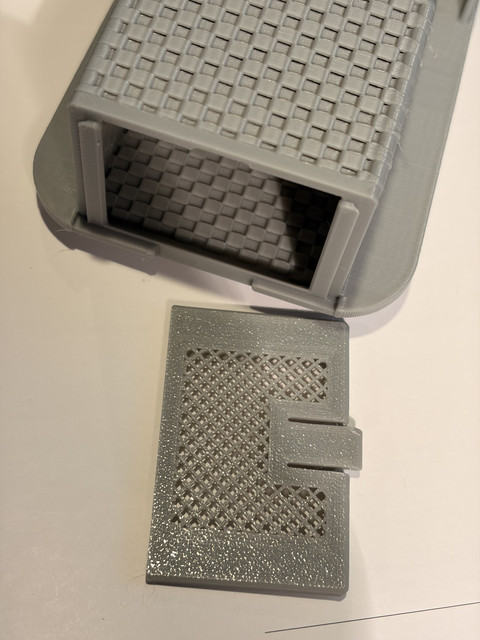 |
|
Thanks for the info guys, my 'easy button' set up is coming this week. @Obsessed I went in to look at the boosts but wasn't able to figure out how to 'get them in order to give them'. I have a Prusa, is this a Bambu (connected to the mothership) only thing? Can I simply download a file or do I have to print it as well? @Blob I know you said I don't need to dry PLA+ but in SW FL the humidity in my house hovers around 50% plus I get some stringing once in a while, I know drying can't hurt. |
|
Originally Posted By bmarshall1: Thanks for the info guys, my 'easy button' set up is coming this week. @Obsessed I went in to look at the boosts but wasn't able to figure out how to 'get them in order to give them'. I have a Prusa, is this a Bambu (connected to the mothership) only thing? Can I simply download a file or do I have to print it as well? @Blob I know you said I don't need to dry PLA+ but in SW FL the humidity in my house hovers around 50% plus I get some stringing once in a while, I know drying can't hurt. Yep, it's a Bambu thing. Only Bambu users can get Boost tokens. Basically you earn them by printing models on your Bambu printer. It's their way to purchase loyalty basically. It's actually a brilliant idea which is probably how MakerWorld got to have a 45% share of the model site web traffic. They have only been around a fraction of the time and yet get twice the visitors of Printables. The way they structure the upload requirements just makes it super user friendly too so I can see the appeal from both sides. |
|
Originally Posted By bmarshall1: Thanks for the info guys, my 'easy button' set up is coming this week. @Obsessed I went in to look at the boosts but wasn't able to figure out how to 'get them in order to give them'. I have a Prusa, is this a Bambu (connected to the mothership) only thing? Can I simply download a file or do I have to print it as well? @Blob I know you said I don't need to dry PLA+ but in SW FL the humidity in my house hovers around 50% plus I get some stringing once in a while, I know drying can't hurt. I never said that. I dry PLA and everything else. |
|
Originally Posted By Blob: I never said that. I dry PLA and everything else. Originally Posted By Blob: Originally Posted By bmarshall1: Thanks for the info guys, my 'easy button' set up is coming this week. @Obsessed I went in to look at the boosts but wasn't able to figure out how to 'get them in order to give them'. I have a Prusa, is this a Bambu (connected to the mothership) only thing? Can I simply download a file or do I have to print it as well? @Blob I know you said I don't need to dry PLA+ but in SW FL the humidity in my house hovers around 50% plus I get some stringing once in a while, I know drying can't hurt. I never said that. I dry PLA and everything else. @Blob, you're correct, it was Tholo. My house rubs around 50% so I just dried my first batch of PLA. It's at 20%, it that a good place to stop? Maybe I'll look for a chart of humidity levels for different filamants. PLA doesn't need to be dried, unless you're in a high humidity environment for a long time. PETG needs to be dried after a couple of days unless its stored in an AMS. Its recommended to print the desiccant containers for the AMS to extend the time. ABS isnt very sensitive to humidity, like PLA it can be out a while. ASA is more like PETG as far as humidity. Nylon (PA 6) must be continuously dried while you print. PA 12 is a more forgiving. |
|
Originally Posted By bmarshall1: @Blob, you're correct, it was Tholo. My house rubs around 50% so I just dried my first batch of PLA. It's at 20%, it that a good place to stop? Maybe I'll look for a chart of humidity levels for different filamants. PLA doesn't need to be dried, unless you're in a high humidity environment for a long time. PETG needs to be dried after a couple of days unless its stored in an AMS. Its recommended to print the desiccant containers for the AMS to extend the time. ABS isnt very sensitive to humidity, like PLA it can be out a while. ASA is more like PETG as far as humidity. Nylon (PA 6) must be continuously dried while you print. PA 12 is a more forgiving. I don't pay attention to the humidity reading in the dryers. They're inaccurate at such low levels and it's not reading the filament moisture level anyway, it's reading the air. I dry based off temp and time. |
|
Originally Posted By Blob: I don't pay attention to the humidity reading in the dryers. They're inaccurate at such low levels and it's not reading the filament moisture level anyway, it's reading the air. I dry based off temp and time. This. The hygrometer tells you if your desiccant is getting wet. It doesn't do anything to tell you the state of the filament. |
|
Originally Posted By -Obsessed-: This. The hygrometer tells you if your desiccant is getting wet. It doesn't do anything to tell you the state of the filament. Originally Posted By -Obsessed-: Originally Posted By Blob: I don't pay attention to the humidity reading in the dryers. They're inaccurate at such low levels and it's not reading the filament moisture level anyway, it's reading the air. I dry based off temp and time. This. The hygrometer tells you if your desiccant is getting wet. It doesn't do anything to tell you the state of the filament. Is 5hr at 50 good for PLA? At the end it said 20% then a bit later (still in the dryer) it was at 26%, I did a 2nd round just because. Is there such a thing as too much drying. |
|
Originally Posted By bmarshall1: Is 5hr at 50 good for PLA? At the end it said 20% then a bit later (still in the dryer) it was at 26%, I did a 2nd round just because. Is there such a thing as too much drying. There is such thing as too much drying, and you're no where near there. I dry my PLA at 60ºC for 12 hours. |
|
Originally Posted By bmarshall1: @Blob, you're correct, it was Tholo. My house rubs around 50% so I just dried my first batch of PLA. It's at 20%, it that a good place to stop? Maybe I'll look for a chart of humidity levels for different filamants. PLA doesn't need to be dried, unless you're in a high humidity environment for a long time. PETG needs to be dried after a couple of days unless its stored in an AMS. Its recommended to print the desiccant containers for the AMS to extend the time. ABS isnt very sensitive to humidity, like PLA it can be out a while. ASA is more like PETG as far as humidity. Nylon (PA 6) must be continuously dried while you print. PA 12 is a more forgiving. If you bought quality filament, its probably starting out "dry enough". How's that for qualifiers. At 50% in the house, it should be ok for a week plus in an ams. If you dont use it up (unlikely!), put it in the cereal box with desiccant. In the winter here in WI, my printer room in the basement is at < 30% rH. Its fine. In the summer it might get to 70%, which is not fine. |
|
PETG is a right horses ass here in the summer. I run it 24 hrs or so at 50 C before printing. Turning up the temp to dry faster is possible within some limits. Pulling moisture out of a packed spool takes time. Turning PLA up past 55 or so for an extended dry is asking for trouble. It will stick the lay together, at best, and might warp the spool on cheap filament. |
|
Originally Posted By Tholo: Drying pla overnight is plenty. The main reason for such spans of time is that the center of the spool could be wetter than the outside. If you bought quality filament, its probably starting out "dry enough". How's that for qualifiers. At 50% in the house, it should be ok for a week plus in an ams. If you dont use it up (unlikely!), put it in the cereal box with desiccant. In the winter here in WI, my printer room in the basement is at < 30% rH. Its fine. In the summer it might get to 70%, which is not fine. You need a humidifier. And a dehumidifier.
|
|
Great thread...should have looked at this earlier...so much to learn. P2S printer here with AMS and AMS HT. Bought some Sunlu and Polymaker PA6CF but want to learn on the cheaper Sunlu. Planning to dry in my toaster oven which has been converted for baking PC boolits. It has a small convection fan and it PID-controlled. Blob said it should work but the drying time has me confused. 12 or 24 hours? I've also read that the filament needs to be cooled to room temp before printing but I read here that it should be heated continuously during printing and at what temp? And this "dialing in" of filament has got me confused as well. |
|
Originally Posted By mvintx: Great thread...should have looked at this earlier...so much to learn. P2S printer here with AMS and AMS HT. Bought some Sunlu and Polymaker PA6CF but want to learn on the cheaper Sunlu. Planning to dry in my toaster oven which has been converted for baking PC boolits. It has a small convection fan and it PID-controlled. Blob said it should work but the drying time has me confused. 12 or 24 hours? I've also read that the filament needs to be cooled to room temp before printing but I read here that it should be heated continuously during printing and at what temp? And this "dialing in" of filament has got me confused as well. Drying time is dependent on drying temp, and of course the filament type. I think most would say you want to dry Nylon 24 hours generally. Depending on the exact composition, you could get by with as low as 80C, or need 100C or even higher. But dry it for 24 hours. You can heat it while printing, but truly it needs to stay dry. So if you keep it in a dry box that is fine. The suggestions to let it cool is primarily when actually in the dryer. If you pull a roll of filament out of a dryer and leave it in the open air while that hot, it will aggressively reabsorb moisture. Hot filament gets insanely hygroscopic just below Tg which is exactly where we dry them. So be aware of that and you'll be fine. |
|
Originally Posted By RhinelandArms: Just an FYI on drying. We ran a test on some PLA-matt, kind of material. The temp was 65c by mistake for just 1 hour and that ended up fusing the filament to each other just enough that it did not like to unroll. What dryer? This is something I've warned about in the past. Could be temp but also I've found that cheap dryers and especially converted setups, the heat is inaccurate and your temp can be off by as much as 10-15C due to heating methodology and lack of convection or fans, causing hit spots which can fuse filament. I've experienced it first hand several times with the supposed same temperature, with different results based on drying device. |
|
Originally Posted By mvintx: Great thread...should have looked at this earlier...so much to learn. P2S printer here with AMS and AMS HT. Bought some Sunlu and Polymaker PA6CF but want to learn on the cheaper Sunlu. Planning to dry in my toaster oven which has been converted for baking PC boolits. It has a small convection fan and it PID-controlled. Blob said it should work but the drying time has me confused. 12 or 24 hours? I've also read that the filament needs to be cooled to room temp before printing but I read here that it should be heated continuously during printing and at what temp? And this "dialing in" of filament has got me confused as well. Dry it until it's dry. I generally do 24 hours for everything but that's mainly due to my schedule. I'll do my prep work in the evening and then I'm at work the next day, dinner and family time after that and I'm not back to the printer until 24 hours later after the kid goes to bed. Definitely print nylon directly from the dryer. Don't know why you'd need it to be cool to print, it's on its way to a 300C nozzle anyway. Check the pinned thread for how to calibrate filament. Start a new thread if you still have questions and need more help. Also you probably won't be able to use PA6-CF in the AMS unit because of how brittle it is. You'll need to bypass it and feed directly into the printer being mindful of the bends in your ptfe tubes. |
|
Originally Posted By Blob: Dry it until it's dry. I generally do 24 hours for everything but that's mainly due to my schedule. I'll do my prep work in the evening and then I'm at work the next day, dinner and family time after that and I'm not back to the printer until 24 hours later after the kid goes to bed. Definitely print nylon directly from the dryer. Don't know why you'd need it to be cool to print, it's on its way to a 300C nozzle anyway. Check the pinned thread for how to calibrate filament. Start a new thread if you still have questions and need more help. Also you probably won't be able to use PA6-CF in the AMS unit because of how brittle it is. You'll need to bypass it and feed directly into the printer being mindful of the bends in your ptfe tubes. Agree on the AMS. It is NOT compatible with AMS feeding. That said, the AMS HT in bypass mode would work as there are no tight bends in that filament path. You'll need to also bypass any filament buffers. Basically the same limitations as TPU but for different reasons. |