


Iran Official Happening Thread: Operation Epic Fury (Page 745 of 745)

 USA
USA
|
Originally Posted By -daddy: I go sans glove, helps with the grip strength  *and I'll stop with the drift*  Jay & Silent Bob Sheep Fckr |
 TX, USA
|
Originally Posted By PeepEater: Kushner is so skeezy even Ben Shapiro called him out for being skeezy in his business deals and his dad is a criminal that got pardoned after he donated to Trump. Sending a couple of Jewish real-estate guys to negotiate with hard-line Muslim terrorists seems totally retarded. |

|
Originally Posted By Embittered: Didn’t we learn this in GWOT? Religious zealots don’t make sense. People willing to or actively trying to die for their cause can’t be reasoned with. Originally Posted By Embittered: Originally Posted By michigan66:
TRUMP: U.S.-IRAN TALKS LASTED THREE HOURS — ANOTHER MEETING PLANNED President Trump says Steve Witkoff and Jared Kushner met with the Iranians for about three hours today, describing the talks as “very good.” Trump said another meeting is planned for the near future, adding: “I can’t understand why they don’t want a deal. It’s either a deal or destruction.” Didn’t we learn this in GWOT? Religious zealots don’t make sense. People willing to or actively trying to die for their cause can’t be reasoned with. It's really kind of pointless to negotiate with somebody who doesn't have full control of the country. Need to wipe out the general in the IRGC and other terrorist militias if they want peace. This is the exact same problem Israel had with Gaza. They kept talking to "The Leader" but that was just a face and then military did whatever the hell it wanted. Seeing tweet above and how that was the norm in the early 1970's I think Iran is closer to flipping (that implies fast, I'm talking a decade or two) into a western nation again, or at least not an unleashed doberman government/military. |
All truth passes through three stages. First, it is ridiculed. Second, it is violently opposed. Third, it is accepted as being self-evident.

|
Originally Posted By brass: It's really kind of pointless to negotiate with somebody who doesn't have full control of the country. Need to wipe out the general in the IRGC and other terrorist militias if they want peace. This is the exact same problem Israel had with Gaza. They kept talking to "The Leader" but that was just a face and then military did whatever the hell it wanted. Seeing tweet above and how that was the norm in the early 1970's I think Iran is closer to flipping (that implies fast, I'm talking a decade or two) into a western nation again, or at least not an unleashed doberman government/military. Originally Posted By brass: Originally Posted By Embittered: Originally Posted By michigan66:
TRUMP: U.S.-IRAN TALKS LASTED THREE HOURS — ANOTHER MEETING PLANNED President Trump says Steve Witkoff and Jared Kushner met with the Iranians for about three hours today, describing the talks as “very good.” Trump said another meeting is planned for the near future, adding: “I can’t understand why they don’t want a deal. It’s either a deal or destruction.” Didn’t we learn this in GWOT? Religious zealots don’t make sense. People willing to or actively trying to die for their cause can’t be reasoned with. It's really kind of pointless to negotiate with somebody who doesn't have full control of the country. Need to wipe out the general in the IRGC and other terrorist militias if they want peace. This is the exact same problem Israel had with Gaza. They kept talking to "The Leader" but that was just a face and then military did whatever the hell it wanted. Seeing tweet above and how that was the norm in the early 1970's I think Iran is closer to flipping (that implies fast, I'm talking a decade or two) into a western nation again, or at least not an unleashed doberman government/military. How do you negotiate with people that are willing to wear suicide vests, blow themselves up for their cause/"God" and use women and children as shields? You dont. Because you cant The commies here are similar, but not the suicide bombing part. They protest, get pepper sprayed, bean bagged, rubber bulleted, etc for their cause/s. The Right does non of that and behave, but are the "extremists" |
Save VA, Join or Donate to VCDL!
https://www.vcdl.org/Donate

|
Robert A. Heinlein, Friday
|
6:35 PM Eastern--this guy is usually reliable. ETA 8:25 PM--nobody else reporting US strikes, looks like he was wrong.
BREAKING: Tonight, the U.S. military carried out strikes against IRGC Navy targets following another deadly attack on commercial shipping in and around the Strait of Hormuz. Earlier today, the Antigua and Barbuda-flagged bulk carrier MV Cape Dao was attacked by means of Iranian one-way attack drones while sailing toward India near the Strait of Hormuz. The attack killed Indian seafarer Suraj Yadav, a 26-year-old wiper from Deoria, Uttar Pradesh. According to the Forward Seamen’s Union of India (FSUI), MV Cape Dao was carrying 28 crew members, including 20 Indians, when it was struck twice on its port side—one hit affecting the C-deck accommodation area and another striking the hull near the engine room. The Indian government confirmed the death of an Indian national and condemned the continuing attacks against commercial shipping, seafarers and civilian infrastructure in the region. The timing of tonight’s U.S. strikes follows the latest attack on commercial shipping, although an official U.S. statement establishing that the strikes were specifically ordered in retaliation for the attack on MV Cape Dao has not yet been confirmed. |
Robert A. Heinlein, Friday


"URGENT | Killing of General Hossein Zarifi, from the Iranian Revolutionary Guard's Quds Force and commander of the "Sajjad Operational Base" in Saravan, in Iran's Balochistan region, during armed clashes with Baloch armed groups. The killing of a military commander at this level is considered a major development, and constitutes a notable escalation in the ongoing confrontations in Iran's Balochistan region." |

|
Originally Posted By michigan66: 6:35 PM Eastern--this guy is usually reliable. ETA 8:25 PM--nobody else reporting US strikes, looks like he was wrong.
Originally Posted By michigan66: 6:35 PM Eastern--this guy is usually reliable. ETA 8:25 PM--nobody else reporting US strikes, looks like he was wrong.
BREAKING: Tonight, the U.S. military carried out strikes against IRGC Navy targets following another deadly attack on commercial shipping in and around the Strait of Hormuz. Earlier today, the Antigua and Barbuda-flagged bulk carrier MV Cape Dao was attacked by means of Iranian one-way attack drones while sailing toward India near the Strait of Hormuz. The attack killed Indian seafarer Suraj Yadav, a 26-year-old wiper from Deoria, Uttar Pradesh. According to the Forward Seamen’s Union of India (FSUI), MV Cape Dao was carrying 28 crew members, including 20 Indians, when it was struck twice on its port side—one hit affecting the C-deck accommodation area and another striking the hull near the engine room. The Indian government confirmed the death of an Indian national and condemned the continuing attacks against commercial shipping, seafarers and civilian infrastructure in the region. The timing of tonight’s U.S. strikes follows the latest attack on commercial shipping, although an official U.S. statement establishing that the strikes were specifically ordered in retaliation for the attack on MV Cape Dao has not yet been confirmed. Maybe India will do the needful. |
|
Originally Posted By BM1455:
"URGENT | Killing of General Hossein Zarifi, from the Iranian Revolutionary Guard's Quds Force and commander of the "Sajjad Operational Base" in Saravan, in Iran's Balochistan region, during armed clashes with Baloch armed groups. The killing of a military commander at this level is considered a major development, and constitutes a notable escalation in the ongoing confrontations in Iran's Balochistan region." He was in a firefight. Getting killed in a running gunfight and being assassinated by the Ginsu are two entirely different things. |
All truth passes through three stages. First, it is ridiculed. Second, it is violently opposed. Third, it is accepted as being self-evident.
Link to Bloomberg article from X post Inside a warehouse in the southern Yemeni port of Aden, weapons experts worked their way through the contents of a shipping container from a commercial vessel that had been en-route to Hodeida, a Red Sea city controlled by the Houthis. It was July, and the cargo had been sitting under guard for months. Spread before the authorities were industrial machines, chemicals and components shipped from China and bound for the Iran-backed militant group. Some looked innocuous. Others did not. Among them were rear fins and other parts resembling components used to assemble an Iranian ballistic missile. There was phenolic resin – a heat resistant material used in missile production – and other parts the investigators suspected could be used to manufacture drones and missiles. “When I first saw the contents, it was clear that this shipment was different from the others we had seen,” said Fawaz Al Bsesi, Director General of Aden’s Land, Sea and Air Ports Department, a branch of the city’s Counter Terrorism Unit and part of the security apparatus set up by Yemen’s internationally-recognized government fighting the Houthis. Once heavily reliant on Iran for finished weapons, the Houthis are now able to manufacture weapons inside Yemen, giving the group the kind of autonomy military power it’s never previously enjoyed. Together with other seizures in the past two years, the cargo provides new evidence of how the Houthis’ military industrial complex has expanded thanks to equipment and parts from China, according to interviews with Yemeni officials, intelligence sources, shipping experts, UN reports and customs data. The discovery in July came at a pivotal moment. As the inspection unfolded, the Houthis were being drawn deeper into the US-Iran conflict, preparing missiles and drones that would by September strike Saudi Arabia’s oil infrastructure and readying troops to advance toward coastal areas bordering and within the strategic Bab el-Mandeb Strait. By mid-September, the Houthis had captured all of Yemen’s Red Sea coastline including islands in the middle of the Bab el-Mandeb, and Saudi Arabia had called upon the US for support. Earlier this month, the group also claimed to have shot down a Saudi fighter jet with missiles at altitudes not previously reached by other members of Iran’s Axis of Resistance. A Saudi government spokesman didn’t respond to a request for comment on the claim. With Iran and the US blocking shipments through the Strait of Hormuz, a potential Houthi blockade of the Bab el-Mandeb could further slow traffic in the Red Sea, through which roughly 12% of the world’s seaborne goods pass The July inspection, carried out at the request of the United Nations Panel of Experts, was the culmination of an investigation that had begun nine months earlier with an unusually specific tip from US intelligence. The Americans had told Yemeni authorities to watch for a shipping container linked to Yemeni businessman Fares al-Muayyad, and look inside for phenolic resin, according to the Aden authorities. A Saudi-led coalition has restricted goods entering Houthi-held ports since intervening in Yemen in 2015, part of an effort to prevent weapons from reaching the group. While there is a UN arms embargo on territory controlled by the Houthis, commercial goods are still allowed to enter ports controlled by the rebel group. Al-Muayyad didn’t respond to a request for comment. By late October last year, Yemeni counterterrorism officers knew where to find the container. It was aboard the Zhu Cheng Xin Zhou, a commercial vessel heading toward Hodeida, according to the container’s bill of lading and interdiction data provided to Bloomberg by the Aden Counter Terrorism Unit. But when the ship called at Aden on Oct. 28, Yemeni authorities, acting on the US tip, seized the container. The US Office of the Director of National Intelligence didn’t respond to a request for comment. Because most of the components are dual use — meaning they have both military and civilian uses — they wouldn’t violate the UN arms embargo on the Houthis. There’s no evidence that the Chinese companies involved knew the ultimate destination of their products. “What we don't know is whether the engineering workshops in China are aware that they are producing missile components,” said Henry Thompson, an arms expert and former member of the UN Panel of Experts on Yemens. The US has increasingly sanctioned China-based companies and individuals it accuses of supplying Iran’s military with sensitive dual-use goods, including last September when it targeted Chinese and other suppliers of the Houthis. At a UN Security Council meeting on July 14, the US, citing a UN agency that monitors shipments into Yemen, said that “more than 70% of the prohibited or restricted dual-use items seized between January 2025 and April 2026 originated in China,” according to the transcript. China’s representative said “China rejects the baseless accusations leveled by the US.” In response to August sanctions against an East Asian procurement network the US said helped Iranian military institutions obtain missile-related technology, China said its cooperation with Iran was lawful under international law and should not be targeted by US sanctions. Beijing has long cultivated Saudi Arabia as a key strategic partner in the region, and recently privately asked Iran to rein in the Houthis, Reuters reported last week. A spokesperson for the Chinese Foreign Ministry didn’t directly respond to questions on commercial and dual use items being used by the Houthis for weapons. "As a permanent member of the UN Security Council and a responsible major country, China has always earnestly implemented Security Council resolutions and shouldered its due international obligations," the spokesperson said. The intervention in Aden ended a journey that had begun more than six months earlier in southern China. Shipping records show the container was loaded aboard the CMA CGM Puccini in Nansha on April 11 and 15 days later reached Djibouti, where cargo bound for Hodeida undergoes UN weapons verification. It remained there for months before being loaded onto the Zhu Cheng on Oct. 21. The discovery led investigators to three other containers linked to al-Muayyad that had arrived in Aden months earlier aboard the CMA CGM Verdi, which left Guangzhou in March 2025. Originally bound for Hodeida, those containers had been re-routed after Israeli strikes caused severe damage to the port. The Yemeni forces told the US about the other containers belonging to Al-Muayyad sitting in Aden and inspected them this July. The owner and manager of the Zhu Cheng didn’t respond to a request for comment. CMA CGM didn’t immediately respond to a request for comment. “The components were deliberately split across four containers to make the shipment harder to detect,” said Al Bsesi, who has spent 15 years inspecting cargo at Yemeni ports. Inside were suspected missile components, control systems and launch equipment that Al Bsesi said complemented what had been found in the first container. The cargo also included computer-controlled machine tools capable of producing precision components used in drones, missiles and other weapons; two-cylinder engines of the type used in drones; and digging and ventilation equipment the Houthis could use when building underground tunnels. “Since the vast majority of these components are intended for military purposes and manufacturing, with only a small number being dual-use — civilian and military — their trade constitutes a clear violation of the UN arms embargo imposed on the Houthis,” the Aden Counter Terrorism Unit said in a statement. Al Bsesi wrote to his superiors that his agents had uncovered “a complete missile structure distributed among the three containers.” A representative for the Houthis didn’t respond to a request for comment. Given there is very little industrial capacity in Houthi territory, it was unlikely such material was being used for civilian purposes, to build factories or plants, according to experts. “Some items are almost certainly components of missiles, others are much more ambiguous,” said Thompson, pointing to their shape, materials and what appears to be a fin for a large missile. “However, taken as a whole, and given the sporadic series of similar shipments that included machined parts, machine tools, and what are very clearly weapons components, it is almost certain that this shipment is intended for the Houthi military industrial complex.” Wolf-Christian Paes, Associate Fellow for Armed Conflict at the International Institute for Strategic Studies (IISS) and another former member of the UN's Panel of Experts, added: “Had you found the exact same pieces at Hamburg port going to a legitimate address, you would have come to a different assessment.” While most of the equipment is classified as dual-use, weapons experts and Aden’s Counter Terrorism Unit say the concentration of so many suspect items in a single shipment points to an increasingly diversified Houthi procurement network. “Ten or fifteen years ago, good quality components for drones basically had to come from American or European manufacturers. But now, Chinese manufacturers make parts that are just as good or better than Western ones at lower cost,” said Peter Salisbury, a Columbia University adjunct professor who led a recent report on Houthi weapons manufacturing for the Century Foundation, a policy think tank. Early in their long fight for control of Yemen, the Houthis were dismissed as a ragtag militia fighting in sandals and pickup trucks, until they took control of the Yemeni capital in 2014. Since then, they’ve fought off a Saudi-led coalition campaign to oust them, and developed into a sophisticated military and political force with hundreds of thousands of fighters and an arsenal capable of destroying US-made MQ-9 Reaper drones. In the past week, the Houthis have fired a barrage of missiles and drones at Saudi Arabia, targeting the capital Riyadh. The Houthis finance their military by taxing businesses and oil imports and by smuggling. They also get telecommunications revenue and benefit from external financial networks, according to UN experts and the US Treasury, which estimates they generate hundreds of millions of dollars a year by “working with Yemeni businessmen to tax petroleum imports.” They have received funding from Iran, too. For the past two years, the US and Israel have operated on the assumption that weakening Iran will inevitably weaken the Houthis. But the group could strike far beyond Yemen well before the latest regional wars, firing ballistic and cruise missiles and long-range drones at Saudi Arabia and the UAE. Since 2024, it has turned many of those same weapons on Israel. That growing independence is the product of years of Iranian support. “The Houthis have their own ideology and ambitions, but without Iranian backing, they would never have become the threat to Yemen, let alone the region that they are today,” said Nadwa al Dawsari, non-resident fellow at the Middle East Institute. “Hundreds of IRGC commanders have operated inside Yemen since 2014, some even earlier, guiding, mentoring, and supporting Houthi military operations and helping the group develop its own weapons production and manufacturing capabilities,” she added. Today though, the Houthis are capable of carrying out their project with much more autonomy. For decades, Yemeni merchants have traveled to Guangzhou and other Chinese trading centers in search of cheap goods to sell back home. But ties really began to increase twelve years ago when civil war broke out in Yemen. After the Houthis seized Sana’a in 2014, China started to become more economically important to the Red Sea state. The war devastated Yemen’s universities and thousands of Yemeni students also began studying at Chinese universities and institutes. It was then that a generation of Yemeni traders in China emerged who knew the factories and brokers needed to move goods from China through Djibouti and into Yemen. Those networks offered the Houthis a ready-made way to source what they needed. An engine could be bought from one Chinese supplier, electronics from another and before too long entire weapons systems were being packed alongside ordinary goods as a way to avoid sanctions. Shipping and interdiction records provided by the Aden Counter Terrorism Unit from this year identify dozens of containers travelling under 41 bills of lading from Chinese exporters, many based in Guangzhou, that the Yemeni authorities say were part of the same network. In 25 of the records, the Yemeni importer named on the shipping documents was changed while the cargo was in transit – a pattern the Aden Counter Terrorism Unit says was intended to obscure the Houthi-linked companies behind the cargo as shipping routes into Yemen were changing. “This is just further evidence that the Houthis are trying every trick in the book to get around efforts to monitor and stop what they are doing,” said Salisbury. Goods bound for Houthi-controlled Red Sea ports typically pass through Djibouti, where the UN Verification and Inspection Mechanism for Yemen screens commercial shipping. Established in 2016 at the request of Yemen’s internationally-recognized government, UNVIM was designed to facilitate commercial imports into Houthi-controlled areas amid restrictions imposed by the Saudi-led coalition, while ensuring compliance with the UN arms embargo. But the mechanism’s powers are limited. It can inspect cargos and report violations, but it cannot seize goods. Asked about Chinese dual-use goods reaching the Houthis, a UN spokesperson said the issue was “outside of the UNVIM mandate.” Two well-publicized seizures in August 2025 and July 2026 marked the first time conclusive evidence pointed to the Houthis acquiring Chinese-sourced components to make drones and missiles at home. The August 2025 shipment included engines, machinery components and raw materials used in making and repairing drones and missiles, as well as tunneling equipment and ventilation machines, according to arms experts. The Houthis buy in bulk via a Yemeni network, but much of what’s needed to build a Houthi Qasef 2-K drone, the Houthis’ version of Iran’s Ababil-T, can also be bought via the Chinese e-commerce conglomerate, Alibaba, in just a few clicks. The shopping list includes engines, GPS units, antennas, flight controllers and batteries, as well as fiberglass resin and other materials used to construct the airframe — various versions of which were found in the recently seized shipments. Type “flight controller” into Alibaba or AliExpress and the site’s algorithm suggests the many other parts used in a drone, including servos, batteries, wiring and avionics. “As a global marketplace, Alibaba.com strictly prohibits sellers from selling military drones and dual-use items on our platform, and we actively enforce policies to prevent the misuse of civilian products for unauthorized purposes,” Alibaba.com, the B2B arm of Alibaba Group, said in a statement. All these items have legitimate civilian uses. But their ready availability means much of the hardware needed to build an attack drone can be sourced through the same commercial marketplaces that sell ordinary industrial and electronic equipment. This highlights both how hard it is for inspectors in Yemen to clamp down on components entering their territory that could be used for military purposes and how easy it is for importers doing business with the Houthis to help the group circumnavigate sanctions and the UN arms embargo. “It’s just like shopping on Amazon,” said Thompson. — With assistance from Hayley Warren |
Robert A. Heinlein, Friday


 WATCH LIVE: Iranian President Pezeshkian addresses 2026 UN General Assembly |
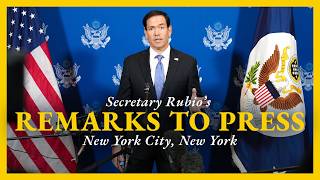 Secretary Rubio delivers remarks to the press |

|
Originally Posted By dukeofearl: Sending a couple of Jewish real-estate guys to negotiate with hard-line Muslim terrorists seems totally retarded. We, Trump, knows that they can't be trusted and are just using this ruse to make the US seem like we are trying to be peaceful all the while our sanctions and blockades are killing the IRGC. |
Saudi Arabia began seesawing its crude oil exports back east before the Petroline was even hit. They got TWICE AS MUCH (2Mbpd would have been plenty enough for refining) amount of crude flowing through the Petroline pipelines within a little over a week, and likely a sufficient amount sooner than that. ARAMCO has 24/365 access to spare parts for every single little piece of infrastructure.
Iranian customs data reviewed by The Wall Street Journal lists around 1,300 shipments of dual use components sent from China to Iran's defense ministry between January and June 2026. Among them were electronics with applications in drones and missile guidance systems. One shipment cleared into Tehran on the same day Beijing was publicly touting its role in easing tensions in the Middle East. WSJ article here. China has become the only major buyer of Iranian oil, despite U.S. sanctions meant to stop the flows, providing billions of dollars for Tehran this year. Chinese front companies help launder the funds, while Chinese banks route the transactions through the country’s financial plumbing, using China’s currency, to evade U.S. oversight, U.S. officials and people familiar with the flows say. On the battlefield, satellite imagery procured from Chinese entities has been linked by U.S. officials to an Iranian strike that killed three American troops, the Journal has reported. Chinese companies have also helped provide chemical precursors used to manufacture the types of ballistic missiles used in the attack, according to a document viewed by the Journal and people familiar with the matter. The actions illustrate a level of Chinese support for Iran that hasn’t been previously reported or publicly acknowledged by the Trump administration. That support has helped extend a conflict that is increasing global energy prices, draining weapons stockpiles and heaping pressure on Trump ahead of the midterm elections. Beijing said it consistently abides by international rules and opposes “attempts to smear China by associating it with the conflict.” It said China maintains cooperation with Iran and supports all efforts toward peace in the Middle East. In the past, China has said it strictly regulates the export of dual-use components, which can serve both civilian and military purposes. It has said it rejects unilateral U.S. sanctions, including those that punish unauthorized trading of dual-use materials, saying the sanctions violate international law. Iranian officials didn’t respond to requests for comment. Washington has launched hundreds of sanctions targeting Iran since the war began on Feb. 28, including penalties against companies and individuals in China it believes are helping Tehran. Those steps, along with an embargo of Iranian trade, have caused a contraction of Iran’s economy. But the White House has proven reluctant to more seriously confront Beijing over its support for Iran, which has continued launching attacks on U.S. forces and oil infrastructure in the Middle East. Trump has made improved relations with Beijing a priority after a tariff war last year showed China has options to hurt the U.S. economy, including restricting American access to rare earth materials. Ahead of this week’s summit, Trump told top officials and aides that maintaining good relations with Xi is a priority, people familiar with the discussions said. As a result, senior officials have repeatedly played down the significance of Chinese aid to Iran, avoiding criticism of Beijing that could jeopardize the meeting. Many within the administration believe the reluctance to take on Beijing is weakening America’s ability to pressure Tehran. Lawmakers on both sides of the political aisle have called on Trump to confront Xi more directly. “There is now a large and growing body of evidence that Chinese companies are helping Iran target and kill American troops, keep Iran’s drone and missile programs alive, and sustain Iran’s economy,” Sen. Elissa Slotkin, a Michigan Democrat, wrote in a letter to Trump on Friday that was shared with the Journal. She urged Trump to make Chinese support for Iran a “centerpiece” of his talks with Xi. Trump brushed off concerns about Chinese support for Iran when asked earlier this month whether he would raise the issue with Xi. “I think he’s behaved reasonably well, and we behave reasonably well,” he said. On Wednesday, Secretary of State Marco Rubio said the U.S. and China would have “a very frank conversation” at the Xi-Trump summit. “We’ll talk about everything that’s relevant. We’ll talk about everything that’s important,” he said. “The idea that we would not interact with them at the highest levels is irresponsible.” A spokesperson for the Treasury Department said it maintains an active channel with Chinese counterparts and won’t hesitate to act when warranted. “This administration has repeatedly targeted malign Iran-related activity that exploits or transits China’s jurisdiction and will continue to do so,” the spokesperson said. The White House has said it is working aggressively to disrupt and penalize anyone who does business with the Iranian regime. In backing Iran, Beijing hopes to undermine Washington’s diplomatic standing and draw down U.S. weapons inventories, weakening it militarily, political analysts say. Yet China is also wary of going too far. It values economic ties with America, and as the world’s largest energy importer, China suffers if the oil shock caused by the conflict drags on, political analysts say. Air shipments The shipments to Iran’s defense ministry that were reviewed by the Journal are part of a surge in flights with cargo from China to Iran this year. The air bridge has become a crucial supply route for Iran’s drone and ballistic-missile programs as the U.S. Navy blocks Iranian sea trade, defense experts say. The shipments have arrived at Tehran’s Imam Khomeini International Airport. The boxes are packed with GPS tracking devices, electric motors and aircraft engine parts, according to Iranian customs records provided by trade database ImportGenius. Records from January 2025 to the end of June this year show thousands of shipments to Iran’s defense ministry and Iranian companies of items that can be used to build drones and other weapons. Many of the entries are marked with a reference to “Article 119,” a section in Iranian customs regulations that grants full tariff exemptions for armaments and defense imports. China has offered economic and military support for Iran for decades. But the two sides deepened ties after the Trump administration in 2018 launched a “maximum pressure” campaign to cut Iranian oil exports to zero and force Iran to negotiate over its nuclear program. The campaign included sanctions penalizing foreign entities that helped Iran, cutting them off from the U.S.-led global financial system. Rejecting those rules, Tehran and Beijing signed a 25-year strategic pact in 2021. China became Iran’s biggest oil importer, buying up more than 80% of its crude exports, according to U.S. lawmakers. An elaborate network of Chinese banks and Hong Kong shell companies evolved to help Iran evade sanctions and keep the oil flowing, the Journal has reported. M/T Celestial Sea, an Iranian-flagged oil tanker. U.S. Marines boarded an Iranian-flagged commercial oil tanker suspected of attempting to violate the U.S. blockade on May 20. USMC Hong Kong said it enforces United Nations sanctions but not those imposed unilaterally by nations, which it says violate international law. Chinese exporters of dual-use goods and electronics also began attending trade fairs in Iran, translating their corporate slogans into Farsi to build local ties, according to an analysis of social-media posts by the Center for Strategic and International Studies in Washington. In the following years, Chinese companies produced for Iran chemical materials such as sodium perchlorate, which is used to make propellant for ballistic missiles. The exports became more important for Iran after Israel largely destroyed its missile program in attacks in 2024, forcing the regime to replenish its arsenal. The sales became widely known when the Journal and other media reported on them in 2025. U.S. forces later that year raided a ship carrying dual-use components from China to Iran, signaling that Washington was watching. One Chinese company that attempted to sell chemical materials, Haokun Energy, told a U.S.-sanctioned importer of products for Iran last December that exports of sodium perchlorate required government licenses. It said it had coordinated with Chinese authorities “to process part of the licenses confidentially,” Haokun wrote in a letter viewed by the Journal. Treasury had earlier sanctioned Haokun and the importer for helping Iran sell oil to China. The December letter said Haokun had set up a Beijing-based shell company for the sodium perchlorate transaction. The Journal verified the company was established weeks before the letter’s date. It couldn’t be determined if the deal progressed. Haokun didn’t respond to requests for comment. Material for Shaheds Days before the U.S.-Iran war began, Iranian customs data showed a delivery of 300 tons of chemical compounds from China to Iran’s ministry of defense. Once the war started, trade between Iran and China initially collapsed, according to Iranian customs data and Kpler, a research firm that tracks oil shipments. The U.S. Navy blockade of Iranian ports, announced in April, further tightened the noose. Tehran responded by expanding air links between China and Iran via Mahan Air, an Iranian airline sanctioned by the U.S. that Treasury says has ferried cash, weapons and personnel for Iran. The airline increased flights from Beijing, Shanghai and Guangzhou to Tehran to about 27 a week by the end of April from four at the start of March, according to FlightRadar24 data. Air shipments to Iran’s ministry of defense accelerated, customs data show. Mahan didn’t respond to requests for comment. Researchers who track trade with Iran say the shipments involve little-known Chinese suppliers working with Iranian importers. Some of the components on offer are known to be used to make Shahed drones, said Kate Koren, deputy director of the economics program at CSIS in Washington. The cheap but deadly Iranian drones have caused significant damage to U.S. bases. In a soon-to-be-published report, Koren said she found several Chinese companies that had publicly advertised sales this year for sensitive electronics, including those found in the Shahed. In May, Treasury sanctioned Chinese and Hong Kong-based companies it said were trying to help Iran acquire weapons, including shoulder-fired missile launchers. A video posted that month on Iran’s Tasnim news agency, affiliated with the Islamic Revolutionary Guard Corps, or IRGC, showed members of the militia getting training on how to use the missile launchers, known as manpads, to shoot down U.S. fighter jets. Iran currently operates manpads that it manufactures inside the country based on older Chinese versions, according to former Treasury officials. But Iranian officials want access to China’s latest models, which are more effective, the former officials said. Over the following weeks, U.S. officials sanctioned more Chinese individuals and companies for procuring weapons for Iran’s military and the IRGC. One of the procurement networks tried to buy manpads for Iran’s Center for Innovation and Technology Cooperation, which works to adapt foreign-made weapons to be produced at home, U.S. officials said. The group tried to deliver the manpads to Iran via Belarus to obfuscate the Iranian end-user, but it wasn’t successful, U.S. officials said. ‘I trust them’ On June 17, the U.S. and Iran signed a 60-day truce. Days later, Iranian customs noted air shipments from China with more than $6 million of electronics components that the U.S. government has said are used for a variety of military purposes, including in flight control units for precision-guided weapons. In July, the U.S. added new sanctions on individuals and companies working for Mahan Air, including a China-based company it said acted as a sales agent for the airline, coordinating the transport of electronics. The U.S. issued more than 100 additional sanctions that month. But divisions were deepening within the administration over how hard to press China. Defense Secretary Pete Hegseth told lawmakers in July that China, along with Russia, was enabling Iran “at different levels.” Days later, Trump pushed back. “I don’t know that they’re enabling,” he said, insisting that Xi had personally assured him China wouldn’t provide Iran with weapons. “I trust them,” he said of Xi and Russian President Vladimir Putin. “There could be some things they do. But thus far, at least, it has not been major.” The same week, after meeting Chinese Foreign Minister Wang Yi in Manila, Rubio told reporters that “nothing that China has done has in any way changed the trajectory” of the conflict. Beijing had in some instances been “quite cooperative,” he said. Behind the scenes, U.S. officials were trying to tighten the screws on support for Iran involving China. In one episode, U.S. officials identified sales of petrochemical products from Iran to Egypt, being paid for with U.S. dollars, violating U.S. sanctions. The transactions were handled through the United Arab Emirates branch of Banque Misr, an Egyptian state-owned bank, according to several people familiar with the transactions. Treasury authorities sent warnings to the bank to stop, the people said. Instead, Banque Misr switched the payments to China’s yuan currency. They were to be cleared through the Cross-Border Interbank Payment System, a Chinese financial network in which transactions are harder for U.S. authorities to track, the people said. The plans eventually failed, as U.S. officials became aware of them, communicating their disapproval to Egyptian officials, according to the people. Treasury later went after Banque Misr, calling its U.A.E. branch “a critical node” for Tehran’s financial activities and moving to cut its access to U.S. dollars. Egypt’s foreign ministry and Banque Misr said they were communicating with U.S. authorities about Treasury’s allegations. Banque Misr added that it respects “relevant regulatory and legal frameworks.” The episode created tension between China and Egypt, with Beijing suspicious that Egyptian officials had shared information with the Americans, people aware of the details said. Xi himself brought the issue up in a summit with Egypt’s president in Cairo earlier this month, one of the people added. Satellite images Some Trump officials and U.S. national security officials still thought the U.S. wasn’t doing enough. Concerns grew more urgent after U.S. officials concluded Iran had used Chinese satellite imagery before and after a July 17 strike that killed three U.S. troops, linking it directly to the attack. The Trump administration had already sanctioned three Chinese satellite-imagery companies in May for providing data it said could help Iran target U.S. forces. In late August, Trump and Treasury Secretary Scott Bessent launched “Operation Economic Outcast,” a program to “sever every economic lifeline” sustaining the Iranian regime. The U.S. added sanctions against a China-owned oil tanker that transported Iranian oil and a network of Chinese companies and individuals that helped Iran obtain critical components. But no major Chinese companies were targeted. When reporters twice asked Bessent whether the administration would strengthen sanctions against Chinese banks and businesses, Bessent declined to single out China, saying that “every country” should be prepared to face U.S. sanctions. Although the U.S. blockade has made it much harder for Iran to export oil, some keeps flowing to China. About four million barrels were delivered to China in the week after “Operation Economic Outcast” was launched, according to Kpler calculations. Mahan Air, meanwhile, flew from China to Iran 39 times in the first week of September, double its prewar level, according to FlightRadar24. Many of the flights appear to be focused only on cargo, rather than moving passengers. Many tracked by FlightRadar24 in early September, for example, weren’t available for booking on the airline’s website. Last week, Iranian state-affiliated media said Mahan would suspend flights to Oman and Turkey. But the airline continues to fly to China.
A Hamas commander who held seven Israeli hostages in captivity during the war was killed in a strike in Gaza City over the weekend, the military announces. The strike killed Mahmoud Abd al-Fattah Awad, who the military says held hostages Daniella Gilboa, Karina Ariev, Doron Steinbrecher, Naama Levy, Ziv Berman, Omri Miran, and Eitan Mor in a tunnel in Gaza City. Recently, the Hamas commander planned and advanced attacks on troops and Israeli civilians, and acted to restore Hamas capabilities, "in systematic violation of the ceasefire," the military says. Separately, the army also confirms killing Hamas's chief financial officer in southern Gaza yesterday. Muhammad Abu Alwan, who served as head of the terror group's finance department, directed the transfer of over a billion dollars to Hamas during the war, according to the IDF and Shin Bet, "making him a key figure in maintaining the terrorist organization’s rule and survival." Abu Alwan had also been involved in restore Hamas infrastructure, in violation of the truce, the military says. |
Robert A. Heinlein, Friday

Attached File
|


|
Originally Posted By realwar: https://www.ar15.com/media/mediaFiles/32274/Screenshot_2026-09-24_at_12-02-51__6__Ho-3832191.JPG

|

|
Originally Posted By realwar: https://www.ar15.com/media/mediaFiles/32274/Screenshot_2026-09-24_at_12-02-51__6__Ho-3832191.JPG
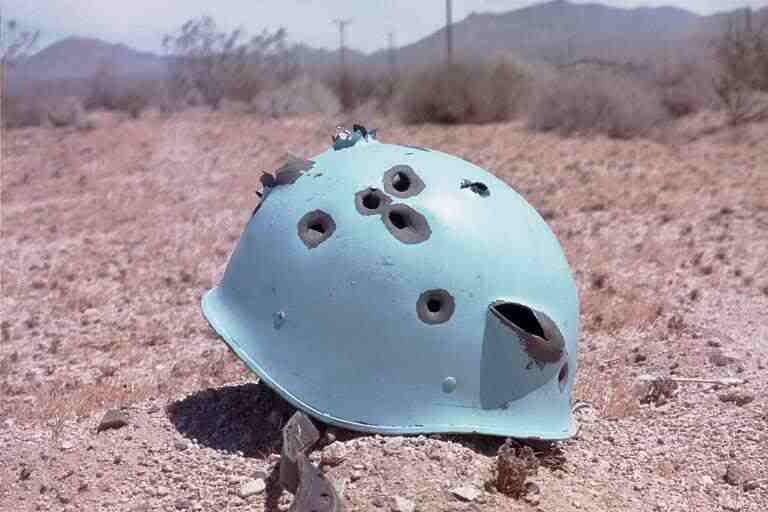
Better make sure it's not full of C-4 |