


AR Sponsor


Posted: 3/28/2017 3:51:36 PM EDT
|
A month or so ago I took two of my rifles, both builds that have always functioned flawlessly, to the range with an assortment of handloads. I fired a few leftover rounds from a previous session just to complete the box. No problems. Then, I began loading magazines with some other loads that I only had four or five of each load, different powders and bullet weights. Rifle #1: pulled the trigger and heard the dreaded click. Dropped the magazine and pulled back on the charging handle to clear the round. Nothing doing. It was locked up tighter than a rat's ass. I figured I would fix the problem at home so I put the rifle in the truck and got out rifle #2.
Rifle #2 (different handload because, well, I'm not THAT stupid  ): Pulled the trigger to hear another click. Charging handle wouldn't clear that round either. Put that rifle in the truck and went home. At home I had to mortar the crap out of both rifles, but one of them just stripped the case rim, so I had to put a dowel down the barrel and tapped it with a mallet while my wife pulled back on the charging handle. ): Pulled the trigger to hear another click. Charging handle wouldn't clear that round either. Put that rifle in the truck and went home. At home I had to mortar the crap out of both rifles, but one of them just stripped the case rim, so I had to put a dowel down the barrel and tapped it with a mallet while my wife pulled back on the charging handle.
I sent off for a Wilson case gauge to check the remaining rounds. The measurements were anywhere from 0.008" to 0.013" over the "go" limit. But before we get to analyzing the problem, let me tell you my reloading press setup. The method I've been using for 40-plus years with nary a problem. First, I screw the die in until it firmly contacts the shellholder, then lower the ram and screw the die in another 1/4 of a turn. This way any "spring" in the levers of the ram/handle is negated. Since the shoulders are obviously not being set back far enough, my thinking is that several thousandths (about 0.010") of the die or shellholder needs to be removed. Here's my problem with that: I probably have around 1,500 to 2,000 rounds of .223/5.56 ammo reloaded. Not all of them are above tolerance. I haven't taken the time to check them all, but a random sampling gave me the numbers above in this post with about half of them being okay. Now here's the thing....I have two reloading presses that I use, both RCBS RS2's. One on a very strong bench in the garage, the other on a not-so-sturdy bench in my reloading room. My thinking is that maybe the press on the not-so-sturdy bench is flexing the wood top on the bench to the point of not pushing the die firmly against the shellholder. Until I know, I don't want to alter the specs on the die or shellholder. When I get some time I'm going to size some cases first in the garage and then in my reloading room, all the while checking the cases with the gauge as I go. What do y'all think? Is 0.015" of excess shoulder length the culprit, or do those two rifles have tight chambers? FTR, factory ammo functions flawlessly. In lieu of pulling a BUNCH of bullets, I'm going to try them in some of my other rifles, just haven't had the time yet (wife is recovering from breast cancer surgery). |
|
It could be the excessive length like you suspect, but it could also be a combination of things. Start with a thorough cleaning of the barrel, to include cleaning the chamber with a chamber brush and good solvent, as any build up at the chamber / throat / free-bore area could also be part of the problem. Make sure your brass is trimmed short enough, properly sized, and bullets are set back enough along with a decent crimp. I would also suggest that you check the headspace to make sure it is within spec.
CY6 Greg Sullivan "Sully" SLR15 Rifles TheDefensiveEdge.com (763) 712-0123 |
Or, 

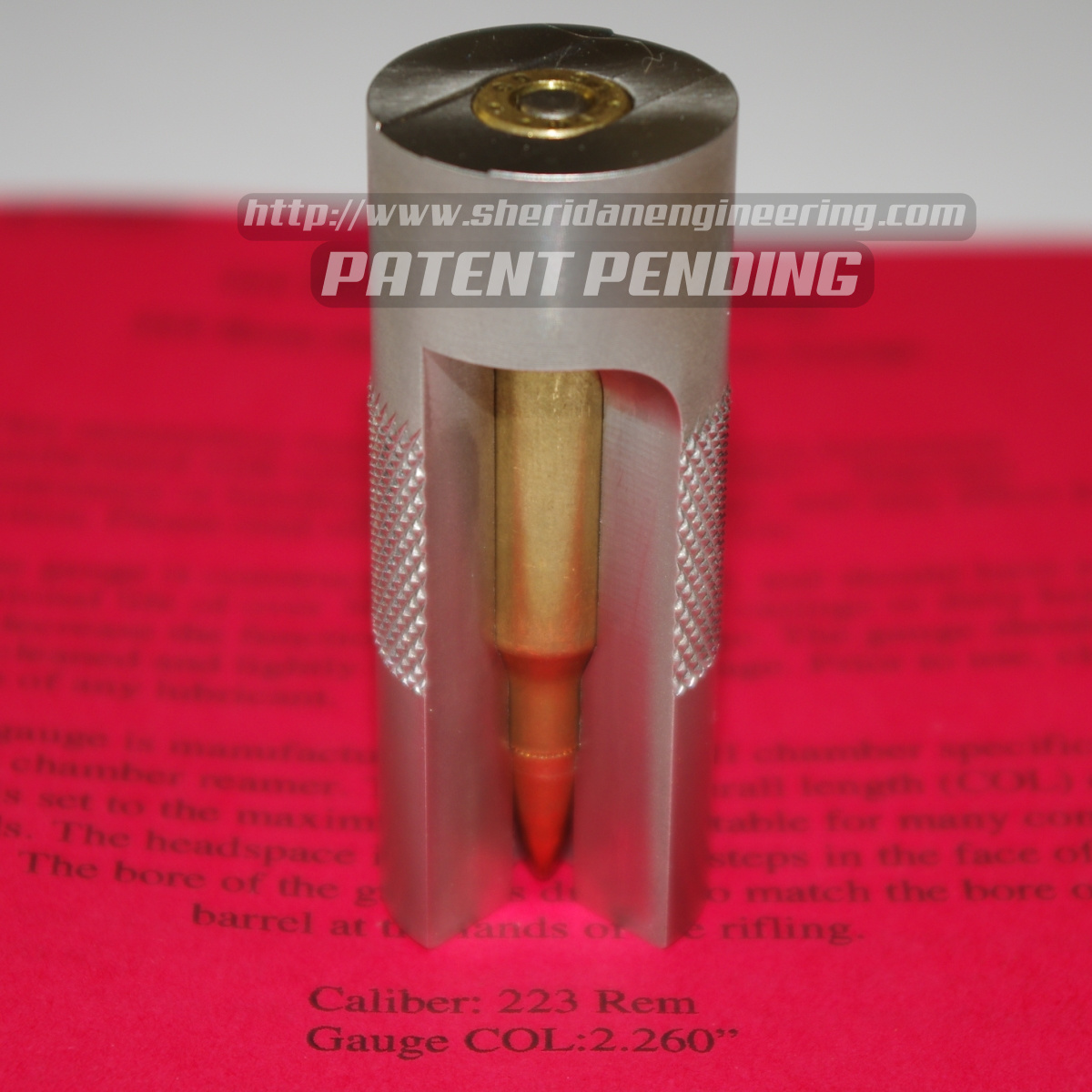
Ammo gauge, get one!!!!! It too easy to not trim the case to the correct OAL to begin with, To not set the sizer so its correctly sizing the case, To over bullet crimp to budge the shoulders of the case, Or even not seat the bullet deep enough in the case to cause rifle embed problems on loading. As for before the rifle is even fired the first time, or when cleaning between firings, You have to clean the chamber with a Chamber brush and CLP by hand!!! As for charging, do not ride the charging handle back forward. Pull the handle all the way back, and let it go. If you don't want to use the charging handle, then lock the bolt back on the carrier catch (catch should be in front of the bolt, not just under the carrier), lock the charging handle forward, then hit the release to charge the weapon Lastly, double check your build, hence pull the bolt off the carrier and with just the carrier and key, dry fit them into the upper receiver to confirm that the Key is not binding inside the upper receiver, and that you have the gas tube correctly aligned with the carrier key (gas tube will enter the key when the front of the carrier is about 1" back from touching the face of the barrel extension). Also, with the B/C back together and in the upper, upper locked home, when you pull back on the charging handle, the last inch of the pull should not be greater in tension the about the middle of the pull, and the face of the bolt should stop 1/8" to 1/4" in front of the back edge of the ejection port window. |
|
Quoted:
http://www.sheridanengineering.com/images/SG223REM.jpg Or, http://www.stu-offroad.com/firearms/reloading/casegauge/gauge-2.jpg http://www.stu-offroad.com/firearms/reloading/casegauge/gauge-3.jpg Ammo gauge, get one!!!!! It too easy to not trim the case to the correct OAL to begin with, To not set the sizer so its correctly sizing the case, To over bullet crimp to budge the shoulders of the case, Or even not seat the bullet deep enough in the case to cause rifle embed problems on loading. As for before the rifle is even fired the first time, or when cleaning between firings, You have to clean the chamber with a Chamber brush and CLP by hand!!! As for charging, do not ride the charging handle back forward. Pull the handle all the way back, and let it go. If you don't want to use the charging handle, then lock the bolt back on the carrier catch (catch should be in front of the bolt, not just under the carrier), lock the charging handle forward, then hit the release to charge the weapon Lastly, double check your build, hence pull the bolt off the carrier and with just the carrier and key, dry fit them into the upper receiver to confirm that the Key is not binding inside the upper receiver, and that you have the gas tube correctly aligned with the carrier key (gas tube will enter the key when the front of the carrier is about 1" back from touching the face of the barrel extension). Also, with the B/C back together and in the upper, upper locked home, when you pull back on the charging handle, the last inch of the pull should not be greater in tension the about the middle of the pull, and the face of the bolt should stop 1/8" to 1/4" in front of the back edge of the ejection port window. |
|
Since you have a case gauge, lets do this in steps,
Upper shotgunned open and B/C removed, size correctly trimmed OAL case, drop it into the chamber and give the back a tap to make sure it seated all way down against the shoulder, then turn the muzzle up and make sure that the case drops free. If it drops free, do it next with a live round, wooden dowel to tap the round into the chamber, and then see if the round still drops free when the muzzle is tilted upwards. If the round down not fall out, cleaning rod down the muzzle to tap the round out, and check the round to see if the problem is the case jamming into the chamber, or the bullet embedding into the rifling at loading. If the live round drop out, then we can almost weed out the chamber and head spacing problem, and narrow the problem to why the carrier not fully locking up the bolt. Hence could be that the barrel extension ramp is not matching the upper receiver ramping (or last of), the gas tube not aligned with the carrier key, the carrier catching the bolt catch, the recoil spring/buffer binding up as it moving the B/C forward, of even the carrier key binding up in the upper receiver slot. |
|
Quoted:
Since you have a case gauge, lets do this in steps, Upper shotgunned open and B/C removed, size correctly trimmed OAL case, drop it into the chamber and give the back a tap to make sure it seated all way down against the shoulder, then turn the muzzle up and make sure that the case drops free. If it drops free, do it next with a live round, wooden dowel to tap the round into the chamber, and then see if the round still drops free when the muzzle is tilted upwards. If the round down not fall out, cleaning rod down the muzzle to tap the round out, and check the round to see if the problem is the case jamming into the chamber, or the bullet embedding into the rifling at loading. If the live round drop out, then we can almost weed out the chamber and head spacing problem, and narrow the problem to why the carrier not fully locking up the bolt. Hence could be that the barrel extension ramp is not matching the upper receiver ramping (or last of), the gas tube not aligned with the carrier key, the carrier catching the bolt catch, the recoil spring/buffer binding up as it moving the B/C forward, of even the carrier key binding up in the upper receiver slot. |
AR Sponsor