


AR Sponsor


Posted: 10/16/2012 6:47:47 AM EDT
|
Figured I would start a thread and discuss some of the tools for maintaining or building your own AR's. AR's are relatively easy to maintain, upgrade and build if you have the right tools. The best part about them, they are addicting. AR's are a great hunting unit, can be built in mutliple configurations to meet your needs, and can be used for home protection.
There are some main tools to have and there are ones that are nice to have. I'll start with the main tools to maintain or build an AR: Upper Receiver Vise Block. In order to work on your upper, you will need one of these. On this first one you slide your upper receiver down on the block and put the two pins through the takedown pin holes. This works great for installing barrels, forearms/handguards, working on your front sight or installing a muzzle brake or flash hider. 
Another option is one that clamps over the upper receiver and you clamp the whole block in the vise. If you get one of these, make sure you look for the one that has the plastic rod that goes inside the upper receiver as it provides more support. You can use the clamp without the plastic rod for sliding in your bolt carrier and bolt to check headspace. 
Lower Receiver Vise Block. This block slides up in the magazine well to support your lower receiver. The block will hold the entire weapon if needed, but is mainly used to support your lower receiver to work on the stock, trigger group, etc. 
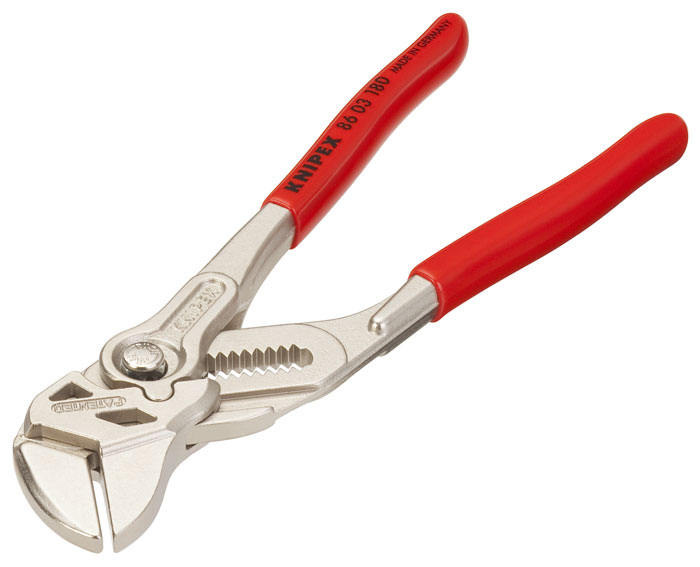
AR Wrench. There are several different combination wrenches out there that can be used for maintenance and building of AR's. This first wrench below does it all from installing barrel nuts, muzzle brakes/flash hiders, handguards/forearms, carbine stocks and buffer tubes, etc. 
This next one is what I really like to use for the carbine stock lock nut/ring. It is thinner and easier to get on the lock nut than the multi-tool listed above: 
Roll Pin Punches. For the AR builder this is a must have. There are roll pin punches and roll pin holder punches. Looking at the picture before the one on the right has a nipple that extends out to act as a guide so that the punch doesn't slide off when driving in or removing roll pins. The one on the left is a roll pin holder, esepecially handy to start roll pins in their holes and you can finish the install with the other punch. 
Front Sight Tool. If you are running a stock front sight, this tool will help you adjust and work on the sight. 
Front Takedown Pin Detent/Spring Installation Tool. Without a tool like this you will find out real quick that the tiny detent is hard to find when it fires across the room and landed in the carpet somewhere. The detent spring goes in the hole first and then the detent, this tool can be used to install them much easier without losing any parts. 
A much cheaper option is to use an adjustable clevis pin. The idea with the clevis pin and the tool above is the you align the hole in the tool or clevis pin with the hole in the receiver, drop in the spring and then detent, push them in to the receiver through the hole with a punch that will fit, then put pressure against the punch with the rod in the tool or clevis pin so that the detent and spring stay in place. Then remove the punch, start removing the tool/clevis pin and follow it with the take down pin that you are trying to install. 
here is a link on how to use the clevis pin to install the detent and spring: http://theblackrifle.blogspot.com/2012/02/how-to-install-ar-15-front-takedown-pin.html Gas Block Dimple Jig. When installing a new barrel, some barrels come with a dimple for the gas block and some don't and others only have one dimple. This jig aligns by utilizing one set screw that goes in the gas port hole which aligns the other side for making one or two dimples, your choice, with the proper sized drill bit per the instructions. 
The next tools are 'nice to have', but not absolutely necessary in a build, but can aide in building and definitely in maintenace. Bolt Ejector Tool. This tool aides in the removal of the ejector, ejector spring and pin. The tool compresses the ejector so that you can drive out the pin with a punch and then remove the ejector and ejector spring. Also used for installing the ejector and ejector spring. 
Bolt Carrier Gas Key Staking Tool. If you don't buy a bolt carrier with a gas key or the existing gas key is not staked, this is the tool required to do it. As with most of the tools listed, there are different versions, and these tools help in staking at the correct angle from the sides so that you an be assured that your gas carrier key will not come loose. Notice in the second picture below that the tops of the bolt and key are also staked, not really necessary but can provide extra support if required. 
A properly staked carrier gas key. 
Rail Alignment Tool. Almost all AR upper receivers come with a picatinny rail machined in to the receiver. A majority of forearms/handguards also have a picatinny rail on top. When you install the forearm/handguard, this tool helps aide in alignment and you not having to eyeball to see if you have the two aligned properly. 
Trigger Jig. This is another nice thing to have if you really get in to working on triggers on your AR or performaning 'trigger jobs'. The tool mounts to the outside of the lower receiver and you can mount your hammer and trigger on the outside of the lower, on the tool, and check the engagement of your hammer and trigger. 
and to finish it all off, check the headspace: 
There are a few other tools, however this is a collective of the main tools used on AR's to do maintenance and building. Of course, there are also other variations/manufacturers of the tools listed above. If you plan on building your own AR or just want to learn more about the assembly, can watch the series of video's at Brownells: www.brownells.com/.aspx/lid=11004/learn/ |
|
Nice!
I would recommend clamping the barrel in a barrel block for installing flash hiders...to avoid stress on the barrel extension index pin. http://www.brownells.com/gunsmith-tools-supplies/rifle-tools/barrel-tools/ar-15-m16-barrel-vise-jaws-prod12470.aspx 
Or the drill a hole in a block of wood method works too...to make your own. Other supplies: Aeroshell 33MS Grease for the barrel nut/receiver. |
|
Quoted:
Quoted:
That properly staked gas key....  Looks to be properly staked more than a few times. Looks to be properly staked more than a few times. I'm a firearm noob and thought that didn't look proper at all. My guess is you don't want to deform the walls of the allen key hole. Good catch..that's fucked up |
|
Most of these tools are unnecessary for the first time builder, I can see someone becoming discouraged from this…. And I really don't like those upper vice blocks.
As for the gas key, those hits on the head probably doest hurt anything but is un necessary… The key uses special screws 
|
|
Quoted:
Nice! I would recommend clamping the barrel in a barrel block for installing flash hiders...to avoid stress on the barrel extension index pin. http://www.brownells.com/gunsmith-tools-supplies/rifle-tools/barrel-tools/ar-15-m16-barrel-vise-jaws-prod12470.aspx http://www.brownells.com/userdocs/products/p_795015100_1.jpg Or the drill a hole in a block of wood method works too...to make your own. I don't even get that fancy. A 2x4 on either side of the barrel and a good squeeze in a vise is all I've ever needed. Joe |
|
Quoted:
Quoted:
That properly staked gas key.... Looks to be properly staked more than a few times.I'm a firearm noob and thought that didn't look proper at all. My guess is you don't want to deform the walls of the allen key hole. You have to press against the fastener or you're wasting your time. The side-staking in that pic is a bit heavy. It also includes 1/3 of a military field stake...the two vertical stakes which are also heavy. Looks like they were all done with a punch and not a in a jig. It is not a good example of proper staking but it will probably be OK. Downside to heavy side-staking is that the bolts can be broken. |
|
Quoted:
Quoted:
Nice! I would recommend clamping the barrel in a barrel block for installing flash hiders...to avoid stress on the barrel extension index pin. http://www.brownells.com/gunsmith-tools-supplies/rifle-tools/barrel-tools/ar-15-m16-barrel-vise-jaws-prod12470.aspx http://www.brownells.com/userdocs/products/p_795015100_1.jpg Or the drill a hole in a block of wood method works too...to make your own. I don't even get that fancy. A 2x4 on either side of the barrel and a good squeeze in a vise is all I've ever needed. Joe That'll work too... 
|
|
Yea that is a bad picture for the carrier key, I just pulled the pictures offline. I usually only stake my keys once, not near the edge.
Tools may be more than need, just trying to show some of the tools and what they are for. I've built around 40 ARs, I do have all those tools, most I use, others only once in awhile. There is a sticky in this forum at the top for performing a build. |
|
Quoted:
Quoted:
And I really don't like those upper vice blocks. I was skeptical of the Patherclaw at first, but ended up buying one and it works just fine. I believe that Mega actually requires that you use it to remain within their warranty terms. It's the one that uses the takedown and pivot pin that I wouldn't use http://www.ar15.com/archive/topic.html?b=6&f=49&t=355495 |
|
Quoted:
Quoted:
Quoted:
And I really don't like those upper vice blocks. I was skeptical of the Patherclaw at first, but ended up buying one and it works just fine. I believe that Mega actually requires that you use it to remain within their warranty terms. It's the one that uses the takedown and pivot pin that I wouldn't use http://www.ar15.com/archive/topic.html?b=6&f=49&t=355495 No doubt that those can be dangerous especially when dismounting a barrel and used in the vertical position. Dismounting can require more torque and this is when the damage can occur. Spikes Block Worx or imitating same is a better orientation for that type of restraint. |

|
couple ive seen missed make live really nice.
magnatized screw driver and none magnatized screw driver set nice brass hammer and punch set or a hd punch and ball peen hammer for those hard to reach places
and a vise block 25-30 bux from lowes. and a solid work bench (concrete and kitchen counters dont count.. ) (concrete i havent tryed kitchen counter i got in a little trouble.... ) )
|
AR Sponsor