


Armory Sponsor


Posted: 11/17/2009 1:26:02 AM EDT
|
I have 16 pounds of 5010 I bought from Pat last year. I am going to do some shooting over the holidays and decided to make up a few more rounds. I opened the first 8 pound container and a yellow smoke came out of it with a pungent smell of vinegar. The second 8 pound container was not nearly as bad but still had a smell of vinegar on it also. I know this is a sign of the powder decomposing but what I want to know is
|
|
heres an earlier post from an expert
Quoted:
recent reports indicate that a batch from Widener's is going bad... I got two jugs from a customer to use for reloading his brass. One is just starting to go bad (vinegar smell) the other's OK. I tested a few loads using the 'bad' powder and it still worked OK, but I'd certainly shoot it sooner than later. The stuff that's already fuming and deteriorated, should be used for fertilizer. //Ben |
|
Just an update on the bad powder. E-mailed Pat and was told that he no longer sells the 5010 because of the age and other unknowns from the powder but did not get any refund. I did try shooting both the semi bad and really bad powders.
First the semi bad powder that only smelled a little like vinegar: Fired about 60 rounds and all fired but there was some vertical stringing up to about 10 ft at 1200 yards so if your going for accuracy it won't work but if its just for short range plinking does fine (I did find some unburnt powder in a couple after firing). Now for the Really bad vinegar smell with the yellow smoke: Put a reduced load for a Spotter/Tracer in and once fired it shot about 500 yards short, fouled my chamber with a yellow cake (could not get the next round to chamber) and didn't burn about 1/4 of the powder. I am a glutton for punishment so I thought I would give the powder one more chance and after cleaning my chamber out put another one in and had nearly the same thing happen just not as bad. I threw the remaining 20 rounds I loaded up away. Since I usually shoot for accuracy and don't own a Ma Deuce I will be disposing of the THREE (just found a third sitting in my closet that also went bad) jugs and going to H50BMG powder because it is just cheaper in the long run. |

|
Recoil 737,
First off relax. Your powder isn't going to blow up, or burn down your house. This is one of the reasons that Internet subscriptions should come with a choke collar. Before any of you start flaming, please provide ANY PROOF of a home being burned, and or destroyed by "old powder spontaneously igniting". I personally know men who have 4831 DATA powder from World War II vintage, they are still shooting accurately. I'm one of them. I currently have over 1,000 rounds of .30-06 ammunition loaded in 1967 from the CMP. All of it runs great. Age is not the enemy of powder. I even have 3 pounds of Bullseye my friends father left him when he died. He had it stored in his garage in Lake Havasu City, Arizona. Just in case you don't know it's one of the hottest cities in the United States! It shoots just fine. Don't worry about smell. Powder doesn't change chemical composition. It may lose effectiveness, but burning down your house??? No......I don't think so. Bill T. |
|
Quoted:
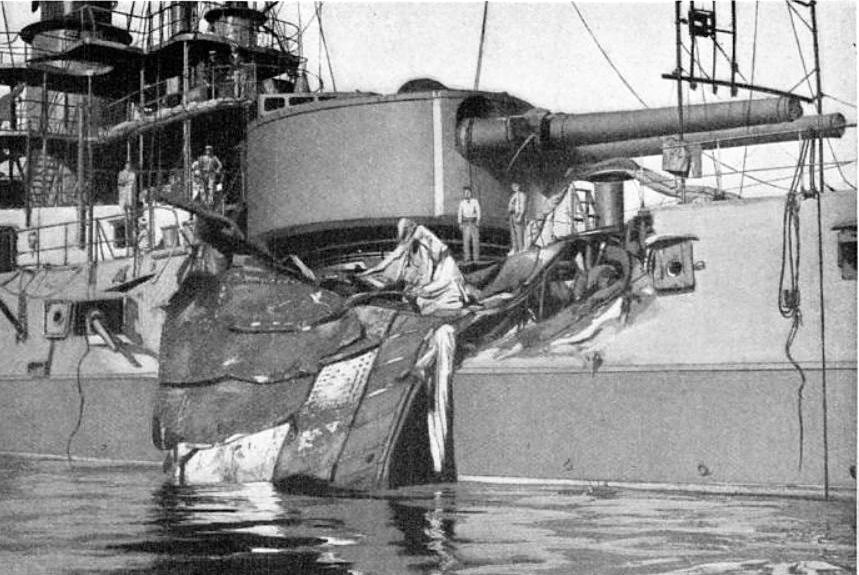
Recoil 737, First off relax. Your powder isn't going to blow up, or burn down your house. This is one of the reasons that Internet subscriptions should come with a choke collar. Before any of you start flaming, please provide ANY PROOF of a home being burned, and or destroyed by "old powder spontaneously igniting". I personally know men who have 4831 DATA powder from World War II vintage, they are still shooting accurately. I'm one of them. I currently have over 1,000 rounds of .30-06 ammunition loaded in 1967 from the CMP. All of it runs great. Age is not the enemy of powder. I even have 3 pounds of Bullseye my friends father left him when he died. He had it stored in his garage in Lake Havasu City, Arizona. Just in case you don't know it's one of the hottest cities in the United States! It shoots just fine. Don't worry about smell. Powder doesn't change chemical composition. It may lose effectiveness, but burning down your house??? No......I don't think so. Bill T. You asked for it. Alliant powder web site How to Check Smokeless Powder for Deterioration Although modern smokeless powders are basically free from deterioration under proper storage conditions, safe practices require a recognition of the signs of deterioration and its possible effects. Powder deterioration can be checked by opening the cap on the container and smelling the contents. Powder undergoing deterioration has an irritating acidic odor. (Don't confuse this with common solvent odors such as alcohol, ether and acetone.) Check to make certain that powder is not exposed to extreme heat as this may cause deterioration. Such exposure produces an acidity which accelerates further reaction and has been known, because of the heat generated by the reaction, to cause spontaneous combustion. The Naval Technical Board Nitrocellulose smokeless powder spontaneously decomposes with the production of oxides of nitrogen which react with moisture to form acids which accelerate further decomposition. The rate of decomposition was considered acceptable at temperatures below 20 degrees Celsius, but accelerated dangerously when temperatures exceeded 35 degrees Celsius. Spontaneous combustion of decomposing powder was blamed for loss of the battleships Jena in 1907 and Liberte in 1911. IMR web page Check to make certain that powder is not exposed to extreme heat as this may cause deterioration. Such exposure produces an acidity which accelerates further reaction and has been known, because of the heat generated by the reaction, to cause spontaneous combustion. ADI smokeless powders All smokeless powders deteriorate chemically as they get older. This rate of deterioration can be accelerated by such things as storage in warm conditions, exposure to other chemicals and exposure to direct sunlight. Any such deterioration may ultimately lead to a fire through spontaneous ignition of the powder. CHECK containers of smokeless powder for possible chemical deterioration through age or inadequate storage. Such deterioration may ultimately lead to spontaneous ignition of the powder. Chemical deterioration of smokeless powder can be recognised by carefully smelling the contents of the container – any deterioration produces an acrid, acidic odour quite different from the normal sweet smelling odours of ethanol or ether which are usually present. U.S. Army Defense Ammunition Center The fact that smokeless powder was subject to progressive decomposition and spontaneous ignition was noted early in 1919. This led to an extensive program to identify possibly hazardous quantities of smokeless powder and their locations, as well as other explosive material that may have had limited stability. NAVAL ORDNANCE AND GUNNERY VOLUME 1 2C3. Characteristics of smokeless powder Grains of smokeless powder have a hard, smooth finish and look very much like corn. When new, the grains are amber in color and are translucent. As the powder ages, its color becomes dark brown, then black, and finally opaque. These changes do not indicate any loss of stability. Smokeless powder is subject to a very gradual chemical decomposition which may in time be a source of danger (spontaneous combustion) unless measures are taken to arrest such action. Like many explosive compounds, smokeless powder is in a state of unstable chemical equilibrium and is readily acted upon unfavorably by impurities which may be present with it. If decomposition takes place in any particle, the decomposition products will include nitrogen oxides which have an acid reaction and will facilitate further decomposition. The use of diphenylamine, whose action has already been explained, has greatly increased the stability life of smokeless powder. A powder which may have become chemically dangerous through partial decomposition is not dangerous for use in a gun, since a part of the decomposition which should take place in the gun, with sudden evolution of heated gases, has already taken place and the powder has lost a corresponding number of heat units. Excessive heat has a most unfavorable influence upon the stability of smokeless powder. At temperatures below 60 degrees F., the stability is not appreciably affected, but at temperatures above 70 degrees F., the rate of decomposition rises quickly, becoming high at 90 degrees F., and dangerously accelerated at temperatures over 100 degrees F. Precautions must therefore be taken to ensure the maintenance of a uniformly low temperature in the magazines in which powder is kept. Since the presence of moisture favors decomposition of smokeless powder, the containers in which it is stored are made airtight, and every effort must be made to maintain their tightness. A leaky container may not only admit undesirable moist air to the powder, but may also permit the loss of volatiles through evaporation, especially if the air in the container is subjected to alternate expansion and contraction due to change in temperature. Such a loss of volatiles will increase the speed of burning of the powder to such an extent that excessive pressures will be produced in the gun. In this event the powder is ballistically dangerous. Your post is proof of your statement. Let me know if you need any more authoritative references. |
|
Rich_V
It is interesting how the Jena in 1907 and the Liberte in 1911, that both of them suffered from a exploding magazine. That the powder should decompose that fast. We are talking about a powder that was only developed about 20 yrs earlier. But I think the "Gun Powder" was the old cordite, one of the first smokeless powders that was still some what unstable. But better than the "gun cotton". So, I suppose if it was cordite that would explain why it was only at max 20 yrs old when it became unstable and blew up. By the way, would someone give the author of the post that says that people on the internet need shock collars. Well would someone give him his. And make sure the batteries are fresh.. |
|
Quoted:
Rich_V It is interesting how the Jena in 1907 and the Liberte in 1911, that both of them suffered from a exploding magazine. That the powder should decompose that fast. We are talking about a powder that was only developed about 20 yrs earlier. But I think the "Gun Powder" was the old cordite, one of the first smokeless powders that was still some what unstable. But better than the "gun cotton". So, I suppose if it was cordite that would explain why it was only at max 20 yrs old when it became unstable and blew up. By the way, would someone give the author of the post that says that people on the internet need shock collars. Well would someone give him his. And make sure the batteries are fresh.. Most likely the early smokeless powders were not fully stabilized, the tech was still early in the development curve. |
|
Quoted:
Quoted:
Let me know if you need any more authoritative references. I'll settle for a single real world example of a home burning that can be directly attributed to, "spontanious ignition of old gunpowder." Bill T. A few months ago I saw a post from a guy who posted pics about powder he'd set outside because it had gone bad (started to turn color and smell off) and came back later to see there were scorch marks on his concrete block wall from the powder deflagrating. Now, if YOU want to run the risk of powder that is already starting to decompose burning your house down that's fine for you. I know a lot of folks who would prefer not to run the risk, even if it's a small risk. In this case we're talking about a batch of powder that is known to be bad. Not suspected, but KNOWN. While modern smokeless powders CAN be stored safely for many decades, it doesn't mean that ALL of it can be. Storage, and even differences in manufacturing between batches can lead to variability. |
| I asked for a real world example because this is how these things always go. What happened on a battleship in 19 whatever is of little concern to what might happen in suburbia next week. And, while I'm on the subject, when the Iowa Class Battleships were called on to shell Lebanon after the Marine Corp barracks incident, they did so with powder manufactured during the Second World War. Quite successfully I might add. Before anyone points to the 1989 accident aboard the Iowa, it was not caused by "old powder". Bill T. |
|
Quoted:
Quoted:
Let me know if you need any more authoritative references. I'll settle for a single real world example of a home burning that can be directly attributed to, "spontanious ignition of old gunpowder." Bill T. You or anyone else are welcome to ignore the advice and experience of the major smokeless powder manufactures along with the US Naval and Army ordnance experts on this subject. You can lead a horse to water........ |
|
There was a guy in Reseda, CA that recently had his backyard storage containers burst into flames.
He's a dealer in surplus ammo and components from what I've heard, and had regular inspections of the inventory. You just never know for certain what's going on in those shells and cans unless you take them apart and visually inspect. |
|
Quoted:
There was a guy in Reseda, CA that recently had his backyard storage containers burst into flames. He's a dealer in surplus ammo and components from what I've heard, and had regular inspections of the inventory. You just never know for certain what's going on in those shells and cans unless you take them apart and visually inspect. I'm wondering if the powder was loose, or in ammunition? I've never heard of rounds "cooking off" on their own, ever. Bill T. |
|
Quoted:
There was a guy in Reseda, CA that recently had his backyard storage containers burst into flames. He's a dealer in surplus ammo and components from what I've heard, and had regular inspections of the inventory. You just never know for certain what's going on in those shells and cans unless you take them apart and visually inspect. Come on Ben, he is asking for real world examples. Everyone knows California isn't the "Real World"... |
|
I "am" in the real world, and I DID have an 8lb jug spontaneously combust. I'll try to find a link to my old post.
My 8lb explosion |
|
Quoted:
Is that post beyond the 30 day search limit for non team members? When I clicked the like link it just sent me to the ar15.com home page. It is in the Team forum, you must be a member to see it. Basically 67Charger had 8 lb of 5010 start to decompose (usual brown fumes NOx) in his house, he put it out in his yard and it exploded with a nice fireball. This can't be true since an ar15.com expert said it can't happen. Sorry 67Charger you must have imagined the whole explosion!! 
|
Armory Sponsor