


Armory Sponsor


[ARCHIVED THREAD] - Case Trimmer (Page 1 of 2)
Posted: 3/3/2014 12:34:44 PM EDT
|
Considering a power case trimmer. Thinking A Dillon or a Giraud. Any input? I will be trimming 223 & 260 Rem
Thank you for your help |
|
They don't make a 260 Remington trim die so you would have to go to C4HD and wait (a long time most likely).
Given those 2 calibers I'd go Giraud. If you put 300BLK into the mix I'd maybe move to the Dillon RT1500B when it is release. I didn't think it was necessary to debur/chamfer when loading boat-tail bullets in 223 with the Dillon but YMMV if going for precision. |

| I use the Giraud for trimming .223 cases in batches of 100's at a time. It's as easy as push a case in, give it a finishing twist, pull out, repeat. Entire process takes about 3 seconds per case. The Giraud is a pricey piece of equipment but well worth it for volume reloaders. |

|
Just watched the video on the Giraud trimmer.. since I have never seen or used one. Looks fancy and perhaps worth it if you are trimming tons.. But I honestly fly through my 223 and 300 brass using the WFT with my drill press. Not sure I see the advantage when you factor in the huge cost of the Giraud.. Feel free to school me.
|
|
Quoted:
Considering a power case trimmer. Thinking A Dillon or a Giraud. Any input? I will be trimming 223 & 260 Rem Thank you for your help Sir, FWIW I post this as a former Dillon owner and also as a Giraud user. I used the Dillon trimmer for many years. I bought it long before Doug Giraud entered his trimmer on the market. In my humble opinion after trimming cases on a Dillon trimmer one still needs to champfer and deburr the case mouth inside and out. That's one of the factors that led me to the Giraud trimmer. Having been a Giraud user for a few years when I began reloading 260 Rem I contacted Mr./Mrs. Giraud and was told I should just use my .308 Win. case holder in lieu of a 260 case holder. FWIW, without checking their list I don't recall they have one for that cartridge. The .308 case holder works just fine for the 260 in the Giraud trimmer. I bought separate cutter heads for the cases I trim, ie: I have one each for .223, .260, and .308. It makes changing the trimmer for different cartridges quite simple. JMHO, 7zero1. |
|
Quoted: Sir, FWIW I post this as a former Dillon owner and also as a Giraud user. I used the Dillon trimmer for many years. I bought it long before Doug Giraud entered his trimmer on the market. In my humble opinion after trimming cases on a Dillon trimmer one still needs to champfer and deburr the case mouth inside and out. That's one of the factors that led me to the Giraud trimmer. Having been a Giraud user for a few years when I began reloading 260 Rem I contacted Mr./Mrs. Giraud and was told I should just use my .308 Win. case holder in lieu of a 260 case holder. FWIW, without checking their list I don't recall they have one for that cartridge. The .308 case holder works just fine for the 260 in the Giraud trimmer. I bought separate cutter heads for the cases I trim, ie: I have one each for .223, .260, and .308. It makes changing the trimmer for different cartridges quite simple. JMHO, 7zero1. Quoted: Quoted: Considering a power case trimmer. Thinking A Dillon or a Giraud. Any input? I will be trimming 223 & 260 Rem Thank you for your help Sir, FWIW I post this as a former Dillon owner and also as a Giraud user. I used the Dillon trimmer for many years. I bought it long before Doug Giraud entered his trimmer on the market. In my humble opinion after trimming cases on a Dillon trimmer one still needs to champfer and deburr the case mouth inside and out. That's one of the factors that led me to the Giraud trimmer. Having been a Giraud user for a few years when I began reloading 260 Rem I contacted Mr./Mrs. Giraud and was told I should just use my .308 Win. case holder in lieu of a 260 case holder. FWIW, without checking their list I don't recall they have one for that cartridge. The .308 case holder works just fine for the 260 in the Giraud trimmer. I bought separate cutter heads for the cases I trim, ie: I have one each for .223, .260, and .308. It makes changing the trimmer for different cartridges quite simple. JMHO, 7zero1. While I respect 7zero1's posts, we differ on our evaluation of Dillon's trimmer. I've used mine to trim .223, 30-06, 308, 30-30, and 30 Carbine and have found that 1. there is no practical increase in accuracy when chamfering the inside of the case vs not, 2. there is no issue seating flat based bullets without an inside chamfer, and 3. any small burrs left from trimming with it are removed with a 10 minute tumble to remove the case lube. To support my contention, consider that none of the commercial high precision ammo manufacturers chamfer their cases when loading; Hornady TAP AMAX isn't, Federal Premium Match isn't, Norma TAC isn't. Look at their commercial ammo to see for yourself. The argument that one must chamfer to seat a flat based bullet is simply not supported by both commercial manufactures' practices and my own humble experience. As to accuracy, my son (28 years old with good eyes) shoots 5/8" groups with his .223 Savage model 10 and my ammo produced on my Dillon 650 and trimmer with no measured accuracy difference between chamfered and non chamfered brass using the same loads. (At 66, I'm not that good of a shot any more to tell the difference anymore.) While I tried both trimmers before I bought, the compelling reason I chose the Dillon is the fact that when used on a progressive press and case feeder during the case prep cycle, there is no, zero, increased time, handling, or effort to ensure that each and every case is trimmed to the same length each time it is processed. I don't have to do anything but crank the handle and I've got deprimed, resized, and trimmed brass ready to go. Try trimming 1,000 pieces of .223 brass in an hour, both with the Giraud and the Dillon and then tell me which trimmer leaves your fingers sore and hands cramped. |
|
I have used RCBS's hand trimmer, Dillon's power trimmer and currently am using Gracey's and Giraud's power trimmers. Dillon's unit uses their trim/resize die which constricts the case neck way too much in my opinion. It REQUIRES a separate operation if you want a reasonable .002" to .003" neck tension. That means you need to neck size afterward in a separate operation or use an expander mandrel. As already mentioned, Dillon's trimmer does not debur or chamfer. It cuts flat across the top of the case leaving a burr inside and out. Twisty tools are needed thereafter (by hand) to fix it.
If you buy Gracey's tool you will want to purchase Bob Jones Sights or Giraud's carbide 3-way cutter as an upgrade. They allow for much easier blade adjustment and easier cutting action than the original tool steel blades. My Gracey is dedicated to .223, which is what I shoot the most and it shines in that roll. The Giraud is the best both in design and execution, but it costs serious money. Lifetime hobbies deserve lifetime investments. Buy the Giraud if you can afford it, Gracey to save a little money. I'd skip the rest. |
|
Quoted: I have used RCBS's hand trimmer, Dillon's power trimmer and currently am using Gracey's and Giraud's power trimmers. Dillon's unit uses their trim/resize die which constricts the case neck way too much in my opinion. It REQUIRES a separate operation if you want a reasonable .002" to .003" neck tension. That means you need to neck size afterward in a separate operation or use an expander mandrel. As already mentioned, Dillon's trimmer does not debur or chamfer. It cuts flat across the top of the case leaving a burr inside and out. Twisty tools are needed thereafter (by hand) to fix it. If you buy Gracey's tool you will want to purchase Bob Jones Sights or Giraud's carbide 3-way cutter as an upgrade. They allow for much easier blade adjustment and easier cutting action than the original tool steel blades. My Gracey is dedicated to .223, which is what I shoot the most and it shines in that roll. The Giraud is the best both in design and execution, but it costs serious money. Lifetime hobbies deserve lifetime investments. Buy the Giraud if you can afford it, Gracey to save a little money. I'd skip the rest. It may be just me but I've found that the tighter neck tension actually helps me with accuracy and I consider it a good thing. The tighter neck tension seems to help with a more even burn rate as my ES and SD for both my .223 and .308 loads with the Dillon trimmed cases and TAC powder are consistently lower than those resized in just Dillon's resizing dies alone (only 2 calibers I've compared to date). As I learned with .357mag and H110 loads, many powders work best with a tighter crimp but YMMV. |
|
I use the Dillon RT-1200 and decap, size, trim, and slightly flare the case mouth, with one pull of the handle- at the leasurely pace of 25 cases per minute. My cases are then wet cleaned which deburrs the case mouth. I get exactly the same results as I did when doing everything by hand, without the sore fingers, lost time, etc.
Like COSteve, I see no advantage to processing brass by hand if you use the correct sequence. Overalll length, heaspace, runout, etc. are all within practical limits- unless you are going benchrest, and I imagine more than a few of those guys trim for overall length (Dillon), not referenced from the shoulder (Giraud). This all adds up to the real question- What is the intended goal? CH could probably make a 260 die if needed. |
|
The Dillon really shines when used on a progressive press with an automatic case feeder.
I use a Lee universal decap die in my first station, the Dillon sizer/trimmer in the 3rd station and a normal resizing die backed out to only uniform the case mouth and set neck tension in the 5th station. The expander ball also knocks off any burrs from trimming while tumbling off the resizing lube takes care of everything else. You can prep brass crazy fast thus way. ZA |
|
Quoted:
The Dillon really shines when used on a progressive press with an automatic case feeder. I use a Lee universal decap die in my first station, the Dillon sizer/trimmer in the 3rd station and a normal resizing die backed out to only uniform the case mouth and set neck tension in the 5th station. The expander ball also knocks off any burrs from trimming while tumbling off the resizing lube takes care of everything else. You can prep brass crazy fast thus way. ZA Same here, although often I just use the RCBS trimmer with a drill attached if I only have a small amount of brass and don't feel like switching out the LNL. It is fast and easy especially with the case feeder. This reminded me that I need a 300 Blk trimmer die. |
|
Quoted:
Is it a pain to swap out cutters? Sir, I assume you are referring to my comments regarding using multiple cutter heads with my Giraud trimmer. While I'm not sure if it is painful to swap out cutter heads I do believe it's a bit tedious. It depends how meticulous you want to be in setting the cutter blade to get just the cut you want both inside and out. Once I achieve that setting I want to keep it that way and not have to alter it every time I want to switch to a different caliber. For the price of the individual cutter heads it's worth it to me to just buy another so I don't have to change the blade settings. I'm pleased CoSteve has elected to post in this thread to provide an experienced alternate perspective. While I recognize the wisdom of his comments I've never done any meaningful experimentation to compare cartridges loaded with case necks champferred and deburred compared to case necks only trimmed with a Dillon trimmer. I no longer have the Dillon trimmer. I sold it on the EE, and it went quite fast! FWIW rifle cartridges I reload for .223 Rem normally have single digit SDs and ES in the teens. I suppose I could do better but my eyes aren't twenty-eight years old any more but I can still put all twenty into the xring if I concentrate on what I'm doing even though Steve and I are almost the same age! JMHO, 7zero1. |
| I can't vouch for the other types, but my powered universal RCBS unit with a .30 cal 3-way cutter is freaking awesome. Right off the bat I was trimming to +/- 0.002" tolerance and since have improved this to +/- 0.001" after adjusting the inner and outer cutter slightly. The only downside is adjusting the length if I use different types of 308 brass... commercial seems to require it adjusted out about 0.004", probably because of case material. This sucks because you can burn up a few cases aligning the thing. |
|
Quoted:
While I respect 7zero1's posts, we differ on our evaluation of Dillon's trimmer. I've used mine to trim .223, 30-06, 308, 30-30, and 30 Carbine and have found that 1. there is no practical increase in accuracy when chamfering the inside of the case vs not, 2. there is no issue seating flat based bullets without an inside chamfer, and 3. any small burrs left from trimming with it are removed with a 10 minute tumble to remove the case lube. To support my contention, consider that none of the commercial high precision ammo manufacturers chamfer their cases when loading; Hornady TAP AMAX isn't, Federal Premium Match isn't, Norma TAC isn't. Look at their commercial ammo to see for yourself. The argument that one must chamfer to seat a flat based bullet is simply not supported by both commercial manufactures' practices and my own humble experience. As to accuracy, my son (28 years old with good eyes) shoots 5/8" groups with his .223 Savage model 10 and my ammo produced on my Dillon 650 and trimmer with no measured accuracy difference between chamfered and non chamfered brass using the same loads. (At 66, I'm not that good of a shot any more to tell the difference anymore.) While I tried both trimmers before I bought, the compelling reason I chose the Dillon is the fact that when used on a progressive press and case feeder during the case prep cycle, there is no, zero, increased time, handling, or effort to ensure that each and every case is trimmed to the same length each time it is processed. I don't have to do anything but crank the handle and I've got deprimed, resized, and trimmed brass ready to go. Try trimming 1,000 pieces of .223 brass in an hour, both with the Giraud and the Dillon and then tell me which trimmer leaves your fingers sore and hands cramped. Quoted:
Quoted:
Quoted:
Considering a power case trimmer. Thinking A Dillon or a Giraud. Any input? I will be trimming 223 & 260 Rem Thank you for your help Sir, FWIW I post this as a former Dillon owner and also as a Giraud user. I used the Dillon trimmer for many years. I bought it long before Doug Giraud entered his trimmer on the market. In my humble opinion after trimming cases on a Dillon trimmer one still needs to champfer and deburr the case mouth inside and out. That's one of the factors that led me to the Giraud trimmer. Having been a Giraud user for a few years when I began reloading 260 Rem I contacted Mr./Mrs. Giraud and was told I should just use my .308 Win. case holder in lieu of a 260 case holder. FWIW, without checking their list I don't recall they have one for that cartridge. The .308 case holder works just fine for the 260 in the Giraud trimmer. I bought separate cutter heads for the cases I trim, ie: I have one each for .223, .260, and .308. It makes changing the trimmer for different cartridges quite simple. JMHO, 7zero1. While I respect 7zero1's posts, we differ on our evaluation of Dillon's trimmer. I've used mine to trim .223, 30-06, 308, 30-30, and 30 Carbine and have found that 1. there is no practical increase in accuracy when chamfering the inside of the case vs not, 2. there is no issue seating flat based bullets without an inside chamfer, and 3. any small burrs left from trimming with it are removed with a 10 minute tumble to remove the case lube. To support my contention, consider that none of the commercial high precision ammo manufacturers chamfer their cases when loading; Hornady TAP AMAX isn't, Federal Premium Match isn't, Norma TAC isn't. Look at their commercial ammo to see for yourself. The argument that one must chamfer to seat a flat based bullet is simply not supported by both commercial manufactures' practices and my own humble experience. As to accuracy, my son (28 years old with good eyes) shoots 5/8" groups with his .223 Savage model 10 and my ammo produced on my Dillon 650 and trimmer with no measured accuracy difference between chamfered and non chamfered brass using the same loads. (At 66, I'm not that good of a shot any more to tell the difference anymore.) While I tried both trimmers before I bought, the compelling reason I chose the Dillon is the fact that when used on a progressive press and case feeder during the case prep cycle, there is no, zero, increased time, handling, or effort to ensure that each and every case is trimmed to the same length each time it is processed. I don't have to do anything but crank the handle and I've got deprimed, resized, and trimmed brass ready to go. Try trimming 1,000 pieces of .223 brass in an hour, both with the Giraud and the Dillon and then tell me which trimmer leaves your fingers sore and hands cramped. I agree with this post. I have a possum hollow that only cuts (definitely not as fast as the Dillon or Giraud) I don't really understand why everyone is so gungho about chamfering and deburring cases. Like you said, I have never seen an ammo manufacturer that has chamfered brass. EVER! And I always wet tumble my brass after I process it, so deburring is a wasted step. Plus, if you chamfer the case and then roll crimp it, the chamfer removed materal and takes away from the crimping tension because the material you remove is supposed to be what is pressed into the crimp groves (like you see on factory ammo). |
|
Quoted:
Is it a pain to swap out cutters? Actually, it's a piece of cake. Giraud includes the tools and a sample case to set the depth of cut. You unscrew the cutter head and screw the new one in its place. You unscrew the case holder and install the replacement. Not too bad, eh? Use the sample case to adjust the depth of cut on the case holder. I added a witness mark on my case holders to more easily index the case holders against the graduations on the Giraud. Honestly, if you cannot do this, you probably should not be reloading. |
| As far as commercial ammo not being deburred or chamfered, has anyone ever seen their finished product (ammo) or store bought brass with brass protruding inside or outside the case mouth? Their manufacturing process is either different from ours or they trim with tools that leave a perfectly square cut. My Dillon power trimmer would smear the brass in a ridge both inside and outside the neck. Pulled bullets would show deep grooves if I loaded directly after trimming w/o deburring/chamfering. |
|
Quoted:
As far as commercial ammo not being deburred or chamfered, has anyone ever seen their finished product (ammo) or store bought brass with brass protruding inside or outside the case mouth? Their manufacturing process is either different from ours or they trim with tools that leave a perfectly square cut. My Dillon power trimmer would smear the brass in a ridge both inside and outside the neck. Pulled bullets would show deep grooves if I loaded directly after trimming w/o deburring/chamfering. Sir, +1 to that! 7zero1 out. |
|
Quoted:
As far as commercial ammo not being deburred or chamfered, has anyone ever seen their finished product (ammo) or store bought brass with brass protruding inside or outside the case mouth? Their manufacturing process is either different from ours or they trim with tools that leave a perfectly square cut. My Dillon power trimmer would smear the brass in a ridge both inside and outside the neck. Pulled bullets would show deep grooves if I loaded directly after trimming w/o deburring/chamfering. The point is if you wet tumble after you cut/process, those burrs are removed both inside and outside the neck. I quit deburring when I started wet tumbling. I also quit chamfering when loading boat tail bullets and have recently not chamfered even flat base bullets... I don't really see much difference honestly... Made me question why everyone even bothers.. |
|
Quoted: My Dillon power trimmer would smear the brass in a ridge both inside and outside the neck. Pulled bullets would show deep grooves if I loaded directly after trimming w/o deburring/chamfering. Dull cutter blade. Cured by rotating to a new cutting edge as there are 3 edges on each cutter. |
|
Quoted:
I don't really understand why everyone is so gungho about chamfering and deburring cases. Like you said, I have never seen an ammo manufacturer that has chamfered brass. EVER! And I always wet tumble my brass after I process it, so deburring is a wasted step. Plus, if you chamfer the case and then roll crimp it, the chamfer removed materal and takes away from the crimping tension because the material you remove is supposed to be what is pressed into the crimp groves (like you see on factory ammo). I don't think wet tumbling with pins is the norm, rather it is the exception. One reason to deburr before seating is so the bullet jackets are not damaged. Roll crimping on 223,...? I've never heard of that. Taper crimp or Lee FCD, yes. Roll crimping is for revolver loading. Honestly, if you have proper neck tension, crimping is not needed for 223. If you are removing enough brass to adversely affect your crimp, prevent you from getting a good crimp, you are removing too much material and should adjust your trimmer to take off less. |
|
I asked Doug Giraud once about just putting in a square cutter into his trimmer as I really didn't need/want the VLD chamfer on most of my plinking 223 and his response was pretty disappointing in it's superior tone. Made me sort of regret spending over $800 between the trimmer and the cutters/shell holders.
It is a nice trimmer but I didn't appreciate being talked down to for simply asking a question. |
|
If you use the Dillon, one of several options are available to roll away any burr/lip on the inside edge of the case mouth. You can use a Lee sizing die with the die body adjusted high and decapper adjusted to a slight interference fit in the case mouth. Some guys use the Lyman M-die. A Dillon 1050 expander/swaging support die does a good job too.
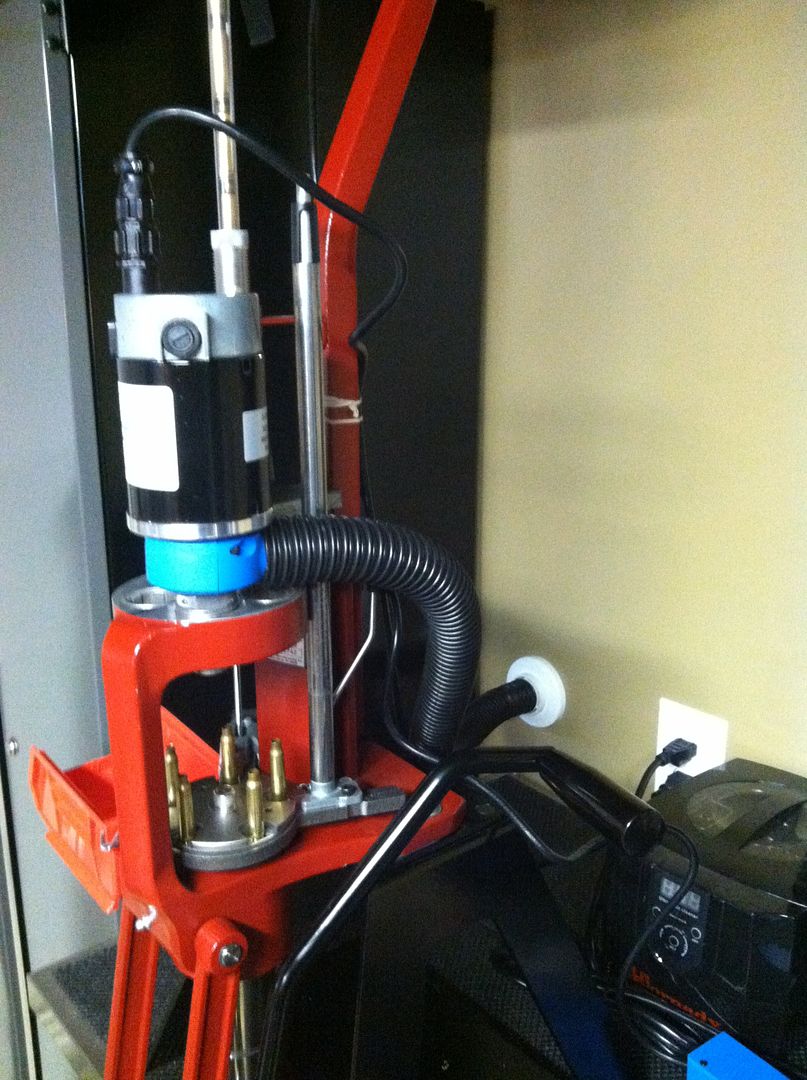
The Dillon trimmer is the ONLY option which does not require handling each piece of brass individually if you have a casefeed system. In that sense, comparing the other options to a Dillon RT-1200 is like comparing a bicycle to a Porsche. Also, deburring in vibratory tumblers has been used for decades to remove burrs from machined parts. |
|
Quoted:
If you use the Dillon, one of several options are available to roll away any burr/lip on the inside edge of the case mouth. You can use a Lee sizing die with the die body adjusted high and decapper adjusted to a slight interference fit in the case mouth. Some guys use the Lyman M-die. A Dillon 1050 expander/swaging support die does a good job too. The Dillon trimmer is the ONLY option which does not require handling each piece of brass individually if you have a casefeed system. In that sense, comparing the other options to a Dillon RT-1200 is like comparing a bicycle to a Porsche. Also, deburring in vibratory tumblers has been used for decades to remove burrs from machined parts. Most of those methods just move the burr or smash it down, At work I use a huge tumbler full of rocks to "deburr" many of my machined parts, it just smashes the burr down but it saves me from going around the parts cutting burrs with a hand deburring tool. |
|
Quoted:
I asked Doug Giraud once about just putting in a square cutter into his trimmer as I really didn't need/want the VLD chamfer on most of my plinking 223 and his response was pretty disappointing in it's superior tone. Made me sort of regret spending over $800 between the trimmer and the cutters/shell holders. It is a nice trimmer but I didn't appreciate being talked down to for simply asking a question. You should call Dillon and ask why they don't sell a chamfered cutter for theirs. 
|
|
Quoted:
You should call Dillon and ask why they don't sell a chamfered cutter for theirs. Quoted:
Quoted:
I asked Doug Giraud once about just putting in a square cutter into his trimmer as I really didn't need/want the VLD chamfer on most of my plinking 223 and his response was pretty disappointing in it's superior tone. Made me sort of regret spending over $800 between the trimmer and the cutters/shell holders. It is a nice trimmer but I didn't appreciate being talked down to for simply asking a question. You should call Dillon and ask why they don't sell a chamfered cutter for theirs. I don't need to as it simply isn't possible due to their design. I am going to buy a cutter for the Giraud and give it a try. |
|
It was a joke, admittedly it was a weak joke, but it was a joke. See the smiley at the end?
Joke failure.  <-- note unhappy smiley <-- note unhappy smiley
IMO, the Dillon should be used then followed by running the case through a sizing die WITH a neck expander ball. This will iron out any burrs so they are not a problem. Just put a sizing die in station #1, as usual. |
|
Quoted:
Actually, it's a piece of cake. Giraud includes the tools and a sample case to set the depth of cut. You unscrew the cutter head and screw the new one in its place. You unscrew the case holder and install the replacement. Not too bad, eh? Use the sample case to adjust the depth of cut on the case holder. I added a witness mark on my case holders to more easily index the case holders against the graduations on the Giraud. Honestly, if you cannot do this, you probably should not be reloading. Quoted:
Quoted:
Is it a pain to swap out cutters? Actually, it's a piece of cake. Giraud includes the tools and a sample case to set the depth of cut. You unscrew the cutter head and screw the new one in its place. You unscrew the case holder and install the replacement. Not too bad, eh? Use the sample case to adjust the depth of cut on the case holder. I added a witness mark on my case holders to more easily index the case holders against the graduations on the Giraud. Honestly, if you cannot do this, you probably should not be reloading. Using a lock ring for each case holder to make changing them a snap. 
|
|
Quoted:
I don't think wet tumbling with pins is the norm, rather it is the exception. One reason to deburr before seating is so the bullet jackets are not damaged. Roll crimping on 223,...? I've never heard of that. Taper crimp or Lee FCD, yes. Roll crimping is for revolver loading. Honestly, if you have proper neck tension, crimping is not needed for 223. If you are removing enough brass to adversely affect your crimp, prevent you from getting a good crimp, you are removing too much material and should adjust your trimmer to take off less. Quoted:
Quoted:
I don't really understand why everyone is so gungho about chamfering and deburring cases. Like you said, I have never seen an ammo manufacturer that has chamfered brass. EVER! And I always wet tumble my brass after I process it, so deburring is a wasted step. Plus, if you chamfer the case and then roll crimp it, the chamfer removed materal and takes away from the crimping tension because the material you remove is supposed to be what is pressed into the crimp groves (like you see on factory ammo). I don't think wet tumbling with pins is the norm, rather it is the exception. One reason to deburr before seating is so the bullet jackets are not damaged. Roll crimping on 223,...? I've never heard of that. Taper crimp or Lee FCD, yes. Roll crimping is for revolver loading. Honestly, if you have proper neck tension, crimping is not needed for 223. If you are removing enough brass to adversely affect your crimp, prevent you from getting a good crimp, you are removing too much material and should adjust your trimmer to take off less. I could have swore cannulars were invented to accept roll crimps. Why else would they put them on bullets if they're not made to be used? Not saying they always need it, but that's why they're there. My comment was in regards to reloading in general, not 223 exclusive. You can apply it to pistol brass if you want, they also don't need to be chamfered, further supporting my argument! Why do people chamfer rifle brass and swear it's necessary, but run thousands of pistol cartridges through a progressive and not trim, chamfer or debur them? Doesn't sound that necessary! I also wasn't saying I remove a ton of brass when chamfering, but rather removing ANY brass is taking away from the crimping power when a cannular is present. It's just plain logic... |
|
Quoted:
Why do people chamfer rifle brass and swear it's necessary, but run thousands of pistol cartridges through a progressive and not trim, chamfer or debur them? Doesn't sound that necessary! It's a good question. I've measured my rifle chamber lengths and know there's only about 0.010" beyond max case spec. Coupled with the really high pressures in rifle cartridges, long cases and trapped bullets can be dangerous. I think that's why everyone is so cautious. I've been checking my pistol brass recently. In general, all pistol brass is shorter than max spec. It is doubtful you'd get any measureable benefit from trimming all to minimum spec. I do have a 45ACP case holder for my Wilson trimmer. I think you might get more uniform crimping from trimming handgun brass but it's good enough as is. I also wasn't saying I remove a ton of brass when chamfering, but rather removing ANY brass is taking away from the crimping power when a cannular is present. It's just plain logic... IMO, the Dillon should be used then followed by running the case through a sizing die WITH a neck expander ball. This will iron out any burrs so they are not a problem. Just put a sizing die in station #1, as usual. Do the Dillon instructions discuss this matter? What it really comes down to is establishing and promulgating good, safe reloading practices. That's why everyone recommends trimming, chamfering and deburring of rifle cartridges. |
|
Quoted:
Most of those methods just move the burr or smash it down, At work I use a huge tumbler full of rocks to "deburr" many of my machined parts, it just smashes the burr down but it saves me from going around the parts cutting burrs with a hand deburring tool. Quoted:
Quoted:
If you use the Dillon, one of several options are available to roll away any burr/lip on the inside edge of the case mouth. You can use a Lee sizing die with the die body adjusted high and decapper adjusted to a slight interference fit in the case mouth. Some guys use the Lyman M-die. A Dillon 1050 expander/swaging support die does a good job too. The Dillon trimmer is the ONLY option which does not require handling each piece of brass individually if you have a casefeed system. In that sense, comparing the other options to a Dillon RT-1200 is like comparing a bicycle to a Porsche. Also, deburring in vibratory tumblers has been used for decades to remove burrs from machined parts. Most of those methods just move the burr or smash it down, At work I use a huge tumbler full of rocks to "deburr" many of my machined parts, it just smashes the burr down but it saves me from going around the parts cutting burrs with a hand deburring tool. I don't ram the brass into the cutter blades, and also change them before they go south, so I get very little burr to begin with. Call it what you want, but if you do as I mentioned the slight burr is effectively gone. I have 1050's and the swaging die puts a slight flare on the case mouth which also eliminates scraping of the bullet jacket. The Lyman M-die does similar. I have handled a lot of rifle brass in the last 30 years and, as COSteve points out, none of it was chamfered from the factory. Additionally, I have seen warnings not to remove too much brass when chamfering. |


|
Quoted:
I don't ram the brass into the cutter blades, and also change them before they go south, so I get very little burr to begin with. Call it what you want, but if you do as I mentioned the slight burr is effectively gone. I have 1050's and the swaging die puts a slight flare on the case mouth which also eliminates scraping of the bullet jacket. The Lyman M-die does similar. I have handled a lot of rifle brass in the last 30 years and, as COSteve points out, none of it was chamfered from the factory. Additionally, I have seen warnings not to remove too much brass when chamfering. Quoted:
Quoted:
Quoted:
If you use the Dillon, one of several options are available to roll away any burr/lip on the inside edge of the case mouth. You can use a Lee sizing die with the die body adjusted high and decapper adjusted to a slight interference fit in the case mouth. Some guys use the Lyman M-die. A Dillon 1050 expander/swaging support die does a good job too. The Dillon trimmer is the ONLY option which does not require handling each piece of brass individually if you have a casefeed system. In that sense, comparing the other options to a Dillon RT-1200 is like comparing a bicycle to a Porsche. Also, deburring in vibratory tumblers has been used for decades to remove burrs from machined parts. Most of those methods just move the burr or smash it down, At work I use a huge tumbler full of rocks to "deburr" many of my machined parts, it just smashes the burr down but it saves me from going around the parts cutting burrs with a hand deburring tool. I don't ram the brass into the cutter blades, and also change them before they go south, so I get very little burr to begin with. Call it what you want, but if you do as I mentioned the slight burr is effectively gone. I have 1050's and the swaging die puts a slight flare on the case mouth which also eliminates scraping of the bullet jacket. The Lyman M-die does similar. I have handled a lot of rifle brass in the last 30 years and, as COSteve points out, none of it was chamfered from the factory. Additionally, I have seen warnings not to remove too much brass when chamfering. This , I can trim full lenght .223 to .300blk, with the M-Die in station 8 then tumble and load with no burr to worry about, works slick as gator snot 
|
|
Quoted:
Ok, the wait on a Giraud is a bit long. I just ordered a CTS Power Trimmer 2.5. The guy is local and it looks good. http://i1.ytimg.com/vi/baZlB9rHHWQ/maxresdefault.jpg http://i1.ytimg.com/vi/76EufY2EbgE/maxresdefault.jpg Looks good! I ordered his newest trimmer the Pro 600, hoping to get it anyday. How long did yours take? |
Just an additional thought is that sometimes it will be nice to have a non-electrical case trimmer. If you decide to get a back-up, you can't beat a Wilson/Sinclair type trimmer:
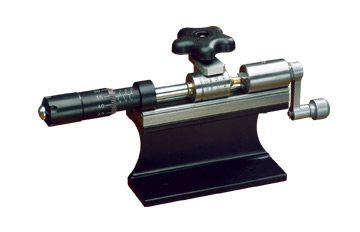
These are useful for small batch preparation as you might do for precision reloads. The reason for this is the method of holding the case: 
This allows you to do two things: 1. After I reform the case, it is covered with lube. I just put them into the case holder and it not only gives me something big to handle, but it also allows me to do all of my case work (case-base truing, case trimming, flashhole uniforming debarring, case mouth chamfering and debarring, primer pocket uniforming) while holding this big thing rather than a small case. 2. The Wilson case holders usually allow you to put the case in backwards and flatten the case heads or bases (base truing). No other manual trimmer allows this. I like to do this with some cases (Remington, Winchester, and others) where the headstamping is a bit heavy or where the case heads are not flat. The reason I do this is (i) we make many measurements off the case head and (ii) I think it is good to have a flat case head contacting the bolt face during detonation. I then clean off the lube and metal chips in soap water. Anyway… this is really good for small batches… which you may or may not prepare at various times. And it is also good when electricity might be hard to acquire. |
[ARCHIVED THREAD] - Case Trimmer (Page 1 of 2)
Armory Sponsor