


Armory Sponsor


Posted: 4/13/2016 2:28:10 PM EDT
| I am not casting yet but know it's in my future. So at this point I am just acquiring lead. I just came into about 80 lbs of lead dive weights for about $.50/lb. My question is in regards to the hardness. They seem soft like pure lead as I can scrape them with a strong fingernail scratch but I can't find any info online. Are these pure soft lead or some known lead alloy? |
|
What dryflash said.
Mixed with COWW or other harder lead should be great for pistol bullets. Fit is king, hardness is farther down the line of what matters. Range scrap is another good source of lead if you can find it cheap/free (aka pick out of berms). I'm trying to build my stash back up I've been slacking on acquiring more lead. Did get about 12lbs of old truck wheel weights from my Grandpa for free recently so mini score. |
|
Clip on wheel weights, or coww, which are a good deal harder and more desirable for general use than stick on wheel weights, or soww.
Not that both don't have their uses, but tons of folks use straight up coww with great results for general purposes. Soww is good for low velocity, blackpowder, or muzzleloaders. It's hard to get a really hard lead ball down a bore when loading a muzzleloader... There is no single alloy for soww or coww, just know relatively speaking that soww is not a lot harder than purr lead and that coww falls somewhere between #2 alloy and lino type (but closer to #2). Hardness isn't worth obsessing over, so don't fret too much. At 50 cents a pound buy the dive weights. |
|
Quoted:
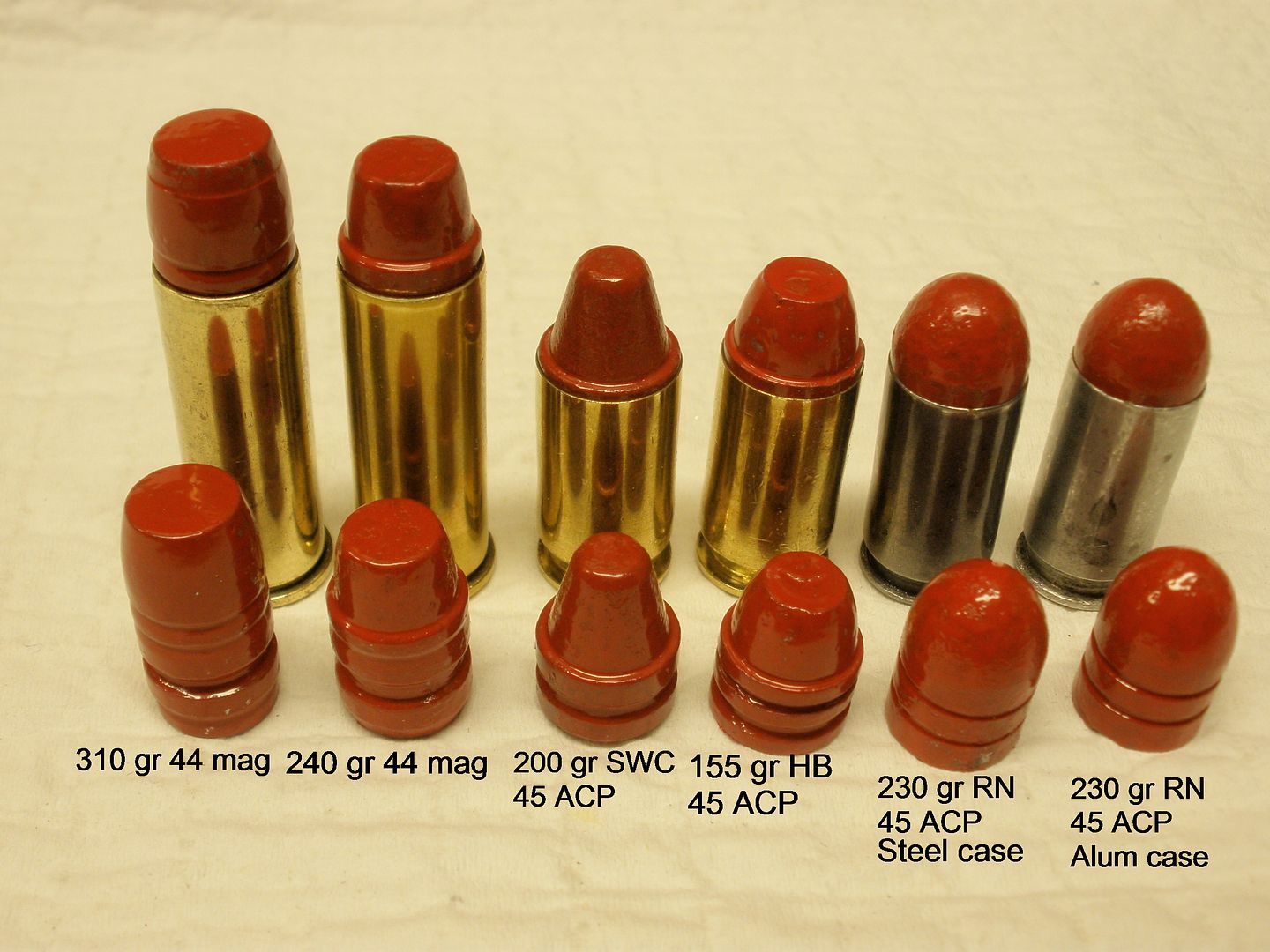
Clip on wheel weights, or coww, which are a good deal harder and more desirable for general use than stick on wheel weights, or soww. Not that both don't have their uses, but tons of folks use straight up coww with great results for general purposes. Soww is good for low velocity, blackpowder, or muzzleloaders. It's hard to get a really hard lead ball down a bore when loading a muzzleloader... There is no single alloy for soww or coww, just know relatively speaking that soww is not a lot harder than purr lead and that coww falls somewhere between #2 alloy and lino type (but closer to #2). Hardness isn't worth obsessing over, so don't fret too much. At 50 cents a pound buy the dive weights. So is there any leading issues when using COWW? I hope to start casting soon, have driven hard cast 44 Mag, 240gr, to 1500fps with no issues. |
|
Quoted:
Clip on wheel weights, or coww, which are a good deal harder and more desirable for general use than stick on wheel weights, or soww. Not that both don't have their uses, but tons of folks use straight up coww with great results for general purposes. Soww is good for low velocity, blackpowder, or muzzleloaders. It's hard to get a really hard lead ball down a bore when loading a muzzleloader... There is no single alloy for soww or coww, just know relatively speaking that soww is not a lot harder than purr lead and that coww falls somewhere between #2 alloy and lino type (but closer to #2). Hardness isn't worth obsessing over, so don't fret too much. At 50 cents a pound buy the dive weights. Thanks guys just picked them up. |
| Dive weights are probably pretty close to pure lead--there wouldn't be any point in alloying a weight if all you have to do is make a big brick. They probably melt pretty close to 612 which is quite a bit higher than COWW. If you get a great deal on them, sure.... But you'll need to alloy them with something else. I smelt COWW in set of ingots and soft lead in a different set. For most of what I do (pistol and low vel rifle stuff), I mix them 50/50. |
|
There are some guys on castboolits that will do an XRF analysis for the price of a pound of lead.
So if you make a large homogeneous batch, send one pound for analysis and let the guy keep the lead in exchange for him telling you exactly what you have. PM me if you want the guys info. Alternatively you can go to a local scrap yard, they usually have an XRF gun. Sometimes you can tip a guy a few bucks and he will shoot your sample for you. I'm a scientist so I like to know exactly what I have. Another method is to look up the "lead pencil hardness test" on cast boolits. Basically you buy a specific brand of lead pencils that have different harnesses of pencils. You use the pencils to see which pencil will scratch the lead and it will tell you approximately what you have. Should work perfectly if you have pure lead. |
|
Here is the link to Cast Boolits. They spell bullet their own way over there.  As mentioned, good folks there. |
|
At one time I got a great deal on some dive weights, about 25 lbs for $5.00.
Starting melting them down to make ingots and all of a sudden I had a pan of oatmeal. One of the weights must have had zinc in it and trashed the whole pan (about 20 pounds). From that point on, I will only melt dive weights in very small batches and not mix with WW's or pure until I see how they melt. |
|
Quoted:
At one time I got a great deal on some dive weights, about 25 lbs for $5.00. Starting melting them down to make ingots and all of a sudden I had a pan of oatmeal. One of the weights must have had zinc in it and trashed the whole pan (about 20 pounds). From that point on, I will only melt dive weights in very small batches and not mix with WW's or pure until I see how they melt. Is this when the lead kinda crumbles when heated? |
|
Pure lead melts at 612F. Zinc goes at something like 750. As long as you keep the temperature moderate while smelting, any zinc that slips past will bob to the top. Read up on smelting, and keep the heat down to a minimum of what works. Zinc is pretty easy to spot if you look for it. It sounds different when you thunk it, and it don't smash when you put a set of pliers on a corner/edge like lead. I put a set of pliears/dykes on anything I can't positively ID as lead before it goes into the pot. Poke around on castboolits for smelting info. There's a couple aspects that may not be readily intuitive (e.g. smelting in a different pot than the one you cast from, fluxing, etc). |
|
I've been slacking. This far into a casting thread and I haven't posted this link yet. This is a free book that covers everything about casting. I printed it out. Best tip in there is using sawdust to flux with. |
|
There's no standard for dive weights, and no reason for a company that makes them to use pure lead when scrap lead is cheaper.
The weight difference between pure lead and wheel weights is not significant, and if the weight truly needs to weigh 5 pounds the mold is just made bigger or filled fuller (depending on the mold). Also there are a few different types of molds sold for divers to cast their own weights and it's most common for divers to just use wheel weights. Given that I have been a shooter and a diver for over 30 years, over the years I've melted lead down into dive weights both for use in diving and just as a means to store the lead until I wanted to cast bullets with it. Personally I stamped the weights as to the alloy used, PB for pure lead, 2 for no 2 alloy and W for wheel weights - but that's only because I had an end use in mind that usually involved bullet casting. |
|
Quoted:
Doing a very non scientific test of scratching the dive weights and some ww's side by side it seems to my untrained eye that they are just a bit softer but not much. Thanks for all the insight. Go buy a $10 set of Staedtler lead pencils and read this thread: http://castboolits.gunloads.com/showthread.php?75455-Testing-hardness-with-pencils You can very easily tell the hardness with relatively good accuracy. |
Armory Sponsor