


Armory Sponsor


Posted: 5/9/2016 1:47:32 PM EDT
|
My uncle has my Grandfather's 1800's Colt .44-40 revolver.
I am familiar with loading smokeless rifle and pistol cartridges, and well as muzzle loaders. I cast bullets already, and plan to cast for this too. Any one loading this cartridge for an old pistol? After some searches, everything I found seemed to be loading for reproduction rifles, more so than revolvers. Is there a specific loading manual for old BP cartridges? Any personal anecdotes before I start loading for this round? |
|
I love 44-40 but it really is hard to load. VERY thin case necks. Easy to crush. Easy to overcrimp and bulge. Revolvers are tough. The lever can: a. Handle more pressure. b. "Fix" a badly sized/crimped case using the lever force (not a good practice).
I load for an 1891 Colt and a repro Uberti.. as well as an antique Winchester and modern Rossi. Lyman makes a great BP manual. 44-40 is great with BP. Smokeless is less messy. I run both depending mood. Lyman 49th has great smokeless data. Unique is a great and safe powder for 44-40. Wide window... Manual notes which data to use for rifle vs revolver. I can list more tips about loading tonight.. For now, back to work for me. |

|
More tips...
200gr bullet sized to .427 should work fine in your old revolver. Don't try to slug bore or cylinder forcing cone or anything like that. I don't suspect you will shoot it enough to care/worry. Pure lead with a good black powder lube is great. I ran wheel weight lead fine too. Even dipping bullets in melted beeswax will work (just trim off the excess using something soft like cardboard or plastic). Running larger than 427 in the 44-40 case requires a lot more expanding of the mouth. The more you expand, the more you will have trouble crimping it back closed. Crimping in a separate step is hugely helpful. When you crimp in the groove of a bullet, it's easy for the crimping to put downward pressure on the neck bulging it. So, seat towards bottom of the groove to give yourself room. Seating in same step as crimping can be that much more difficult. I liked the Lee FCD but I LOVE the Redding 44-40 crimp die especially when running larger diameter bullets. It really helped closing the neck after flaring. Don't over flare. Just enough for bullet to slide in without scraping lead. I use a 429 bullet sizing die for my repros. Wider bullet gives you a lot less margin since you have to flare more. I use IMR 4227 in my Rossi. It can handle a lot more pressure. Believe that data is in Lyman 49th too. FWIW, all the difficulties of the 44-40 cartridge revolve around the fact that it has a thin neck as mentioned above. Ironically, the thin neck also gave it huge advantages in the field compared to the 45LC cartridge. Reason? The neck expands easier to fit your chamber when fired. This seals the nasty corrosive residue out of your action. Especially important in the lever action. Hope this stuff helps. Post questions as you get them. |
|
Thanks for all the tips!
I have the Lyman BP manual requested from the library. I was lucky that they had it! I don't know the model number off hand, but I suspect it is the older one with the screw and I plan on loading BP or equivalent for it. As far as bullets go, we already have the Lee mold 430-240 which we use for .44 mag 
But I assume I want the Lee 429-200 for .44-40. Right? 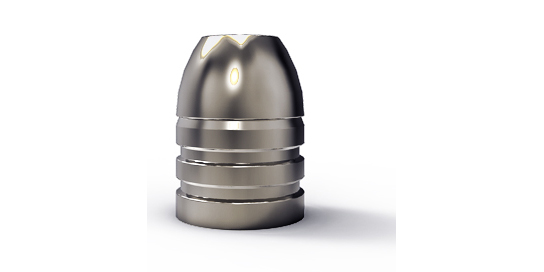
We have beeswax for a casting flux, should I just use that as a lube? I'm unfamiliar with other BP lubes. I'll probably get the Lee FCD, I've always had more luck crimping in a separate step to begin with. Thanks for all the tips! 
|
|
I have not seen 240gr load data for 44-40. Not saying you cant, just saying I wouldnt.
For bullets I size in my RCBS lube sizer, I use stick lubes specific to BP.. But for bullets like 58cal minies which are to big for lube sizer, I melt Beeswax in a pyrex measuring cup in a pan of boiling water. Dip using tweezers or something that will hold bullets well. I believe original lube was a mix of beeswax and some type of meat fat. maybe lard would work? not sure. Alternative to lube is powder coating which some have tried with BP. I may someday but kind of like old school for black powder. Get yourself black powder gune cleaner/lube too. Dont use oil based products (although i believe ballistol is petro based and is well liked). Do read the manual well. Good ideas in there too. Soak fired cases in a mix of water/vinegar. Helps get out residue. |
|
Quoted:
Cool. I powder coat bullets for .40S&W, but that would look really out of place with BP. haha I like old school too. 
I should get the manual in a couple days, and I'll read it closely! And I plan on picking up the 429-200 mold.  Gosh, I think I have an extra 429-200 mold if you want it. Free if u cover shipping. Dont order yet. Let me check the house tonight to be sure. Not sure I even used it. I have had great results with a Lyman mold and dont plan on using the Lee. Give me a few hours to double check I still have the Lee. Edit: found it on bottom of my lee mold boxes. It still has sticker on sprue plate. Its yours if u want it. PM me. |
|
Quoted:
Gosh, I think I have an extra 429-200 mold if you want it. Free if u cover shipping. Dont order yet. Let me check the house tonight to be sure. Not sure I even used it. I have had great results with a Lyman mold and dont plan on using the Lee. Give me a few hours to double check I still have the Lee. Edit: found it on bottom of my lee mold boxes. It still has sticker on sprue plate. Its yours if u want it. PM me. Quoted:
Quoted:
Cool. I powder coat bullets for .40S&W, but that would look really out of place with BP. haha I like old school too.
I should get the manual in a couple days, and I'll read it closely! And I plan on picking up the 429-200 mold. Gosh, I think I have an extra 429-200 mold if you want it. Free if u cover shipping. Dont order yet. Let me check the house tonight to be sure. Not sure I even used it. I have had great results with a Lyman mold and dont plan on using the Lee. Give me a few hours to double check I still have the Lee. Edit: found it on bottom of my lee mold boxes. It still has sticker on sprue plate. Its yours if u want it. PM me. I am humbled by the generosity of those in the Reloading forum. IM sent.
|
|
Quoted:
Can Alox be used with Black powder? I've used that before with smokeless. Quoted:
Quoted:
I have that Lee 200gr mould and they shoot great. It does really well with Win231 (HP38). I just use Lee liquid alox and tumble lube them. Can Alox be used with Black powder? I've used that before with smokeless. Good question. Hope someone has answer but I would think no since it is petro based. I investigated uses for it and found it was developed as a lube for marine applications to prevent corrosion. Some use it on bike chains and such. I can toss in a little SPG to get u started. if you dont have a lube sizer, perhaps melt and dip. Dilute with beeswax too if you got it. Works fine. |
|
I have played around with loading BP in 357. The reason you want a BP lube is to help keep the fouling soft and easy to remove. This is important when you get to cleaning your revolver. Just go to one or the retailers and search BP pistol lube. I tried the Lee tumble lube, that's how I now know to use BP lube.  eta, go with the SPG offered above. |
|
Quoted:
Good to know on the Alox. The amount of knowledge on this forum is amazing!
Edit: spelling. Take the SPG I am sending you and dilute it in Beeswax (only to get more out of it, use straight if you want). Melt it in Pyrex (or something that can handle the heat) in a pot of boiling water. Don't expect to want to use the Pyrex for eating after (at least I wouldn't). Don't let the wife see ya.... Dip using forceps or tweezers (like you use for powder coating). This is what I do with bullets I can't size (.577 Snider and Minie balls). I then use the blunt side of a thick plastic knife to scrape off the edge of the Snider bullet since I load that in a cartridge. In the case of the 44-40, you want the edges pretty clean (remember THIN necks). In fact, you may want to be careful not to get any lube in the groove that you will be crimping into (top). If I were you, I would get a Lee bullet sizing die in .427. You can also special order a 428 since they don't sell it outright as far as I know. It should scrape the edges clean for you (no knife needed). Their maximum special order size is .575.  Might call one day and see if I can talk them into bigger for my Snider. Need it about 590+. Might call one day and see if I can talk them into bigger for my Snider. Need it about 590+.
Again, old guns tend to like .427-.428. Sure, accuracy will be worse in a larger bore, but smaller bullets are way easier to load. Start with 427... move to 429 if you think you can handle it. Don't bother trying anything bigger than 429. You will be frustrated beyond belief. My bullets drop small. I powder coat the smokeless ones. I size to 429. It barely sizes anything. BUT if I don't size, that little bit puts you over the edge. Use your cylinder as a case gauge. Make sure it drops in smooth. Kaplunk! Good luck and please post results. 
|
|
Lots of fun in shooting old Colts but there are some things you need to make absolutely certain about
1) as mentioned, determine if it is an original Black Powder Frame. This is doubtful as they are serious collectors items & one in really good shape shouldn't be fired very much due to value. Reason, the steel is quite soft compared to guns from later production. Use the serial # at the Colt site to get the manufacture date. If made before WWII it is advisable to get the Colt letter for it (costs $100) 2) you say it is 44-40. Does it actually say 44 WCF or "Colt Frontier Six Shooter" or 44-40? There were other 44 cal chamberings too. Prior to 1889 the legend is acid etched, after 1889 to 1919 its stamped. In both cases, the gun should not say 44-40 as this was not incorporated until 1919. 3) measure the cylinder/barrel gap with common feeler gauges. It should be 0.006" - 0.010". If more than about 0.012" have a decent Colt smith correct the gap & at the same time adjust the timing. If the gap is wide, it has been shot enough that it has other issues as well. 4) once you assure it is 44-40 and safe to fire, measure the cylinder mouths to find out exactly what size your bullets need to be (0.427, 0.428 or 0.429) 5) bullets, do not attempt to use sized down .44 mag bullets. Get the proper 200 or 205gr mold & cast with soft lead. The gun was designed around a specific max pressure/energy and 240gr bullets will hammer the old gun too hard. 6) proper load, BP frame is just that BLACK POWDER ONLY! About 35gr of 3f should work just fine. Adjust the powder amount so that the base of the bullet firmly sits on the powder. Post 1889 you can use smokeless. 7.5 gr of Unique is about right for pistols made before 1900. Even though the Lyman book says max load of 9gr of unique, it's a 100 YO pistol, don't push it too hard. 7) other than that, it is the same loading process as any other pistol round but take into consideration that the case is thinner than most so go slow & use techniques that don't push the brass too hard. MLG |
|
A few items I haven't seen mentioned yet:
I load BP in my .50-70. I pan lube because it fills the grooves fully and is fairly easy. I make my own BP lube by mixing peanut oil and beeswax 50/50 by volume. You will want to cast your bullets soft. I use 25:1 lead : tin. A drop tube will allow you to get all your powder in the case more easily. I made a drop tube out of a 36" piece of copper tubing. A compression die will allow you to compress the powder w/o using the bullet. (Using the bullet deforms the soft bullet.) Compression is your friend when loading BP. |
|
Quoted:
A few items I haven't seen mentioned yet: I load BP in my .50-70. I pan lube because it fills the grooves fully and is fairly easy. I make my own BP lube by mixing peanut oil and beeswax 50/50 by volume. You will want to cast your bullets soft. I use 25:1 lead : tin. A drop tube will allow you to get all your powder in the case more easily. I made a drop tube out of a 36" piece of copper tubing. A compression die will allow you to compress the powder w/o using the bullet. (Using the bullet deforms the soft bullet.) Compression is your friend when loading BP. I should like to try the Peanut oil/wax lube mix. Thx I have been debating a compression die... COL variation is a bit crap indeed using bullet to compress. I run mine on progressive with Hornady BP measure. |
|
Quoted:
A few items I haven't seen mentioned yet: I load BP in my .50-70. I pan lube because it fills the grooves fully and is fairly easy. I make my own BP lube by mixing peanut oil and beeswax 50/50 by volume. You will want to cast your bullets soft. I use 25:1 lead : tin. A drop tube will allow you to get all your powder in the case more easily. I made a drop tube out of a 36" piece of copper tubing. A compression die will allow you to compress the powder w/o using the bullet. (Using the bullet deforms the soft bullet.) Compression is your friend when loading BP. I think I'd like to try pan lubing, thanks for the link! |
|
OP, I have been loading both smokeless and black powder .44-40s lately as I recently got a Cimarron Firearms 1873 Sporting Rifle. I've been posting about that here. It may be of interest. IMO, the difficulty of loading .44-40 is overstated. Yes, the brass is thinner than more modern cases, just make sure that you put enough flare on the case mouth to start the bullet, and ensure that it's lined up with the die in the press. If you run the case mouth into the bottom of the die you'll crumple it. I'm using a set of Lee dies and have no complaints. I am using Starline brass, which is a little thicker than Remington or Winchester brass. Without using a drop tube and compression, modern brass does not hold as much powder as the old balloon head brass. A good black powder load is a 200 grain soft lead bullet with 35 grains of FFg or FFFg black powder, ignited with a large pistol primer. A Lee 2.2cc dipper measures about 32 grains of FFg or 35 grains of FFFg, and gives you 100% loading density. Swiss or Olde Eynsford black powder will burn a lot cleaner and give higher velocities than regular Goex, which is much dirtier in comparison. You must use a black powder compatible lube, which generally means no petroleum products. I've been making my own, a 50/50 mix of beeswax and mutton tallow. I got the tallow from Dixie Gun Works; you can also get it from durofelt.com. The soft cast bullets from cowboybullets.com come with a BP-compatible lube. They don't carry enough for my rifle's 24-1/4" barrel but would probably work in a revolver. (I got a hard ring of crud in the last few inches of the barrel, because the bullet ran out of lube at that point.) His 100 count sample packs are cheap enough to try out for yourself. The bullets do shoot well in my rifle on top of Reloder 7 smokeless powder. If you want to be period correct, get ahold of a Winchester Model 1882 reloading tool and the matching mold, or an Ideal Number 6 tool with built in mold, and go retro. Winchester:  Ideal:  Cleaning up after shooting black powder requires a water based solvent and should be done the same day you shoot it. Soapy water, Windex, windshield wiper fluid, or Hoppe's MPro-7 all work well. After cleaning, dry and oil the gun. Hope this helps. |
|
Good info, Dave.
I actually just purchased the Winchester mold and reloading tool. I plan on going retro too. Wonder if lard would work mixed with beeswax? Quoted:
OP, I have been loading both smokeless and black powder .44-40s lately as I recently got a Cimarron Firearms 1873 Sporting Rifle. I've been posting about that here. It may be of interest. IMO, the difficulty of loading .44-40 is overstated. Yes, the brass is thinner than more modern cases, just make sure that you put enough flare on the case mouth to start the bullet, and ensure that it's lined up with the die in the press. If you run the case mouth into the bottom of the die you'll crumple it. I'm using a set of Lee dies and have no complaints. I am using Starline brass, which is a little thicker than Remington or Winchester brass. Without using a drop tube and compression, modern brass does not hold as much powder as the old balloon head brass. A good black powder load is a 200 grain soft lead bullet with 35 grains of FFg or FFFg black powder, ignited with a large pistol primer. A Lee 2.2cc dipper measures about 32 grains of FFg or 35 grains of FFFg, and gives you 100% loading density. Swiss or Olde Eynsford black powder will burn a lot cleaner and give higher velocities than regular Goex, which is much dirtier in comparison. You must use a black powder compatible lube, which generally means no petroleum products. I've been making my own, a 50/50 mix of beeswax and mutton tallow. I got the tallow from Dixie Gun Works; you can also get it from durofelt.com. The soft cast bullets from cowboybullets.com come with a BP-compatible lube. They don't carry enough for my rifle's 24-1/4" barrel but would probably work in a revolver. (I got a hard ring of crud in the last few inches of the barrel, because the bullet ran out of lube at that point.) His 100 count sample packs are cheap enough to try out for yourself. The bullets do shoot well in my rifle on top of Reloder 7 smokeless powder. If you want to be period correct, get ahold of a Winchester Model 1882 reloading tool and the matching mold, or an Ideal Number 6 tool with built in mold, and go retro. Winchester: https://2.bp.blogspot.com/-735AFl3-vaU/VwBQCDbE_XI/AAAAAAAACTw/3qUJEeXVtT8ykRWYPcckoGHjPb2cI4cUg/s1600/Winchester_1882_Reloader_Mold.jpg Ideal: https://3.bp.blogspot.com/-NdTW29n3hdc/VwBQfwFH7TI/AAAAAAAACT4/DDVIHAnuBsgnsEFWqb-JuP5b7yrz08jig/s1600/Ideal_Number_4_44WCF_Tool_1.jpg Cleaning up after shooting black powder requires a water based solvent and should be done the same day you shoot it. Soapy water, Windex, windshield wiper fluid, or Hoppe's MPro-7 all work well. After cleaning, dry and oil the gun. Hope this helps. |
|
Quoted: Good info, Dave. I actually just purchased the Winchester mold and reloading tool. I plan on going retro too. Wonder if lard would work mixed with beeswax? Quoted: Good info, Dave. I actually just purchased the Winchester mold and reloading tool. I plan on going retro too. Wonder if lard would work mixed with beeswax? Quoted: OP, I have been loading both smokeless and black powder .44-40s lately as I recently got a Cimarron Firearms 1873 Sporting Rifle. I've been posting about that here. It may be of interest. IMO, the difficulty of loading .44-40 is overstated. Yes, the brass is thinner than more modern cases, just make sure that you put enough flare on the case mouth to start the bullet, and ensure that it's lined up with the die in the press. If you run the case mouth into the bottom of the die you'll crumple it. I'm using a set of Lee dies and have no complaints. ... Pretty much any animal fat should work in a black powder lube. Just make sure you use unsalted lard. One weird thing with the Winchester tool is that about 1/3 of the rounds I load do not feed smoothly into the chamber of my Cimarron (Uberti) rifle, and I can't figure out why. I didn't mention it in my first post because it's not relevant for the OP's Colt revolver. I haven't loaded any rounds yet with my Ideal No.6 tool to compare. It may be a seating depth issue. I don't have problems with rounds loaded on my Lee Classic Turret Press. I just loaded 100 rounds of BP .44-40 tonight on my press; 50 each with 3Fg Swiss BP and Goex BP. The bullet I'm using is cast from an Accurate Molds 43-215C: 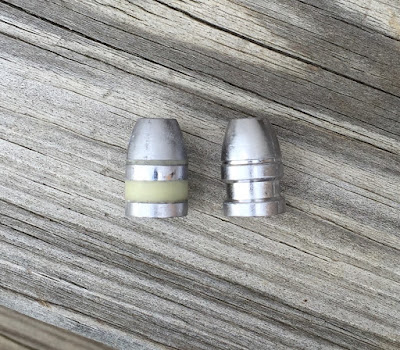 This bullet was designed to carry enough lube to keep the BP fouling soft in a 24" rifle barrel when using Goex BP. (You don't need as much lube when using Swiss powder.) The nose profile duplicates the original factory bullet but it carries more lube, and has a crimp groove. The meplat is about .27 caliber. This is my first batch of these and I should get to shoot them next weekend. |
|
Nice mold. I am using the Lyman cowboy mold... 200gr http://www.lymanproducts.com/lyman/bullet-casting/mould-details.php?entryID=18
Same single large lube groove. Very happy with it. No issues with my Rossi or Winchester 1873... Although I admit I have switched those over to smokeless. PITA to clean. The Rossi gets a hefty dose of IMR4227 under a powder coated bullet. Great accuracy. Finally found a use for 4227. (OP, that is not a powder for SAA). Quoted:
Pretty much any animal fat should work in a black powder lube. Just make sure you use unsalted lard. One weird thing with the Winchester tool is that about 1/3 of the rounds I load do not feed smoothly into the chamber of my Cimarron (Uberti) rifle, and I can't figure out why. I didn't mention it in my first post because it's not relevant for the OP's Colt revolver. I haven't loaded any rounds yet with my Ideal No.6 tool to compare. It may be a seating depth issue. I don't have problems with rounds loaded on my Lee Classic Turret Press. I just loaded 100 rounds of BP .44-40 tonight on my press; 50 each with 3Fg Swiss BP and Goex BP. The bullet I'm using is cast from an Accurate Molds 43-215C: https://2.bp.blogspot.com/-1UILN3xdt-0/Vzp0KCvLC7I/AAAAAAAACaw/vmH3ZNJDcUsbgvZcKQc7uZU8n2GEdqHWgCLcB/s400/AM_43-215C.jpg This bullet was designed to carry enough lube to keep the BP fouling soft in a 24" rifle barrel when using Goex BP. (You don't need as much lube when using Swiss powder.) The nose profile duplicates the original factory bullet but it carries more lube, and has a crimp groove. The meplat is about .27 caliber. This is my first batch of these and I should get to shoot them next weekend. Quoted:
Quoted:
Good info, Dave. I actually just purchased the Winchester mold and reloading tool. I plan on going retro too. Wonder if lard would work mixed with beeswax? Quoted:
OP, I have been loading both smokeless and black powder .44-40s lately as I recently got a Cimarron Firearms 1873 Sporting Rifle. I've been posting about that here. It may be of interest. IMO, the difficulty of loading .44-40 is overstated. Yes, the brass is thinner than more modern cases, just make sure that you put enough flare on the case mouth to start the bullet, and ensure that it's lined up with the die in the press. If you run the case mouth into the bottom of the die you'll crumple it. I'm using a set of Lee dies and have no complaints. ... Pretty much any animal fat should work in a black powder lube. Just make sure you use unsalted lard. One weird thing with the Winchester tool is that about 1/3 of the rounds I load do not feed smoothly into the chamber of my Cimarron (Uberti) rifle, and I can't figure out why. I didn't mention it in my first post because it's not relevant for the OP's Colt revolver. I haven't loaded any rounds yet with my Ideal No.6 tool to compare. It may be a seating depth issue. I don't have problems with rounds loaded on my Lee Classic Turret Press. I just loaded 100 rounds of BP .44-40 tonight on my press; 50 each with 3Fg Swiss BP and Goex BP. The bullet I'm using is cast from an Accurate Molds 43-215C: https://2.bp.blogspot.com/-1UILN3xdt-0/Vzp0KCvLC7I/AAAAAAAACaw/vmH3ZNJDcUsbgvZcKQc7uZU8n2GEdqHWgCLcB/s400/AM_43-215C.jpg This bullet was designed to carry enough lube to keep the BP fouling soft in a 24" rifle barrel when using Goex BP. (You don't need as much lube when using Swiss powder.) The nose profile duplicates the original factory bullet but it carries more lube, and has a crimp groove. The meplat is about .27 caliber. This is my first batch of these and I should get to shoot them next weekend. |
Two weeks ago I fired 50 shots of BP ammo through my Cimarron 1873. The load was 35 grains of Swiss 3Fg, propelling a bullet cast from the original Winchester mold, loaded with the Winchester tool: The Winchester bullet carried enough lube to prevent the barrel from fouling out, and left a nice lube star on the muzzle.  After 50 shots with this bullet/powder combination, it took three patches (using both sides) wet with MPro-7 to clean the bore. I've spent more time cleaning rifles after shooting smokeless powder. The Winchester bullet doesn't carry enough lube for use with Goex, and is undersized for my bore so accuracy wasn't good. |
|
Did you happen to get the decapping pin with your tool? Mine didn't have one.. lost to time I am sure.
If so, please post a pic. I have no idea what they look like. I will be using mine soon enough. I still need to cast some bullets with my old mold first. Quoted:
Two weeks ago I fired 50 shots of BP ammo through my Cimarron 1873. The load was 35 grains of Swiss 3Fg, propelling a bullet cast from the original Winchester mold, loaded with the Winchester tool: https://3.bp.blogspot.com/-itv_0geTrLw/VxQmgNCtgTI/AAAAAAAACWY/IA1y41Rv45geSH9Y8eWIYIKMBZBLltqQQCLcB/s1600/cartridges-and-tool.jpg The Winchester bullet carried enough lube to prevent the barrel from fouling out, and left a nice lube star on the muzzle. https://2.bp.blogspot.com/-NHikA7Ge_6I/VxwURuLyUDI/AAAAAAAACXA/9gE9ZKv1nm4OqC4Gp-89ymCetqPfRU8TwCLcB/s400/muzzle-lube-star.jpg After 50 shots with this bullet/powder combination, it took three patches (using both sides) wet with MPro-7 to clean the bore. I've spent more time cleaning rifles after shooting smokeless powder. The Winchester bullet doesn't carry enough lube for use with Goex, and is undersized for my bore so accuracy wasn't good. |
|
Quoted: Did you happen to get the decapping pin with your tool? Mine didn't have one.. lost to time I am sure. If so, please post a pic. I have no idea what they look like. I will be using mine soon enough. I still need to cast some bullets with my old mold first. Quoted: Did you happen to get the decapping pin with your tool? Mine didn't have one.. lost to time I am sure. If so, please post a pic. I have no idea what they look like. I will be using mine soon enough. I still need to cast some bullets with my old mold first. ... Both my Winchester 1882 tool and Ideal No.6 tool are missing their decapping pins and powder scoops. This page has pictures of one. If you have access to a lathe it shouldn't be difficult to copy. (I have a mini lathe but haven't gotten around to making a replacement.) However, there are two inexpensive and readily obtainable modern substitutes: 1. You can use a Lee .44-40 case length gauge as a decapping pin. Pops 'em right out. 2. A Lee 2.2cc dipper is basically a 35 grain volumetric measure for black powder. Lee dipper set. To measure my powder charges I pour some BP into a Pyrex bowl I bought at the supermarket and run the 2.2cc dipper through it, then strike it off level with my finger or a business card. With practice you can get pretty consistent. Incidentally, I have a Lee autoprime tool, which they recommend against using with Federal primers. Unfortunately, I have a lot of Federal primers, so for priming my .44-40 brass I've been using the Winchester tool. It's slow but it works and you get a very good feel for how the primer is being seated. |
|
Quoted: I have not seen 240gr load data for 44-40. Not saying you cant, just saying I wouldnt. ... Just noticed this. The 1995 - 96 Alliant manuals list load data for 240 grain cast bullets and 23.5 grains max of Reloder 7, for rifles. Reloder 7 burns too slowly for use in handgun barrels. The cool thing about this charge is that it is low pressure, safe to shoot in 1873 repros, but really gives the round a boost in rifle length barrels. Pressure is given at 12,100 CUP with a MV of 1250 FPS. Here's a link to download old Alliant loading manuals in PDF format. I loaded up some 200 grain cast on top of 23.5 grains Reloader 7 and my Uberti 1873 loves the load. It's accurate and shows no signs of pressure. I shot this group at 50 yards, 9 shots into 2" with a called flier.  I haven't tried 240 grain bullets in my rifle yet, but I bet the 215ers I cast with my Accurate 43-215C will do well with it, too. I first learned about using Reloder 7 in this thread on CAS City. There's additional discussion of it here, on Castboolits. |
|
Great info, Dave. thx
I actually just bought some #7 for tok rounds so maybe I will try it in my Rossi. OOps.. i just realized i got accurate #7.. not alliant.. bah.. Well, I will stick with 4227 till I run out. It runs ok and I have yet to have found any other use for all the powder I got. It is sub par in everything I have tried. |


|
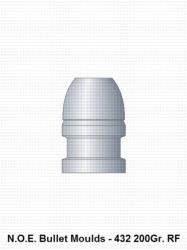
Quoted: It has taken me a while, but I have finally made a step towards loading besides just acquiring supplies! I cast a bunch of bullets today, still have to lube them but I'm getting closer to a final product! http://i1381.photobucket.com/albums/ah236/aquilifertrf/_DSC0016_zpsi9lhcxmd.jpg http://i1381.photobucket.com/albums/ah236/aquilifertrf/_DSC0018_zpsq5shl4uq.jpg That's a good start and nice pics. |

|
Quoted:
Powder is still something I am undecided on. Is it better to use genuine BP like the swiss or goex, or would a BP substitute like Triple Seven be better because it is easier to clean? When I shoot BP revolver, I run till the revolver starts to bind up (as mentioned above). with Goex BP, I can get to about 50 rnds for 44-40 before things get too dirty. For 45colt, a bit less. I plan on trying Grafs BP as I heard it was cleaner than Goex. I am not going to spend the cash on Swiss. I either am done after 50 (and move on to another gun) or spray it down with a little Ballistol and run a few more. If you plan on running 30-50 rnds once in a great while, then you are better off finding something local. Some places dont sell black so you may have your answer. Getting into BP vs synthetic is probably not really an important discussion for the amount you are likely to shoot. If you run your 30-50 rnds, I doubt you will notice a difference. You have to clean the same way regardless and I doubt you will see much difference. I have not used substitutes in cartridges though. I have in cap/ball. Maybe slightly cleaner but cleanliness is subjective. If you wanted clean, you need to stick with smokeless. Both subs and BP are way more dirty.
|
|
Quoted:
Powder is still something I am undecided on. Is it better to use genuine BP like the swiss or goex, or would a BP substitute like Triple Seven be better because it is easier to clean? Has it been determined whether or not your revolver is a black powder frame? I used Pyrodex at first because it was all I could find locally, but then I found an old feller selling Swiss BP out of his garage about 5 miles from my house. Balistically, I don't find much difference in the two, but Pyrodex in and of itself is corrosive so one must be diligent in cleaning. BP on the other hand isn't corrosive but is hygroscopic and attracts moisture. A 7/1 mixture of Ballistol/water is absolutely the berries for cleaning BP firearms. One other thing I haven't seen mentioned here is the fact that after loading BP brass cases must be cleaned in some sort of solution of soap and water, vinegar and water, et al. You might get by with a couple of loadings with something like Swiss BP, but in general BP is hard on brass. This one thing is probably what keeps me from shooting more BP. |
|
Quoted:
Has it been determined whether or not your revolver is a black powder frame? I used Pyrodex at first because it was all I could find locally, but then I found an old feller selling Swiss BP out of his garage about 5 miles from my house. Balistically, I don't find much difference in the two, but Pyrodex in and of itself is corrosive so one must be diligent in cleaning. BP on the other hand isn't corrosive but is hygroscopic and attracts moisture. A 7/1 mixture of Ballistol/water is absolutely the berries for cleaning BP firearms. One other thing I haven't seen mentioned here is the fact that after loading BP brass cases must be cleaned in some sort of solution of soap and water, vinegar and water, et al. You might get by with a couple of loadings with something like Swiss BP, but in general BP is hard on brass. This one thing is probably what keeps me from shooting more BP. Quoted:
Quoted:
Powder is still something I am undecided on. Is it better to use genuine BP like the swiss or goex, or would a BP substitute like Triple Seven be better because it is easier to clean? Has it been determined whether or not your revolver is a black powder frame? I used Pyrodex at first because it was all I could find locally, but then I found an old feller selling Swiss BP out of his garage about 5 miles from my house. Balistically, I don't find much difference in the two, but Pyrodex in and of itself is corrosive so one must be diligent in cleaning. BP on the other hand isn't corrosive but is hygroscopic and attracts moisture. A 7/1 mixture of Ballistol/water is absolutely the berries for cleaning BP firearms. One other thing I haven't seen mentioned here is the fact that after loading BP brass cases must be cleaned in some sort of solution of soap and water, vinegar and water, et al. You might get by with a couple of loadings with something like Swiss BP, but in general BP is hard on brass. This one thing is probably what keeps me from shooting more BP. Wonder if nickel plated cases last longer? Not sure if nickel reacts more/less with corrosives of residue. I bring an empty bottle (simply limeade bottle - it seals well) filled with mostly water and a little vinigar. I soak brass till I get home. Then I soak brass in water/dawn/lemishine for a bit. Then I rinse and put in food dehydrator. Then I dry tumble to shine. Then resize/load. Better to probably decap somewhere in there but havent spent the extra time. |
|
Quoted:
Has it been determined whether or not your revolver is a black powder frame? I used Pyrodex at first because it was all I could find locally, but then I found an old feller selling Swiss BP out of his garage about 5 miles from my house. Balistically, I don't find much difference in the two, but Pyrodex in and of itself is corrosive so one must be diligent in cleaning. BP on the other hand isn't corrosive but is hygroscopic and attracts moisture. A 7/1 mixture of Ballistol/water is absolutely the berries for cleaning BP firearms. One other thing I haven't seen mentioned here is the fact that after loading BP brass cases must be cleaned in some sort of solution of soap and water, vinegar and water, et al. You might get by with a couple of loadings with something like Swiss BP, but in general BP is hard on brass. This one thing is probably what keeps me from shooting more BP. Quoted:
Quoted:
Powder is still something I am undecided on. Is it better to use genuine BP like the swiss or goex, or would a BP substitute like Triple Seven be better because it is easier to clean? Has it been determined whether or not your revolver is a black powder frame? I used Pyrodex at first because it was all I could find locally, but then I found an old feller selling Swiss BP out of his garage about 5 miles from my house. Balistically, I don't find much difference in the two, but Pyrodex in and of itself is corrosive so one must be diligent in cleaning. BP on the other hand isn't corrosive but is hygroscopic and attracts moisture. A 7/1 mixture of Ballistol/water is absolutely the berries for cleaning BP firearms. One other thing I haven't seen mentioned here is the fact that after loading BP brass cases must be cleaned in some sort of solution of soap and water, vinegar and water, et al. You might get by with a couple of loadings with something like Swiss BP, but in general BP is hard on brass. This one thing is probably what keeps me from shooting more BP. In what way is BP hard on brass? |
Armory Sponsor