


Armory Sponsor

Posted: 11/4/2011 5:52:52 AM EDT
|
I’m looking for recommendations for the ultimate reloading bench top.
I just bought my retirement hacienda (even though I won’t be retiring for a few more years). It includes a 900 sq ft semi-finished “man cave” behind the garage. The previous owner was turning it into a combination lounge for watching sports as well as a home office. It has nice built in cabinetry that doesn’t have a top surface yet. I was thinking of using heavy plywood (3/4” – 1” – two ¾” glued together - ???) and Formica on top before mounting my presses. Does this sound like a good approach in general? If so, how heavy a plywood? If not, what is suggested? |
|
Quoted:
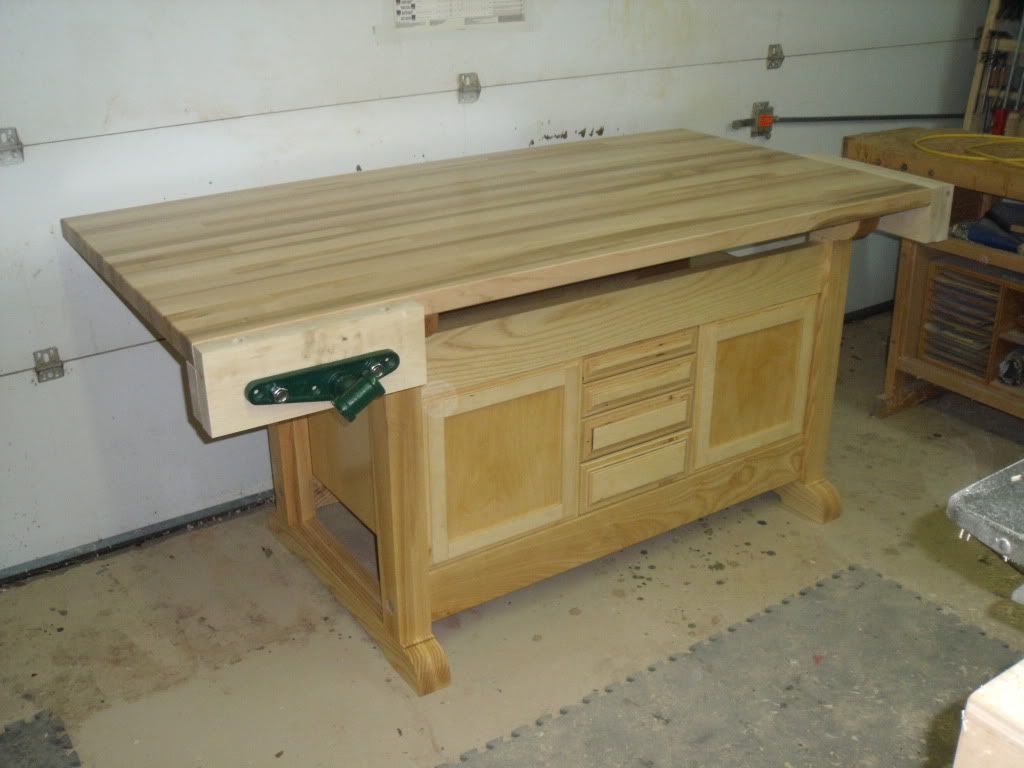
You want the ultimate top? 1 3/4" Maple Slab http://i1096.photobucket.com/albums/g326/Covertness/Workbenchwithtop1.jpg Bought the slab from Grizzly, made the base myself Very nice! |

2 layers of 3/4 melamine gluded and screwed together with a little trim on the ends. Built in 1998. Holes in the bench are for mounting the Dillon's that are stored on the right when not in use. Link to the reloading bench thread, lots of different benches here. |
|
I don't know if it is the ultimate, but this is one that was recommended to me. It is far better than the makeshift table I have now.
National reloading manufacturers association |
| Reason I mentioned pre made kitchen counter tops is it's economical and no finish work. I got a big discount on mine because of small chips on the backsplashes. Don't use any with front edge chips. Those are the ones that bite your arms or snag holes in your favorite gun t-shirts. |

|
Quoted:
I like the idea of two 3/4" plywood glued together with 1/4" hardboard on top and have used that in other applications. I used three 2x12's and really like it - very solid and adaptable. You can't really see it, but here's a pic: http://i713.photobucket.com/albums/ww139/familyguy4_photobucket/IMG_7423.jpg I like the repurposed stout built router table with the feather holder and scale. 
|
|
I found a deal at the local Lowes, in the kitchen section. They had a custom countertop that was made for someone to order, then got scratched in transit. They had it on a cart with a sticker with no price, so I asked the dept manager what the price was. He said $20 takes it home, so home it went. It is about 13/4 in thick and heavy as all get out.
I cut it down to size with a skil saw, and made a set of legs with 4x4 and 1x4 bracing. It is stout enough that I mounted my Rockchucker on it, and didn't have to brace it. I also drilled extra holes to mount the shotgun press, when I load them. Check you local home stores, you might find a bargain. 
|
|
I use flat sawn 2x lumber cut into 1.5 inch strips, and turned 90 degrees so it presents as quarter sawn (more stable) between two layers of 3/8 A-C plywood.
When on face is torn up, turn the top over. When the second face is torn up, add more layers of plywood. I size some 2x lumber to form a solid edge and hide the plywood edge. |

Armory Sponsor