


Armory Sponsor


Posted: 11/1/2011 5:36:00 PM EDT
|
I'm a new reloader who had been concerned about humidity since I started a few months ago. I've figured out that issue, no problems with humidity.
Now as colder weather is upon us, how do y'all deal with static electricity? BTW: My bench is in my garage, with a typical concrete floor. |
|
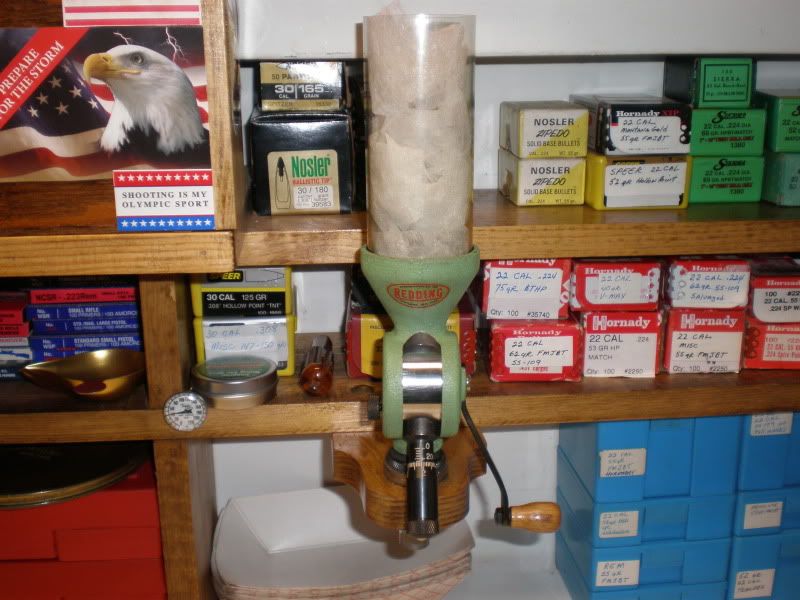
Sometimes your press will need to be grounded to get uniform charge weights from a drum measure. It never hurts in any case.
A dryer sheet wrapped around the measure reservoir helps prevent static on the plastic. Flake gunpowders won't throw worth a hoot if the measure has static. For some reason, I have had the worst experience with Unique. |
|
Quoted:
Sometimes your press will need to be grounded to get uniform charge weights from a drum measure. It never hurts in any case. A dryer sheet wrapped around the measure reservoir helps prevent static on the plastic. Flake gunpowders won't throw worth a hoot if the measure has static. For some reason, I have had the worst experience with Unique. Good info. Thanks AeroE. My house seems to dry out easily even with a humidifier,even though the news says 30-50% outside. |
|
Plexus plastic polish is great for static control, its sold in pilot shops for airplane windshields and a lot of motorcycle dealers carry it for the plastic windshields on bikes. A small can will last for many years. http://www.plexusplasticcleaner.com/frames.html |
|
Quoted:
I've gone so far as to run a wire from my press to the neutral/ground in a nearby outlet. That greatly reduced the static/spillage from my PM on my 550 Why would you ever use a neutral? It can have a voltage drop that raises it above ground from loads on the circuit. Use the ground only. |
|
Quoted:
Quoted:
I've gone so far as to run a wire from my press to the neutral/ground in a nearby outlet. That greatly reduced the static/spillage from my PM on my 550 Why would you ever use a neutral? It can have a voltage drop that raises it above ground from loads on the circuit. Use the ground only. He may not understand that they aren't the same conductor. |
|
Quoted:
Quoted:
Quoted:
I've gone so far as to run a wire from my press to the neutral/ground in a nearby outlet. That greatly reduced the static/spillage from my PM on my 550 Why would you ever use a neutral? It can have a voltage drop that raises it above ground from loads on the circuit. Use the ground only. He may not understand that they aren't the same conductor. Considering my neutrals are all tied to ground inside my box, I doubt it matters. To be more correct in my original statement, the wire tied to my press, is attached to the metal outlet box, which is grounded. That better? 
|
|
Quoted:
Quoted:
Quoted:
Quoted:
I've gone so far as to run a wire from my press to the neutral/ground in a nearby outlet. That greatly reduced the static/spillage from my PM on my 550 Why would you ever use a neutral? It can have a voltage drop that raises it above ground from loads on the circuit. Use the ground only. He may not understand that they aren't the same conductor. Considering my neutrals are all tied to ground inside my box, I doubt it matters. To be more correct in my original statement, the wire tied to my press, is attached to the metal outlet box, which is grounded. That better?
They join at the service panel, not inside the device boxes. Quoted:
Thanks for the replies. I'm more concerned about static coming off of me when I'm around powder. The original question should have said "How to stay grounded?"  I wouldn't worry about that. If you're making that much lightening, igniting gunpowder might not be your biggest worry. |
|
Quoted:
Quoted:
Quoted:
Quoted:
Quoted:
I've gone so far as to run a wire from my press to the neutral/ground in a nearby outlet. That greatly reduced the static/spillage from my PM on my 550 Why would you ever use a neutral? It can have a voltage drop that raises it above ground from loads on the circuit. Use the ground only. He may not understand that they aren't the same conductor. Considering my neutrals are all tied to ground inside my box, I doubt it matters. To be more correct in my original statement, the wire tied to my press, is attached to the metal outlet box, which is grounded. That better?
They join at the service panel, not inside the device boxes. Quoted:
Thanks for the replies. I'm more concerned about static coming off of me when I'm around powder. The original question should have said "How to stay grounded?" I wouldn't worry about that. If you're making that much lightening, igniting gunpowder might not be your biggest worry. Thanks AeroE! Your reply means a lot to me (and my question-asking-engineer-wife). 
Now back to my hijacked thread... |
|
If you are worried about ESD (electro static discharge), get shoes that are ESD rated or use a grounding strap to ground your feet. Wear cotton or wool, not poly for clothing. You could also go barefoot as your bare feet will ground you. I saw a video of how they made primers at one of the ammo plants and the guy that worked in that room was actually standing in a shallow water bath to garuantee grounding. Good rules to follow are to touch something metal to ground yourself before touching the powder or powder measure. As has been said, smokeless powder is not a big risk in a reloading application unless you spill alot and never clean it up and have an explosive layer of dust around. The powder is not volitile and so unlike gasoline or solvents doesn't have LEL coming from the vapor. Excessive dust is the real risk. Keep your area cleaned and you should be ok.
|
|
Quoted:
I'm a new reloader who had been concerned about humidity since I started a few months ago. I've figured out that issue, no problems with humidity. Now as colder weather is upon us, how do y'all deal with static electricity? BTW: My bench is in my garage, with a typical concrete floor. Humidity has a direct link to static electricity, there are many things that can be done to minimize it. ESD shoes as someone has said only will work if you have a grounding mate to stand on. however the easiest way to control ESD is to have the humidity of around 50%-60% anything more is not useful and going under is where ESD starts to be come more apparent. but to better under stand what ESD concerns that you have or what you are worried about happening i then would be able to better help you. as i set up ESD production cells for manufacturers that have ESD levels around 10-100V sensitivity. ESD that makes you jump is about 35,000V ESD that you can feel is around 3,000V ESD under about 3,000V is something that can not be felt also just about everything makes static electricity, but its the ability for that material to dissipate the charge that comes into play. along with the model of danger HBM, CDM, etc.. |
Armory Sponsor