


Armory Sponsor


Posted: 1/5/2016 4:12:29 PM EDT
|
So I've been thinking how to "reinforce" an existing fireproof safe. My concern would be if my firearms were in a high temp house fire, would the firearms, suppressors, flash drives, etc be protected enough to use, or would there be significant damage even though the safe itself was not breached by the fire.
What if you started with a budget safe around $1200, perhaps a 10-15 gun safe and enclosed the safe in a box made with steel plate, then concrete board, then fire-resistant gypsum board against the heat. This might help reduce the heat the safe is actually exposed to? Also, could you line the inside of the safe with 1.5 inches of fire resistant gypsum board, which would reduce internal volume, but would increase fire resistance also? Or maybe you could just line the inside and forget the outside box. I'm really don't know what I'm talking about here, but thought the ideas were fun. I realize even the best safes really just hold out for a certain amount of time, and that there are quality safes out there. Would these ideas be valid or worthwhile? or is it better just to spend the cash and get a more expensive quality safe. Of course these ideas could be completely cuckoo. 
|
|
No useful input other than to say I was curious about this as well.
I'm considering building a cabinet around my safe and was wondering if it would be worth lining it with cement board or some other fire resistant liner or if it would just be a waste of money. I kind of suspect it would be a waste of money honestly. |
|
why dont you do this..
look up some UL assemblies for 3 and 4 hour "fire walls" and put your safe in a room that has a 4 hour fire rating. remember, it's not just the vertical wall assemblies that need to be rated, it's also the floor and ceiling. I would imagine that a CH stud and some 1" shaft liner would be the most economical way to go about it. (but even then, you're talking about $15-$20 per square foot of wall and ceiling space).. |
|
Quoted:
why dont you do this.. look up some UL assemblies for 3 and 4 hour "fire walls" and put your safe in a room that has a 4 hour fire rating. remember, it's not just the vertical wall assemblies that need to be rated, it's also the floor and ceiling. I would imagine that a CH stud and some 1" shaft liner would be the most economical way to go about it. (but even then, you're talking about $15-$20 per square foot of wall and ceiling space).. Good idea. But I don't want to rebuild a whole room. Just kind of "insulate" the safe. For sure, if you were going to build a new house or add on, a fire-resistant room would be a great idea. |
|
Quoted:
Good idea. But I don't want to rebuild a whole room. Just kind of "insulate" the safe. For sure, if you were going to build a new house or add on, a fire-resistant room would be a great idea. Quoted:
Quoted:
why dont you do this.. look up some UL assemblies for 3 and 4 hour "fire walls" and put your safe in a room that has a 4 hour fire rating. remember, it's not just the vertical wall assemblies that need to be rated, it's also the floor and ceiling. I would imagine that a CH stud and some 1" shaft liner would be the most economical way to go about it. (but even then, you're talking about $15-$20 per square foot of wall and ceiling space).. Good idea. But I don't want to rebuild a whole room. Just kind of "insulate" the safe. For sure, if you were going to build a new house or add on, a fire-resistant room would be a great idea. ok, then get a safe that meets your requirements from the beginning. this isn't one of those things you can "add to" a safe, whatever you do, you will create an imperfection in the assembly and your work will be for naught. even a room with 4 hour wall assembly will have a door (best you can find anywhere is around 90 minute, and they're over $300). got lights in that room? electrical outlets? in order to maintain the integrity of the fire rating of the room, you'll have to keep all penetrations to 1/2" or less (surface mount all fixtures, outlets and wiring conduit). can't have any windows, etc. if you're not going to do it right, you're wasting your time.. (based on my nearly 18 years in the commercial construction industry) and yes, regardless of what you do, all your polymer firearms will melt inside your safe if there is a fire. I've seen a safe keep papers from burning.. but they were so brittle that you couldn't pick them up without them falling apart (so what's the point?) I've seen a bag of nickels pulled out of a bank safe after a fire that melted into one huge boat anchor (worthless).. unless you're integrating a cooling system for the safe, everything inside it will probably be destroyed in a "total loss" fire.. |
|
Quoted:
In my old house I ran a water line from the hot water heater through the ceiling to over the safe. Then I had a sprinkler head put in, felt pretty good about that setup. if the two are close, that is a viable option. it's called a "domestic sprinkler head".. typically, it's run off the cold water service that runs through the house.. op, this would be a great option for you if you have a water line that is close. (I assumed that since OP didn't want to add to the rating of the room, he probably wouldn't be interested in adding plumbing and reworking the drywall after the lines were installed) |
|
Quoted:
if the two are close, that is a viable option. it's called a "domestic sprinkler head".. typically, it's run off the cold water service that runs through the house.. op, this would be a great option for you if you have a water line that is close. (I assumed that since OP didn't want to add to the rating of the room, he probably wouldn't be interested in adding plumbing and reworking the drywall after the lines were installed) Quoted:
Quoted:
In my old house I ran a water line from the hot water heater through the ceiling to over the safe. Then I had a sprinkler head put in, felt pretty good about that setup. if the two are close, that is a viable option. it's called a "domestic sprinkler head".. typically, it's run off the cold water service that runs through the house.. op, this would be a great option for you if you have a water line that is close. (I assumed that since OP didn't want to add to the rating of the room, he probably wouldn't be interested in adding plumbing and reworking the drywall after the lines were installed) Not a bad idea. Actually, there is a bathroom that is next door, so I could extend the water pipe from under the house and run it up the wall I suppose to install a sprinkler. I guess that would hose the place down until the pipe melted. |
|
Quoted:
Not a bad idea. Actually, there is a bathroom that is next door, so I could extend the water pipe from under the house and run it up the wall I suppose to install a sprinkler. I guess that would hose the place down until the pipe melted. Quoted:
Quoted:
Quoted:
In my old house I ran a water line from the hot water heater through the ceiling to over the safe. Then I had a sprinkler head put in, felt pretty good about that setup. if the two are close, that is a viable option. it's called a "domestic sprinkler head".. typically, it's run off the cold water service that runs through the house.. op, this would be a great option for you if you have a water line that is close. (I assumed that since OP didn't want to add to the rating of the room, he probably wouldn't be interested in adding plumbing and reworking the drywall after the lines were installed) Not a bad idea. Actually, there is a bathroom that is next door, so I could extend the water pipe from under the house and run it up the wall I suppose to install a sprinkler. I guess that would hose the place down until the pipe melted. water moving through a PVC pipe to sprinkler heads will cool the pipe, preventing it from melting. PVC is an approved fire suppression piping material for Residential and Multi-Family construction. works like this: 
Quoted:
Coat the entire safe in intumescent paint/epoxy. It expands when exposed to flame/high heat and provides extra protection. intumescent fireproofing material is VERY expensive and the entire surface area of the safe would have to be stripped back to raw steel and degreased prior to application of the material. we use intumescent fireproofing in exposed areas where structural members must be protected by code .. |
|
Quoted:
Good idea. But I don't want to rebuild a whole room. Just kind of "insulate" the safe. For sure, if you were going to build a new house or add on, a fire-resistant room would be a great idea. Quoted:
Quoted:
why dont you do this.. look up some UL assemblies for 3 and 4 hour "fire walls" and put your safe in a room that has a 4 hour fire rating. remember, it's not just the vertical wall assemblies that need to be rated, it's also the floor and ceiling. I would imagine that a CH stud and some 1" shaft liner would be the most economical way to go about it. (but even then, you're talking about $15-$20 per square foot of wall and ceiling space).. Good idea. But I don't want to rebuild a whole room. Just kind of "insulate" the safe. For sure, if you were going to build a new house or add on, a fire-resistant room would be a great idea. Your "room" can be any size you want, maybe just an inch or two of airspace around the safe with a drywall door. you could repeat this for multiple layers of protection. Tom |
| I understand the fire resistance of drywall is only due to it releasing water trapped inside when superheated. So just stack some water bottles on the top shelf of your safe. Many smaller bottles probably better than a few larges as they will rupture in sequence and cool as you go. Stuff will get wet, but its better than the alternative. |
|
Quoted:
I understand the fire resistance of drywall is only due to it releasing water trapped inside when superheated. So just stack some water bottles on the top shelf of your safe. Many smaller bottles probably better than a few larges as they will rupture in sequence and cool as you go. Stuff will get wet, but its better than the alternative. That is an interesting idea. I wonder how that would work in reality. |
|
Quoted:
I've thought about using rockwool insulation in the closet around my safe. Anyone have an opinion on the effectiveness of this approach? Quoted:
I've thought about using rockwool insulation in the closet around my safe. Anyone have an opinion on the effectiveness of this approach? insulation is ineffective considering the door will burn down faster than the walls.. Quoted:
Quoted:
I understand the fire resistance of drywall is only due to it releasing water trapped inside when superheated. So just stack some water bottles on the top shelf of your safe. Many smaller bottles probably better than a few larges as they will rupture in sequence and cool as you go. Stuff will get wet, but its better than the alternative. That is an interesting idea. I wonder how that would work in reality. it wouldn't. the safe acts like a dutch oven everything inside would get hot and the polymer would melt before the water bottles heated up enough to burst.. now, if the safe were INSIDE a water bottle which was exposed to a fire, that's a different scenario.. |
|
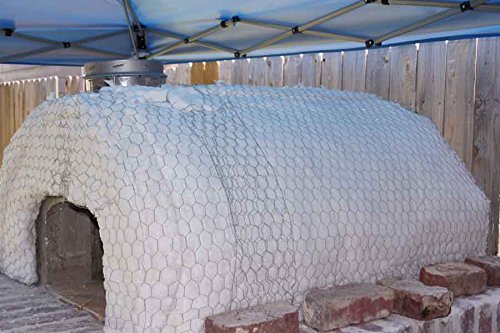
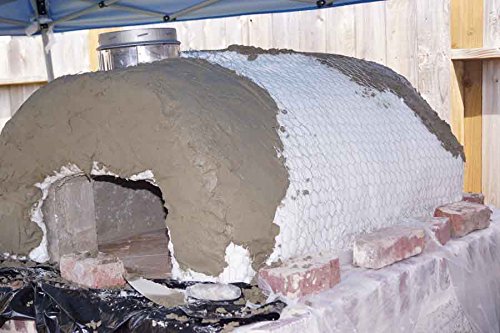
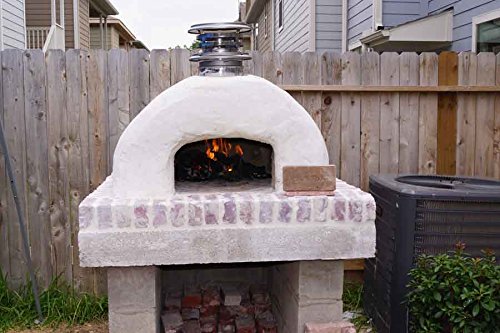
Maybe buy some ceramic blanket and find a way to secure it to the safe walls.
On amazon. Aluminosilicate Ceramic Fiber Blanket 6lb/ft3 (96kg/m3) Non-reactive with moisture (unlike mineral wool and vermiculite) 2300F (1260C) Maximum Temperature, 2100F Continuous Use 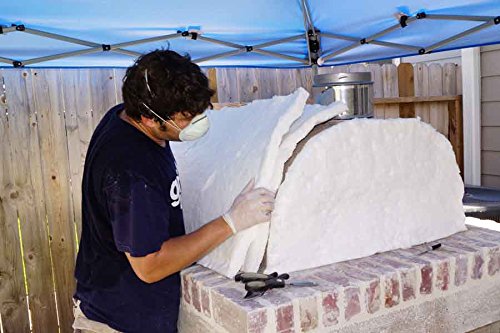
|
|
Quoted:
insulation is ineffective considering the door will burn down faster than the walls.. it wouldn't. the safe acts like a dutch oven everything inside would get hot and the polymer would melt before the water bottles heated up enough to burst.. now, if the safe were INSIDE a water bottle which was exposed to a fire, that's a different scenario.. Quoted:
Quoted:
I've thought about using rockwool insulation in the closet around my safe. Anyone have an opinion on the effectiveness of this approach? insulation is ineffective considering the door will burn down faster than the walls.. Quoted:
Quoted:
I understand the fire resistance of drywall is only due to it releasing water trapped inside when superheated. So just stack some water bottles on the top shelf of your safe. Many smaller bottles probably better than a few larges as they will rupture in sequence and cool as you go. Stuff will get wet, but its better than the alternative. That is an interesting idea. I wonder how that would work in reality. it wouldn't. the safe acts like a dutch oven everything inside would get hot and the polymer would melt before the water bottles heated up enough to burst.. now, if the safe were INSIDE a water bottle which was exposed to a fire, that's a different scenario.. A thin water bottle will melt before a Glock. When used as a component in fire barriers, drywall is a passive fire protection item, subject to stringent bounding. In its natural state, gypsum contains the water of crystallisation bound in the form of hydrates. When exposed to heat or fire, this water is vapourised, retarding heat transfer. Therefore, a fire in one room, which is separated from an adjacent room by a fire-resistance rated drywall assembly, will not cause this adjacent room to get any warmer than the boiling point (100°C) until the water in the gypsum is gone. |
|
Quoted:
A thin water bottle will melt before a Glock. When used as a component in fire barriers, drywall is a passive fire protection item, subject to stringent bounding. In its natural state, gypsum contains the water of crystallisation bound in the form of hydrates. When exposed to heat or fire, this water is vapourised, retarding heat transfer. Therefore, a fire in one room, which is separated from an adjacent room by a fire-resistance rated drywall assembly, will not cause this adjacent room to get any warmer than the boiling point (100°C) until the water in the gypsum is gone. Quoted:
Quoted:
Quoted:
I've thought about using rockwool insulation in the closet around my safe. Anyone have an opinion on the effectiveness of this approach? insulation is ineffective considering the door will burn down faster than the walls.. Quoted:
Quoted:
I understand the fire resistance of drywall is only due to it releasing water trapped inside when superheated. So just stack some water bottles on the top shelf of your safe. Many smaller bottles probably better than a few larges as they will rupture in sequence and cool as you go. Stuff will get wet, but its better than the alternative. That is an interesting idea. I wonder how that would work in reality. it wouldn't. the safe acts like a dutch oven everything inside would get hot and the polymer would melt before the water bottles heated up enough to burst.. now, if the safe were INSIDE a water bottle which was exposed to a fire, that's a different scenario.. A thin water bottle will melt before a Glock. When used as a component in fire barriers, drywall is a passive fire protection item, subject to stringent bounding. In its natural state, gypsum contains the water of crystallisation bound in the form of hydrates. When exposed to heat or fire, this water is vapourised, retarding heat transfer. Therefore, a fire in one room, which is separated from an adjacent room by a fire-resistance rated drywall assembly, will not cause this adjacent room to get any warmer than the boiling point (100°C) until the water in the gypsum is gone. comeone... you're not paying attention.. the water bottle is "cooled" by the water within (until such point as the water boils off and no further cooling protection is provided) now, we're also talking about a house fire which builds.. not someone walking up to the water bottle with a propane torch.. a glock has no such internal cooling component.. that is why you can boil water INSIDE a water bottle (do you even youtube, bro?) I guess you could boil water inside a glock also, but remember, just heating the polymer pistol to a point where it reaches the elastic limit of the polymer will probably be all that is needed to render the pistol/rifle inoperable as the internals will be out of specification. melting point of Nylon6 is about 400 degrees Fahrenheit, which of course is much lower than the "rating" of most "fire proof" safes.. |
|
comeone... you're not paying attention..
the water bottle is "cooled" by the water within (until such point as the water boils off and no further cooling protection is provided) now, we're also talking about a house fire which builds.. not someone walking up to the water bottle with a propane torch.. a glock has no such internal cooling component.. that is why you can boil water INSIDE a water bottle (do you even youtube, bro?) I guess you could boil water inside a glock also, but remember, just heating the polymer pistol to a point where it reaches the elastic limit of the polymer will probably be all that is needed to render the pistol/rifle inoperable as the internals will be out of specification. melting point of Nylon6 is about 400 degrees Fahrenheit, which of course is much lower than the "rating" of most "fire proof" safes.. yes, but you leave the cap off the bottle when boiling water inside it. If you placed a piece of sheet rock and a water bottle inside an un-insulated metal box and heated it up, I wouldn't be surprised if the bottle raptures well before much of the water has been boiled out of the sheetrock. |
| If your not going to buy a good fire safe, then an enclosure built with 2-3 layers of good Type X drywall, with a door of the same construction, would provide a good short burn protective shell that should survive for maybe 45 minutes. Build your support structure with metal studs, not wood. Don't use rock-wool or dry insulators, they are good for slowing heat loss from a closed heated system. Three layers of drywall will outperform 3 inches of rock-wool by at least 30 minutes. That's all based on a good bit of fire testing of real safes. |
|
Quoted: If your not going to buy a good fire safe, then an enclosure built with 2-3 layers of good Type X drywall, with a door of the same construction, would provide a good short burn protective shell that should survive for maybe 45 minutes. Build your support structure with metal studs, not wood. Don't use rock-wool or dry insulators, they are good for slowing heat loss from a closed heated system. Three layers of drywall will outperform 3 inches of rock-wool by at least 30 minutes. That's all based on a good bit of fire testing of real safes. I'll be installing my RSC into a closet soon that has about 8" of space all the way around the "safe." How would you maximize the fire protection with that space. Layer after layer of Type X drywall? I don't mind utilizing all of the available space. |
|
Quoted:
SafeGuy, I'll be installing my RSC into a closet soon that has about 8" of space all the way around the "safe." How would you maximize the fire protection with that space. Layer after layer of Type X drywall? I don't mind utilizing all of the available space. Quoted:
Quoted:
If your not going to buy a good fire safe, then an enclosure built with 2-3 layers of good Type X drywall, with a door of the same construction, would provide a good short burn protective shell that should survive for maybe 45 minutes. Build your support structure with metal studs, not wood. Don't use rock-wool or dry insulators, they are good for slowing heat loss from a closed heated system. Three layers of drywall will outperform 3 inches of rock-wool by at least 30 minutes. That's all based on a good bit of fire testing of real safes. I'll be installing my RSC into a closet soon that has about 8" of space all the way around the "safe." How would you maximize the fire protection with that space. Layer after layer of Type X drywall? I don't mind utilizing all of the available space. Well, clearly we have never tested such an arrangement. The drywall inside a safe that has reached calcination temperatures will release steam. However, the closet is not going to contain the steam like a safe does. No doubt that layers of drywall will add a significant delay to the high temperature exposure of the safe, but I could only guess at how long it might last. The important hole in the plan is a frontal enclosure that is fairly well sealed to provide the best opportunity to shelter the safe in an isolation chamber. The other concern will be the breakdown of the supporting structure. Once the drywall starts to decay, it crumbles and buckles. Attaching/supporting the drywall panels to a structure that doesn't burn up before the drywall is falling apart is probably something that requires some thoughtful design. Same with a door that closes tightly and stays that way as things burn up around it. It's an interesting challenge, but using steel studs and framing the door with steel would be a minimum to make it worthwhile. Sandwiching the drywall is some light expanded metal would be a real improvement. I would do at least 2 layers of drywall, better with 3 I would think. We could debate the design endlessly, but that should give you some ideas. |
|
the guy in that thread wasted his money. he didn't even add a 1hr rated enclosure around his safe. you guys know that UL actually tests and certifies rated enclosures, right? it takes a specific assembly comprising of specific steps/products to actually create any real "protection".. 1 layer of 5/8" rock won't do it 2 layers will work if all joints are taped/bedded with fire rated joint compound shaft liner will work if a CH stud is used, but even then, you've got to construct it correctly. any one item of the recipe is left out and you wasted your money. |
|
some info I happened across, much more at link, but relevant to my earlier post regarding addition of water bottles, key point: Until the moisture is gone, the inside of the safe will stay around 250 to 300 °F at high humidity.
http://gunsafereviewsguy.com/articles/myths-about-gun-safe-fire-ratings/ Gypsum Drywall (Sheetrock) Fire Protection Gypsum drywall, a.k.a. firewall, fiberboard, fireboard by gun safe manufacturers, is commonly called Sheetrock (a trademark of USG) in the construction industry. In residential and commercial construction, gypsum drywall is used as wallboard over studs. In some construction applications it’s used to slow down the spread of fire. For example, many building codes require double layers of 5/8? or thicker drywall on the garage side of an attached garage wall. Gypsum is known by it’s chemical name Hydrous Calcium Sulfate CaSO42H2O. It contains 20.9% chemically combined water representing almost 50% of its weight. In a fire, once the gypsum gets above 212 °F, a process called “calcination” will start where the water breaks its chemical bonds and begins to boil off as steam. Converting a sold or liquid to a gas (e.g. water to steam) is known in chemistry as a phase change. A phase change form water to steam is an endothermic reaction meaning an amount of heat is absorbed, which you know because you have to heat water to make steam. The amount of heat absorbed for a given amount of material varies from chemical to chemical, a property known as the Latent Heat of Vaporization. Cooling using the Latent Heat of Vaporization is how air conditioners work: the refrigerant is compressed and cooled to a liquid in the condenser outside your house, and then made to change phases to a gas in the evaporator coil inside your air ducts, cooling your home. So inside a gun safe, heat from the fire is absorbed keeping the inside cool by converting water to steam. If the gun safe is constructed well enough to maintain a seal in a fire, the steam also has a side effect of adding a small pressure to the inside of the gun safe keeping smoke and hot gasses from coming inside. Until the moisture is gone, the inside of the safe will stay around 250 to 300 °F at high humidity. After all the water in the gypsum is gone the drywall fireproofing will literally “run out of steam”. Note that gypsum isn’t like a sponge holding water, the water is actually part of the gypsum molecules. With all the water baked out, what’s left is no longer gypsum. Instead it’s a different chemical called Anhydrous Calcium Sulfate CaSO4, which will fall apart. Some gypsum fire board is available with fiberglass reinforcement to hold it together better, but most gun safes don’t have any structural support for the fireproofing material. So, what’s left of the drywall will crumble into the bottom of the gun safe. With the drywall destroyed there will be virtually no insulation between the scorching hot outer shell of the gun safe. The contents will rapidly go up in flames. You might hear steam and think of harmless “shower steam”, but that’s not really steam. The cloud that comes out of your shower is really fog, caused when the warm, humid air around the hot water hits cooler air in your bathroom and the water condenses. Shower fog is actually small droplets of liquid water suspended in the air. Real steam is colorless and very dangerous, as it is at least 212 °F and can easily be hundreds of degrees hotter. It will cause near-instant severe burns if it hits your skin, as anyone who’s ever opened a hot radiator can tell you. Also steam at 212 °F will cause more severe burns than water at the same temperature, because of steam’s additional energy due to the Latent Heat of Vaporization. Steam inside your gun safe can be good or bad depending on what you have inside. Note that UL 72 Class 150 and 125 certifications limit the relative humidity inside a fire safe to protect the contents. Many things you could put inside a gun safe, like photos and electronic media, can be destroyed by this steam. If the protective steam from the drywall in your gun safe outlasts the fire, you should get in there as soon as possible before your guns rust or have other damage due to the steam. |
|
Quoted:
some info I happened across, much more at link, but relevant to my earlier post regarding addition of water bottles, key point: Until the moisture is gone, the inside of the safe will stay around 250 to 300 °F at high humidity. http://gunsafereviewsguy.com/articles/myths-about-gun-safe-fire-ratings/ Gypsum Drywall (Sheetrock) Fire Protection Gypsum drywall, a.k.a. firewall, fiberboard, ... .... other damage due to the steam. Good write up on the theoretical performance of fire safes, but not completely accurate. A few clarifications. First, the temperature required to drive Calcination is higher than 212ºF. It's more like 260º. We don't see the Calcination effect start when the gypsum board reaches temperatures well over 212º, but there is some steam release from the free water stored in the gypsum that follows the ambient humidity. The gyp-board is an anhydrous material, and it does absorb and retain some free water from the atmosphere. This water is converted to steam early in the heating cycle, so the total steam release comes in two stages. Again, the drywall reaches a stable temperature at the phase change points as the energy is absorbed to cause the phase change, just like ice water stays at 32ºF as long as both phases of the material are present (water and ice). So, the Gypsum response to heating is over-simplified. Second, steam is water molecules absorbed into the air. The shower analogy is not accurate either. There is no mention of the concept of Dew-Point. Air moisture content is referred to as Relative Humidity. Air has a "capacity" to hold water vapor, and the Dew Point represents the point where the air is "saturated" with water molecules. At the saturation point, no more water can be contained in the air at a molecular level, and that's when the cloud of water droplets forms to make the fog you can see. So, in your shower, you have saturated the air in the room before the visual evidence of suspended water droplets form as fog begins to appear. Again, this happens in two stages where saturation must be complete before the dew-point is reached and free water droplets are forming. Third, steam is stable at 212ºF unless considerable pressurization is present. So, in a safe, the enclosure would have to be completely air-tight to allow pressure to build and result in steam temperatures rising above 212º. The pressures necessary to add significant temperature rise are quite high. In fact, when we do fire testing, we frequently measure air pressure inside the safe to judge the quality of door seals and body containment integrity. In most testing, the measurement of pressure is on the order of a 10-20 millibars, where 68.8 millibars = 1.0 PSI. To put this in perspective, a 10º rise in saturated steam temperature (from 212º to 222º) correlates to a pressure rise of about 3 PSI in a closed container. The point is that safes are not well sealed, and pressures don't rise enough to make any difference in the steam temperatures. Forth, and most important. Heat transfer happens in three modes: Conduction, Convection and Radiation. The generation of steam is only one aspect of the thermal response in a safe. This is where the real surprises are hidden in designing a good fire safe. Stacking layers of drywall to present a thermal barrier is a hugely oversimplified model of what really needs to be done. Without writing a book on the matter, suffice it to say that all of the parts of the safe provide thermal conduction and radiant transfer of energy that adds to the convection response of the generated steam coming out of the insulating materials. Hot spots where corners are exposed to heat from three sides concentrates energy transfer, and conduction transfer rates are MUCH higher in those areas. Steel that is exposed to the outside of the safe -and- the inside of the safe, like the jambs and door perimeter, conduct energy at a VERY high rate. Any hot elements or surfaces inside the safe are acting like infra-red radiators moving energy to the interior contents, as well as releasing convection energy to the inside air. These effects are not hindered by the presence of steam. The fire safe is an extremely complex mix of thermal systems. This is where the men are separated from the boys. These complex systems must be understood, so that design can be properly engineered to manage ALL aspects of the safe's thermal response. So, even a simple gypsum board lined safe has to be highly "engineered" to make it viable as a fire protection system. For those that just slap up some drywall and print a label with some arbitrary rating, they have no clue what's happening in a real fire. Fire safe design takes years of expensive testing and real experience to just begin to understand, and it's not written anywhere. Those that make that investment keep those secrets and will provide a superior product in every class, because you must do the testing and development necessary to master the technology. |
|
When did Amsec start to fire line the bottoms of their BF safes? When I purchase my BF6030 several years ago it was advertised as being fire lined on all sides, but when I went to mount the safe the bottom was when just a single layer of steel around 11 guage. I really like the safe but I was disappointed because it was advertised as having Outer and Inner steel liner on the body. |
|
Quoted:
When did Amsec start to fire line the bottoms of their BF safes? When I purchase my BF6030 several years ago it was advertised as being fire lined on all sides, but when I went to mount the safe the bottom was when just a single layer of steel around 11 guage. I really like the safe but I was disappointed because it was advertised as having Outer and Inner steel liner on the body. That happened maybe 3 years ago. It was only added to satisfy customer inquiries, and was not necessary to pass the fire testing. On all fire rated safes, unless it is drop-tested, the bottom of the safe is never exposed to the furnace temperatures, since the bottom is resting on the floor of the furnace. |
|
Quoted: That happened maybe 3 years ago. It was only added to satisfy customer inquiries, and was not necessary to pass the fire testing. On all fire rated safes, unless it is drop-tested, the bottom of the safe is never exposed to the furnace temperatures, since the bottom is resting on the floor of the furnace. Quoted: Quoted: When did Amsec start to fire line the bottoms of their BF safes? When I purchase my BF6030 several years ago it was advertised as being fire lined on all sides, but when I went to mount the safe the bottom was when just a single layer of steel around 11 guage. I really like the safe but I was disappointed because it was advertised as having Outer and Inner steel liner on the body. That happened maybe 3 years ago. It was only added to satisfy customer inquiries, and was not necessary to pass the fire testing. On all fire rated safes, unless it is drop-tested, the bottom of the safe is never exposed to the furnace temperatures, since the bottom is resting on the floor of the furnace. Why was it advertised as having a Outer and Inner steel liner on the body, if that wasn't the case for the bottom of the safe. |
|
Realize that you need TWO layers of 5/8" Type X Gypsum Wall Board to achieve a 1 hour rating. This guy didn't get there if I understand his pictures correctly. Also, don't forget that you would need to protect the ceiling, and the floor if on an elevated story, as well. |
|
Quoted:
Realize that you need TWO layers of 5/8" Type X Gypsum Wall Board to achieve a 1 hour rating. This guy didn't get there if I understand his pictures correctly. Also, don't forget that you would need to protect the ceiling, and the floor if on an elevated story, as well. I can tell without any doubt, based on multiple fire tests on gunsafes with drywall barriers from 1 to 5 layers, that 2 layers of Type X Gyp doesn't make it 1 hour in a basic 1200ºF fire test. In fact, two layers will barely get you to 45 minutes, and that is with a host of specialized installation and construction tricks that took a great deal of testing and refinements to achieve. Anyone claiming a 1 hour rating with 2 layers of drywall simply never tested their products, or the fire exposure was sorely lacking. |
|
Quoted:
Why was it advertised as having a Outer and Inner steel liner on the body, if that wasn't the case for the bottom of the safe. This is an accepted industry standard, and consistent with industry practices. In fact, even the UL72 Fire Ratings do not expose the bottom of the safe to fire, unless you go for the optional enhanced "with Impact" drop test listing in the testing program. For a UL Class 350 test, safes are placed in the furnace on a bed of insulation and sand. The thermocouple harness is routed out thru the bottom of the safe, and the perimeter of the safe base is surrounded by sand and insulating materials. Furthermore, when a safe is submitted for the enhanced listing that is referred to as the Drop Test, the safe is not rigged with TCs, and is only lined with paper to assess content damages. This is the only test where the floor of the safe is exposed. The Fire Endurance testing (where temperature measurements are recorded) on that safe is still done in the same manner, with the floor isolated from fire. There are two basic Class 350 tests, Fire Endurance and Explosion Hazard, and a third test if you opt for the Drop Testing enhanced listing mark. Each test is conducted with a new safe sample. I have personally conducted this testing numerous times at UL. I know that seems absurd to the casual consumer, but this is the standard and it has been for over 100 years. So, if the UL72 Standard, the recognized holy grail of fire ratings, does not expose the safe floor to fire, why would a lowly gunsafe be treated any differently? |
Armory Sponsor