


|
So clip your toenails and sprinkle them on the back of a P320. Then put it in a paint can shaker and see what happens. Not saying it’s an impossibility. But I’m still with Occam's Razor. The theory that requires the least assumptions is that people are not giving due care when holstering and getting objects in the trigger guard. Theres a few one-offs, like using the wrong holster, or a kid able to stick his finger in because of a light-bearing holster, and probably some that were finger fucking but have a premade excuse. But if you can test your theory and get repeatable results, that would be quite meaningful. |
|
Quoted: If an Sig Sauer doesn’t say made in West Germany on the side, it’s garbage. The two piece breech stamped slides were an act of absolute poverty and lack of modern machinery and German P226 frames are notorious for cracking prematurely because of it. Hell, wasn’t it a Sig employee that made a color coding system for the frame rails to determine life cycle of the gun and get people to throw them away before catastrophic failure? Sig has always been a company of hype built on mediocre tactical products, and no one was willing to accept it. They are pioneers in using barrel hood lockup but they’ve never not had problems. The 320 is just their worst problem yet. |
|
Quoted: So clip your toenails and sprinkle them on the back of a P320. Then put it in a paint can shaker and see what happens. Not saying it’s an impossibility. But I’m still with Occam's Razor. The theory that requires the least assumptions is that people are not giving due care when holstering and getting objects in the trigger guard. Theres a few one-offs, like using the wrong holster, or a kid able to stick his finger in because of a light-bearing holster, and probably some that were finger fucking but have a premade excuse. But if you can test your theory and get repeatable results, that would be quite meaningful. I agree that describes some instances. A P320 is not immune to user error or accessory deficiency or failure, just like anything else. I might have to go buy a P320 and start saving my toenail clippings. Maybe I can set up a PO Box where people can donate their toenails to my efforts. |
|
I may not know why the gun has a large occurrence of firing without people admitting to being stupid. I have stopped carrying it, and won't for the foreseeable future. Not just because of the unintentional discharges, and actually mostly because of the companies responses. You may think it's silly of me, but the risk/reward ratio is a bit extreme when death is on the line. It's not like I'm debating with a Sicilian. 
|
|
Quoted: Is that mess of a MIM arthritic-maimed fist looking pile of crap really the striker, sear, etc assembly from a 320? Ho-Lee shit… Yes, and that tail on the rear of the sear isn’t common to other striker fired handguns I am familiar with. The P320 has that because it’s for sear spring seating. S&W and Glock, notably, do not have a shelf at the rear to form a V between those surfaces. Anything that falls on their sears just falls away. There’s no debris trap. |
|
Quoted: I know, another thread on this topic, but I think I have a workable theory. I’d like to be told why I’m wrong and my idea is impossible. We know from the “punch test” the P320 striker block safety is unreliable. Punch Test We know from the “one millimeter test” that the secondary sear doesn’t necessarily catch the striker if the sear has pivoted, even if only enough out of the way that slide/frame clearance can allow it to fire. Slide Movement Test This video shows how the sear is built, and I will borrow an image from it. Striker Function and image attribution We want to explain how a SIG P320 must fire (1) in a holster with no trigger manipulation, (2) through normal use of the handgun, (3) in a way that is not repeatable after the fact, and (4) would specifically affect the P320 and not other common handguns. I theorize that a pistol in a holster carried in a typical muzzle-down orientation allows for ingress of debris through the back of the slide/frame. This piece of debris could be anything which exists in the environment and can fit in that gap. It then fits into what I will refer to as the “V trap” between the back of the sear and the striker tail, illustrated below with an arrow. https://www.ar15.com/media/mediaFiles/581716/IMG_5972_jpeg-3596697.JPG We know this area is accessible from the back of the slide because of the punch test, and that this sear can be moved down without a trigger pull due to that same test. We know that the striker block safety doesn’t necessarily successfully block the striker in all instances. We know that a pivoted sear, as it has pivoted in the millimeter test, will not reliably catch the striker on the secondary sear. It also shows us, as expected, that slide/frame clearance and the movement inherent to that does affect sear engagement, allowing these two components to move apart and back together. If a piece of debris of the appropriate size falls into the “V trap” while the pistol is being carried normally it can wedge in that V. Then, every time the slide is pushed against the frame by normal movement of a pistol in a holster that piece of debris pushes the sear farther down and when the slide moves back away from the frame (because of the magazine spring) this contaminant falls under gravity and wedges itself a little bit farther in until it pushes the sear down too far and the striker releases because the sear has pivoted. The secondary sear is also moved out of the way because the sear did rotate, and the striker block safety is unreliable and may have had sympathetic movement with the sear. It is not repeatable because as soon as the striker releases this small bit of contaminant is free to fall wherever it may and be as unnoticeable as any other fleck of dirt. In clean conditions you can’t make the striker slip because there isn’t a piece of debris. Why doesn’t it affect Glock? The Glock sear and striker engagement has no V configuration at the rear for the foreign contaminant to become trapped in and can’t be moved out of the way of the striker without substantial trigger pull because of the trigger housing blocking it. Why doesn’t it affect S&W with their M&P? The S&W sear doesn’t have that shelf at the rear for its sear spring like the P320 does. It doesn’t affect anything hammer fired because the sear and hammer are both in the frame so have no play between them during slide/frame movement during normal carrying. I’m not familiar with every design of striker fired pistol. In conclusion… The P320 can have the sear/striker engagement wedged apart by a small foreign contaminant due to the geometry at the rear of that engagement. The P320 sear has nothing to prevent it from pivoting independent of the trigger, even on manual safety equipped models. The P320 when afflicted by this contaminant eventually reaches a state in which slight bumping of the pistol will fire it. The striker releasing frees this contaminant, leaving no lasting evidence on the pistol and no repeatability in controlled lab conditions. Other pistol designs I am familiar with do not afford this opportunity for a foreign contaminant to wedge in and/or have more reliable striker block safeties. Hammer fired pistols are immune due to sear engagement not being affected by slide/frame clearance. Depending on the exact size of the foreign contaminant and the amount of movement the pistol experiences this could happen almost immediately or very slowly over the course of days, weeks, or months. It would almost exclusively happen to pistol in a muzzle-down orientation when being bumped, but could happen to a pistol in another orientation if it is already at the point sear engagement < slide/frame clearance. I put a lot of thought into this, but I’m not an expert on the P320 and also am not intimately familiar with the design of every handgun which is routinely carried. I humbly submit my theory to be picked apart and proven wrong by people more knowledgeable than me. Thank you for your time if you bothered to read this and gave it consideration. The Glock also only has a half-cocked striker. If it slips and the striker block fails, it’s still not going off. |
|
Quoted: The Glock also only has a half-cocked striker. If it slips and the striker block fails, it’s still not going off. Quoted: Quoted: I know, another thread on this topic, but I think I have a workable theory. I’d like to be told why I’m wrong and my idea is impossible. We know from the “punch test” the P320 striker block safety is unreliable. Punch Test We know from the “one millimeter test” that the secondary sear doesn’t necessarily catch the striker if the sear has pivoted, even if only enough out of the way that slide/frame clearance can allow it to fire. Slide Movement Test This video shows how the sear is built, and I will borrow an image from it. Striker Function and image attribution We want to explain how a SIG P320 must fire (1) in a holster with no trigger manipulation, (2) through normal use of the handgun, (3) in a way that is not repeatable after the fact, and (4) would specifically affect the P320 and not other common handguns. I theorize that a pistol in a holster carried in a typical muzzle-down orientation allows for ingress of debris through the back of the slide/frame. This piece of debris could be anything which exists in the environment and can fit in that gap. It then fits into what I will refer to as the “V trap” between the back of the sear and the striker tail, illustrated below with an arrow. https://www.ar15.com/media/mediaFiles/581716/IMG_5972_jpeg-3596697.JPG We know this area is accessible from the back of the slide because of the punch test, and that this sear can be moved down without a trigger pull due to that same test. We know that the striker block safety doesn’t necessarily successfully block the striker in all instances. We know that a pivoted sear, as it has pivoted in the millimeter test, will not reliably catch the striker on the secondary sear. It also shows us, as expected, that slide/frame clearance and the movement inherent to that does affect sear engagement, allowing these two components to move apart and back together. If a piece of debris of the appropriate size falls into the “V trap” while the pistol is being carried normally it can wedge in that V. Then, every time the slide is pushed against the frame by normal movement of a pistol in a holster that piece of debris pushes the sear farther down and when the slide moves back away from the frame (because of the magazine spring) this contaminant falls under gravity and wedges itself a little bit farther in until it pushes the sear down too far and the striker releases because the sear has pivoted. The secondary sear is also moved out of the way because the sear did rotate, and the striker block safety is unreliable and may have had sympathetic movement with the sear. It is not repeatable because as soon as the striker releases this small bit of contaminant is free to fall wherever it may and be as unnoticeable as any other fleck of dirt. In clean conditions you can’t make the striker slip because there isn’t a piece of debris. Why doesn’t it affect Glock? The Glock sear and striker engagement has no V configuration at the rear for the foreign contaminant to become trapped in and can’t be moved out of the way of the striker without substantial trigger pull because of the trigger housing blocking it. Why doesn’t it affect S&W with their M&P? The S&W sear doesn’t have that shelf at the rear for its sear spring like the P320 does. It doesn’t affect anything hammer fired because the sear and hammer are both in the frame so have no play between them during slide/frame movement during normal carrying. I’m not familiar with every design of striker fired pistol. In conclusion… The P320 can have the sear/striker engagement wedged apart by a small foreign contaminant due to the geometry at the rear of that engagement. The P320 sear has nothing to prevent it from pivoting independent of the trigger, even on manual safety equipped models. The P320 when afflicted by this contaminant eventually reaches a state in which slight bumping of the pistol will fire it. The striker releasing frees this contaminant, leaving no lasting evidence on the pistol and no repeatability in controlled lab conditions. Other pistol designs I am familiar with do not afford this opportunity for a foreign contaminant to wedge in and/or have more reliable striker block safeties. Hammer fired pistols are immune due to sear engagement not being affected by slide/frame clearance. Depending on the exact size of the foreign contaminant and the amount of movement the pistol experiences this could happen almost immediately or very slowly over the course of days, weeks, or months. It would almost exclusively happen to pistol in a muzzle-down orientation when being bumped, but could happen to a pistol in another orientation if it is already at the point sear engagement < slide/frame clearance. I put a lot of thought into this, but I’m not an expert on the P320 and also am not intimately familiar with the design of every handgun which is routinely carried. I humbly submit my theory to be picked apart and proven wrong by people more knowledgeable than me. Thank you for your time if you bothered to read this and gave it consideration. The Glock also only has a half-cocked striker. If it slips and the striker block fails, it’s still not going off. Maybe. Maybe not:  The Partially Cocked Glock Myth Enough people have come up with various ways to test it and it seems rather repeatable that it is enough energy to cause ignition. |
|
@VeryAverage https://www.instagram.com/reel/DMtf-7XycGU/ Does your theory comport with this behavior? |
|
Quoted: I know, another thread on this topic, but I think I have a workable theory. I’d like to be told why I’m wrong and my idea is impossible. We know from the “punch test” the P320 striker block safety is unreliable. Punch Test We know from the “one millimeter test” that the secondary sear doesn’t necessarily catch the striker if the sear has pivoted, even if only enough out of the way that slide/frame clearance can allow it to fire. Slide Movement Test This video shows how the sear is built, and I will borrow an image from it. Striker Function and image attribution We want to explain how a SIG P320 must fire (1) in a holster with no trigger manipulation, (2) through normal use of the handgun, (3) in a way that is not repeatable after the fact, and (4) would specifically affect the P320 and not other common handguns. I theorize that a pistol in a holster carried in a typical muzzle-down orientation allows for ingress of debris through the back of the slide/frame. This piece of debris could be anything which exists in the environment and can fit in that gap. It then fits into what I will refer to as the “V trap” between the back of the sear and the striker tail, illustrated below with an arrow. https://www.ar15.com/media/mediaFiles/581716/IMG_5972_jpeg-3596697.JPG We know this area is accessible from the back of the slide because of the punch test, and that this sear can be moved down without a trigger pull due to that same test. We know that the striker block safety doesn’t necessarily successfully block the striker in all instances. We know that a pivoted sear, as it has pivoted in the millimeter test, will not reliably catch the striker on the secondary sear. It also shows us, as expected, that slide/frame clearance and the movement inherent to that does affect sear engagement, allowing these two components to move apart and back together. If a piece of debris of the appropriate size falls into the “V trap” while the pistol is being carried normally it can wedge in that V. Then, every time the slide is pushed against the frame by normal movement of a pistol in a holster that piece of debris pushes the sear farther down and when the slide moves back away from the frame (because of the magazine spring) this contaminant falls under gravity and wedges itself a little bit farther in until it pushes the sear down too far and the striker releases because the sear has pivoted. The secondary sear is also moved out of the way because the sear did rotate, and the striker block safety is unreliable and may have had sympathetic movement with the sear. It is not repeatable because as soon as the striker releases this small bit of contaminant is free to fall wherever it may and be as unnoticeable as any other fleck of dirt. In clean conditions you can’t make the striker slip because there isn’t a piece of debris. Why doesn’t it affect Glock? The Glock sear and striker engagement has no V configuration at the rear for the foreign contaminant to become trapped in and can’t be moved out of the way of the striker without substantial trigger pull because of the trigger housing blocking it. Why doesn’t it affect S&W with their M&P? The S&W sear doesn’t have that shelf at the rear for its sear spring like the P320 does. It doesn’t affect anything hammer fired because the sear and hammer are both in the frame so have no play between them during slide/frame movement during normal carrying. I’m not familiar with every design of striker fired pistol. In conclusion… The P320 can have the sear/striker engagement wedged apart by a small foreign contaminant due to the geometry at the rear of that engagement. The P320 sear has nothing to prevent it from pivoting independent of the trigger, even on manual safety equipped models. The P320 when afflicted by this contaminant eventually reaches a state in which slight bumping of the pistol will fire it. The striker releasing frees this contaminant, leaving no lasting evidence on the pistol and no repeatability in controlled lab conditions. Other pistol designs I am familiar with do not afford this opportunity for a foreign contaminant to wedge in and/or have more reliable striker block safeties. Hammer fired pistols are immune due to sear engagement not being affected by slide/frame clearance. Depending on the exact size of the foreign contaminant and the amount of movement the pistol experiences this could happen almost immediately or very slowly over the course of days, weeks, or months. It would almost exclusively happen to pistol in a muzzle-down orientation when being bumped, but could happen to a pistol in another orientation if it is already at the point sear engagement < slide/frame clearance. I put a lot of thought into this, but I’m not an expert on the P320 and also am not intimately familiar with the design of every handgun which is routinely carried. I humbly submit my theory to be picked apart and proven wrong by people more knowledgeable than me. Thank you for your time if you bothered to read this and gave it consideration. It's a piece of shit! |
|
Quoted: @VeryAverage https://www.instagram.com/reel/DMtf-7XycGU/ Does your theory comport with this behavior? I’m not exactly sure what’s going on with that video… I suspect he has moved the slide too far forward because the barrel isn’t present and is causing issues as a result. The barrel lockup is an important limit that puts parts where they are supposed to be. Hard to say what is being shown there. It would be something if the barrel was present and he could get a striker drop, or especially fire a case. The pistol will have a striker forward when disassembling, and it looks to me like he moved the slide too far forward and inadvertently mimicked a disassembly. I could be overlooking something, but I don’t think that video explains the primary issue at play. |
|
Quoted: While I have been convinced that there is a real issue with the P320. That SIG should have addressed years ago. It seems odd that NO ONE has positively identified the issue. Yet so many blast all things SIG USA. Test Engineer here - I assume when you say "positively identified" you mean "recreated in a test." My following comment isn't completely directed at you, as I see this sentiment repeated a lot on this board. Just my humble 2 cents - but not being able to recreate a problem DOES NOT mean the problem does not exist. That is not how testing works. Short version: If a failure has been observed, but cannot be recreated, it is then potentially classified as a UVF, or Unverified Failure. This could be caused by a myriad of factors, which become the subject of long, arduous investigations by people who are a lot smarter than I am. In my experience, this is a worst case scenario - and is exactly where Sig is probably. There are just too many videos of their guns going off in holsters to deny there is something going on. One thing I think that lines up with the OP: If a failure is observed in a piece of hardware, great care is taken in testing not to "lose" the failure - this means remaining in whatever configuration the hardware was in at the time of failure and basically not touching anything at all. When these Sig P320/M18 incidents occur, the pistol cycles, and I would count that the same as a "reset" of sorts - or a different configuration as when the pistol discharged. That factor alone would make it incredibly difficult to recreate the issue. |
|
Quoted: Test Engineer here - I assume when you say "positively identified" you mean "recreated in a test." My following comment isn't completely directed at you, as I see this sentiment repeated a lot on this board. Just my humble 2 cents - but not being able to recreate a problem DOES NOT mean the problem does not exist. That is not how testing works. Short version: If a failure has been observed, but cannot be recreated, it is then potentially classified as a UVF, or Unverified Failure. This could be caused by a myriad of factors, which become the subject of long, arduous investigations by people who are a lot smarter than I am. In my experience, this is a worst case scenario - and is exactly where Sig is probably. There are just too many videos of their guns going off in holsters to deny there is something going on. One thing I think that lines up with the OP: If a failure is observed in a piece of hardware, great care is taken in testing not to "lose" the failure - this means remaining in whatever configuration the hardware was in at the time of failure and basically not touching anything at all. When these Sig P320/M18 incidents occur, the pistol cycles, and I would count that the same as a "reset" of sorts - or a different configuration as when the pistol discharged. That factor alone would make it incredibly difficult to recreate the issue. Quoted: Quoted: While I have been convinced that there is a real issue with the P320. That SIG should have addressed years ago. It seems odd that NO ONE has positively identified the issue. Yet so many blast all things SIG USA. Test Engineer here - I assume when you say "positively identified" you mean "recreated in a test." My following comment isn't completely directed at you, as I see this sentiment repeated a lot on this board. Just my humble 2 cents - but not being able to recreate a problem DOES NOT mean the problem does not exist. That is not how testing works. Short version: If a failure has been observed, but cannot be recreated, it is then potentially classified as a UVF, or Unverified Failure. This could be caused by a myriad of factors, which become the subject of long, arduous investigations by people who are a lot smarter than I am. In my experience, this is a worst case scenario - and is exactly where Sig is probably. There are just too many videos of their guns going off in holsters to deny there is something going on. One thing I think that lines up with the OP: If a failure is observed in a piece of hardware, great care is taken in testing not to "lose" the failure - this means remaining in whatever configuration the hardware was in at the time of failure and basically not touching anything at all. When these Sig P320/M18 incidents occur, the pistol cycles, and I would count that the same as a "reset" of sorts - or a different configuration as when the pistol discharged. That factor alone would make it incredibly difficult to recreate the issue. To point out one thing beyond your last paragraph even, the pistol could even be in a hooded holster that doesn’t allow it to cycle. You could have no slide movement at all, even. If the striker released to fire the pistol, the contaminant is no longer pinched and falls free. The action taking place removes the evidence of that cause inherently, regardless of whether the pistol cycles or even attempts to cycle. I think you meant that anyway, but wanted to make clarification on that. Even if you, for example, take the fired and uncycled pistol still in the holster and send it to the FBI lab the contaminant is gone. |
|
Quoted: To point out one thing beyond your last paragraph even, the pistol could even be in a hooded holster that doesn’t allow it to cycle. You could have no slide movement at all, even. If the striker released to fire the pistol, the contaminant is no longer pinched and falls free. The action taking place removes the evidence of that cause inherently, regardless of whether the pistol cycles or even attempts to cycle. I think you meant that anyway, but wanted to make clarification on that. Even if you, for example, take the fires and uncycled pistol still in the holster and send it to the FBI lab the contaminant is gone. Quoted: Quoted: Quoted: While I have been convinced that there is a real issue with the P320. That SIG should have addressed years ago. It seems odd that NO ONE has positively identified the issue. Yet so many blast all things SIG USA. Test Engineer here - I assume when you say "positively identified" you mean "recreated in a test." My following comment isn't completely directed at you, as I see this sentiment repeated a lot on this board. Just my humble 2 cents - but not being able to recreate a problem DOES NOT mean the problem does not exist. That is not how testing works. Short version: If a failure has been observed, but cannot be recreated, it is then potentially classified as a UVF, or Unverified Failure. This could be caused by a myriad of factors, which become the subject of long, arduous investigations by people who are a lot smarter than I am. In my experience, this is a worst case scenario - and is exactly where Sig is probably. There are just too many videos of their guns going off in holsters to deny there is something going on. One thing I think that lines up with the OP: If a failure is observed in a piece of hardware, great care is taken in testing not to "lose" the failure - this means remaining in whatever configuration the hardware was in at the time of failure and basically not touching anything at all. When these Sig P320/M18 incidents occur, the pistol cycles, and I would count that the same as a "reset" of sorts - or a different configuration as when the pistol discharged. That factor alone would make it incredibly difficult to recreate the issue. To point out one thing beyond your last paragraph even, the pistol could even be in a hooded holster that doesn’t allow it to cycle. You could have no slide movement at all, even. If the striker released to fire the pistol, the contaminant is no longer pinched and falls free. The action taking place removes the evidence of that cause inherently, regardless of whether the pistol cycles or even attempts to cycle. I think you meant that anyway, but wanted to make clarification on that. Even if you, for example, take the fires and uncycled pistol still in the holster and send it to the FBI lab the contaminant is gone. I agree and apologies if I wasn't clear - if/when the failure causes the striker to release, the pistol is in a different state than when the failure occurred. |
|
Quoted: Your theory makes sense. If you test and get repeatable results i think it carries a lot of weight. Personally I think there is something wrong in the design. But I also think 90% of the it went off by itself is user induced. Unfortunately (fortunately?) I don’t own a P320, so the only way I can test this is if I go buy one. I’m not that inclined to do so. I don’t care much for them anyway for purely subjective reasons. |
|
Quoted: Looks like a 1970s Hong Kong made pot metal cap gun. Quoted: Looks like a 1970s Hong Kong made pot metal cap gun. Quoted: Is that mess of a MIM arthritic-maimed fist looking pile of crap really the striker, sear, etc assembly from a 320? Ho-Lee shit… I never really paid a whole lot of attention to the P320 as I don't own one until all these discussions here. These sentiments above were my first thought as well when I watched some of these videos and looked at the pictures of the internals in that those critical parts look pretty well.....rough...like something I would expect out of a Jennings or Lorchin rough. Maybe the observed aesthetic quality of these parts are not the issue leading to these uncommanded discharges but the manufacturing quality from at least a casual observer perspective its not confidence inspiring. There is no way I would carry something around potentially pointed at myself or others where the line between potential life/death and holding a fully tensioned firing pin/striker back from a primer are internal components that looked that bad. |
|
Quoted: I didn’t take it as being dismissive. I was just wondering what the other theories are. I wonder if there is a way to scientifically test this. Introduce a correctly sized piece of contamination and then just work the slide/frame apart and back together a few hundred times. Your theory is pretty reasonable at this point. I’ve been trying to figure out what has been letting the sear drop. Something has to release the striker. Why are the sears dropping. It makes me questions a bunch of things, like cleanliness and anything else that may be involved. Thank you for typing it up and posting it. |
|
Quoted: Your theory is pretty reasonable at this point. I’ve been trying to figure out what has been letting the sear drop. Something has to release the striker. Why are the sears dropping. It makes me questions a bunch of things, like cleanliness and anything else that may be involved. Thank you for typing it up and posting it. Quoted: Quoted: I didn’t take it as being dismissive. I was just wondering what the other theories are. I wonder if there is a way to scientifically test this. Introduce a correctly sized piece of contamination and then just work the slide/frame apart and back together a few hundred times. Your theory is pretty reasonable at this point. I’ve been trying to figure out what has been letting the sear drop. Something has to release the striker. Why are the sears dropping. It makes me questions a bunch of things, like cleanliness and anything else that may be involved. Thank you for typing it up and posting it. In this instance, I think what we generally regard as “cleanliness” wouldn’t matter that much. If you have a cleaned pistol, put some grease on the slide rails and locking block, etc. then put it in a holster for carry… all it takes is a small bit of foreign matter to be introduced to the pistol at that V trap. A chunk of table salt 0.040” in diameter ought to do it, and it could happen that day or after being carried for months. I don’t think anyone would get up from eating their breakfast after a bit of salt got spilled across the table and think “my gun is dirty now and I need to clean it so it doesn’t shoot me”. I don’t think a third party looking inside the pistol would consider it dirty, either. Some little fleck of table salt stuck somewhere down in the frame. Unnoticeable probably, and unremarkable if noticed. Carried guns end up with all kinds of junk in them. Hair, skin, pet hair, Cheetos dust, wind-blown sand… basically think of everything that ends up between the seat cushions of a car. |
|
Quoted: I’m not exactly sure what’s going on with that video… I suspect he has moved the slide too far forward because the barrel isn’t present and is causing issues as a result. The barrel lockup is an important limit that puts parts where they are supposed to be. Hard to say what is being shown there. It would be something if the barrel was present and he could get a striker drop, or especially fire a case. The pistol will have a striker forward when disassembling, and it looks to me like he moved the slide too far forward and inadvertently mimicked a disassembly. I could be overlooking something, but I don’t think that video explains the primary issue at play. Quoted: Quoted: @VeryAverage https://www.instagram.com/reel/DMtf-7XycGU/ Does your theory comport with this behavior? I’m not exactly sure what’s going on with that video… I suspect he has moved the slide too far forward because the barrel isn’t present and is causing issues as a result. The barrel lockup is an important limit that puts parts where they are supposed to be. Hard to say what is being shown there. It would be something if the barrel was present and he could get a striker drop, or especially fire a case. The pistol will have a striker forward when disassembling, and it looks to me like he moved the slide too far forward and inadvertently mimicked a disassembly. I could be overlooking something, but I don’t think that video explains the primary issue at play. That's just the punch test showing the striker block safety is locked to sear movement. It's been making the rounds this morning b/c the tool is difficult to see in the video. |
|
Quoted: Test Engineer here - I assume when you say "positively identified" you mean "recreated in a test." My following comment isn't completely directed at you, as I see this sentiment repeated a lot on this board. Just my humble 2 cents - but not being able to recreate a problem DOES NOT mean the problem does not exist. That is not how testing works. Short version: If a failure has been observed, but cannot be recreated, it is then potentially classified as a UVF, or Unverified Failure. This could be caused by a myriad of factors, which become the subject of long, arduous investigations by people who are a lot smarter than I am. In my experience, this is a worst case scenario - and is exactly where Sig is probably. There are just too many videos of their guns going off in holsters to deny there is something going on. One thing I think that lines up with the OP: If a failure is observed in a piece of hardware, great care is taken in testing not to "lose" the failure - this means remaining in whatever configuration the hardware was in at the time of failure and basically not touching anything at all. When these Sig P320/M18 incidents occur, the pistol cycles, and I would count that the same as a "reset" of sorts - or a different configuration as when the pistol discharged. That factor alone would make it incredibly difficult to recreate the issue. Quoted: Quoted: While I have been convinced that there is a real issue with the P320. That SIG should have addressed years ago. It seems odd that NO ONE has positively identified the issue. Yet so many blast all things SIG USA. Test Engineer here - I assume when you say "positively identified" you mean "recreated in a test." My following comment isn't completely directed at you, as I see this sentiment repeated a lot on this board. Just my humble 2 cents - but not being able to recreate a problem DOES NOT mean the problem does not exist. That is not how testing works. Short version: If a failure has been observed, but cannot be recreated, it is then potentially classified as a UVF, or Unverified Failure. This could be caused by a myriad of factors, which become the subject of long, arduous investigations by people who are a lot smarter than I am. In my experience, this is a worst case scenario - and is exactly where Sig is probably. There are just too many videos of their guns going off in holsters to deny there is something going on. One thing I think that lines up with the OP: If a failure is observed in a piece of hardware, great care is taken in testing not to "lose" the failure - this means remaining in whatever configuration the hardware was in at the time of failure and basically not touching anything at all. When these Sig P320/M18 incidents occur, the pistol cycles, and I would count that the same as a "reset" of sorts - or a different configuration as when the pistol discharged. That factor alone would make it incredibly difficult to recreate the issue. You are describing the Michigan State Police 320 that was sent to the FBI, & was X-Rayed before the FBI took it out of the retention holster w/ the fired case still in the chamber. |
|
Quoted: In this instance, I think what we generally regard as “cleanliness” wouldn’t matter that much. If you have a cleaned pistol, put some grease on the slide rails and locking block, etc. then put it in a holster for carry… all it takes is a small bit of foreign matter to be introduced to the pistol at that V trap. A chunk of table salt 0.040” in diameter ought to do it, and it could happen that day or after being carried for months. I don’t think anyone would get up from eating their breakfast after a bit of salt got spilled across the table and think “my gun is dirty now and I need to clean it so it doesn’t shoot me”. I don’t think a third party looking inside the pistol would consider it dirty, either. Some little fleck of table salt stuck somewhere down in the frame. Unnoticeable probably, and unremarkable if noticed. Carried guns end up with all kinds of junk in them. Hair, skin, pet hair, Cheetos dust, wind-blown sand… basically think of everything that ends up between the seat cushions of a car. Quoted: Quoted: Quoted: I didn’t take it as being dismissive. I was just wondering what the other theories are. I wonder if there is a way to scientifically test this. Introduce a correctly sized piece of contamination and then just work the slide/frame apart and back together a few hundred times. Your theory is pretty reasonable at this point. I’ve been trying to figure out what has been letting the sear drop. Something has to release the striker. Why are the sears dropping. It makes me questions a bunch of things, like cleanliness and anything else that may be involved. Thank you for typing it up and posting it. In this instance, I think what we generally regard as “cleanliness” wouldn’t matter that much. If you have a cleaned pistol, put some grease on the slide rails and locking block, etc. then put it in a holster for carry… all it takes is a small bit of foreign matter to be introduced to the pistol at that V trap. A chunk of table salt 0.040” in diameter ought to do it, and it could happen that day or after being carried for months. I don’t think anyone would get up from eating their breakfast after a bit of salt got spilled across the table and think “my gun is dirty now and I need to clean it so it doesn’t shoot me”. I don’t think a third party looking inside the pistol would consider it dirty, either. Some little fleck of table salt stuck somewhere down in the frame. Unnoticeable probably, and unremarkable if noticed. Carried guns end up with all kinds of junk in them. Hair, skin, pet hair, Cheetos dust, wind-blown sand… basically think of everything that ends up between the seat cushions of a car. OP is to be congratulated on not using the word doughnut anywhere in his exposition. Make horizontal shoulder holsters great again? OP, you could be on to something. You probably want to come up w/ a jig to cut fingernail clippings to a uniform shape & size lest the doubters decry your method. Sending you an IM shortly. |
|
Quoted: You are describing the Michigan State Police 320 that was sent to the FBI, & was X-Rayed before the FBI took it out of the retention holster w/ the fired case still in the chamber. Quoted: Quoted: Quoted: While I have been convinced that there is a real issue with the P320. That SIG should have addressed years ago. It seems odd that NO ONE has positively identified the issue. Yet so many blast all things SIG USA. Test Engineer here - I assume when you say "positively identified" you mean "recreated in a test." My following comment isn't completely directed at you, as I see this sentiment repeated a lot on this board. Just my humble 2 cents - but not being able to recreate a problem DOES NOT mean the problem does not exist. That is not how testing works. Short version: If a failure has been observed, but cannot be recreated, it is then potentially classified as a UVF, or Unverified Failure. This could be caused by a myriad of factors, which become the subject of long, arduous investigations by people who are a lot smarter than I am. In my experience, this is a worst case scenario - and is exactly where Sig is probably. There are just too many videos of their guns going off in holsters to deny there is something going on. One thing I think that lines up with the OP: If a failure is observed in a piece of hardware, great care is taken in testing not to "lose" the failure - this means remaining in whatever configuration the hardware was in at the time of failure and basically not touching anything at all. When these Sig P320/M18 incidents occur, the pistol cycles, and I would count that the same as a "reset" of sorts - or a different configuration as when the pistol discharged. That factor alone would make it incredibly difficult to recreate the issue. You are describing the Michigan State Police 320 that was sent to the FBI, & was X-Rayed before the FBI took it out of the retention holster w/ the fired case still in the chamber. Which is what I’ve been alluding to as well. In my theory the act of the striker dropping changes the configuration the parts were in and frees the foreign contaminant. As soon as the striker drops the pistol is returned to its normal, proper configuration. Can’t observe or repeat the failure after the failure happens, because the failure happening changed the configuration. |
|
If I go to acquire a P320, is there some particular variant I should be looking for? Just any post-upgrade P320/M17/M18? They all share the same internal components? Me running out and buying a custom shop piece probably wouldn’t be the most representative sample. What are cops carrying? |
|
Quoted: If I go to acquire a P320, is there some particular variant I should be looking for? Just any post-upgrade P320/M17/M18? They all share the same internal components? Me running out and buying a custom shop piece probably wouldn’t be the most representative sample. What are cops carrying? Have you not watched any of the videos or read any of the leaked documents on all the testing yet? |
|
Quoted: If I go to acquire a P320, is there some particular variant I should be looking for? Just any post-upgrade P320/M17/M18? They all share the same internal components? Me running out and buying a custom shop piece probably wouldn’t be the most representative sample. What are cops carrying? Any P320 on Texas Gun Trader will do ya. Or lowball some of our 320s offered in the EE. The .mil guns, and some P320 models differ by having a manual safety that locks the trigger, but the Air Force doesn't even use it. The Marine Corps did, and still nearly shot a Japanese guard in the foot. |
| The problem with the p320 is someone decided it would be a great idea to have the striker under constant tension. I can not think of another manufacturer of striker fired pistols that have a striker under constant tension. I told a buddy of mine that i thought it was a disaster waiting to happen. |
|
Quoted: The problem with the p320 is someone decided it would be a great idea to have the striker under constant tension. I can not think of another manufacturer of striker fired pistols that have a striker under constant tension. I told a buddy of mine that i thought it was a disaster waiting to happen. Eh, S&W I would consider to be fully tensioned. Canik and the Walther it copies, too. Someone might argue they are only 95% or something, but I wouldn’t consider that to be meaningful. Glocks even with their only partially cocked striker have been shown to be sufficiently tensioned to light off a primer of somehow they were to fall and the striker block didn’t work. This explanation we use has to be unique to the P320, whatever it is. |
|
Quoted: If an Sig Sauer doesn’t say made in West Germany on the side, it’s garbage. My last Sig pistol said Made in Switzerland on the side so I guess it needed to go in the trash? Anyhow, I like Op's theory. Having carried duty pistols in open holsters in humid, hot, southeast Texas for a good while, I can attest to the amount of goo and debris that can accumulate in the back of guns from even just a week of carry. I've seen it in the hammer channels of hammer fired duty pistols where its more obvious as well. I would add that after firing the fuzz and debris would also blow out of a lot of crevices inside the pistol once it fired, decreasing the possibility of it being noticed after a UD. |
|
Quoted: Eh, S&W I would consider to be fully tensioned. Canik and the Walther it copies, too. Someone might argue they are only 95% or something, but I wouldn’t consider that to be meaningful. Glocks even with their only partially cocked striker have been shown to be sufficiently tensioned to light off a primer of somehow they were to fall and the striker block didn’t work. This explanation we use has to be unique to the P320, whatever it is. I'll have to dig it out to look again but I think my CZ P10C has the striker partially back all the time also. |
Best thread on this subject so far  OP your theory is the first one that I've read that has any credibility. Having been the chief engineer of two large, high tech companies (now retired), having had to solve problems like this myself, the endless series of videos of people poking these guns in the ass with tools or pulling the trigger back a ridiculous amount to get it to fire are just stupid. I do find that you can get the pistol to fire by pulling the trigger back to where it starts to engage the sear and then manipulating slide very, very bad. It should never be possible to fire a weapon by any means other than the trigger by itself. Nevertheless, this behavior still does not explain any of the so-called uncommanded discharges. I'd like to see someone take a dozen 320s, attach them to a shaker (vibration) table in various orientations and shake the crap out of them for hours or days. It would also be very reasonable to have some contamination added to the part of the weapon that the OP is concerned about. |
|
Quoted: Best thread on this subject so far I'd like to see someone take a dozen 320s, attach them to a shaker (vibration) table in various orientations and shake the crap out of them for hours or days. It would also be very reasonable to have some contamination added to the part of the weapon that the OP is concerned about. Go to 32:10  Sig Breaks Silence - The P320 Interview |
|
Quoted: Best thread on this subject so far OP your theory is the first one that I've read that has any credibility. Having been the chief engineer of two large, high tech companies (now retired), having had to solve problems like this myself, the endless series of videos of people poking these guns in the ass with tools or pulling the trigger back a ridiculous amount to get it to fire are just stupid. I do find that you can get the pistol to fire by pulling the trigger back to where it starts to engage the sear and then manipulating slide very, very bad. It should never be possible to fire a weapon by any means other than the trigger by itself. Nevertheless, this behavior still does not explain any of the so-called uncommanded discharges. I'd like to see someone take a dozen 320s, attach them to a shaker (vibration) table in various orientations and shake the crap out of them for hours or days. It would also be very reasonable to have some contamination added to the part of the weapon that the OP is concerned about. SIG did that. |
|
Quoted: SIG did that. Quoted: Quoted: Best thread on this subject so far OP your theory is the first one that I've read that has any credibility. Having been the chief engineer of two large, high tech companies (now retired), having had to solve problems like this myself, the endless series of videos of people poking these guns in the ass with tools or pulling the trigger back a ridiculous amount to get it to fire are just stupid. I do find that you can get the pistol to fire by pulling the trigger back to where it starts to engage the sear and then manipulating slide very, very bad. It should never be possible to fire a weapon by any means other than the trigger by itself. Nevertheless, this behavior still does not explain any of the so-called uncommanded discharges. I'd like to see someone take a dozen 320s, attach them to a shaker (vibration) table in various orientations and shake the crap out of them for hours or days. It would also be very reasonable to have some contamination added to the part of the weapon that the OP is concerned about. SIG did that. They sure did. 
|
|
Quoted: OP, there haven't been any UD reports about the Flux Raiders. Have you considered that maybe the P320 just doesn't like to be confined in a holster? YES! Actually, this method only would work through vibration/bumping if carried muzzle down in a holster. Bumping the pistol around in other orientations would very possibly clear the debris. The pistol just being moved to another orientation, but not bumped, wouldn’t clear it. The “holster pop” is explained by the orientation of the pistol in the holster, muzzle down, and then experiencing bumping in that orientation. A vibratory test where the pistol moves in all different orientations wouldn’t repeat the conditions for my hypothesis. I’m gaining some more familiarity now… Attached File |
|
Quoted: This Quoted: Quoted: If an Sig Sauer doesn’t say made in West Germany on the side, it’s garbage. This Except folded/welded slide W German P22x pistols just aren’t as robust as their modern counterparts. I prefer to shoot the old ones, but they rarely see any +p loads through them. |
|
Quoted: So SIG did it. Do it with some foreign material in the OPs magic spot. Note also that since SIG did do this, and with no negative results, the OPs theory is all that's left. Everything else is just bullshit, and nobody has yet to prove a thing. Except that SIG did it with negative results - they had primer indents on the primers. Did you forget that part? |
|
https://youtu.be/HiWhK6OUMV4?si=IreRsuZgEGBSZR7R So, this is direct link only as just some initial observations on my desk. Not trying to pimp a YouTube channel or profit from this. I was able to force it to drop the striker with a Ruger RXM sight stud and jostling the slide around a bit. Obviously not definitive, but even in just an hour and a half with no large variety of debris to test, just what was convenient at hand, I was able to “bump fire” the pistol because of that rear sear shelf which is unique to the P320 design amongst striker fired pistols I am familiar with. Edit: This releases the striker. This pistol seems to have a fully functional striker block safety. |
|
|
Quoted: @VeryAverage https://www.instagram.com/stories/mischief_machine/3688399107389114934?igsh=MTNmeTM1b2w1YjQ4NQ== https://www.instagram.com/stories/mischief_machine/3688439420958562399?igsh=MWg1c250cWxlMDg0bw== https://www.instagram.com/stories/mischief_machine/3688447115904236154?igsh=MWQ5cXpqbjB3OTRiMA== This is way more interesting than putting a screw in the trigger. Quoted from the big P320 thread. Looks like Mischief Machine beat me to it by about 15 minutes with unburnt powder and some slide wiggling. |
|
Quoted: https://youtu.be/HiWhK6OUMV4?si=IreRsuZgEGBSZR7R So, this is direct link only as just some initial observations on my desk. Not trying to pimp a YouTube channel or profit from this. I was able to force it to drop the striker with a Ruger RXM sight stud and jostling the slide around a bit. Obviously not definitive, but even in just an hour and a half with no large variety of debris to test, just what was convenient at hand, I was able to “bump fire” the pistol because of that rear sear shelf which is unique to the P320 design amongst striker fired pistols I am familiar with. Edit: This releases the striker. This pistol seems to have a fully functional striker block safety. 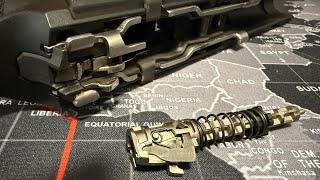 P320 False Auto-Sear Malfunction |