


Posted: 11/14/2025 8:35:32 PM EDT
[Last Edit: _DR][Edited]
|
Read this article and something seems amiss, maybe I am wrong? The regular pilots are advised to coordinate a test pilot to test stall characteristics after wing maintenance, and are unable, so choose to test the stall recovery themselves, fail to recover. But if they are type-rated, shouldn't they be qualified to conduct a stall and recovery? Could something have been incorrectly maintained? Shouldn't the maintenance firm have their own test pilot? I'm sure the NTSB will determine root cause, not familiar enough with this type of scenario to know what procedures are standard. Pilots performing post-maintenance stall test killed as Raytheon Hawker 800XP crashes in Michigan By Jon Hemmerdinger 13 November 2025 Pilots of a Raytheon Hawker 800XP business jet were performing a post-maintenance stall test during a 16 October flight that ended with the jet crashing in Michigan, killing all three people aboard. The US National Transportation Safety Board (NTSB) says in a preliminary investigation report that a stall test had been required after maintenance technicians performed inspections of the jet’s wings. The inspections involved removing and replacing the wing’s leading edges and “ice protection panels”. The work was performed by maintenance firm Duncan Aviation at its facility in Battle Creek, Michigan. Duncan had given the jet’s primary captain a list of “experienced test pilots, for hire, to perform the post-maintenance stall test flight”, says the NTSB. “After being unable to coordinate the stall test flight with a test pilot, the flight crew elected to perform the post-maintenance stall test themselves.” “The stall flight was part of a test flight conducted at the completion of a scheduled maintenance event performed by Duncan,” that company says. “Our focus is on supporting the families and friends of the crew, our team members who worked on the aircraft and developed close relationships with the aircraft’s representatives, the aircraft owner and anyone else touched by the tragic event,” says Duncan president Mike Minchow. The jet took off at 17:08 local time from Battle Creek Executive airport and climbed to 15,000ft, then at 17:27 “began a rapid descent”, during which one of the pilots said over the radio that they were “in a stall, recovering”. The Hawker slammed into the ground and most of its wreckage was consumed by fire. The crash killed two pilots and their maintenance representative, but no Duncan employees, Duncan says. “The NTSB has investigated at least three other accidents/incidents involving the performance of required stall tests after maintenance in business jets,” the report says. It notes that the jet’s pilot operating manual describes procedures for and warnings about completing stall tests. “Pilots conducting stall checks should have prior experience in performing stalls in the Hawker and must be prepared for unacceptable stall behaviour at any point leading up to and throughout the manoeuvre,” the manual says. Story corrected on 14 November to note that the jet took off at 17:08 local time, not 17:28. Pilots performing post-maintenance stall test killed as Raytheon Hawker 800XP crashes in Michigan 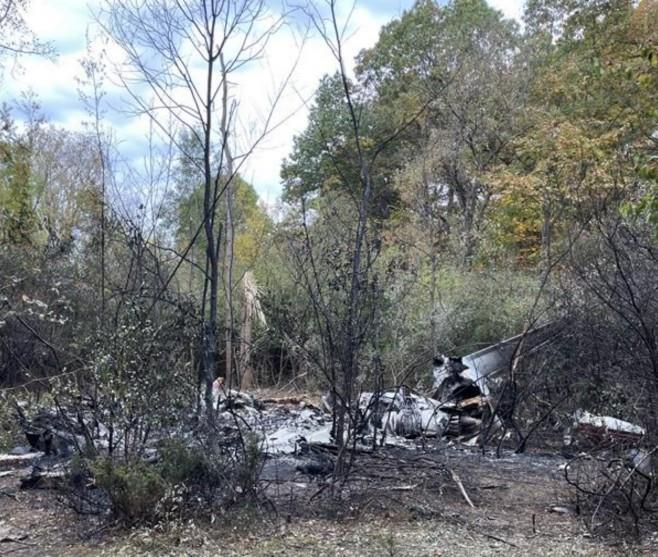 Crash site 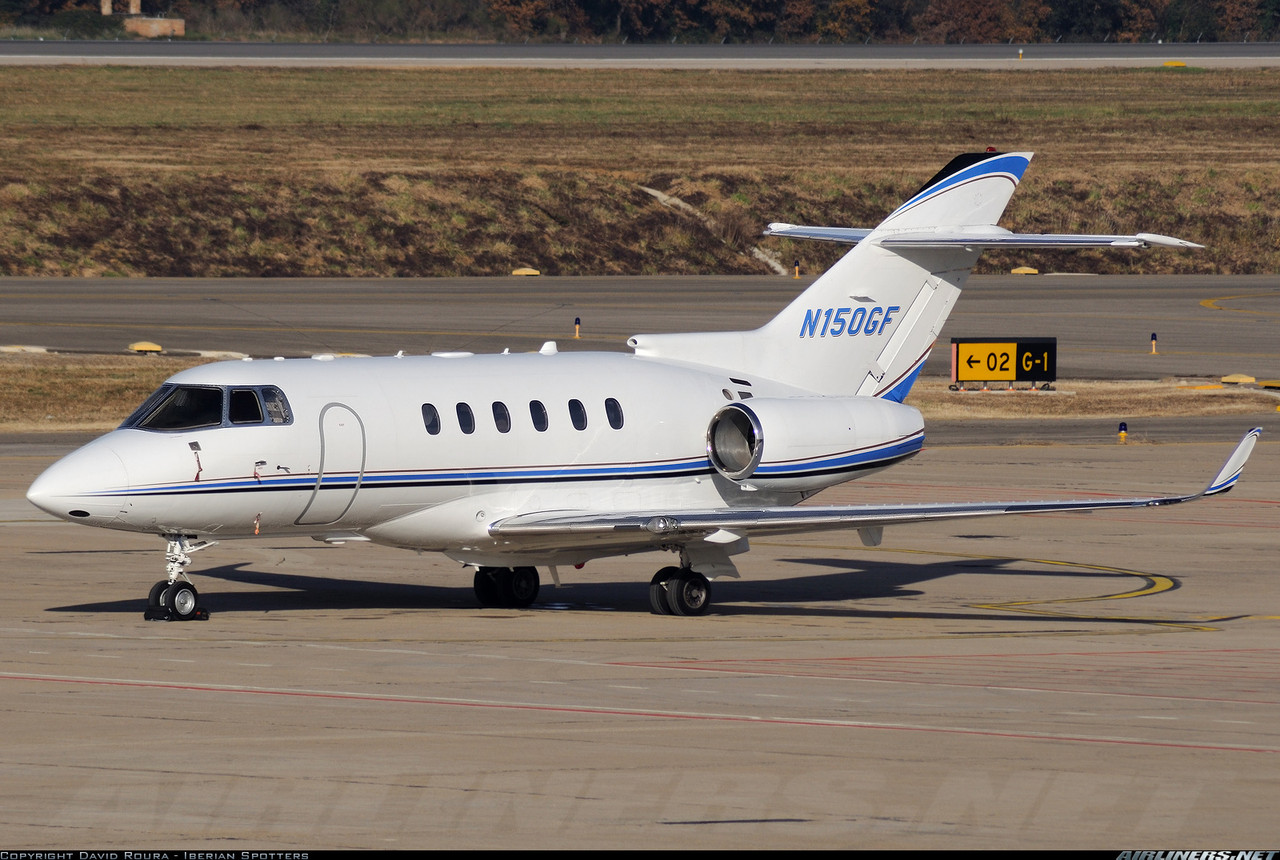 Stock photo |
"According to Argonne National Laboratory, it takes 100 pounds of battery in an EV to go a distance achieved by only one pound of gasoline in an ICE vehicle"


|
A similar terrible thing happened in the Bombardier CRJ's testing phase back in the 90's. Two test pilots were out on a sortie to test the stall characteristics of the jet. There was a drag chute installed to assist in recovery if it wasn't possible with control inputs. Unfortunately, once in the stall, one of the pilots jettisoned the drag chute instead of deploying it. They did not recover. |
|
Originally Posted By SquatchAv8: Unfortunately, once in the stall, one of the pilots jettisoned the drag chute instead of deploying it. Oof. |
"According to Argonne National Laboratory, it takes 100 pounds of battery in an EV to go a distance achieved by only one pound of gasoline in an ICE vehicle"


|
YouTube showed this to me this morning. I’d be a hell of a lot more deliberate if I went out looking for stall warnings on a swept wing jet without any experience doing it. The army has dedicated courses for pilots to become “maintenance test pilots” because of so many incidents like this in the Vietnam era.  I Investigated a Routine Flight Gone Horribly Wrong! |

|
Interesting...NTSB weighs in. Something about "unacceptable stall characteristics" NTSB issues 'urgent' advice for Hawker jet stall tests Recommendations follow two fatal accidents January 8, 2026 By Ian Wilder The NTSB issued a batch of urgent safety recommendations regarding the operation of Hawker jet variants following two fatal accidents during manufacturer-required stall test flights following maintenance in 2024 and 2025. Along with the two fatal accidents, another incident and two related events prompted the NTSB to call attention to gaps investigators identified in documentation, procedures, and the criteria for qualifying pilots to conduct these test flights. Ice and other wing irregularities, including bent vortex generators, caused stalls before stick pusher and simultaneously with stick shaker activation. Lack of pilot training and experience requirements that led to improper remedial action was found to be causal in one of the fatal accidents, while another investigation is ongoing. The NTSB’s guidance to Textron Aviation, current holder of the Hawker type certificate, recommended a review of the aircraft documentation provided to pilots on all airplanes on the A3EU type certificate. Updated guidance should, according to the agency, include the effects of wing deformities or contamination on stall behavior, including that tiny changes in wing shape can have dramatic effect, allowing stalls to commence before there's any indication from the aircraft, and include an abrupt roll. The NTSB recommends that any pilot conducting such a flight be trained on proper recovery procedures, beginning with sufficient altitude. The NTSB also recommended Textron develop for the Hawker 700, 800, 800XP, 850XP, and 900XP a “clear and thorough” stall test plan; define manufacturer-authorized training and experience requirements to qualify pilots to conduct stall training; and review all other airplanes on the type certificate model for similar issues. In one of the accidents involving a Hawker 900XP, N900VA, near Westwater, Utah, in February 2024, the stick shaker and stick pusher failed to activate before a stall. The aircraft stalled as the stick shaker activated and before the stick pusher engaged. The late response by the stall protection system was “likely due to wing performance degradation from structural ice that accumulated as the airplane entered the clouds during part of its climb,” the NTSB wrote. According to the final report, after the airplane entered a stall, it abruptly rolled to the right. The flight crew responded with full left-wing-down aileron control input, full power, and full aft (airplane-nose-up pitch) elevator control input, which aggravated the aerodynamic stall and spin. The accident killed both crewmembers on board. The NTSB found that although the aircraft manual references “unacceptable stall characteristics,” which includes that a stall may occur before stick shaker or stick pusher activation or an uncommanded roll that exceeds 20 degrees and cannot be limited by a pilot’s aileron control input, current documentation for pilots does “not provide clear information or recovery procedures beyond a statement that the elevator control must be moved forward.” A more recent accident in October involved a Hawker 800XP airplane, XA-JMR, that crashed during a stall test flight near Bath Township, Michigan, killing the pilot, co-pilot, and a company maintenance representative on board. The NTSB wrote in its guidance that, although the investigation is ongoing, the “descent profile and other aspects of the flight are similar to those identified” in the Utah accident. The NTSB guidance also cited a 2006 investigation of an accident involving a Corporate Jets Limited BAE 125-800A—another of 51 unique airplane models on the type rating. Six crewmembers were injured during a stall test flight when the airplane entered a stall without the expected stick shaker and stick pusher activation and rolled uncommanded through 360 degrees. Ice contamination on the wings, the NTSB wrote, resulted in the airplane’s adverse stall behavior. The NTSB referenced two other stall test flight events where deformed vortex generators caused stalls without stick shaker or stick pusher activation and uncommanded rolls, though neither of these events resulted in damage or injuries. NTSB issues 'urgent' advice for Hawker jet stall tests |
"According to Argonne National Laboratory, it takes 100 pounds of battery in an EV to go a distance achieved by only one pound of gasoline in an ICE vehicle"
|
Originally Posted By _DR: Interesting...NTSB weighs in. Something about "unacceptable stall characteristics" Originally Posted By _DR: Interesting...NTSB weighs in. Something about "unacceptable stall characteristics" The NTSB found that although the aircraft manual references “unacceptable stall characteristics,” which includes that a stall may occur before stick shaker or stick pusher activation or an uncommanded roll that exceeds 20 degrees and cannot be limited by a pilot’s aileron control input, current documentation for pilots does “not provide clear information or recovery procedures beyond a statement that the elevator control must be moved forward.” The NTSB did not say the aircraft has "unacceptable stall characteristics", they cited a reference in an aircraft manual (presumably an operator manual?) where the manufacturer states as such. That may sound like minutia to some people, but it is a very important distinction. At the end of the day the aircraft is certificated and the FAA is satisfied with the aircraft's performance. FAA only wants more information about the flight characteristics near and beyond stall included in the operator manual. On the surface this seems similar to the 737 max debacle - a design that is approved and accepted but has enough rope for inexperienced or poorly trained pilots to hang themselves. Investigation even stated that the crew made wrong (not simply wrong, but the opposite of correct) inputs in pitch, roll, and thrust in addition to their flagrant disregard for the altitude requirements the manual has for this test. Plus basic airmanship with regards to appreciating how much even tiny amounts of ice can change aircraft flight characteristics. You can't stop stupid. |
|
Originally Posted By Morgan321: Seems like you're misrepresenting your quote. The NTSB did not say the aircraft has "unacceptable stall characteristics", they cited a reference in an aircraft manual (presumably an operator manual?) where the manufacturer states as such. That may sound like minutia to some people, but it is a very important distinction. At the end of the day the aircraft is certificated and the FAA is satisfied with the aircraft's performance. FAA only wants more information about the flight characteristics near and beyond stall included in the operator manual. On the surface this seems similar to the 737 max debacle - a design that is approved and accepted but has enough rope for inexperienced or poorly trained pilots to hang themselves. Investigation even stated that the crew made wrong (not simply wrong, but the opposite of correct) inputs in pitch, roll, and thrust in addition to their flagrant disregard for the altitude requirements the manual has for this test. Plus basic airmanship with regards to appreciating how much even tiny amounts of ice can change aircraft flight characteristics. You can't stop stupid. Originally Posted By Morgan321: Originally Posted By _DR: Interesting...NTSB weighs in. Something about "unacceptable stall characteristics" The NTSB found that although the aircraft manual references “unacceptable stall characteristics,” which includes that a stall may occur before stick shaker or stick pusher activation or an uncommanded roll that exceeds 20 degrees and cannot be limited by a pilot’s aileron control input, current documentation for pilots does “not provide clear information or recovery procedures beyond a statement that the elevator control must be moved forward.” The NTSB did not say the aircraft has "unacceptable stall characteristics", they cited a reference in an aircraft manual (presumably an operator manual?) where the manufacturer states as such. That may sound like minutia to some people, but it is a very important distinction. At the end of the day the aircraft is certificated and the FAA is satisfied with the aircraft's performance. FAA only wants more information about the flight characteristics near and beyond stall included in the operator manual. On the surface this seems similar to the 737 max debacle - a design that is approved and accepted but has enough rope for inexperienced or poorly trained pilots to hang themselves. Investigation even stated that the crew made wrong (not simply wrong, but the opposite of correct) inputs in pitch, roll, and thrust in addition to their flagrant disregard for the altitude requirements the manual has for this test. Plus basic airmanship with regards to appreciating how much even tiny amounts of ice can change aircraft flight characteristics. You can't stop stupid. Good information , thanks for pointing that out. Hopefully the needed training will be required and done in the future. |
"According to Argonne National Laboratory, it takes 100 pounds of battery in an EV to go a distance achieved by only one pound of gasoline in an ICE vehicle"