


Posted: 5/18/2016 12:25:43 PM EDT
|
In this thread we discuss the fact that with fatness comes the expectation of greatness.
Example A: 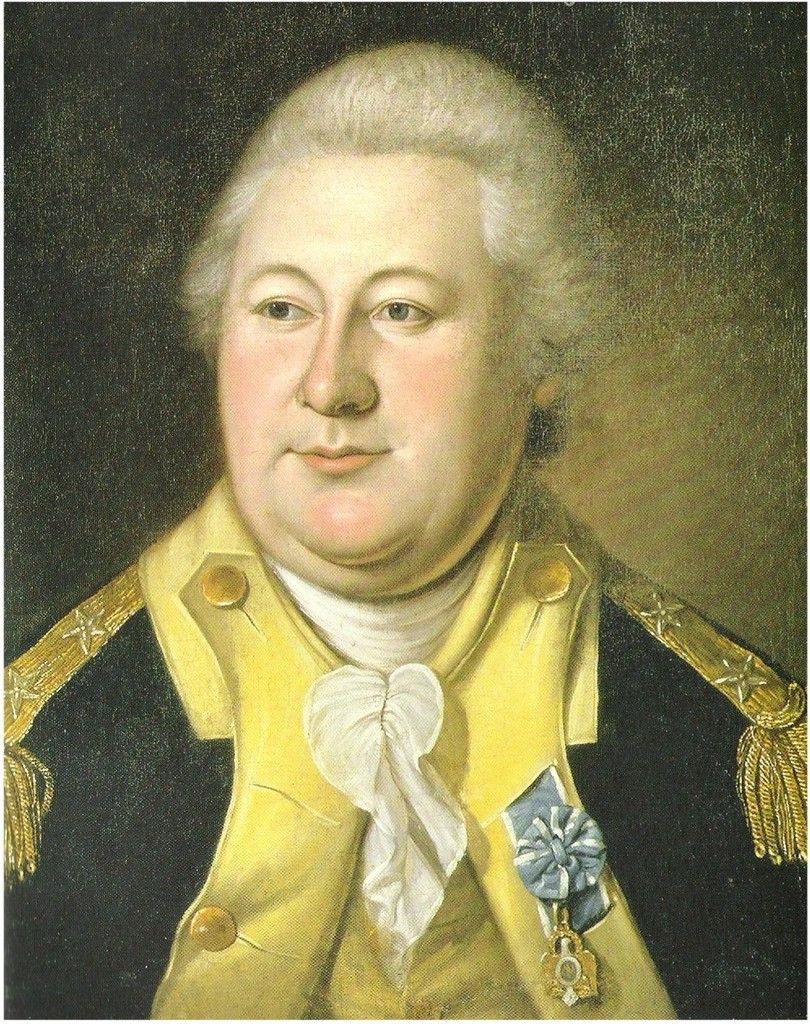
This sexy beast is General Henry Knox. Clearly he is a rotund man. The portrait painter (Peale) probably lost money on this painting as paint isn't cheap. George Washington took one look at Foxy Knoxy and was immediately impressed. How could you not be? Basically he was an ambulatory giant blueberry. Anyway, George had a nose for greatness so he dispatched (after lunch) Knox to Fort Ticonderoga to fetch cannons that were desperately needed to keep the British holed up in Boston. Knox went all the way from Boston to Lake Champlain in Vermont, got the cannons, and hauled them (he used oxen, not just his brute power of flab) all the way across rivers, mountains, hills and dales back to Boston. It was an epic journey performed by an epic man. Why would George give such an important mission to Knox? Call it a gut feeling but George sensed greatness. We have been following George's example since. Along the way Knox had to cross the Connecticut river in Springfield, Massachusetts. A steep hill greeted him on the far side of the river. As he huffed and puffed his way up the hill he reached the summit and held his knees, panting. "This," he said with a mighty wheeze, "Is," another wheeze, "The," he gasped, "Place." With that he dropped to the ground and had a nap. When he woke up he had a light snack of three boiled chickens, a suckling pig, and washed it down with half a hogshead of ale. The officers who accompanied Knox marked "the place" on their maps, knowing better than to question a great man on an epic quest. Later that site became the Springfield Arsenal. When Knox arrived at Boston reeking of ox sweat and of Parmesan cheese he was haled as the corpulent hero he was. The British awoke to being surrounded by cannons and agreed to evacuate the city- yet leave the city intact. Example 2: 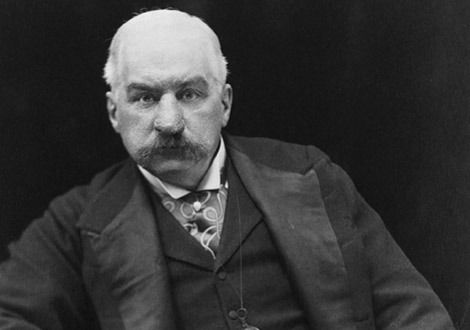
J.P. Morgan J.P. Morgan was the banker's banker. The scion of U.S. Steel he was as rich as he was great as he was fat. His fatness was to be expected in a great man, of course. How could you trust a skinny banker? You can't! You won't! J.P. Morgan was who the US Government turned to to end the Panic of 1893. He hitched his pants up, wiped the gravy off his 'stache, labored to his feet and within a short time had stabilized the gold market, saved the U.S Treasury, resurrected confidence on behalf of the consumer, and recorded his debut album. Sure, he was a ruthless baron hellbent on domination. Yes, he crushed his foes and the working man under his considerable heft. Unfortunately with great bulk one does not also get great moral weight. Still, would you trust a skinny banker? Example 3: 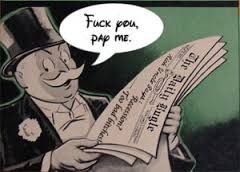
Uncle Rich Pennybags, aka Mr. Monopoly This is a game for winners. Made by winners. How do you know? It has the symbol of a fat man on it- the symbol of success in America. Example 4: 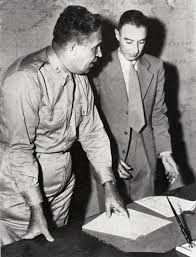
General Groves and Oppenheimer You can't trust a skinny banker. You can't trust a skinny physicist either. General Groves on the left here, resplendent with a sweet gunt poking out under his belt, was a trustworthy fat great man. He herded a bunch of Hungarian cats and they made us the BOMB. The skinny dude in the background is Oppenheimer. He had a role to play, but in the end.... Oppenheimer's security clearance was revoked. You just can't trust a skinny physicist. Example 5: 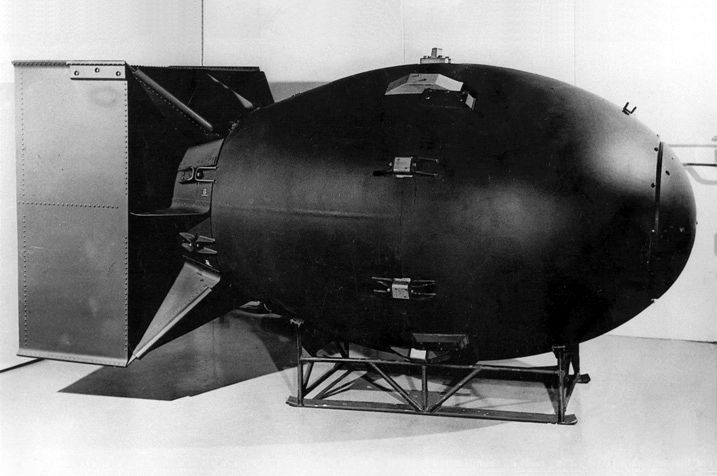
We even dropped greatness upon Nagasaki. Fat Man! 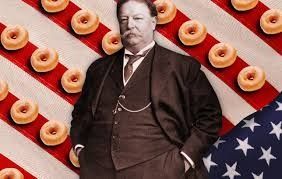
Taft, donuts, AMERICA. Now, we have established that with fatness comes the expectation of greatness. The reason we reflexively hate fat poor people is simple. Consider when you see a fat poor person buying cheetoes and french fries with foodstamps. Your innate response? "What a fat loser." Consider the word order. You naturally associate fatness with greatness. That poor lazy slob is fat YET not great. Not even close. You hate fat poor people for one basic reason: STOLEN VALOR. Stay hungry, my friends. |

|
Quoted:
Fat people disgust me. The market does not agree with you. At least in the case of skinny men. http://www.businessinsider.com/skinny-women-make-more-money-2011-6 _____________________________________________________________________________________ The Journal of Applied Psychology found that women who are 25 lbs. below average weight take home an additional $15,572 each year. On the other hand, men who are 25 lbs. below average weight take home $8,437 less each year. ____________________________________________________________________________________ Further, you can't trust the skinnies: _________________________________________ By contrast ... ectomorphic (slender) men were described with a different set of negative traits (i.e., nervous, sneaky, afraid, sad, weak, and sick). _____________________________________ Sorry bro. You want some fritos and a moon pie? 
|