


Joined:
Oct 2024
Posts:
4846
EE: 0% (0)
 AZ, USA
Posted: Yesterday 8:49:02 PM EDT
[Last Edit: Eponymous][Edited]
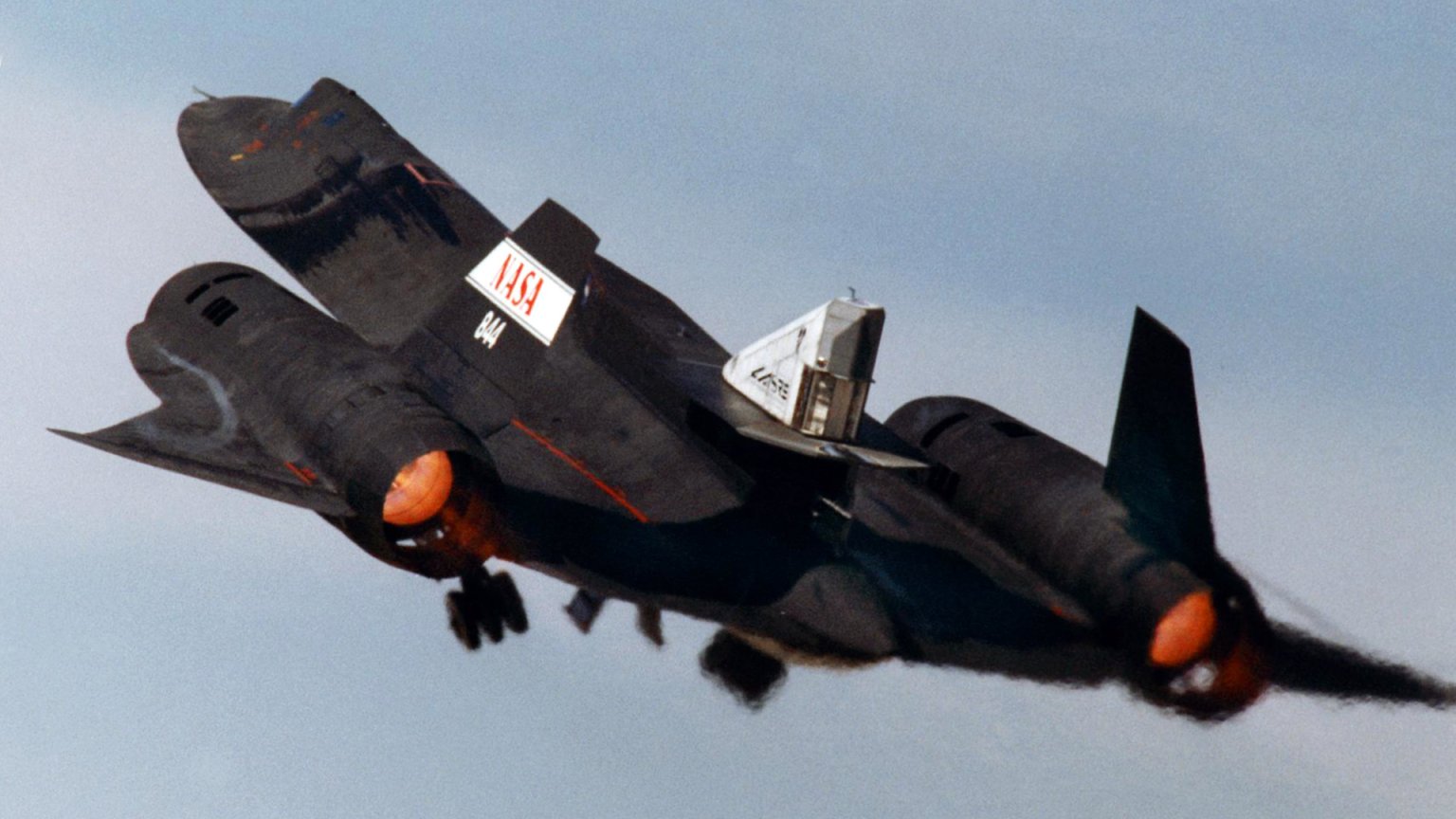 Last week, NASA Administrator Jared Isaacman cryptically teased plans for a new high- and fast-flying X-plane with a silhouette of an aircraft that immediately drew comparisons to the famed SR-71 Blackbird as a backdrop. In our report, we looked at what it could mean, including the possibility of reviving the SR-71, or at least using it to inform or even cobble together a new airframe. Now it turns out that an SR-71 that had been on display at NASA’s Armstrong Flight Research Center for years is suspiciously missing. Steve Trimble, Aviation Week‘s defense editor and friend of TWZ, was first report of the disappearance of the former NASA SR-71, also known by the tail number 844, at Armstrong. That facility is collocated with Edwards Air Force Base in California. Trimble’s piece says that satellite imagery shows the jet has not been seen since at least May 17. The aircraft in question, which originally carried the U.S. Air Force serial number 61-7980, was the last Blackbird produced and the last one to fly, taking to the skies for the final time in 1999. 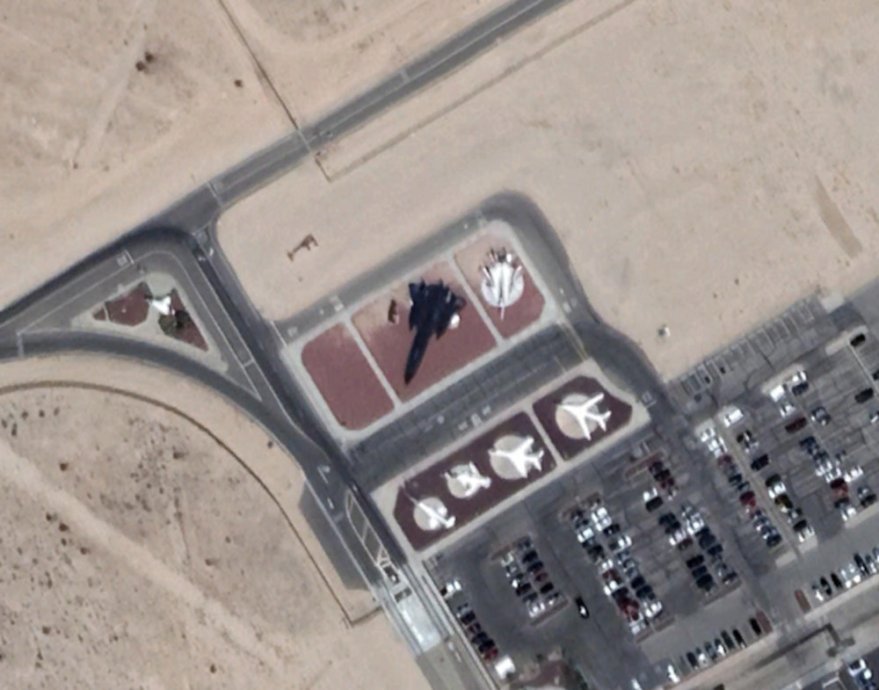 A satellite image taken in 2018 showing SR-71, tail number 844, on display outside of the Armstrong Flight Research Center in California. Google Earth “The current disposition of the aircraft is unclear, but Aviation Week sources suggest that the aircraft was moved into a hangar earlier this year for an inspection,” according to the story. “The presentation and the disappearance of the display SR-71S with the 844 tail number for NASA raises the possibility of a return-to-flight program after a more than 26-year-long hiatus.” 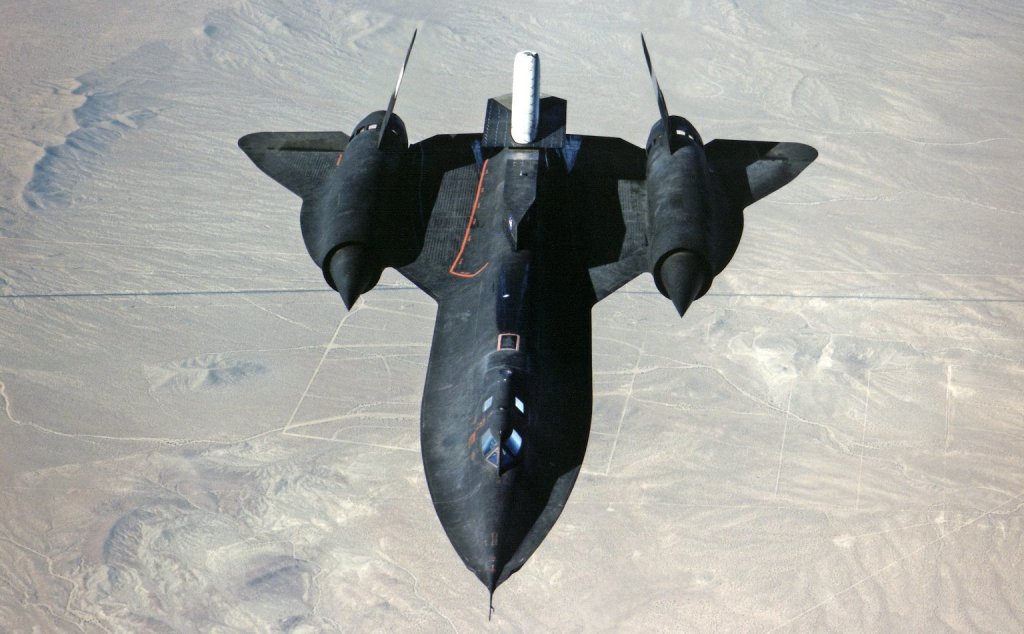 Another look at SR-71 tail number 844 during its service with NASA. This picture was taken on October 31, 1997, during a flight in support of the NASA/Rocketdyne/Lockheed Martin Linear Aerospike SR-71 Experiment (LASRE). NASA The presentation mentioned above is the one NASA’s Isaacman gave last week at the annual All-In Summit in Los Angeles, California, during which he shared the SR-71-esque silhouette. “In the service of the first A [aeronautics] in NASA, we are rebuilding our X-plane fleet. The X-59 is researching quiet supersonic flight, but it’s just the beginning,” he said at that time. “As NASA recommits to flight test and works alongside industry to push the boundaries of airframe and propulsion design, it will not be long before NASA once again is flying as high and as fast as we had in decades past, and then even more.” Isaacman has made expanding NASA’s X-plane fleets a top priority since taking charge of the agency last year. “You sure that’s a Blackbird?” the NASA administrator said during a live interview that immediately followed his remarks after the image was brought up, but did not offer any further clarification.  NASA Administrator showed this image during a presentation last week while talking about plans for new X-planes. NASA “NASA has a long history of building and flying experimental aircraft that push the boundaries of what is possible,” NASA told TWZ directly when asked for more information. “As Administrator Isaacman has said, we want to see more X-planes flying in the years ahead, developing the technologies that will allow us to fly higher, farther, and faster than we have in decades. We look forward to sharing more as those efforts progress.” We have reached back out to NASA in light of Aviation Week‘s report. As we wrote in our initial reporting on Isaacman’s comments: “As for bringing a Blackbird back into operation for high-speed testing, which is now at the forefront of military aeronautics (and civilian to a lesser degree) after decades of being sidelined, that would be a very challenging operation. The SR-71s are long retired and have been placed in museums and other display areas. While the Pentagon could technically claw some of them back from their ‘on loan’ status, reconstituting even one of them would be a major undertaking as the entire support ecosystem that once sustained them has been gone for decades. Still, having a Mach 3+ capable jet for testing would be a highly relevant tool in a new age of high-speed flight exploration.” “On the other hand, building a new test aircraft that aims higher and faster than the SR-71, but may be based on its ‘DNA,’ is certainly possible. Such an aircraft could leverage material science, avionics, flight controls, and engines that are seven decades more modern than its progenitor. Technology demonstrators in this class could also already exist in the classified domain. NASA could possibly assume ownership of one after the Pentagon declassifies it, as well.” “Regardless of how such an exotic aircraft is obtained, one of the biggest differentiating factors could be that a NASA aircraft is piloted by a human onboard, instead of it being a drone, but an uncrewed aircraft is possible too.“ Aviation Week‘s report today notes that tail number 844 would probably be the best available candidate for returning to flight status. In addition to being the last produced and the last to fly, NASA previously upgraded it, including with “an automated digital flight and inlet control system to virtually eliminate the Blackbird’s problem of violent engine unstarts at high speed.” It has also been sitting in a controlled area in the Mojave Desert that is great for preservation. It is also worth pointing out here that Isaacman is personally aware of the time and resources it takes to reconstitute high-end vintage military aircraft. He founded private ‘red air’ aggressor firm Draken International, making him once the owner of the world’s largest private air force stocked with old jets. His own private collection includes a demilitarized, ex-Ukrainian two-seat MiG-29UB that he flies regularly. He has also been working to restore a former Royal Air Force swing-wing Panavia Tornado F2 interceptor, which would be the most complex private military jet flying, if or when it returned to working condition. At the same time, the SR-71 is in a completely different category, having been the very definition of a high-demand, low-density asset even at the very peak of its service life with the Air Force. Only 32 of these jets were ever built, and they were notoriously complex and expensive to operate and maintain. The aircraft’s Pratt & Whitney J58 turbojets ran on JP-7 fuel that is no longer in regular production. After 9/11, the possibility was raised of returning a Blackbird to service to support the Global War on Terror, but doing so was projected to cost between $40 and $45 million – and that was just two years after 844’s last flight. There is also a possibility, in line with Isaacman’s comments last week, that 844 could re-merge in a substantially different, reworked form. There is even the potential it could be retrofitted for uncrewed, or at least pilot-optional, flight. Any such conversion effort would also be a major undertaking, as would sustaining the resulting bespoke jet. As we noted earlier, NASA could also use the SR-71 at Edwards to help inform other future designs. At the same time, maybe this is all a coincidence and the SR-71 in question is getting some other form of TLC, but its months-long absence is certainly a curious development in light of the current push for new X-planes under Isaacman’s leadership. Source: https://www.twz.com/air/a-sr-71-blackbird-has-vanished?utm_source=pushly |
Joined:
Sep 2022
Posts:
3501
EE: 0% (0)
USA


|
Originally Posted By Ameshawki: Sixty year old tech. I think we have better stuff.  |
Proud and grateful Tennessee Squire
flgfish: "Low mileage cars piss me off. You saving your girlfriend for the next guy? Drive the car and enjoy it. A 911 is damn near bulletproof."
flgfish: "Low mileage cars piss me off. You saving your girlfriend for the next guy? Drive the car and enjoy it. A 911 is damn near bulletproof."


| I would rather have my tax dollars spent on restoring a SR-71 back to flight conditions, than on many other current government expenditures. |
It's true no matter who you are, the worst thing you can do for someone is give them something for nothing. - 3rdpig
Do not handicap your children by making their lives easy. - Heinlein
Do not handicap your children by making their lives easy. - Heinlein


|
Originally Posted By Predicament: NASA flew one until 1999. But yeah, we do have better tech. This is probably about Lockhead Martin's SR-72. Originally Posted By Predicament: Originally Posted By Ameshawki: Sixty year old tech. I think we have better stuff. NASA flew one until 1999. But yeah, we do have better tech. This is probably about Lockhead Martin's SR-72. What I would assume. |
|
Originally Posted By lumper: I would rather have my tax dollars spent on restoring a SR-71 back to flight conditions, than on many other current government expenditures. Hell yeah. We should spend $10 billion on restoring an SR-71. Then add a pod which is padded and equipped with silk sheets and mood lighting. And put Sydney Sweeney in there wearing her outfit from that last video. And since it's my idea, I get to go too. (Yeah, that's probably only about $5 billion worth of expenses. The other $5 billion will be used to pay my wife) |
|
Originally Posted By 2001WS6: U-2 is still in the air  Originally Posted By 2001WS6: Originally Posted By Ameshawki: Sixty year old tech. I think we have better stuff. So is the BUFF and the KC135, and they're roughly the same age (the BUFF is older). |

The cost of treason isn't paid in Dollars.
Joined:
Sep 2012
Posts:
8439
EE: 100% (3)
USA
|
Originally Posted By lumper: I would rather have my tax dollars spent on restoring a SR-71 back to flight conditions, than on many other current government expenditures. |
|
Originally Posted By 2001WS6: U-2 is still in the air Originally Posted By 2001WS6: Originally Posted By Ameshawki: Sixty year old tech. I think we have better stuff. The oldest U2S airframe currently in operation was built in 1980. The newest was made in 1989. |


|
Originally Posted By Waldo: Do they even make JP7 ? Any of the Q tankers still flying? No, and also no. But I believe some KC’s have been pulled out of the boneyard and sold to commercial tanker companies. Maybe they could retrofit one to handle JP7. And I don’t know what it would take to refine JP7 in 2026 but somebody knows the answer to that question |

|
Originally Posted By Waldo: Do they even make JP7 ? Any of the Q tankers still flying? Excellent questions. I should think there are better aircraft these days. Turbine/rocket Combined Cycle, hypersonic, etc 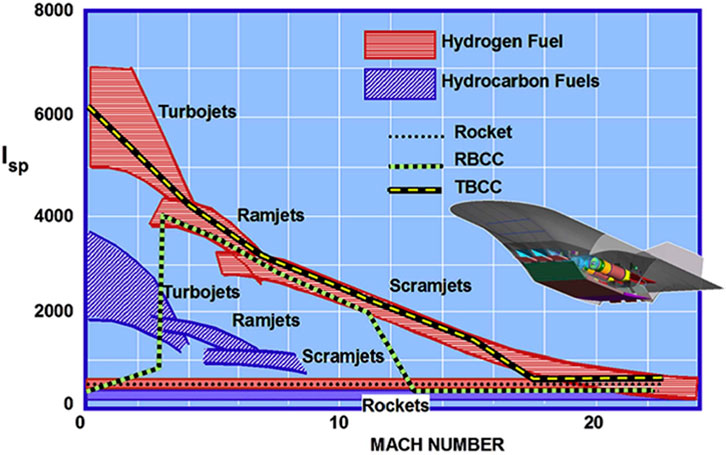 Preliminary sizing and study of a hybrid rocket based combined cycle |
per aspera ad astra
|
Originally Posted By KELBEAST: No, and also no. But I believe some KC’s have been pulled out of the boneyard and sold to commercial tanker companies. Maybe they could retrofit one to handle JP7. And I don’t know what it would take to refine JP7 in 2026 but somebody knows the answer to that question Originally Posted By KELBEAST: Originally Posted By Waldo: Do they even make JP7 ? Any of the Q tankers still flying? No, and also no. But I believe some KC’s have been pulled out of the boneyard and sold to commercial tanker companies. Maybe they could retrofit one to handle JP7. And I don’t know what it would take to refine JP7 in 2026 but somebody knows the answer to that question One? You need 3 for a testing day unless you’re going in a single circle |
Joined:
Oct 2024
Posts:
4848
EE: 0% (0)
AZ, USA
|
Darkstar The image shows the Lockheed Martin Darkstar, a fictional mock-up and movie prop built by Skunk Works for the film Top Gun: Maverick. • Origin: Designed by Lockheed Martin's Skunk Works division specifically for the movie. • Design: Features a sleek, stealthy, delta-wing shape meant to represent a Mach 10 hypersonic aircraft. • Status: While it is only a physical movie prop rather than an operational military jet, it draws inspiration from real conceptual work surrounding hypersonic flight and unconfirmed successor designs to the SR-71.  The Lockheed Martin Darkstar prop was constructed through a unique, top-secret collaboration between Paramount Pictures' production design team and the real-world engineers at Lockheed Martin Skunk Works. The director was adamant about avoiding CGI wherever possible, choosing instead to build a full-scale, physical aircraft for Tom Cruise and the actors to interact with. The construction process relied on specialized fabrication techniques: 1. Conceptual Engineering and 3D Modeling • Aerodynamic Legitimacy: Skunk Works conceptual designers and aircraft model developers created a hyper-realistic forebody model. • Digital Blueprint: The engineering team provided a highly comprehensive 3D CAD model containing accurate structural profiles and precise geometric dimensioning and tolerancing (GD&T) specifications. • Design DNA: The ultra-thin wing profiles and sleek aerodynamic lines were heavily inspired by the historic SR-71 Blackbird and contemporary hypersonic research. 2. Rapid Fabrication and Materials • The Build Partner: A specialized manufacturing firm named ADM Works was contracted to translate the CAD files into a physical structure. • Speedy Assembly: The massive, full-scale mockup was completely fabricated and assembled in a remarkably fast 14 weeks. • Material Selection: The prop was constructed as a functional piece of art rather than a standard movie setpiece. It combined structurally sound internal framework with an exterior finish made largely of wood and composite materials. • Operational Capabilities: While it could not fly, the prop had to be structurally robust enough to withstand being towed at high speeds on the tarmac at NAS China Lake during filming. It was outfitted with fully operational landing gear. 3. Hyper-Realistic Detailing • No-Vision Cockpit: The cockpit was designed without a forward-facing window to match the engineering requirements of an actual Mach 10 aircraft. • Authentic Flight Controls: Skunk Works loaned the production actual prototype flight instrumentation and a real flight stick. • Telltale Wear: The production designers went as far as painting "tiger striping" heat stress marks on the nose of the plane, mimicking the material warping that occurs after intense real-world supersonic friction. The prop was built so convincingly that, according to producer Jerry Bruckheimer, the U.S. Navy reported that China temporarily re-oriented a spy satellite to photograph the mockup, believing it was a genuine, experimental hypersonic aircraft. The original full-scale mockup survived filming and was put on display at public events like the Aerospace Valley Open House at Edwards AFB and the Palm Springs Air Museum. |
| We have satellites in every square inch of the sky. We don't need to quickly get somewhere to take a picture - we're already there. If not, Elon can put one up in days if not hours. I expect the cameras now can count the freckles on your nose. Phased array cameras are a thing. |
Joined:
Oct 2024
Posts:
4849
EE: 0% (0)
AZ, USA
 Everything We Know About The Lockheed Martin SR-72: The Blackbird's Hypersonic Successor This futuristic spy plane is aiming to reach speeds in excess of Mach 6 and will reach any destination on earth within the hour. By Tobias Handke 9 January 2019 The Lockheed Martin SR-71 "Blackbird" reigned supreme for over three decades as America's premier spy plane. Capable of reaching speeds over three times the speed of sound, the SR-71 still holds the record for the fastest air-breathing manned aircraft ever created. Although retired in 1999, the Blackbird's creators, Lockheed Martin, recently announced they planned on building the SR-72, an unmanned hypersonic successor to the SR-71. The construction of this aviation marvel is headed by Lockheed Martin's advanced development program known as Skunk Works. The crew at Skunk Works are equipping the SR-72 with two hybrid jet/rocket engines with the potential to reach speeds in excess of Mach 6 (7350.26 kph), with Lockheed hoping the jet will be able to reach any destination on earth within an hour. It's also believed the aircraft will be fitted with high-tech weaponry, meaning along with being sent out on recon missions, the SR-72 could also be used to strike specific targets. 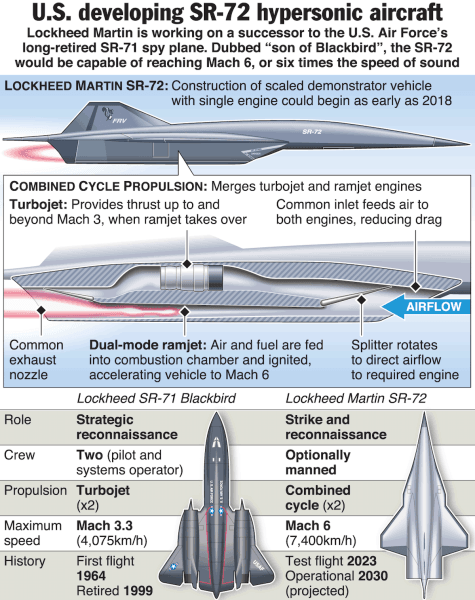 “Hypersonic aircraft, coupled with hypersonic missiles, could penetrate denied airspace and strike at nearly any location across a continent in less than an hour,” said Brad Leland, Lockheed Martin program manager. “Speed is the next aviation advancement to counter emerging threats in the next several decades. The technology would be a game-changer in theatre, similar to how stealth is changing the battlespace today.” Lockheed Martin has confirmed ground tests have been conducted on the powerful engine and they're planning on beginning aerial testing in the early 2020s, with an actual finished model of the SR-72 hopefully in the air during the early 2030s. |

Joined:
Oct 2024
Posts:
4850
EE: 0% (0)
AZ, USA
 NGAD: America’s New 6th Generation Fighter Has ‘X-Plane DNA’ November 16, 2023 The United States has seen the development of several so-called “X-planes,” the series of aircraft that have been used to test and evaluate new technologies and aerodynamic concepts. The concept was first initiated during the Second World War and has continued to the modern day. To date, there have been around seventy X-planes that have been disclosed to the public. It appears that there was another one. This week at the POLITICO Defense Summit, U.S. Air Force Secretary Frank Kendall revealed that a secret, multi-agency X-plane program paved the way for Next-Generation Defense Summit (NGAD) – Air & Space Forces Magazine first reported. It was also three years ago that then Assistant Secretary of the Air Force for Acquisition, Technology and Logistics, Dr. Will Roper, announced that the U.S. Air Force had secretly designed, built, and flown a full-scale prototype for the NGAD. It is unclear if that prototype was part of the X-plane program. However, as the report noted, Kendall’s remarks have shed a few more details about the highly classified project, including the agencies that are involved, as well as some of the money spent. Kendall further revealed that the NGAD will control the uncrewed fighters escorting it and that the unmanned Collaborative Combat Aircraft program won’t get started until the fiscal year 2024 (FY24) defense bill is passed. The X-plane Explained The involvement of an X-plane with the NGAD would be unique, as the experimental aircraft are generally employed to explore new, previously unfielded technologies on an air platform, while the term “Y-plane” is generally a prototype of a specific platform. With some refinement, those aircraft can be put into production. 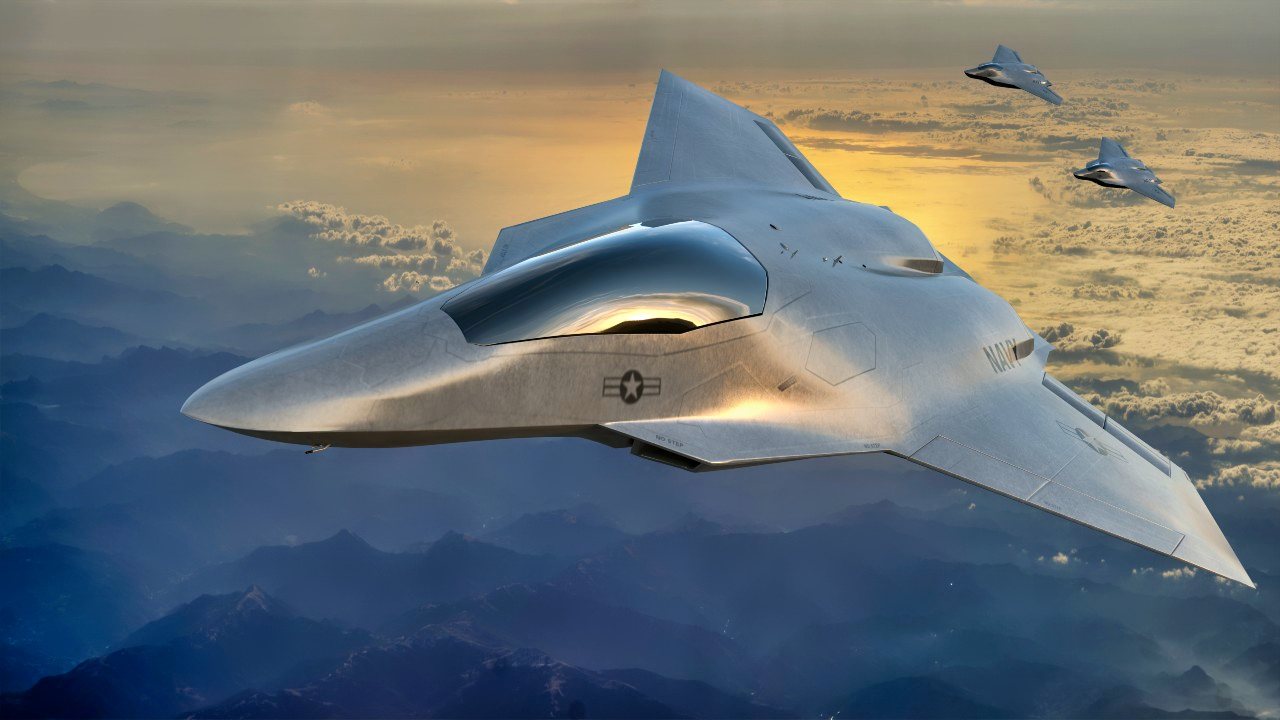 However, it has been noted that the Department of Defense (DoD) selected the Lockheed Martin X-35 at the conclusion of an X-plane competition with Boeing’s X-32. Those X-planes explored combining supersonic flight with short takeoff and vertical landing capabilities and stealth, as well as new manufacturing techniques. Perhaps X marks the new spot in fighter aircraft development. More Than a Single Aircraft The NGAD is also more than a single aircraft. Described as a “family of systems,” the goal of NGAD, which originated from a DARPA (Defense Advanced Research Projects Agency) Air Dominance Initiative study in 2014, is to field a new sixth-generation fighter aircraft in the 2030s to replace the Lockheed Martin F-22 Raptor. The Air Force has estimated that the NGAD program could cost $11.7 billion from 2024 to 2027. It would be one of the most expensive Air Force programs to date. 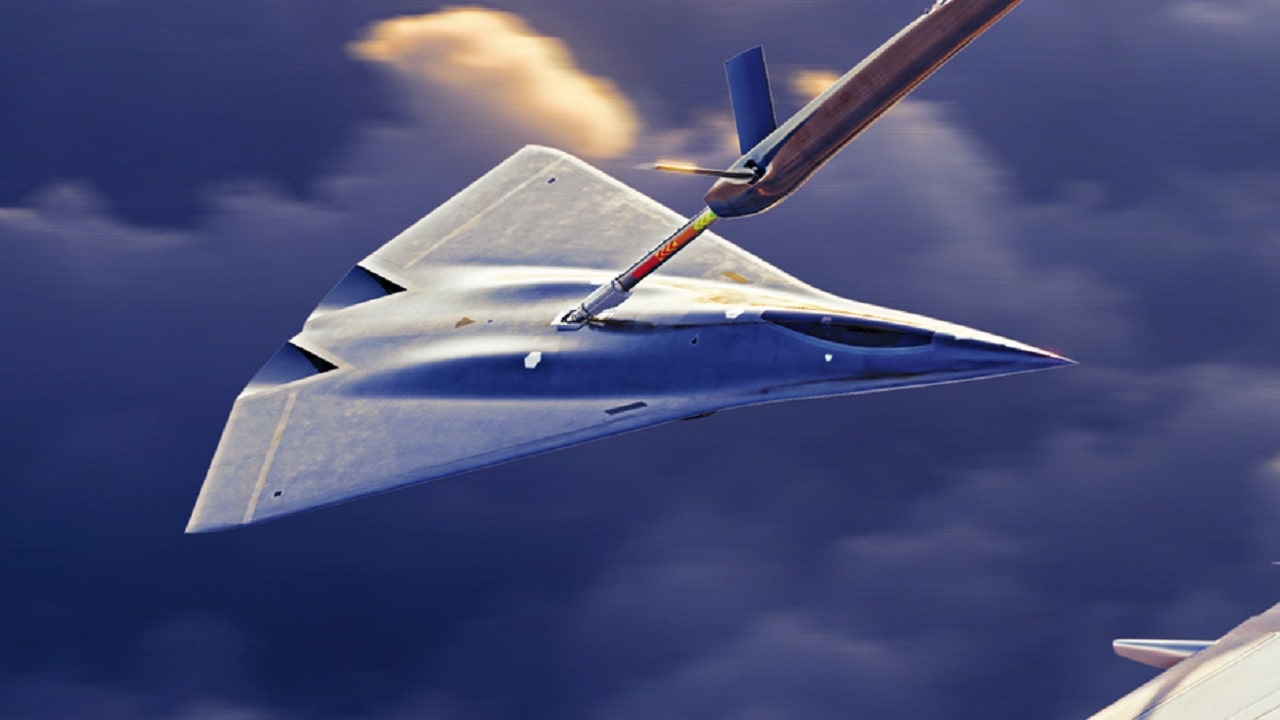 Truly Loyal Wingman NGAD will actually include a number of manned and unmanned systems. A variety of multi-mission drones, which have been dubbed Collaborative Combat Aircraft (CCA), could act as the loyal wingmen for the manned NGAD fighter. As reported by Air & Space Forces, CCAs are building on the progress of other Pentagon and partner efforts including the U.S. Air Force’s Skyborg program, the Air Combat Evolution program under DARPA, and aviation giant Boeing’s work with Australia on the MQ-28 Ghost Bat. “All of those coming together convinced me that we were ready to commit this kind of capability,” Kendall said.  He further described the CCA as one of the most important programs waiting for funding. It is slated to receive $5.8 billion over the next five years. Production will begin at the end of the five-year cycle, around fiscal 2028. It was also noted that the CCA program is not part of this NGAD Platform source selection. Kendall has said that the NGAD and CCA will be developed “in parallel,” yet he has declined to say when a contract award for the CCA program might be awarded. What Companies Are Involved? Earlier this year, Kendall also noted that a single defense contractor would take the lead as overall designer and developer, even as multiple companies have worked on different designs. There will also be ongoing competition to supply NGAD’s systems, and an overall winner will be picked – a noted reversal from the original NGAD concept that had called for rolling competitions, which could produce a series of incrementally better platforms. That was revealed to be too costly. To date, industry sources have suggested that Boeing and Lockheed Martin have been involved in the NGAD program, while Northrop Grumman announced last July that it won’t compete to be the prime contractor on the NGAD fighter program. Currently, Boeing and Lockheed Martin are the only U.S. defense contractors producing fighter aircraft, while Northrop Grumman has been focused on the B-21 Raider long-range strategic bomber, which was officially unveiled just under a year ago. It was just last week that the B-21 Raider took its first flight in Palmdale, California. It followed several taxi tests at the facility.  Northrop Grumman may still be involved in the NGAD however. Last year, the Air Force announced that it awarded contracts worth a total value of $4.9 billion to five companies – General Electric, Raytheon Technologies’ Pratt & Whitney, Boeing, Lockheed Martin, and Northrop Grumman – to develop prototypes of an adaptive engine for the next-generation fighter jet.  Each of the awards, worth up to $975 million, was for design, analysis, rig testing, prototype engine testing, and weapon system integration. The work is to be completed by July 2032. “The contract is for the execution of the prototype phase of the Next Generation Adaptive Propulsion program and is focused on delivering capability enabling propulsion systems for future air dominance platforms and digitally transforming the propulsion industrial base,” the award notice stated. Source: https://nationalinterest.org/blog/buzz/ngad-americas-new-6th-generation-fighter-has-x-plane-dna-207311 |

|
Originally Posted By MtnMusic: Hell yeah. We should spend $10 billion on restoring an SR-71. Then add a pod which is padded and equipped with silk sheets and mood lighting. And put Sydney Sweeney in there wearing her outfit from that last video. And since it's my idea, I get to go too. (Yeah, that's probably only about $5 billion worth of expenses. The other $5 billion will be used to pay my wife) |

|
Originally Posted By lumper: I would rather have my tax dollars spent on restoring a SR-71 back to flight conditions, than on many other current government expenditures. Claw back a fraction of the NGO theft and you could easily fund it. |
In America, the village idiots have organized.


Member
Joined:
Jun 2023
Posts:
8175
EE: 0% (0)
WA, USA
|
Originally Posted By Eponymous: Last year, the Air Force announced that it awarded contracts worth a total value of $4.9 billion to five companies – General Electric, Raytheon Technologies’ Pratt & Whitney, Boeing, Lockheed Martin, and Northrop Grumman – to develop prototypes of an adaptive engine for the next-generation fighter jet. That seems like six companies. |
Just no

|
Originally Posted By Coffin-Nail: One can hope but I'd bet on it being something much more mundane like repainting it. That's the first thing that occurred to me. However, if it has been in the hangar since May 17th, that would be an unusually long coatings job. |
"I hate all of you, except Saint Peter, of course, who I did not expect to have an arfcom account." -- Aimless 7/14/15

Joined:
Oct 2024
Posts:
4852
EE: 0% (0)
AZ, USA


|
Reaction Engines, in the UK, went tits-up a couple of years ago. They held the IP for the Sabre air-breathing, dual-mode rocket engine. It was meant to push the (never in active development) Skylon SSTO spaceplane to LEO. Boeing had some involvement with them, a few years before they shut down. Maybe NASA picked that up? |

|
Of course the SR-71 is still around. They are putting them on catapults on Iowa Class Batteships. Then, Chuck Norris will wear one on each foot like water skis and go KICK SOME ASS!!!!!  America, Fuck Yeah! |
|
Originally Posted By atavistic: We have satellites in every square inch of the sky. We don't need to quickly get somewhere to take a picture - we're already there. If not, Elon can put one up in days if not hours. I expect the cameras now can count the freckles on your nose. Phased array cameras are a thing. I didn’t realize Bill Clinton had an account here 
|

|
Originally Posted By atavistic: We have satellites in every square inch of the sky. We don't need to quickly get somewhere to take a picture - we're already there. If not, Elon can put one up in days if not hours. I expect the cameras now can count the freckles on your nose. Phased array cameras are a thing. Satellites are susceptible to weather blocking targets and are predictable......whereas a spy plane is not |
"The villainy you teach me, I will execute, and it shall go hard but I will better the instruction"

|
"The presentation and the disappearance of the display SR-71S with the 844 tail number for NASA raises the possibility of a return-to-flight program after a more than 26-year-long hiatus." |

What have the Romans ever done for us?
Joined:
Jul 2008
Posts:
46365
EE: 100% (212)
TN, USA
|
Originally Posted By voyager3: It just transformed and flew back home. 
|
Panem et Circenses
I have also learned from experience that the greater part of our happiness or misery depends upon our dispositions, and not upon our circumstances.
Kites rise highest against the wind, not with it. - Churchill
I have also learned from experience that the greater part of our happiness or misery depends upon our dispositions, and not upon our circumstances.
Kites rise highest against the wind, not with it. - Churchill
The cost of treason isn't paid in Dollars.
Joined:
Sep 2012
Posts:
8444
EE: 100% (3)
USA
|
Originally Posted By cyclone: Satellites are susceptible to weather blocking targets and are predictable......whereas a spy plane is not How would weather not also block planes that fly above all the weather? (That’s part of their thing) At least from visual sensors. I think such statement were only true in an era when we had to wait for a satellite to be on target. For this issue a spy plane would hold no advantage in a world where there is always a satellite on target. |
|
Originally Posted By atavistic: We have satellites in every square inch of the sky. We don't need to quickly get somewhere to take a picture - we're already there. If not, Elon can put one up in days if not hours. I expect the cameras now can count the freckles on your nose. Phased array cameras are a thing. I think you are correct. Which means maybe they are trying to eventually develop something that can go through space without relying on rocket boosters? I don’t know |
|
Originally Posted By neshomamench: How would weather not also block planes that fly above all the weather? (That’s part of their thing) At least from visual sensors. I think such statement were only true in an era when we had to wait for a satellite to be on target. For this issue a spy plane would hold no advantage in a world where there is always a satellite on target. Originally Posted By neshomamench: Originally Posted By cyclone: Satellites are susceptible to weather blocking targets and are predictable......whereas a spy plane is not How would weather not also block planes that fly above all the weather? (That’s part of their thing) At least from visual sensors. I think such statement were only true in an era when we had to wait for a satellite to be on target. For this issue a spy plane would hold no advantage in a world where there is always a satellite on target. Targets can be obscured when the enemy knows the satellite is passing over......smoke, cover, etc......you don't always know when the plane is going to come by, and the plane can also change altitude.....satellites can be defeated |
"The villainy you teach me, I will execute, and it shall go hard but I will better the instruction"
|
It's a NASA plane, so maybe they're going to use it to test something. Maybe bolt a scramjet on that middle position and do long duration runs or some such. I have no fucking clue, but since we're grasping at straws here anyway.... 
|
Those who ignore history are doomed to repeat it..