


Posted: 8/26/2026 3:50:55 PM EDT
|
I've mentioned this a couple times here in the past, but it never really caught on. The most important definition to establish is that, for our purposes, risk = volatility and is quantified by the standard deviation of the price. I typed out a long post, but figured it was TMI and would simply result in lots of distracted replies. Youtube recommended a good graphical description of how the math works to me and I figured I'd share it:  The Math of the "Perfect" Portfolio |
|
Originally Posted By Procat: How do you find it compares to other methods of technical analysis? I know several people who swear by moving averages, RSI, bollinger bands, ect. IMO while they can be very accurate they are often superseded by headlines / macro events. The nuance is how you select the investments because there are effectively unlimited options. I’ll make a post tomorrow with the details of one way to choose a portfolio that is the very definition of “risk parity”. RSI and Bolinger bands are highly subjective and based only on very recent performance, sometimes even just from the last few hours. Additionally they are used in attempts to time the market, which decreases in importance as your time horizon gets longer. What’s different about this from “technical analysis” is that this is purely math based on historical performance as far back as you want to go, is intended for buy and hold investing, and not reliant on timing the market. What’s important to remember is that this will give up a huge amount of returns during crazy bull markets like we’ve had since 2008. You shouldn’t even consider this if you are 25 and planning to retire in 40 years. You do this when you are willing to accept lower returns in exchange for reduced volatility. |
|
Originally Posted By Morgan321: I’ll make a post tomorrow with the details of one way to choose a portfolio that is the very definition of “risk parity”. But for general investing how do you select what to invest in since there are unlimited options? This is where the risk parity aspect comes in. Wikipedia says: Risk parity (or risk premia parity) is an approach to investment management which focuses on allocation of risk, usually defined as volatility, rather than allocation of capital. The approach on that page is summarized more cleanly in the below picture. Put 25% of your risk (not 25% of your money) into each quadrant.  You can see examples of each quadrant of the graph just in the last decade - pre-covid we had low inflation and good growth so stocks were outperforming. Covid caused the .gov to print money and inflation went through the roof and we all know how expensive gold and commodities got (and still are). Today growth is slowing and inflation has cooled (but is still relatively high) and we see that gold has held much of it's value and just in the last couple of months the media are all discussing how the increase in treasury yields will impact the federal budget and debt. Not sure if I'm doing an adequate job of explaining this? An interesting thing I noticed on the above linked page is that the relative performance of the generic risk parity concept compared to the total stock market was significantly better up until around 2000. That was when the dot-com-crunch brought ultra-low (often zero) federal reserve rates into existence and it has remained that way to this day. When the 'risk free rate' is in the low single-digit range beating it by just a couple percent is still not a massive return. The ultra-low rates also drive a major bull market, which is why stocks have been unbeatable for the last 20+ years. Again, the time for this approach is when you want more than the risk free rate of return but aren't willing to accept the volatility of the broader stock market. In my situation (foreseeable early retirement, have just barely enough cash that needs to last a decade so losses are not acceptable) this seems perfect. But if the 2-3-5-7 year treasuries get up to 5% again I'll probably just go that route and eliminate all risk. |
|
Originally Posted By grendelbane: I see how purchasing high yielding Treasuries would reduce risk. I don’t see how it would eliminate it. There has to be a “risk free rate of return” and short term US treasuries are the universally accepted zero risk rate. You can do the math assuming the risk free rate is zero (or negative or any other number you choose) but nobody does that. |
|
Originally Posted By Morgan321: There has to be a “risk free rate of return” and short term US treasuries are the universally accepted zero risk rate. . I understand about the theoretical risk free rate of T-bills. What was described was T-notes. They are not considered risk free. They carry some risk, though it may be small. |
|
Originally Posted By grendelbane: I understand about the theoretical risk free rate of T-bills. What was described was T-notes. They are not considered risk free. They carry some risk, though it may be small. Recall in the OP we defined risk to be equal to volatility. Treasury bills, notes, bonds, etc. are all fixed interest rate investments. The only difference between them is their time to maturity. By definition they are zero risk because they have zero volatility. |
|
Originally Posted By Morgan321: Apart from uncle sam defaulting on the debt, what risk is there in any fixed rate treasury product? Recall in the OP we defined risk to be equal to volatility. Treasury bills, notes, bonds, etc. are all fixed interest rate investments. The only difference between them is their time to maturity. By definition they are zero risk because they have zero volatility. Uncle Sam has defaulted on T-bills before. It happened during the Carter administration, but that’s not really what I am referring to, just historical trivia. Look at a chart of Treasury note prices. They do vary, as they are long enough duration to be affected by interest rate changes. Inflation can affect the real value of the interest and principal. While not very risky, they certainly carry some risk. |
|
Originally Posted By grendelbane: Uncle Sam has defaulted on T-bills before. Look at a chart of Treasury note prices. They do vary, as they are long enough duration to be affected by interest rate changes. Inflation can affect the real value of the interest and principal. While not very risky, they certainly carry some risk. Originally Posted By grendelbane: Uncle Sam has defaulted on T-bills before. Look at a chart of Treasury note prices. They do vary, as they are long enough duration to be affected by interest rate changes. Inflation can affect the real value of the interest and principal. While not very risky, they certainly carry some risk. This is not something that can be planned for and not worthy of a second of thought. 1979 Technical Glitch: A severe computer and word-processing failure delayed payments on some Treasury bills (T-bills) for a few weeks. You buy the treasury product and hold it to maturity. You are guaranteed your principal plus the agreed amount of interest. A guaranteed return with zero volatility is, by our definition, risk free. This is not an investment plan that allows you to buy and sell treasury products as if they were a commodity. If you want to do that then this plan is not for you. Along the same lines this plan doesn't allow you to play the lottery, you need a different plan for that. |
|
Originally Posted By Morgan321: You're being a bit pedantic. You buy the treasury product and hold it to maturity. You are guaranteed your principal plus the agreed amount of interest. A guaranteed return with zero volatility is, by our definition, risk free. We will just have to disagree then. A T-note held for 7 years is going to vary in price, as well as have exposure to inflationary pressures. My definition says that is definitely not risk free. |
|
Originally Posted By grendelbane: We will just have to disagree then. A T-note held for 7 years is going to vary in price, as well as have exposure to inflationary pressures. My definition says that is definitely not risk free. Just because the bear didn't catch you doesn't mean you ran the fastest. Again, any changes in price between purchase and maturity don't matter if you're not selling. Your return is guaranteed. Look at the price of gold over the last few years - it skyrocketed far more than the price of existing treasuries dropped (as a result of the rapid rise in interest rates). If something causes one of your assets to decrease in price and/or value then another asset will offset that decrease, this is the most basic premise of this theory. This method lets you plan for the return that meets your needs with a high degree of certainty - that return is for you to decide and it is has zero correlation to inflation. In fact using this method you will see some of your assets significantly decrease in value and some significantly increase in value, but you are only concerned about the total portfolio value. If you can always pick the winners then go do that in your own thread. |

|
Time. Time and energy is precious. If this is someones full time job or a heavy hobby, why not? Otherwise, some folks are trying to build a machine that does not require constant turning the dials, staying on top of things and running the razors edge of risk for relative minimal risk. It's not GD up in here but still:Attached File |
|
Originally Posted By SkiandShoot: Time and energy is precious. If this is someones full time job or a heavy hobby, why not? I totally understand why old people buy annuities. The gains of a very low risk setup are small, just a couple percentage points above the risk free rate. Prior to the 22-23 fed rate hikes the risk free rate was under 1% - 4% instead of 1% is a big deal, that's 4x the interest! Now the risk free rate is over 3% and that same portfolio might yield 6% - better, but not 4x. Graphically, look at the slope of the 'capital allocation line' - as the risk free rate raises that line flattens, reducing the gains of this approach. I hope they raise the rates after the mid-terms. If 3-5-7 year treasuries get to 5% I'm going to put 1/2 of this cash into them and be done with it. |

When i saw the 4 squares, I thought it was a car buying thread.  Checked the link and still don't fully understand. I felt like this was my mind when reading.  Is this similar to the stocks, bonds, cash theory or more stocks (how aggressive to be), bonds and cash? |
TBD

|
Originally Posted By SkiandShoot: Time. Time and energy is precious. If this is someones full time job or a heavy hobby, why not? The why not is because you will, very likely, come out on the short end of the stick. |
It’s better to keep your mouth shut and appear stupid than open it and remove all doubt.
|
Originally Posted By Morgan321: Originally Posted By Morgan321: Originally Posted By SkiandShoot: I hope they raise the rates after the mid-terms. If 3-5-7 year treasuries get to 5% I'm going to put 1/2 of this cash into them and be done with it. Even if that were to come to pass, you are OK with a rate of return that is, at best, gaining 1.5% over inflation on 50% of your money for the rest of your life? Couple that with each year that you pull money from that account, the remaining money still earning 1.5% real value is diminishing. If you are cutting retirement this close you might consider working a few more years so you have enough to be more aggressive. |
It’s better to keep your mouth shut and appear stupid than open it and remove all doubt.
|
Originally Posted By JThompson: Is this similar to the stocks, bonds, cash theory or more stocks (how aggressive to be), bonds and cash? Originally Posted By JThompson: Is this similar to the stocks, bonds, cash theory or more stocks (how aggressive to be), bonds and cash? Originally Posted By BFskinner: If you are cutting retirement this close you might consider working a few more years so you have enough to be more aggressive. Retiring once you’re at SS age is a trivial math problem. Retiring 20 years before SS age is a whole different story unless you’ve got a lot of accessible cash. |
|
Originally Posted By Morgan321: This reduces the volatility of your investments significantly in exchange for lower average returns. You can get 5-6% with very low volatility, so when the stock market sees large declines your money declines very little or not at all. The idea is that you give up market returns in exchange for stability and a slightly higher return than treasuries. Ok, that sounds no different from other recommendations. Thought there was something unique about this method like if it calculated a "sweet spot". |
TBD
|
Originally Posted By JThompson: Ok, that sounds no different from other recommendations. Thought there was something unique about this method like if it calculated a "sweet spot". It is mathematically impossible to get a “more efficient” result unless you are lucky or can see the future. |
|
Originally Posted By Morgan321: This reduces the volatility of your investments significantly in exchange for lower average returns. You can get 5-6% with very low volatility, so when the stock market sees large declines your money declines very little or not at all. The idea is that you give up market returns in exchange for stability and a slightly higher return than treasuries. I’m not cutting retirement this close, I’m cutting early retirement this close. I’m retiring early because I don’t want to be forced to work. Retiring once you’re at SS age is a trivial math problem. Retiring 20 years before SS age is a whole different story unless you’ve got a lot of accessible cash. Originally Posted By Morgan321: Originally Posted By JThompson: Is this similar to the stocks, bonds, cash theory or more stocks (how aggressive to be), bonds and cash? Originally Posted By BFskinner: If you are cutting retirement this close you might consider working a few more years so you have enough to be more aggressive. Retiring once you’re at SS age is a trivial math problem. Retiring 20 years before SS age is a whole different story unless you’ve got a lot of accessible cash. People can manage their money however they wish, good luck. Personally I have enough in liquidity to ride out several years of a down market without touching potentially severely depreciated mutual funds. Everything else in the market and I will take the ups and downs in stride for the improved long-term yields. |
It’s better to keep your mouth shut and appear stupid than open it and remove all doubt.
|
Originally Posted By BFskinner: Personally I have enough in liquidity to ride out several years of a down market without touching potentially severely depreciated mutual funds. Everything else in the market and I will take the ups and downs in stride for the improved long-term yields. That’s where I’m at because my taxable cash needs to last 15 years. 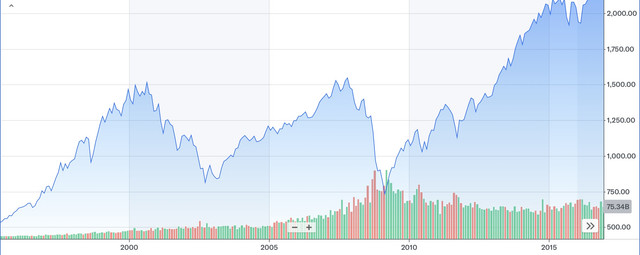
|
|
Originally Posted By Morgan321: Dot com crunch just barely recovered in 8 years when 2008 happened. That took 13 years total to recover, roughly 2000-2013. Do you keep 13 years of living expenses in cash? That’s where I’m at because my taxable cash needs to last 15 years. https://i.ibb.co/cSDgbQ9P/IMG-0119.jpg Originally Posted By Morgan321: Originally Posted By BFskinner: Personally I have enough in liquidity to ride out several years of a down market without touching potentially severely depreciated mutual funds. Everything else in the market and I will take the ups and downs in stride for the improved long-term yields. That’s where I’m at because my taxable cash needs to last 15 years. https://i.ibb.co/cSDgbQ9P/IMG-0119.jpg I am not going to base my decisions on the worst confluence of events in the history of the market. If you decide to do that and it makes you sleep better at night I can't fault that decision but it isn't one that is right for the vast majority of retail investors. |
It’s better to keep your mouth shut and appear stupid than open it and remove all doubt.
|
Originally Posted By BFskinner: I am not going to base my decisions on the worst confluence of events in the history of the market. Dot com crunch wasn’t the worst period of the market, it was just recent enough that people looking at retiring soon remember it. |
|
Originally Posted By Morgan321: Then why are you posting in this thread? Dot com crunch wasn’t the worst period of the market, it was just recent enough that people looking at retiring soon remember it. Originally Posted By Morgan321: Originally Posted By BFskinner: I am not going to base my decisions on the worst confluence of events in the history of the market. Dot com crunch wasn’t the worst period of the market, it was just recent enough that people looking at retiring soon remember it. Accurate, it was in the modern era and, depending upon how you measure it 65-94. That said, even then the market wasn't negative relative to inflation, especially if you include dividends. That inflationary period and 30 year rolling averages that cluster around it spawned the 4% rule and why I could, if I needed to, restrict my withdrawals to 4% without resorting to, what is in my opinion, an overly conservative investment strategy. With my cash cushion, I could even pull out even less for many years or none at all for a few really horrible years to mitigate sequence of returns risk. The upside of staying mostly in the market and potentially earning millions more than I started with and the lifestyle that money would allow, to me at least, is well worth it. That is, of course, based on my own risk tolerance which is clearly not the same as yours. A better question is why you made a thread in the first place? Affirmation of your views? I did that already by saying, twice, if you want to do that good for you and good luck. I am sorry if it wasn't sufficiently unquestioning from the beginning....carry on... |
It’s better to keep your mouth shut and appear stupid than open it and remove all doubt.