


[ARCHIVED THREAD] - Friday coffee thread (Page 1 of 2)
Posted: 5/29/2015 10:26:40 AM EDT
|
What in your cup? Major Dickason's blend here. |

| 50/50 mix of a Local shop's Texas Pecan and Death Wish coffee barrel brand (link) |

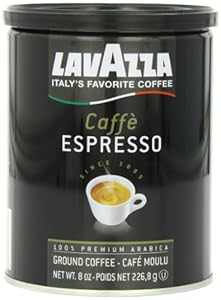


|
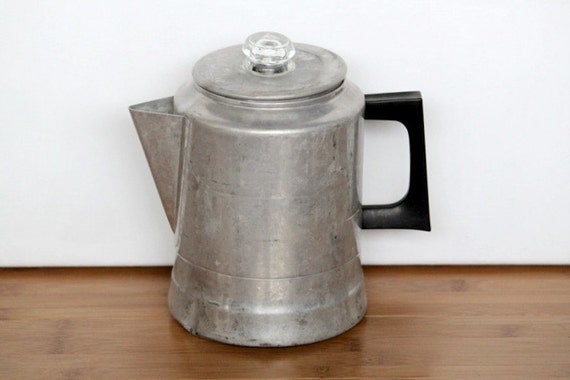
Indonesian Bali Blue Moon, that I roasted about 3 days ago
Balinese Blue Moon coffee is a rare and unique Arabica specialty coffee produced by smallholding farmers in the fertile volcanic highland area at the heart of the colorful paradise island of Bali. Arabica coffee planting in the Kintamani Highland was disrupted by the eruption of Gunung Agung in 1963. This eruption caused the production of Arabica coffee in the area to drop significantly for almost 15 years. The government started to redevelop Arabica coffee in the late 1970’s and early 1980’s, mainly by granting coffee seedlings to farmers. Recently, the growing area of Arabica coffee in Bali is estimated at 7,500 hectares. Farming techniques in Kintamani are relatively uniform. The manure used for coffee is produced organically by the animals inside the farm (cattle, goats, and poultry); pesticides are never used. The population of coffee ranges from 1,111 to 2,000 trees per hectare. The farmers generally prune their coffee trees using a single stem system. They cut their trees at 180cm in height in order to ease harvesting. In this system, cherry quality depends on branch management; better pruning yields higher quantities of high quality cherries. Farmers use permanent shade trees such as Erythrina, Albizia, and Leucaena on their farms. Shading intensity generally ranges from 30% to over 50%. It is proven that shaded coffee produces better cup quality. In the early 1990’s, when the price of coffee was very low, several farmers began cutting their coffee trees to grow tangerines and oranges instead. Some of the farmers uprooted all of their coffee trees to make way for the new crops, while others planted the oranges and tangerines between the rows of coffee trees. This provided shade cover for the coffee and provided the diversification needed to maximize the return from the land. Harvesting begins in May or early June and ends in September or early October. After picking the cherries, the farmers sort through to pick out cherries that do not meet their quality standard. After sorting, the outer skin of the cherries is removed by the pulping machine. Then the pulped coffee is put into a fermentation tank for 24-36 hours. After washing, the coffee is sun-dried on patios and drying racks. Arabica coffee farmers in Kintamani are, for the most part, strongly organized through Subak Abian (SA), a traditional structured organization of farmers in Bali. SA plays an important role not only in agriculture, but also in religion. Each of the 58 current SA democratically established the traditional rule known as the “awig-awig.” SA is a unique farmer’s organization in Indonesia because it is founded on the Hindu philosophy of “Tri Hita Karana,” which translates to “the three sources of prosperity.” This philosophy emphasizes the importance of the relationships between man and God, man and fellow man, and man and the environment. Cupping Notes: Coffee Variety: Bali Blue Moon, Organic Acidity (1-5): 2.75/3.0 - Intensity: medium Body (1-5): 3.25 - Mouthfeel: smooth-to-silky Flavor (1-5): 3.0/3.25, slight spice, slight smoke, graham, melon - Sweetness: medium; balanced w/ a correct bittersweetness Aftertaste (1-5): 3.5, accurate, lingering, pleasant; changes to hints of caramel and cinnamon long after the swallow Balance (1-5): 3.25 - Structure/Integration: good Total Score: 87.0 Comments: very enjoyable; shifts a lot during temp change, and morphs nicely during and after the swallow; has great ‘presence’ - not a bashful coffee; the aftertaste seals the deal. Ran it through the press instead of the espresso machine today. |



|
Quoted:
What in your cup? Major Dickason's blend here. My GF was at TJ Maxx the other day and bought me a pound of their whole bean RAINFOREST brand. Now I should have been concerned when I saw nothing on the vacuum pack about what beans were being used, but I brewed up a pot in her Mr. Coffee and it was really weak, almost like water. Not 'spitting out' bad, but not good. Yesterday I decided to brew up a few mugs in my French press and wow...this has to be the worst coffee I've ever drank and I've had some bad coffee over the years. I roast my own green beans, so I know a bit about beans and decent coffee. Her mom got me a pound of a Kona blend from Home Goods and it's actually good tasting and legit Kona coffee beans, albeit in a blend, so these places can have good coffee for not a lot cash. Anyhow, I still have some of the Kona left and I'll probably pitch these Robusta (?, Vietnam/Brazil) beans in the garbage, as they're not worth fiddling with going forward. Chris |


|
I went 100% Texas pecan myself....not bad for store coffee..... |

