


Posted: 5/14/2017 10:23:45 PM EDT
|
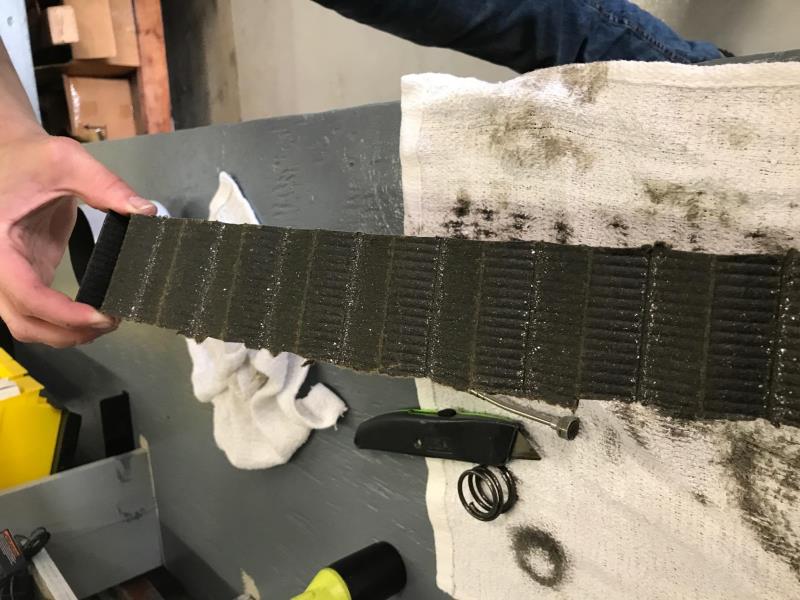
Noticed my oil pressure had dropped a few psi over the past 100 hours or so; still within limits, but it was trending towards the lower end. Cut open the filter and found some metal. Metal is a mix between ferrous and non-ferrous. I've been advised that such a mix almost always comes from a cylinder. Compressions at TDC are good on all four cylinders. I sent the metal out for analysis, but in the meantime I borescoped the cylinders. After my engine failure, the IA replaced the cylinder that failed with a chromed cylinder. The engine has since run a bit hotter and the oil would foul sooner; decreased oil pressure appears to correlate with increased temperature; and for the first 150 hours or so with that cylinder, the engine leaked more than usual. The only cylinder that seemed a bit unusual with the borescope was that troublesome #4 that has about 250 hours on the cylinder and piston now. I usually fly 10-20 hours/mo and have done so for 5+ years in that aircraft.
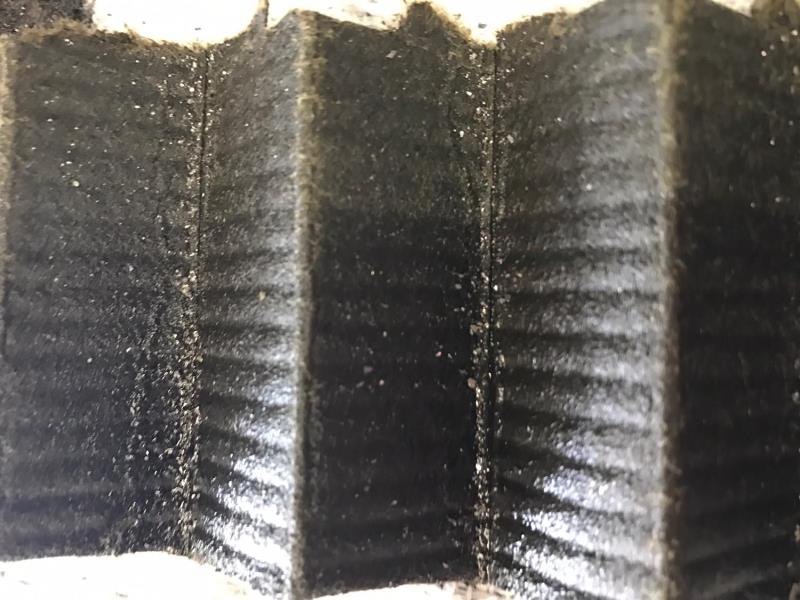
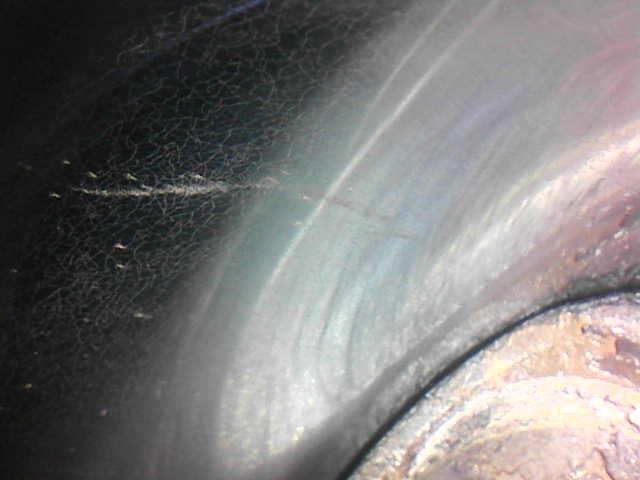
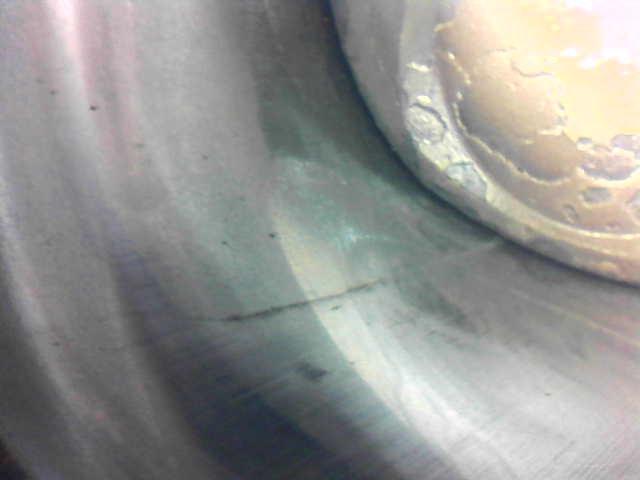
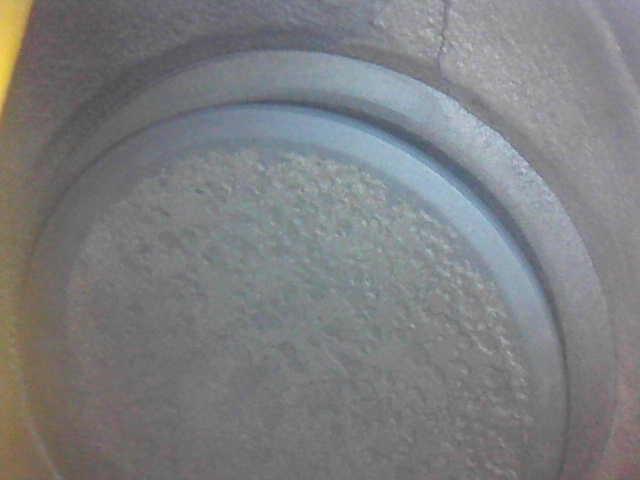
Here are some photos of that cylinder. This long line is a bit suspicious to me and it appears on both sides of the cylinder. I'm not sure if that crack by the valve is in the metal or the carbon. Opinions are welcomed. 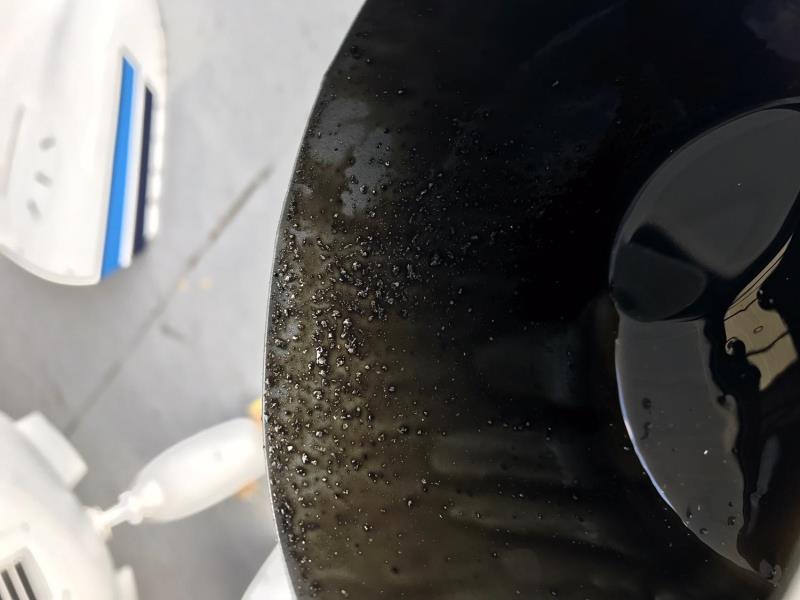
|
|
Is that all metal on the side of a bucket in the first pic?
Oil looks awfully black also, how long between oil changes? Is this a turbo engine? Lycoming or continental? If lyc is anything in the suction screen? I think there is a couple things going on here. Oil could be getting cooked from blow by, how are the compressions? Cylinder looks cracked to me in that pic, may not be all the way through yet to show it self on compression check though. The metal in the filter came from the oil pump, if not oil pump metal it was pumped through it so I would definitely pull the pump and check it. While that cracked cylinder is off I would be taking a good look through the cyl base at the cam lobes and lifter tappets and make sure they are not peening themselves apart, that is always a good source for metal in the filter. If it has a prop gov, it and the prop need to be sent out and flushed out, pretty sure most gov have a magnet in them. Oil cooler, Turbo, waste gate and controller too, need to be flushed. |
|
Quoted:
Is that all metal on the side of a bucket in the first pic? I believe so Oil looks awfully black also, how long between oil changes? That was 20 hours since the previous oil and filter change. At annual, there was a tiny amount of metal in the oil. 25-30 hours after annual, there was another oil/filter change. No metal in the filter. 40 hours later, I did another oil/filter change. No metal in filter. The oil pressure was hanging around 60. There's an IA on the field who I think very highly of. I had him do two new main tires and since I had a stack of cases of oil from SnF and a bunch of filters, I told him to go ahead and do the filter and inspect it for me, so the change came about five hours early. I have always done 25 hour oil changes since I got the plane. Usually I'd do a drain and fill every 25 hours, and a filter and inspection every 50, but since seeing that small amount of metal at annual, I decided to do a filter every 25 hours and keep an eye on it as well. Is this a turbo engine? Lycoming or continental? Not turbo. Lycoming IO360-A1A If lyc is anything in the suction screen? Going to pull that. Hired a mechanic to pull the screen. I don't have dikes long enough to cut the safety wire and the engine has a Tannis heater. I suspect you'll need a Snap On OEXL28 wrench to get to it. I think there is a couple things going on here. Oil could be getting cooked from blow by, how are the compressions? Compressions are high 70s at TDC; did not check them through the stroke which might have been more revealing. I suspect a fair mount of blowby. Oil consumption is a bit on the high side. 1 quart every 3 hours it seems. Cylinder looks cracked to me in that pic, may not be all the way through yet to show it self on compression check though. I'm curious about this as well The metal in the filter came from the oil pump, if not oil pump metal it was pumped through it so I would definitely pull the pump and check it. This is my suspicion as well. I'd like to find as much as I can before making a decision. It could be an IRAN, replace a jug and the oil pump and go on my way, or it could be that if it's likely that my best bet is to do a used engine or an overhaul/exchange to not gamble on the crankshaft. While that cracked cylinder is off I would be taking a good look through the cyl base at the cam lobes and lifter tappets and make sure they are not peening themselves apart, that is always a good source for metal in the filter. Agreed. The experienced A&Ps I've consulted believe that an plane that's seen the type of exercise and maintenance that mine has is less likely to eat a camshaft. If it has a prop gov, it and the prop need to be sent out and flushed out, pretty sure most gov have a magnet in them. Oil cooler, Turbo, waste gate and controller too, need to be flushed. I've read that inspecting the prop governor screen is a good way to determine if metal made it past the filter and circulated inside the engine. |
| That head looks cracked . The jug as well . The line in the jug would be straight if it was wear from a ring or a broken piston . That is a lot of metal in the filter as well . I would plan on pulling the engine apart soon . It may do it on its own if you continue . The question is when |
|
See lycoming SI 1011L about lifters and tappets.
They call it spalling, I always called it peening so maybe I should change my ways but that is what I think your metal source is. Hope I'm wrong though but seen it a bunch, even on regular or high use aircraft. The lycoming cam lobes are cut so the tappet rotates, the tappet face hardness layer is thin and when it wears through the spalling starts and cam lobes wear down and tappets start coming apart. |
|
Oil contamination is from blow-by, and that jug is toast.
Crazy as it might sound, Airboaters running AC engines usually know all the tips & tricks when it comes to figuring out what's going on. I know it sounds red-neck, but you have to appreciate their ingenuity when it comes to running the stink out of a non-airworthy engine....might learn something. 
http://southernairboat.com/phpBB3/viewforum.php?f=47&sid=105d6798082bfeac56fba8ab8faa39fb BTW: When I hear "low oil pressure" and "metal in the Filter" I immediately think rod & main bearings. 
|