


Posted: 11/16/2007 5:33:09 AM EDT
|
Looks like the Marder is being replaced. www.defenseindustrydaily.com/land-panther-germanys-tracked-puma-ifv-04191/#more Land Panther: Germany's Tracked Puma IFV 14-Nov-2007 19:14 | Permanent Link Related stories: Contracts - Awards, New Systems Tech, Tanks & Mechanized, R&D - Contracted, Other Corporation, Partnerships & Consortia, Europe - Other, Transformation, FOCUS Articles Drivers wanted… (click to view full)Germany has always been known for producing excellent armored vehicles. A combination of features that arguably make it the world's best tank, and fire sale prices stemming from Germany's rapid disarmament, have made the Leopard 2 the standard battle tank in Europe and beyond. The same level of innovation and execution was shown in the late 1960s, when Germany's Marder became the west's first Infantry Fighting Vehicle (IFV). Designs like the American M2/M3 Bradley, Sweden's CV90 family and new SEP, Singapore's Bionix-II, and Korea's new XK-21 have stepped far beyond that legacy, however, and even the Russian region has continued to update their BMP designs. Meanwhile, the nature of military operations has changed to emphasize modularity, out of country missions, advanced electronic communications, and strong protection against threats like land mines. The Marders need to be replaced, and this became a priority even within Germany's limited defense budget. In response, German armored vehicle leaders Rheinmetall & KMW formed a 50/50 joint venture to design and produce a solution that would address these issues, and return Germany to a leadership position in the tracked IFV field. Enter the new Puma IFV – which has just received a EUR 3 billion production order from Germany…. Puma IFV: Platform & Features Modular armor (click to view full)The Puma carries a crew of 3, plus 6 fully-equipped troops and its weapons array. PSM's goals for the Puma were simple to state, but difficult to execute: Optimum protection against any type of threat for maximum survivability of the crew. The Puma features two different levels of protection. The basic 'Class A' configuration provides protection against shell fragments, and some level of protection against direct fire and mines*, plus the usual array of automatic fire extinguishers, NBC overpressure protection, et. al. as backup. The exhaust is cooled before release to minimize infared signature, and the company claims that the rear ramp can double as a 2-man fighting station.* These IFVs can be quickly reconfigured for higher intensity combat by adding separately transported modular armor elements, which can raises the protection level up to 'Class C' and provide strong protection from land mines, shaped charges, and medium-caliber weapons fire up to 30mm. Special roof armor elements can provide protection the crew from air or artillery delivered bomblets, and the system can carry "active protection systems" against anti-tank rockets as a customer option. Optimum armament for escalation and de-escalation in all missions. The Puma has a remote-controlled turret that carries a 30mm MK30-2 ABM stabilized cannon with a 3 km/ 1.8 mil range for fire on the move, and a coaxial 5.56mm MG4 machine gun. This allows a unified crew compartment, without a "turret basket" that holds the commander and gunner. The vehicle carries 200 main rounds ready and another 200 in storage, and can switch between APFSDS-T armor piercing rounds and KETF submunition/fragmentation rounds with programmable fuzes via the dual-feed system. Grenade dispensers are mounted around the turret for smoke et. al., and missiles and/or a RWS with a 40mm grenade launcher can be added for additional firepower. Puma: Enter… (click to view full)Rapid, strategic, global deployability and high tactical mobility. While the USA has spent billions trying to create survivable vehicles under 20 tons that can fit into a C-130, Germany set a more realistic goal. In its basic Class A configuration, the 31.45t/ 34.667-ton Puma can be airlifted in the forthcoming Airbus A400M, and the vehicles' protection will be adequate for any landing strip secure enough to fly in the aircraft. Add-on armor modules can improve its protection to Class C while raising its weight to 41t/ 45.2 tons. Gross Vehicle Weight (max. recommended weight) is 43t/ 47.4 tons. A flight of 5 A400Ms could transport 5 Class A vehicles, or 4 Class A vehicles, plus 4 sets of Class C protection modules as well as additional equipment. A highly compact 890 series 10-cylinder, 800kW engine offers a specific power-to-weight ratio of 20-25 kW/t and can drive the Puma at up to 70 km/h/ 42 mph, while decoupled running gear with hydro-pneumatic elements offers maneuverability and a smoother ride. The Puma has 450 mm/ 18 inches of ground clearance despite mine protection, and an unrefueled range of 600 km/ 360 miles. Network centric warfare capability. The Puma's benefits from Germany's world-renowned optronics indutry, and uses the Leopard tank's "hunter-killer" system that lets the gunner and commander acquire targets separately, and then automatically slews the turret to the designated victim upon handover. Puma will be compatible with Germany's FuInfoSys battlefield C2 system, and its IdZ future infantryman setup. IFF systems assist with combat identification, with a 170kW flywheel generator for power and unspecified "digital networking" capabilities.* On the training side, PSM does offer a simulator, but embedded training also ensures that the Puma functions as its own simulator when requested. Sustainability under extreme climatic conditions and inadequate infrastructural conditions. Recent operations have emphasized the importance of good air conditioning in vehicles; it's hard to function when temperatures hit 50C/140F inside. Onboard BITE "prognostics" monitor vehicle systems, and can warn of problems before they show up as system failures. Beyond that, the vehicle's maintainability under "inadequate infrastructural conditions" is not clear.* * = Neither KMW nor PSM would respond to questions concerning their vehicle. Overall, PSM has certainly produced Germany's next IFV. In order to find customers beyond their home country, however, PSM's Puma must compete with advanced, versatile tracked competitors like BAE's CV90 and its variants, Russia's BMP-3, and South Korea's amphibious XK-21 NIFV. It must also compete with the lighter wheeled APCs that have become so popular in Europe despite their terrain limitations. Puma IFV: Project and Industrial Organization Puma: 3/4 view (click to view full)The Bundestag set the project in motion in September 2002 when it awarded a development contract for the new IFV. To address this need, German armored vehicle leaders Rheinmetall & KMW formed a 50/50 joint venture called Projekt System & Management GmbH in 2002. Typically, their goal was to produce the world's best IFV, with a range of features that would give it an unmatched ability to cope with current and future threats. The initial development contract was followed by a 2004 order for 5 pre-series vehicles and related services, which are currently undergoing intensive trials, and by a November 2007 production order. Both Krauss-Maffei Wegmann and Rheinmetall hailed the production decision as "a crucial step in reequipping the German Army for the future as well as being vitally important to the German defence industry and a whole host of medium-sized subcontractors." The first serially produced PUMA are scheduled to enter service in 2010. Puma IFV: Contracts & Key Events Fahrvergnuegen… (click to view full)Nov 8/07: The German Bundestag's budget committee clears the way for the procurement of 405 new Puma infantry fighting vehicles from PSM in Kassel, Germany. Rheinmetall AG in Düsseldorf and Krauss-Maffei Wegmann GmbH & Co. KG in Munich will effectively split a combined total of some EUR 3 billion (about $4.2 billion) in gross sales. Klaus Eberhardt, Chairman of the Executive Board of Rheinmetall AG, said that: "This is the biggest single order in the history of our company, and definitely confirms our status as Europe's top supplier of army technology." There's a bunch of pics at the link for those interested. Looks like an interesting vehicle. I'm kind of surprised - and impressed - that they are staying with a relatively heavy tracked vehicle instead of a lighter wheeled vehicle. THe article makes mention of that too, and kind of diggs at the Stryker a bit. One issue I see is that the transport that is supposed to fly the thing is still 'forthcoming', but then again, I don't think it's going to be much of an issue. -K |


LOL....ouch! Thats a smack down!! It would be better, if they replaced the 5.56 machine gun with a 7.62 and added on a TOW or Milan launcher. I like the modular armor concept, though. Does it float? |
The article doesn't mention whether or not it's able to swim, but considering it's weight, I would think not. IIRC, the Marder couldn't swim either, so it doesn't seem like the Germans see that as being all that important. Someone in another forum I hang out on mentioned that situational awareness goes down with an unmanned turret because the commander/gunner are stuck inside the hull and can't really look outside the vehicle like they could in a Warrior or Bradley. Again, this doesn't seem to be much of an issue to the Germans as the Marder was the same way. THe 5.56mm issue was apparently so they could carry more ammo, but I agree that they lost alot of hitting power. The article did state they can install a RWS - probably like what's on the Stryker - so that could add significantly to the vehicles firepower. -K |
|
A retired 3-star general buddy of mine likes to tell the story (joke) about a German general he knew years ago. Noting that the German vehicles sit much taller than their American counterparts, my friend ask the German for an explanation. The German replied, "Because the rivers in Russia are deep, my friend." He said he thought deep down that the Germans really wanted another crack at Ivan. |
 He does raise a good point though. The Bradley is going on 25 years or so old now. Is it getting to be time to look for a replacement? Or should be just keep on updating it? The CV90 series is a good vehicle, as are a number of other newer designs. The Brad still has some advantages, but I don't know how competitive it will be 10 or 15 years from now. I guess it could still be up armored, up gunned, and perhaps be given a more powerful engine, but it's still a 25 year old vehicle. Should we be looking for a replacement? -K |
The rear hatch is supposed to be able to be half opened - I guess ramp up - and serve as a 2 man fighting position. Interesting idea, but I'm not quite sure how useful it'll be. I would like to know more myself. -K |
Don't know enough about Brads to comment intelligently  . IMHO...We should always be looking for newer and better. We should only jump on that newer/better vehicle if it is significantly better, and worth the cost in $$$/man hours, than the current version. . IMHO...We should always be looking for newer and better. We should only jump on that newer/better vehicle if it is significantly better, and worth the cost in $$$/man hours, than the current version.
|
I think so. The brad rocks, I love it but we need to consider going beyond the A3 upgrades. Some Ideas( Mnd you my experience is exclusive with A2ODS here) -An Aux Power Unit would be nice. Having to run the engine to power the turret and electronics during extended OPs is a pain. It eats fuel and is a huge heat signature. A small APU could keep the bats charged up and allow longer OP time; with much less heat and noise signature. -30mm Would be nice also -Go with a fire and forget ATGM Javelin maybe? |

The Germans have a mounting point for MILAN on the Marder, but more often than not, it was unused, dismounted and the infantry would use it, with the Marder hiding behind the hill a few yards away. Evidently, the Germans decided it wasn't really worth it. They're not alone, the vast majority of IFVs in the world have no missile. Indeed, the only reason the Bradleys have TOWs was in order to sell it to Congress. The Army didn't really want them per se, but figured it would be hard to sell such what would be an expensive Super-M113 to Congress.
Whilst this is true, it is to be noted that Marder has a two-man turret. The externally mounted weapons assembly does restrict visibility a bit, but nowhere near as much as an unmanned turret would. Another interesting Bradley fact is that it was designed to have a one-man turret offset to the right, with the commander sitting in the hull behind the driver, much like a BMP. When, for cost-cutting reasons, the Bradley was pressed into service as a cavalry vehicle with an observation requirement, the turret was enlarged to fit the BC, with the resultant increase in size of the turret basket, and decrease in passenger capability. BAE has produced a Brad with an unmanned turret, which I saw in Florida last December. I hope it doesn't go into production though, there were no hatches for the TC or Gunner at all!
All things are relative. The Brad's diesel is much quieter, cooler and more fuel efficient than the M1's, and they've only recently figured out how to mount an APU to Abrams which isn't immediately removed by the crew.
In the works. The unmanned turreted vehicle I saw had a 35, but it was so big, it took up the whole turret. Hence unmanned!
They'd want to extend the range on the Javelin to have the same capabilities. Otherwise, the troops inside carry one or two, no? NTM |
It may be quieter then the M1; but after living in one for awhile I would love to be able to reduce the noise and fuel use to the point that I could actually hear something other then the engine.
Well the 25mm has been effective against just about everything here in Iraq; I geuss it is just the joy of wanting bigger/better. I wouldn't want to give up the manned turret for it though!
I know we have CLU's for Javelins, but here we've never been issued them or had a need for them. I would just like to see some form of fire and forget implemented. Also as ops here have shown it would be nice to be able to have the ability to fire something more AP/Anti Material based then the TOW. We've never used the TOW up here. Just thoughts at random. Hopefully my next unit will have the latest M3's. All my experiance in Iraq has been with A2 ODS variants. |
It may be quieter then the M1; but after living in one for awhile I would love to be able to reduce the noise and fuel use to the point that I could actually hear something other then the engine. I'm sorry, I erred badly. The diesel isn't quieter than the turbine. All the other items still stand though. NTM |
|
It is very nice, but that sumagun is a heavy beast. They will not have an easy time deploying it with their very limited air lift and sea lift capability. Heck, the Germana have something like 3,000 troops as part of ISAF in Germany and have no heavy armor at all. Even if the airbus can haul one of those they'll have to spend hours taking it down for transport and hours being able to get it up and going once it arrives. |

 German?
put a GAU-8 on it with more ammo and call it good  really though, the military is trying to design new stuff. mostly lower profiles and better armor and even unmanned stuff. |
I dont know, but the 40mm the Swedes use in their CV9040 has some pretty sweet ammo options, including airburst for use against both ground troops and aircraft. I guess there's more flexibility with the bigger rounds, though ammo capacity goes down. -K |
Commie hordes are not coming through the Fulda Gap any time soon. Maybe, but the MG now shares the same ammo as the squad inside does - so only 556 ammo is carried on board. I can see their logic. The coax is strictly Apers, and anything else the 30mm will handle. Plus you can carry more rounds in your read box for it - this might be an issue since this is a remote controled unmanned turret. |
That seems to be an historical thing with the Germans, by the end of WWII the majority of their AFVs were turretless - Stgs, Jagdpanzers, Hetzers. Cool thread. |
That was merely for production speed and cost savings measures. |
The Nazis used it, but it predates them. Unlike the swastika - which the Nazis caused to fall out of fashion nearly worldwide - the iron cross managed to survive without much stigma. In fact, both the US Army and Marine Corps use a modified version on some of their marksmanship badges: en.wikipedia.org/wiki/Weapons_Qualification_Badge |
I'm surprised it's still in use because of the Christian conotations, it seems to go against the multicultural attitudes that rule in modern Europe. The symbol has its roots in the Crusades, after all. |
I thought the major reason was it allowed them to fit bigger guns on chassis that otherwise couldn't accommodate them? |
Anti Christian PC bullshit is far worse in the US than in Europe. Many countries still have official state religions, and several flags are crosses. Even most German atheists recognize the significance of religion to that country's history. Of course, they also aren't dealing with as much of the political, fundamentalist persuasion of Christianity that causes so many people in the US to get upset (and lash out at all of Christianity). |
the tanks' EAPU is pretty loud, plus im not sure where they would put one on a brad. you have to run the EAPU for a long time (at least an hour) to charge up the batteries also, its really only good for slave starts. i think the bradley has more batteries than an abrams, with the hull and turret batteries running independently. what would be nice on a brad is if they opened up the damn hatches to accomodate for OTVs with sideplates. they also need to fix the ring on the TC hatch, every brad i have ever been on the metal on the hatch is bent out to where it catches the molle loops on your vest and hangs you half in half out, and it would be great if they could insulate the driver a little more so you dont burn yourself on the damn engine cover while driving. |
Almost all recently developed IFVs are coming protected against 30mm threats... |
|
Looks like a decent vehicle...I'm sure the quality is there. But it's not all that different from every other vehicle of it's type, like the Swedish CV90, the Spanish ASCOD, and the Italian DARDO Hitfist. They could have at least gave it a more futuristic look.
|
That to, but even that was because it was quicker to build a big gun/small hull assault gun than a larger tank with the same gun. |

Plus, I think--since a new design was called upon because of new conflicts--that vehicles of this sort need more of an ability to engage targets in difficult positions, atop buildings or in close, incorporating automated turrets like the 30mm Elbit OWS or 12.7 mm Kongsberg remote weapon stations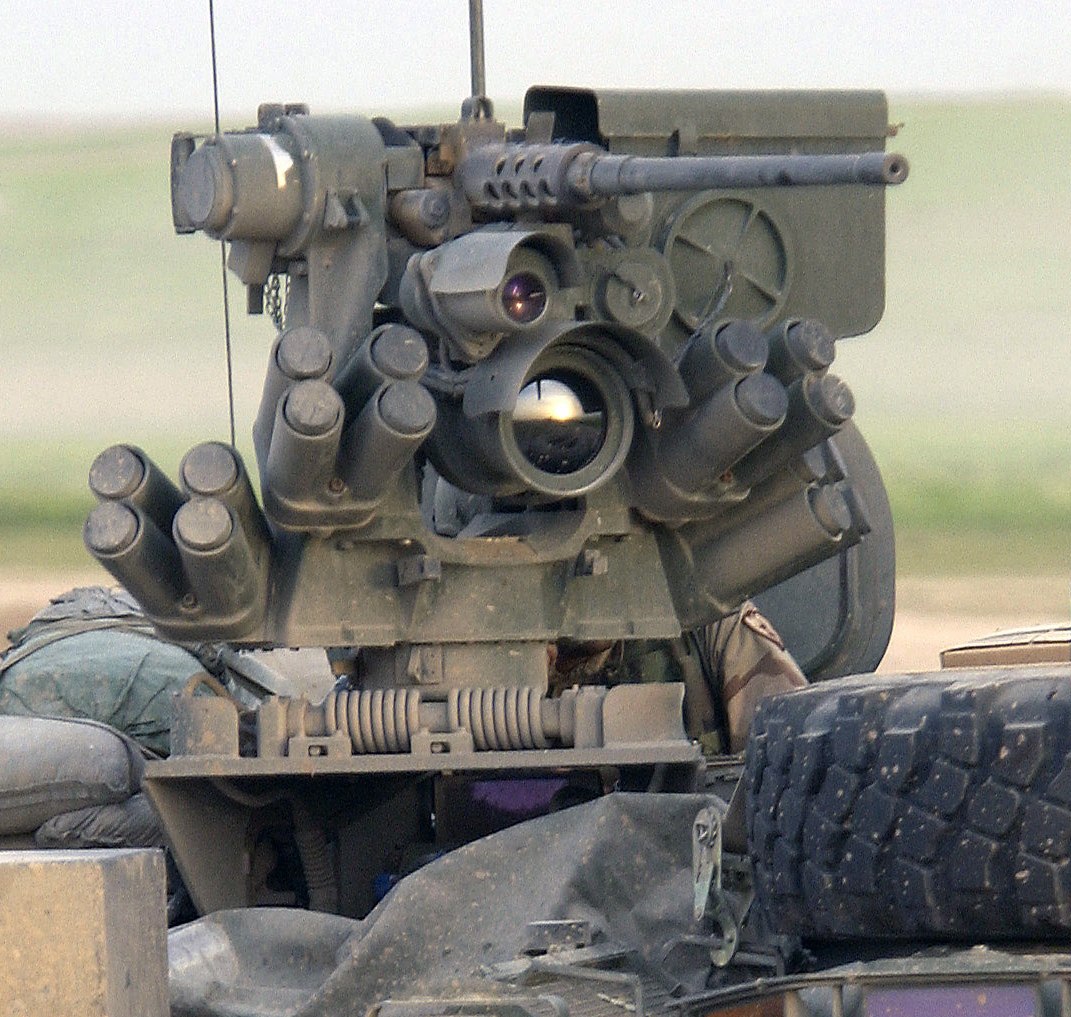 |
Which itself wasn't German either, of course. The current (and pre-war) insignia is properly known as Balkankreuz, the Balkan Cross.
Currently being fielded. It's called the "Heat Abatement Kit." Doesn't do squat for the rest of the crew, but helps the driver out. NTM |
|
thats good news. im a 19k but ive been in an infantry company for over a year and have crewed a bradley quite a few times. nothing has ever gotten me so worked up as getting stuck in the hatch on a piece of jagged metal, unable to free yourself while hanging in the most awkward position. add to that being out in sector when this happens and im ready to frag the damn vehicle already. |