


Posted: 3/8/2008 6:10:15 PM EDT
|
As some of you seem convincing that reloading is the way to go, I have a couple questions. A. Once you get the hang of it, how many rounds on average can you re-load per hour? B. I would be most likely to re-load .223, .308, and 45 ACP. How much different equipment will would I need? C. What is the margin of accuracy needed? And how do you ensure you stay at it when adding the correct amount of powder? D. How much should one be willing to spend? And what brand of equipment? E. What is done to prep the shells? Do you clean them? Or just pop off the primer and go? My concern is return on investment. In the long I know it is worth it, but the short term is the question. To those who dont re-load, why? |

B: the dies for all three calibers a case trimmer with proper holders and a few small tools. C:i try and keep all my loads +/- 1/10th or less from each other i throw them from an rcbs uni flow powder mesuare into my scale pan D: id say about 350$ to start and id go with the rcbs kit you can get them onsale at bi-mart for around 270$ iirc E:i run all my shells throught a tumbler befroe i reload them |
|
A. Depends on the caliber, and the equipment used. Some equipment is advertised as being able to produce 1200 rds./ hour. I find pistol calibers quicker to reload, as it's easier to set the bullet in, as opposed to set it in the neck of the rifle shell. B. Depends on how muchtime you want to spend resetting things. If you get a seperate "plate" for each caliber, resetting between cartridges is a snap. You'll hafta buy seperate dies for each calber either way, but getting an extra plate and powder charger for each caliber makes switchover even faster. c. Someone more experienced will hafta answer this. However, reloading manuals will give you an idea of a starting charge, and you can work your own loads from there. D. Depends if you want a progressive setup or not. Since I'm not much of a target shooter, and would prefer to reload for quantity, a progressive setup is what I'll be getting. E. Some peoples order of operations vary, but the basic steps are: Tumble them clean Lube cases De-primer Resize the shell (length and flared mouth) Re-prime Powder Add bullet Crimp Of course, some setups will take care of some of those steps for you. So we're back to how much you want to spend. |
|
Per hour - 50 rds rifle, 80 pistol on a single-stage press. 200-300 on a progressive. You really only need dies and a decent press. My margin is .1 grain and I use a regular balance beam scale, or a powder throw on the progressive. This is the most time-consuming part of the operation for single-stagers. You can spend as little as $25 on a used RCBS Rockchucker, $20 on dies and $40 on a scale. After that, you're off and running outside of components. Brands are basically "you get what you pay for". Prep. Easiest thing to do is wash them with a little soap/water and let thoroughly dry, tumbling from time to time. With pistol brass, I may do this every 3-4 loadings. Rifle I try to do more often. ROI - is about your time. If you don't see it as a worth-while hobby, then it's a wasted effort. One of the nice things is you'll able to make up custom, accurate loads for a particular rifle by just getting dies if you already have the press and scale. |
Go to the local library and check out a copy of "ABC's of Reloading". Can also buy at any place that sells reloading equipment. Will explain all the reloading tools, and how to reload step by step. Its the new reloaders bible. Come and visit us in the reloading forum. Click on the General tab in the communities line, scroll down about 2/3 of the way down the page, there it is. |
|
All I do is pistol so far-357--45acp--44mag. I have a Dillon and mine takes 5 dies each but you can get by with 4 or 3 depending what set up you have. My machine is rated for 800 an hour but I can load comfortably at 400 an hour. I haven't done rifle but I know you are suppose to clean the primer pocket with a tool, run a bottle brush in the case, measure and trim the case, none of these steps are needed in pistol. You can order a single stage press with dies from , Dillon, Lee. or others Sam's in Everett has some Dillon stuff set up to look at. I believe Cabalas has a good reloading section including equipment. I also believe any one that reloads would suggest several Manuel's as well. I took an NRA reloading class that lasted about 4 hours and left with a bunch of small Manuel's. I like Dillon, they have had great cust service on any questions I have had. They also have videos on how to set up and use there progressive presses. |
|
Follow up questions…Looked some online. What are the dies for? What do you mean by tumble? Due to limited space, I would like the smallest, but most effective. .223 would be re-loaded the most. Would someone be willing to give a demonstration? I live in the Tacoma area. I would be interested in seeing from start to finish…from the freshly fired brass to fully re-loaded. |
|

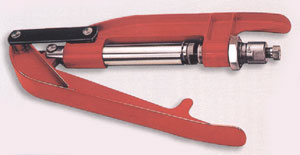
If space is a concern, you could go with, (dare I say it) a Lee hand press. This is what I am using right now and just finished doing 150 rounds of 380 in just over an hour. The nice thing about using the hand press is I can take it to the range to fine tune loads. I live in Parkland and would be happy walk you through the steps. As far as cost, if you shop, you can get set up for one calber around 100.00 |
IM inbound... I think I know what to do with my tax refund! 
|
That is about what I would do. What is the model? |
|
For all the reloaders in here, isn't it sort of, kind of, making you giggle a little that he is asking about reloading? I mean who hasn't quickly run their experience through their head?... It starts with the single stage press then the reloading monster rears its ugly head and nine months later you come too with a single stage, a progressive, Giraud trimmer, 5 buckets of brass - two in calibers you don't have weapons for (.308 and 30 cal in my case), extra toolheads and powder measures, a super swage, enough components for 25 thousand rounds of ammo, 5,000 of that being match grade if you so choose, and a detailed understanding of the RCW fire code that only allows you 10,000 primers and up to 50 pounds of smokeless powder in an approved container.... Oh Bambi! Run away! Run away while you can! |

|
As some of you seem convincing that reloading is the way to go, I have a couple questions. A. Once you get the hang of it, how many rounds on average can you re-load per hour? Single stage 100-200/hour depending on the stage of pre prepped brass. I clean, size, trim, and prime cases, then store for single stage loading in batches of 500. Progressive I have done 1250 rounds of .45 ACP with a Dillon 1050 using preprimed factory brass. B. I would be most likely to re-load .223, .308, and 45 ACP. How much different equipment will would I need? Any single stage will work, but doing .45 acp would be a pain using a single stage. Just need dies, press, scales, blocks, etc, etc, etc. If you are interested in volume, I'd go progressive, but there is a lot of value in using a single stage to become comfortable in producing great shooting rounds. You can screw up a lot of ammo and components in very little time using a progressive. We started out single stage, then went progressive. C. What is the margin of accuracy needed? And how do you ensure you stay at it when adding the correct amount of powder? Blasting ammo just needs to be a minute of a pop can accurate. Surprisingly this ammo can be quite accurate if you use the right techniques and components. Our progressive presses have powder alarms that keep us in check. When handloading on a single stage, I check every 5 rounds for powder weight once I have my scale set right. The powder weights may vary by a .1 grain, but it shoots well, under 1" at 100 yds, but case prep is the key. Use ball powder if possible when loading progressive. D. How much should one be willing to spend? And what brand of equipment? Depends upon your budget. We have one shotshell reloader, 3 or 4 single stage presses, and two progressives. Single stages are RCBS, progressives are Dillon. Dillon is THE way to go in my opinion, but I've heard good things about Hornady. All combined we might have $3-4,000 in reloading gear including toolheads and dies for multiple calbers, but we also loaded ammo commercially. E. What is done to prep the shells? Do you clean them? Or just pop off the primer and go? Tumble to clean off dirt and grit, lube, size and decap, trim if necessary, polish tumble, load, shoot. If you don't get the grit off in the first step you can mess up your dies in a heartbeat. My concern is return on investment. In the long I know it is worth it, but the short term is the question. To those who dont re-load, why? Depends on how much you shoot. If you shoot 1,000 rounds a year, and don't increase your shooting after reloading, it will pay off in the long run, plus there is a lot of satisfaction in taking game with ammo you crafted, just like catching fish on flies, jigs, and other gear you tie. Most folks just shoot more after they get into it, so it does drive your cost per round down considerably. |
|
For the cost part I bought a metric shitload of 77 grain Sierras two years ago. I paid off all of my reloading equipment last year in "cost savings" (other reloaders are laughing right now) when the cost of my 77 grain bullets was 75% less then store bought stuff.. Dillon 550b, Giraud trimmer, Super Swage, etc. I shoot highpower so buying store bought match grade ammo can add up very quickly. I would have to check my logs to give you the exact price per round for 55 gr, 62 gr, 69 gr, 75 gr, and 77 gr, but I do know when I run across a deal on primers, bullets, or powder, I buy as much as I can. Nosler also has special offers and incredibly cheap shipping. So when the 69 grain bullet costs you about 25 cents in componets versus the <checks MidwayUSA really quick> SEVENTY-FIVE FUCKING CENTS PER ROUND! Then you're on to something. So my Match grade 69 grain cartriges (.25) cost half of what a 55 Grain FMJ Black Hills ammo costs (.46). Or a little less then half of Remington Ultramax (.40). |
Again, as Dryflash suggested, go to the reloading forum. A great bunch of guys. Time is the big thing. When I got back into reloading I was stopping at the bar after work and spending $20 a day doing that. After I started reloading again I stopped doing that and reload after work. My last 1000K of 223 cost me 161 dollars. This is quality bulletts powder and primers. YOU have to decide it the time is there. RENECK??????????? It is called resizing, for a AR you want to full length resize. |
161 bucks for 1 million rounds of 223???? where do I send the check? 
|
WOOPS 1K 
|
|
If you do get into it.. call around for prices or drop by to check the stores out. I bought my Dillon 550B used online. If you decide to try different calibers then you would need the dies and the conversion plate for each type of round. I found Sam's Gun Shop funny.. their prices for a few dillon accessories were $1 more expensive than what's on the Dillon website. Where do you guys buy some cheap Varget powder? I've been looking, but still seem to find the online price comparable to local stores.. that's calculating the Hazmat charges. Any case I bought a 1lb of it for $24 (1lb to try out since I'm new to reloading also). I haven't found a local store that sold Horandy VMax 60g or Sierra 68g matchking.. guess that one is going to be a online purchase. Brass seems to be cheaper online as well.. About the investment.. Well I calculated I would be spending close to $800-$900 for equipment. then I calculated the cost of good ammo versus good reloading ingredents for 1000 rounds. I pretty much figured out that my 5000th reload would break me even.. Note prices are targetting the sky rocket 223 prices. Hope this helps. |