


Posted: 7/26/2013 5:54:33 PM EDT
|
Now that I've sorted out my questionable power supply issues... (see pic below) I think I know why I got such a great deal on this ebay amp. >:(
It doesn't seem to be putting out anywhere near what it should. I'm only seeing approx 100-110w out with 25w input. The Tokyo Hy-Power HL-160V25 is advertised as a 160w amplifier. The Kenwood TM281A (@25w) only pulls 6A from the Astron 50A power supply. When I flip the Tokyo Hy-Power amp on and key-up, the total draw is only 14A. That tells me the radio is pulling 6A and the amp only pulls 8A. Is this something I can diagnose and repair myself ? I'm pretty handy with a soldering iron. ;D The 30A MFJ power supply on the left is dwarfed by the Astron 50A supply. Shipping weight was something absurd like 48lbs or so. 

|
| I would have to ask, how are you measuring your power out, and what is your SWR? If the amp is drawing only 8 amps your true power out is probably not close to 100W. And, advertised power output is probably not gonna happen unless everything else is near perfect. |
|
What are you using to measure your power?
Are you feeding the amp into a dummy load for testing (yes it can make a huge difference). Are you testing the output at multiple points in the 2 meter band. Two meters is pretty wide and it is possible the amp has one spot where it preforms best. Please show your EXACT test setup. What meter are you using to read the power on? |
|
I'm using the analog meters on the amp and power supply.
Now I'm starting to wonder WTF... I just tried it again and now the ammeter on the PS is showing 24-26A at full load. I think there is a relay hanging up in the amplifier. I hear it click when I transmit. I wonder if that was giving me problems or tripped out earlier when I accidentally hit the amp with 65w instead of 25w.
I don't have a dummy load yet or SWR meter. Not entirely sure how to use them together to be honest. 
Might need to get one of the local hams over to help before I let the smoke out of one of my machines. |
|
Quoted:
I don't have a dummy load yet or SWR meter. since you apparently already injected 65W into the amp (which has a 25W-input front end) i would use caution w.r.t. further testing without a dummy load and a proper watt meter. reflected power when you are playing with a 5W HT is no big deal. reflected power when you are playing with 150W is a big deal. grab a good multi-band SWR/power meter (Diamond SX600, for example), and also get a dummy load off of ebay. http://www.gigaparts.com/store.php?action=profile&sku=ZDM-SX600 http://www.ebay.com/itm/CELWAVE-250W-Dummy-Load-Signal-Port-RF-DL200-50-2GHz-/140504218018?pt=LH_DefaultDomain_0&hash=item20b6b439a2 ar-jedi |
|
Also something I may have overlooked is grounding.
I have no ground system at all. The antenna pole is mounted to the side of the house and not touching anything conductive, much less the earth. The coax runs straight to the back of the amp from the antenna. The coax from the radio runs straight to the back of the amp. The radio hangs (ungrounded) from a shelf on my computer desk. I think this may be an issue.
|
|
Quoted:
Also something I may have overlooked is grounding. I have no ground system at all. The antenna pole is mounted to the side of the house and not touching anything conductive, much less the earth. The coax runs straight to the back of the amp from the antenna. The coax from the radio runs straight to the back of the amp. The radio hangs (ungrounded) from a shelf on my computer desk. I think this may be an issue. the lack of a ground connection is not your problem. in fact, at VHF frequencies and above "RF ground" is not really practical. in general -- if the grounding conductor is longer than about 1/10 the wavelength, it stops acting like a ground and starts looking like another antenna element, with a non-zero impedance. as an example, on 2m (~146MHz) any "ground" wire longer than about 0.2m (~=8") isn't doing what you think it's doing. your issue is not grounding; your issue *may* be related to power reflected back to the amp from the antenna, and the amp having nowhere to dump it, but that is not going to be solved with a length of heavy wire. ar-jedi |
|
What causes this "reflection" ? I believe the Diamond X50 is rated for 150w.
For whatever reason, it hasn't been acting up lately. It's consistently pulling 24-25A when I key-up now. I still only see 100w on the amplifier meter... but that gauge may not be super accurate either. Next week I will buy that dummy load and SWR/Watt meter you mentioned previously. 
|
|
Quoted:
What causes this "reflection" ? pick up a small pebble. now throw it as far as you can. maybe it went 25 feet, right? it's a bit "too light" for your arm strength/speed. pick up a red brick. now throw it as far as you can. maybe it went 25 feet as well, right? it's a bit "too heavy" for your arm strength/speed. pick up a baseball. now throw it as far as you can. i bet you can clear 100 feet no problem. in fact some outfielders in MLB can hit home plate on one bounce from deep center field. why is this? the baseball matches your arm strength/speed very well, and therefore you can transfer maximum power to the baseball. in RF-land, a similar concept applies. the output impedance of the transmitter should be closely matched with the input impedance of the antenna -- this results in maximum power transfer. and just like the example i gave you above, if the input impedance to the antenna is higher or lower than the output impedance of the amplifier, power transfer is degraded. in radio-land, 50ohms is the nominal "target" impedance for everything -- transmitters, antennas, feedlines, and so on. the reasons for selecting 50ohms are somewhat complicated to explain but suffice to say that it is what it is. you should be asking now, "wait, if power transfer suffers when the antenna impedance is *not* 50ohms, where does the 'unused' power go?" -- and the answer to that is that the unused power is "reflected" by the antenna back down the coax towards the transmitter. some reflected power is inevitable -- no antenna is perfect. (*) whether the magnitude of the reflected power is enough to disrupt operation of the amplifier depends on several factors, including the design of the amplifier, the loss of the coax, and the characteristic of the reflected waveform. you can see now that the VERY WORST CASE SITUATION is keying up the amplifier with no antenna connected at all. in this case there is absolutely NO PLACE for the power to go, and ALL of it is reflected back into the internals of the amplifier. this may result in at worst destruction or at best degradation of the amplifier internals, and a hefty repair bill. ar-jedi (*) a dummy load *is* a perfect 50ohm load but then again it makes a lousy antenna! |
|
Quoted:
pick up a small pebble. now throw it as far as you can. maybe it went 25 feet, right? it's a bit "too light" for your arm strength/speed. pick up a red brick. now throw it as far as you can. maybe it went 25 feet as well, right? it's a bit "too heavy" for your arm strength/speed. pick up a baseball. now throw it as far as you can. i bet you can clear 100 feet no problem. in fact some outfielders in MLB can hit home plate on one bounce from deep center field. why is this? the baseball matches your arm strength/speed very well, and therefore you can transfer maximum power to the baseball. Quoted:
Quoted:
What causes this "reflection" ? pick up a small pebble. now throw it as far as you can. maybe it went 25 feet, right? it's a bit "too light" for your arm strength/speed. pick up a red brick. now throw it as far as you can. maybe it went 25 feet as well, right? it's a bit "too heavy" for your arm strength/speed. pick up a baseball. now throw it as far as you can. i bet you can clear 100 feet no problem. in fact some outfielders in MLB can hit home plate on one bounce from deep center field. why is this? the baseball matches your arm strength/speed very well, and therefore you can transfer maximum power to the baseball. there is no way I will miss the impedance matching question on the general test with that analogy. 
|
|
Quoted:
So if the antenna is an issue. you don't know this without an SWR/power meter in front of you. don't jump to conclusions here. lacking any instruments just stay at level flight and don't fly the plane into the ground. my money is on the amp, BTW, not the antenna or coax. but you need an SWR meter to start the debugging process. ar-jedi |
|
You need to take that amplifier and put it aside until you can buy or borrow a
1. VHF SWR/POWER meter 2. a (200watt plus) 50 ohm dummy load. RADIO-------AMP----SWR/PWR------DUMMY LOAD or atleast... RADIO------AMP----SWR/PWR------ANTENNA( with excellent SWR) You need to do this before you burn something up. Also....Ebay is were hams dump there shit. Why do you need a VHF amp ? the best way to get gain on 2m is with a higher antenna. I've been a ham for 20 years, I don't know any hams running 160watts on 2meter FM 
And finally... If you antenna is mounted up and outside, you need to ground the mast to you house single point ground 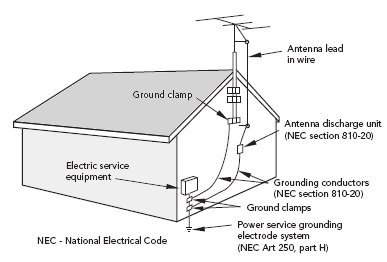
This is an affordable VHF/UHF SWR/power meter.... http://www.universal-radio.com/catalog/meters/0284.html 
|
|
Quoted:
Why do you need a VHF amp ? the best way to get gain on 2m is with a higher antenna. I've been a ham for 20 years, I don't know any hams running 160watts on 2meter FM
To be honest, coming from the CB world, old habits are hard to break.
I got the amp because I can't hit a repeater that I felt was well within my range. (~30mi) Turns out, "multi-path distortion" (due to mountain terrain) is the culprit, not lack of horsepower. Contacts on this repeater have reported (after moving to a different, mutually agreed repeater) that they hear a distorted/garbled signal from me. I have been clearly hitting other repeaters 100-135 miles away. In fact I just finished a conversation with a guy on a repeater in Freehold NJ. That is a 110 mile trip as the crow flies. I am "Not full quieting, but really strong, solid signal" into that repeater. One thing I can say about the amp... the pre-amp works wonders pulling in weak signals. It doesn't increase noise/static at all... just brings audio quality in nice and strong. It's worth the expense for that alone.
I will work on testing equipment over the next few days/weeks. |